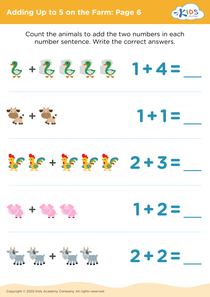
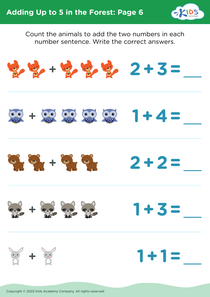
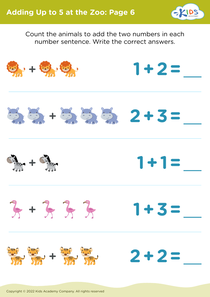
Fine motor skills (writing numbers) Adding in the Sea Worksheets for Ages 3-6
4 filtered results
-
From - To
Discover our "Adding in the Sea Worksheets," designed for children ages 3-6 to develop fine motor skills and number writing proficiency. These engaging and educational printables combine underwater themes with math learning, making addition fun and interactive. Your little learners will practice writing numbers, honing their ability to hold pencils and form digits correctly while adding charming sea creatures. Perfect for preschool and early grade students, these worksheets provide a delightful way to reinforce foundational math skills and fine motor development. Ensure your child's success with our captivating and effective learning resources!
For more details, visit Kids Academy: Adding in the Sea Worksheets 3-6.
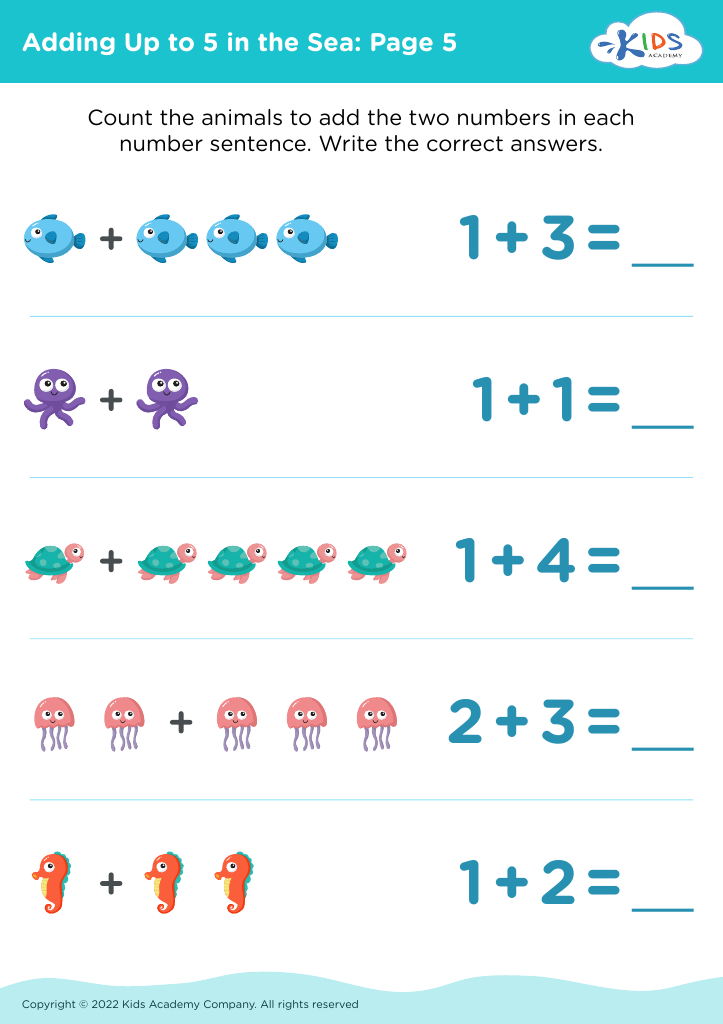
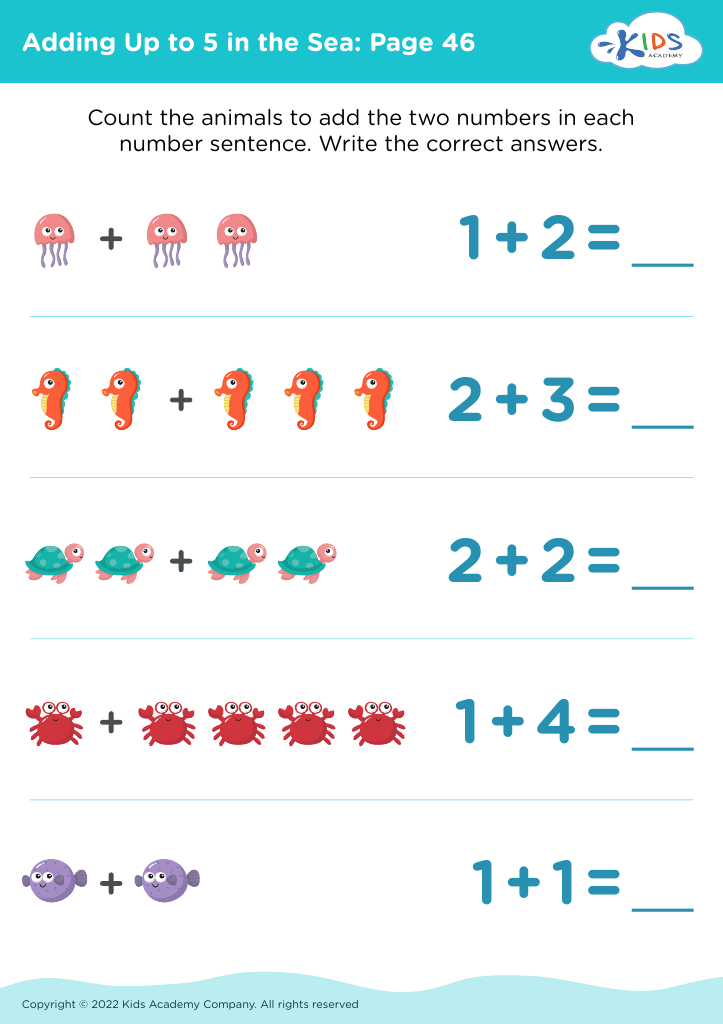
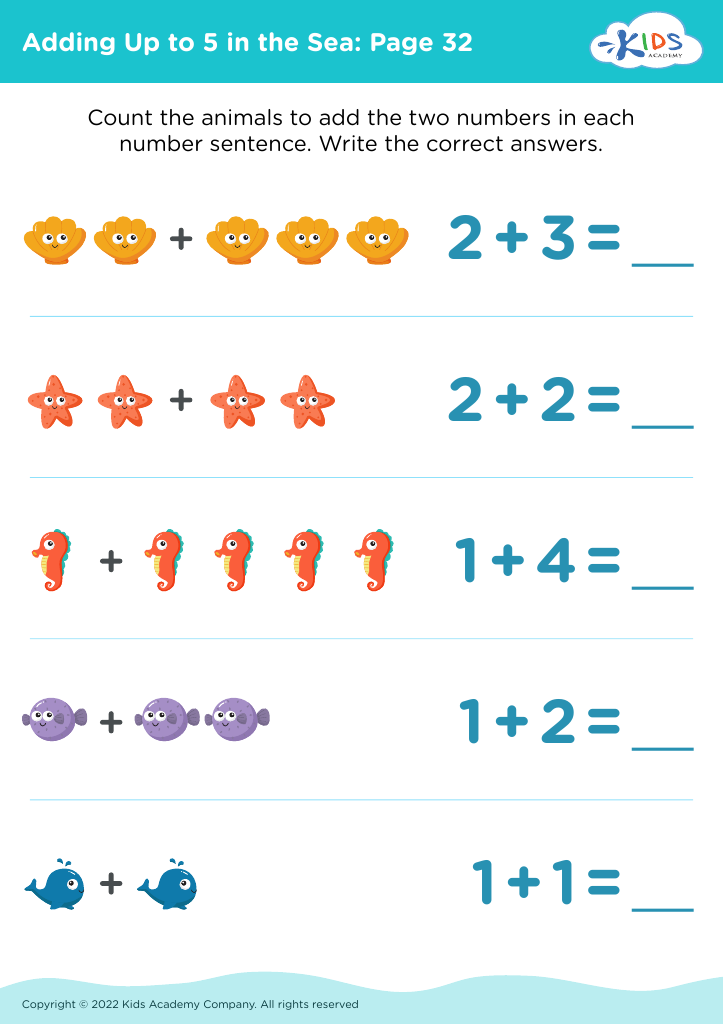
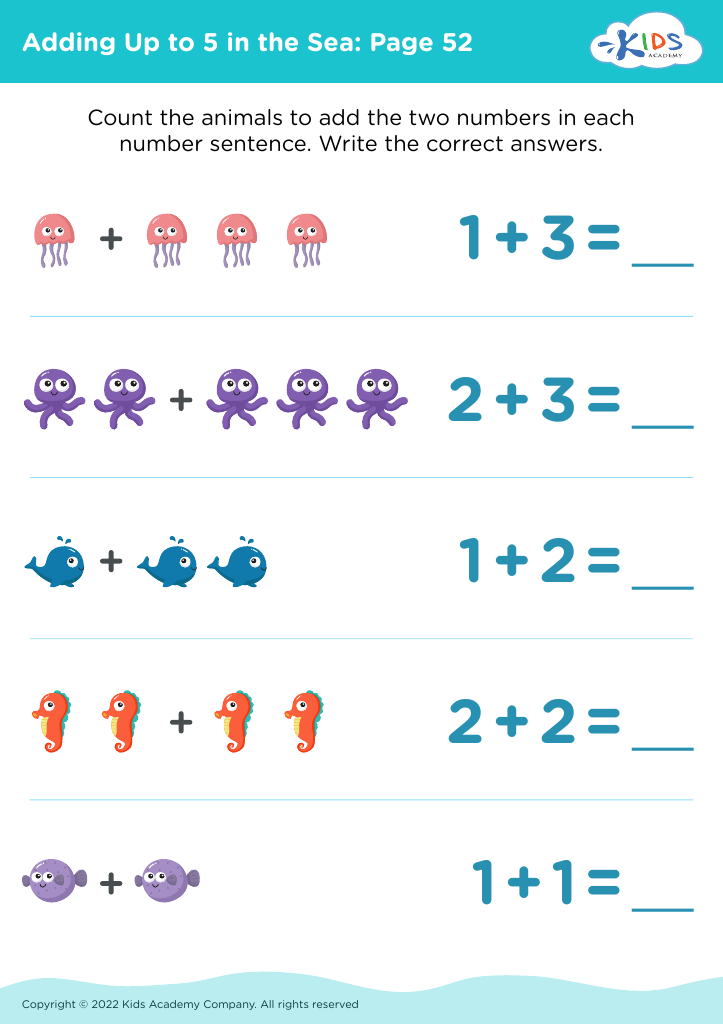



Fine motor skills, which involve the controlled movements of small muscles in the hands and fingers, are crucial for young children aged 3-6. Developing these skills through activities like "writing numbers" and thematic exercises such as "Adding in the Sea" provides a foundational platform for academic success and daily life functioning.
Firstly, fine motor skills are directly linked to early writing abilities. When children practice handwriting numbers, they enhance their dexterity, pencil control, and coordination—essential skills for writing letters and words later on. These abilities build confidence and competence, which are crucial for positive attitudes toward learning.
Secondly, specially themed activities like "Adding in the Sea" make learning engaging and fun. This encourages enthusiasm and longer attention spans among young kids, leading to better grasp and retention of mathematical concepts. Activities involving counting and number writing in a thematic context also develop cognitive skills such as problem-solving, categorization, and memory.
Lastly, fine motor skill activities prepare children for everyday tasks such as buttoning clothes, zipping, and using utensils, fostering independence and self-care. Parents and teachers should thus prioritize fine motor skills to set solid groundwork for academic proficiency, cognitive development, and practical life skills in young children.