Improving concentration Adding in the Sea Worksheets for Ages 3-6
4 filtered results
-
From - To
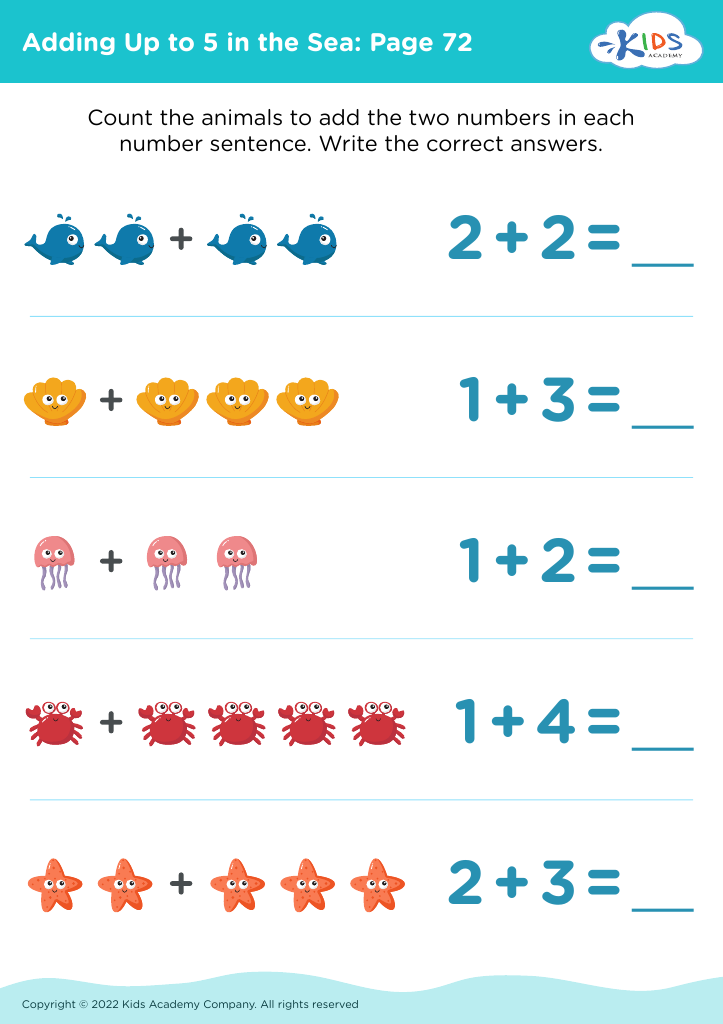
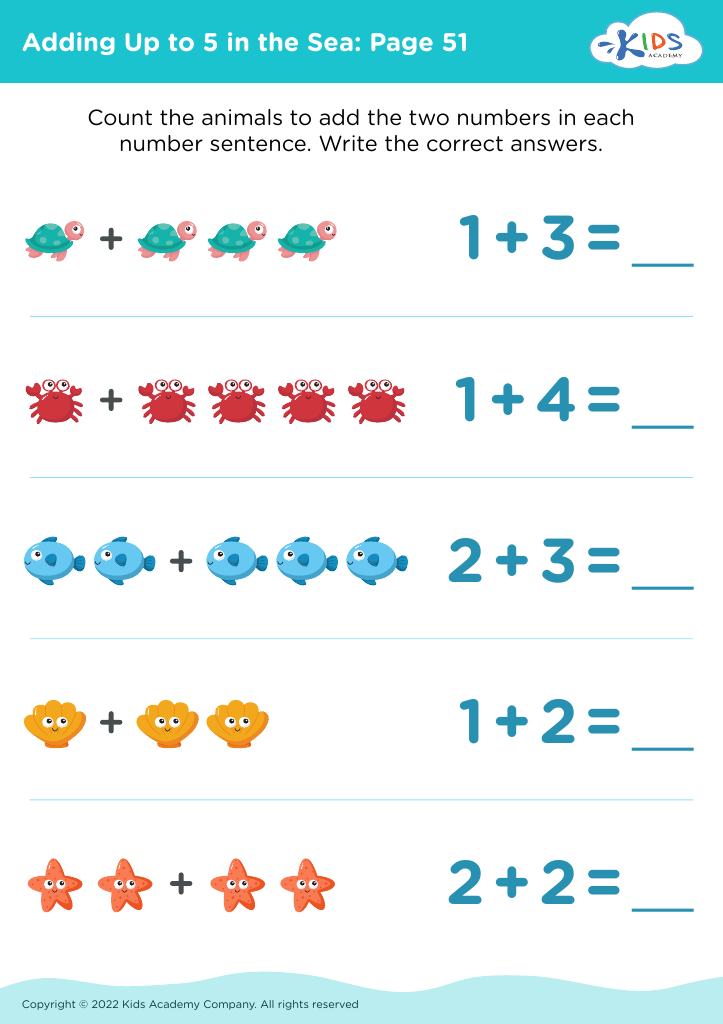
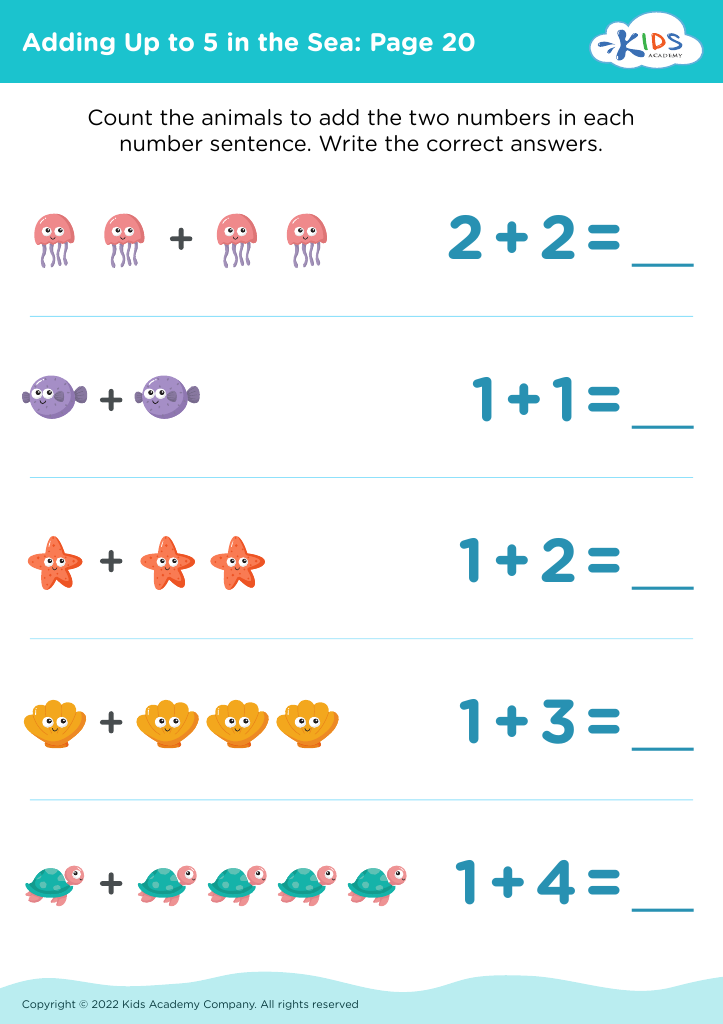
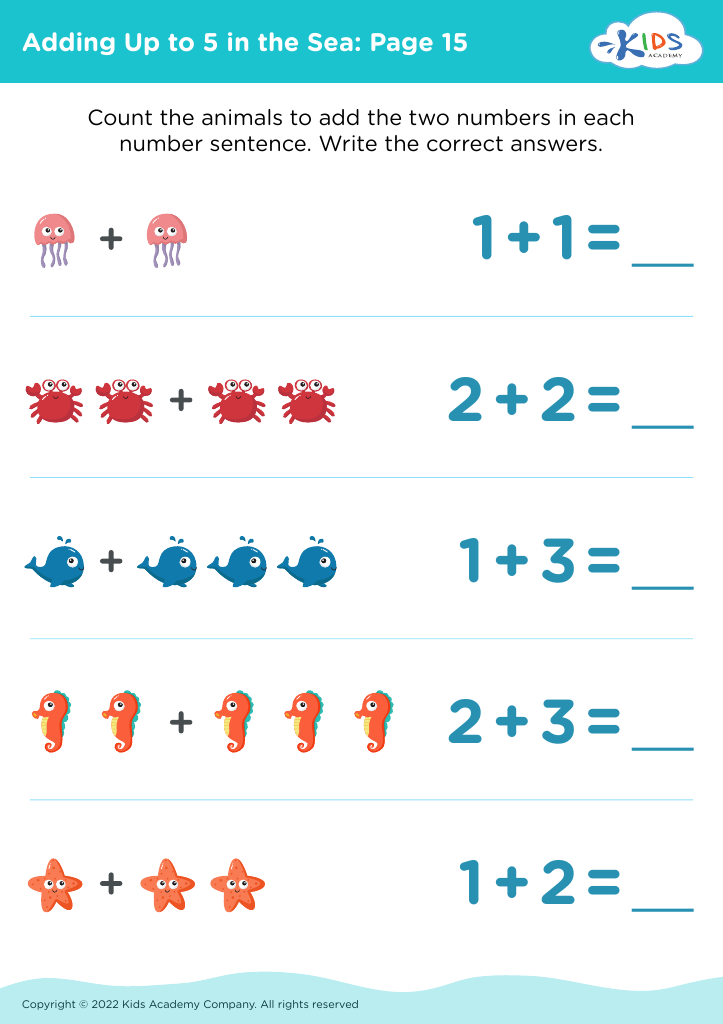
Enhance your child's concentration with our "Adding in the Sea" worksheets, specifically designed for children aged 3-6. These engaging and brightly illustrated printable worksheets from Kids Academy turn math practice into a fun underwater adventure. Through colorful sea-themed activities, young learners can improve focus while mastering basic addition skills. Each worksheet is crafted to capture and maintain their attention, ensuring a productive learning experience. Ideal for both classroom use and homeschooling, these worksheets provide an enjoyable way for kids to develop essential math and concentration skills at an early age. Download now to embark on an educational sea journey!



Parents and teachers should prioritize improving concentration in children aged 3-6 because this foundational skill greatly influences overall development and future academic success. During early childhood, the brain is rapidly growing, forming neural connections essential for learning. Encouraging concentration helps young children develop the ability to focus on tasks for longer periods, enhancing their ability to absorb and process information.
At this age, children are also beginning to acquire critical pre-literacy and numeracy skills. Improved concentration allows them to engage more deeply in activities like listening to stories, recognizing letters and numbers, and following instructions, thus laying a solid foundation for reading and math proficiency.
Moreover, fostering concentration promotes better self-regulation and impulse control. As children learn to focus, they become more patient and capable of delaying gratification, traits important for emotional and social development. This can lead to fewer behavioral issues both at home and in educational settings.
Lastly, strong concentration skills set the stage for lifelong learning. By instilling good focus habits early on, children are more likely to succeed academically in later years, experience less frustration with learning new skills, and develop a love for learning that lasts a lifetime. Consequently, improving concentration is an investment in a child’s holistic growth and long-term success.