Underwater animal identification Adding in the Sea Worksheets for Ages 3-6
3 filtered results
-
From - To
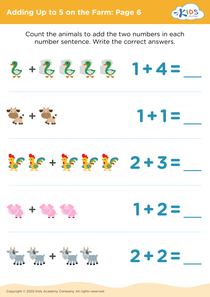
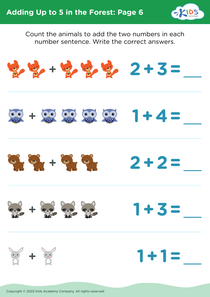
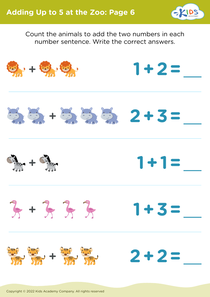
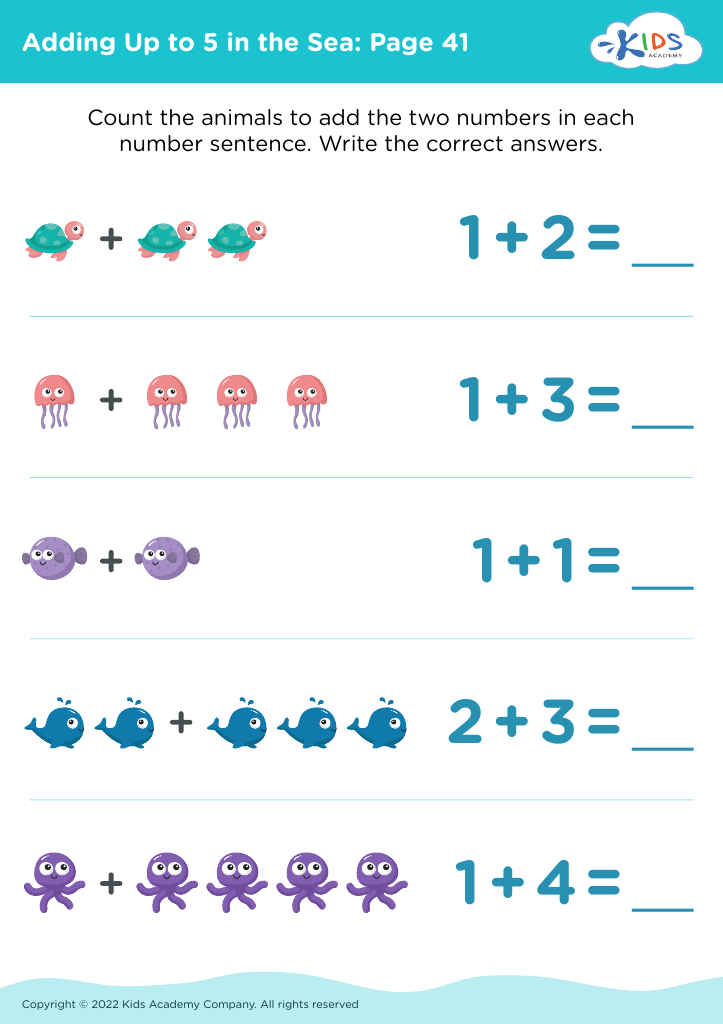
Explore the captivating world of underwater animals with our "Underwater Animal Identification Adding in the Sea Worksheets" for ages 3-6! This engaging resource combines fun marine life themes with essential early math skills. Young learners can identify colorful sea creatures while practicing addition in an interactive way. Our worksheets are designed to enhance cognitive development, improve fine motor skills, and encourage critical thinking. With vibrant illustrations and playful activities, children will have a blast exploring numbers and animals in their ocean-themed adventure. Perfect for enhancing classroom learning or fun at home, these worksheets provide a fantastic way to learn through play!
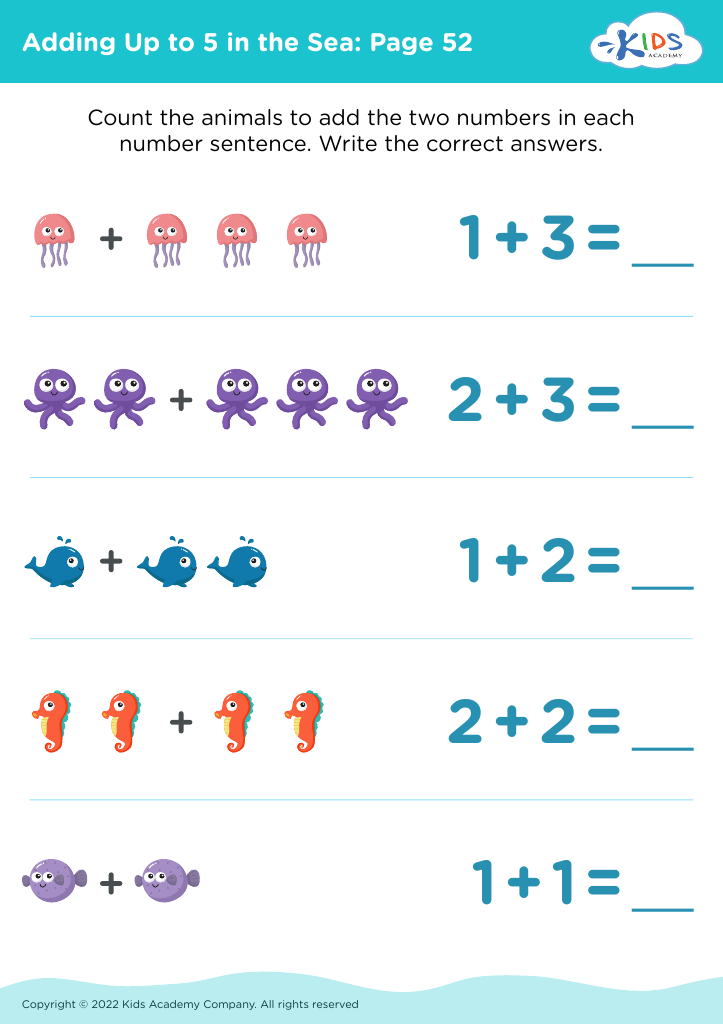
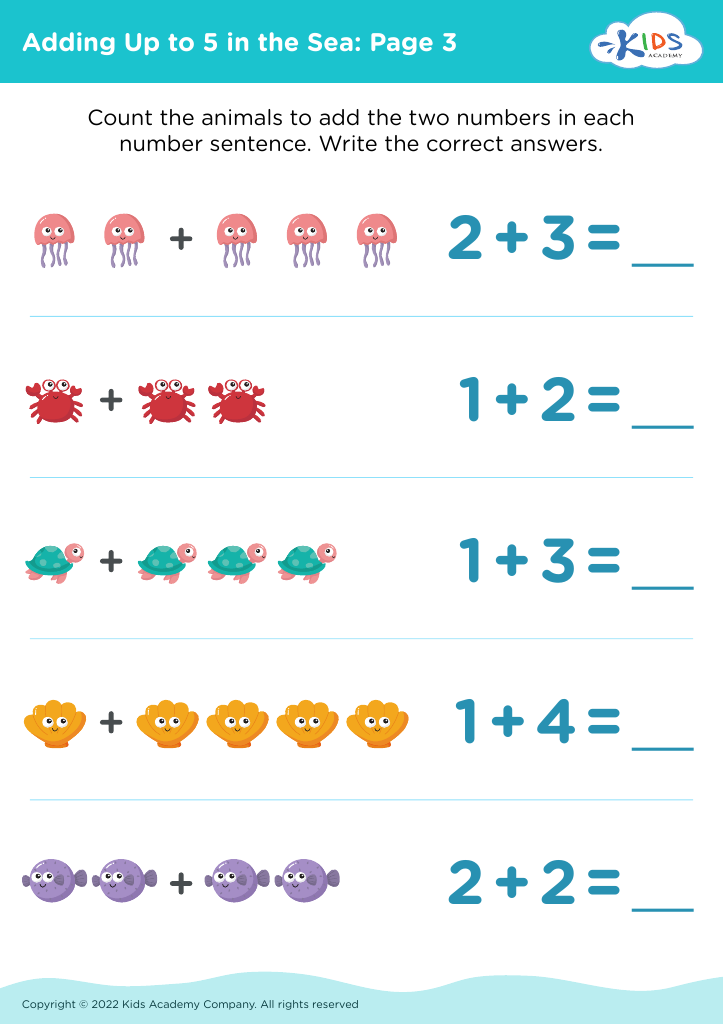



Parents and teachers should care about underwater animal identification for children aged 3-6 for several compelling reasons. First, it nurtures a sense of curiosity and appreciation for marine life, fostering a connection to nature. Young children are naturally inquisitive, and exploring the vibrant world of underwater animals can spark their interest in environmental stewardship from an early age.
Secondly, identifying underwater animals enhances cognitive development. Engaging children in activities that involve observation, categorization, and description promotes critical thinking and vocabulary acquisition. They learn to express themselves as they articulate what they see, thus bolstering their communication skills.
Moreover, early exposure to underwater ecosystems encourages empathy and care for wildlife. Teaching children to recognize various marine species can instill a lifelong respect for the environment, leading to more responsible choices as they grow.
In addition, activities related to underwater animal identification can be fun and interactive, making learning enjoyable. Through games, storytelling, and hands-on crafts, children can develop collaboration and social skills.
Ultimately, introducing young learners to underwater animal identification lays the groundwork for environmental awareness, creativity, and community engagement, which are essential for nurturing responsible, informed future citizens.