Animal recognition Adding on the Farm Worksheets for Ages 3-6 - Page 2
31 filtered results
-
From - To
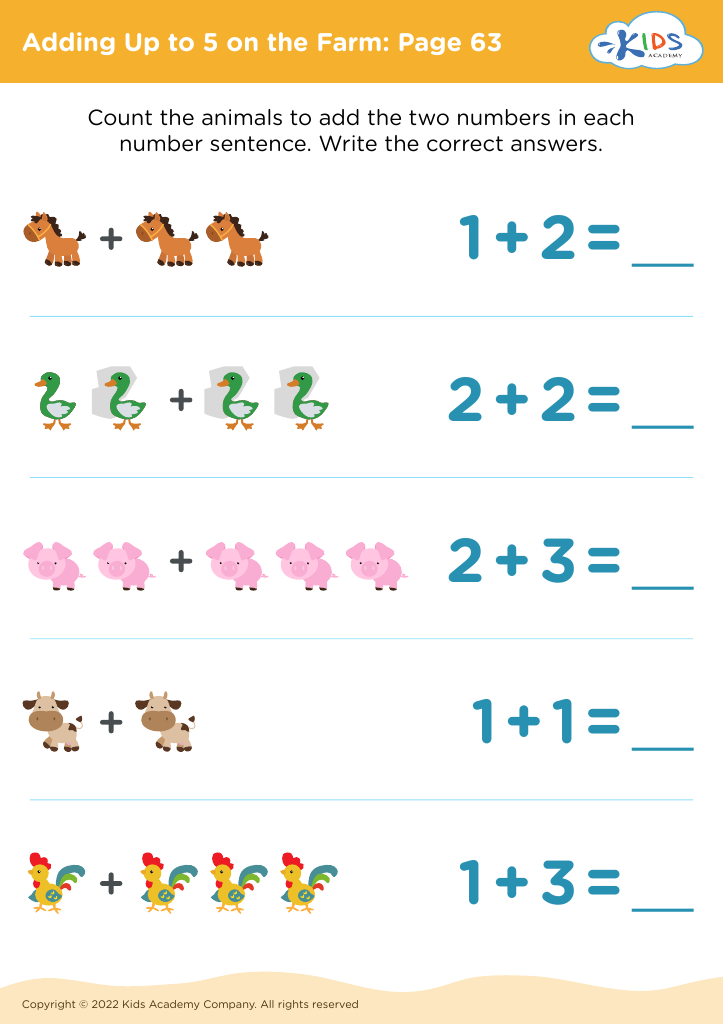
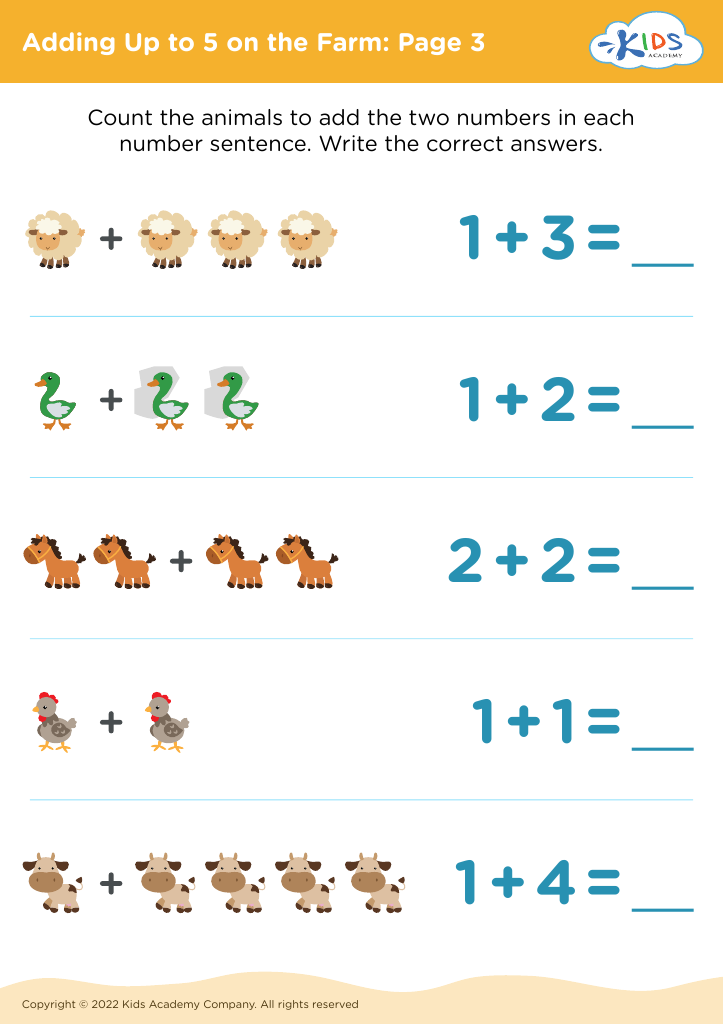
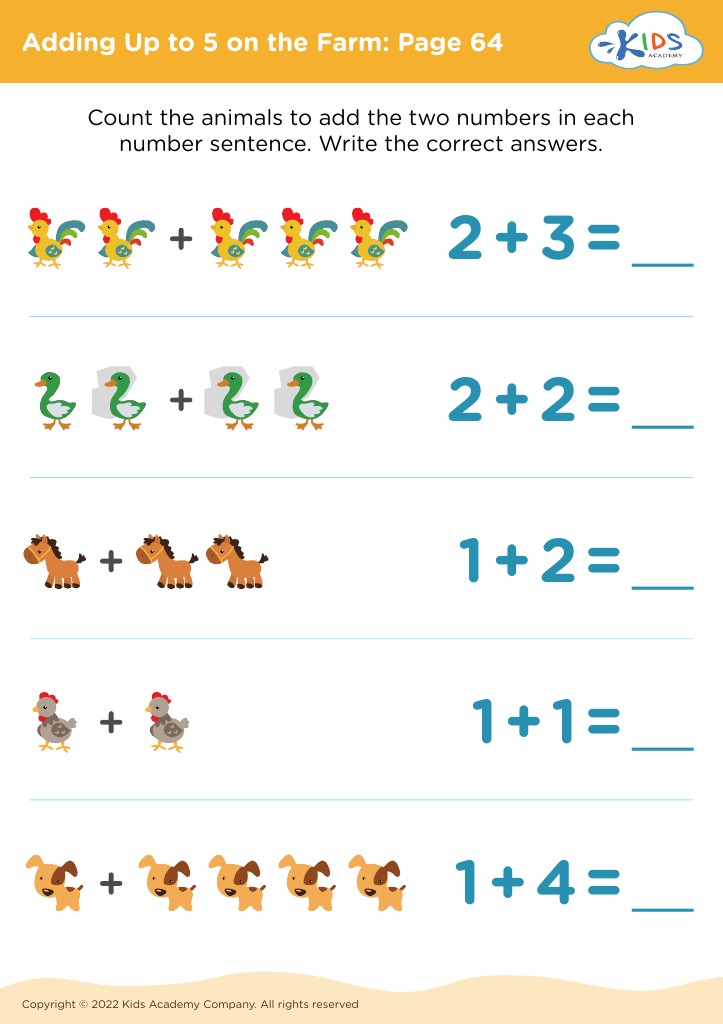
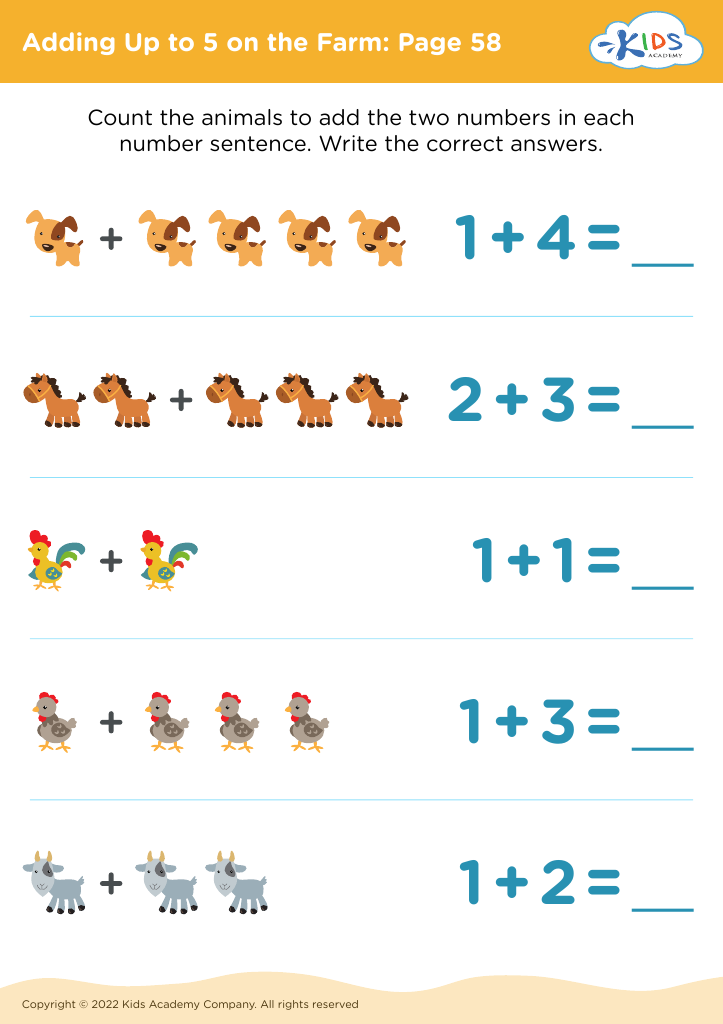
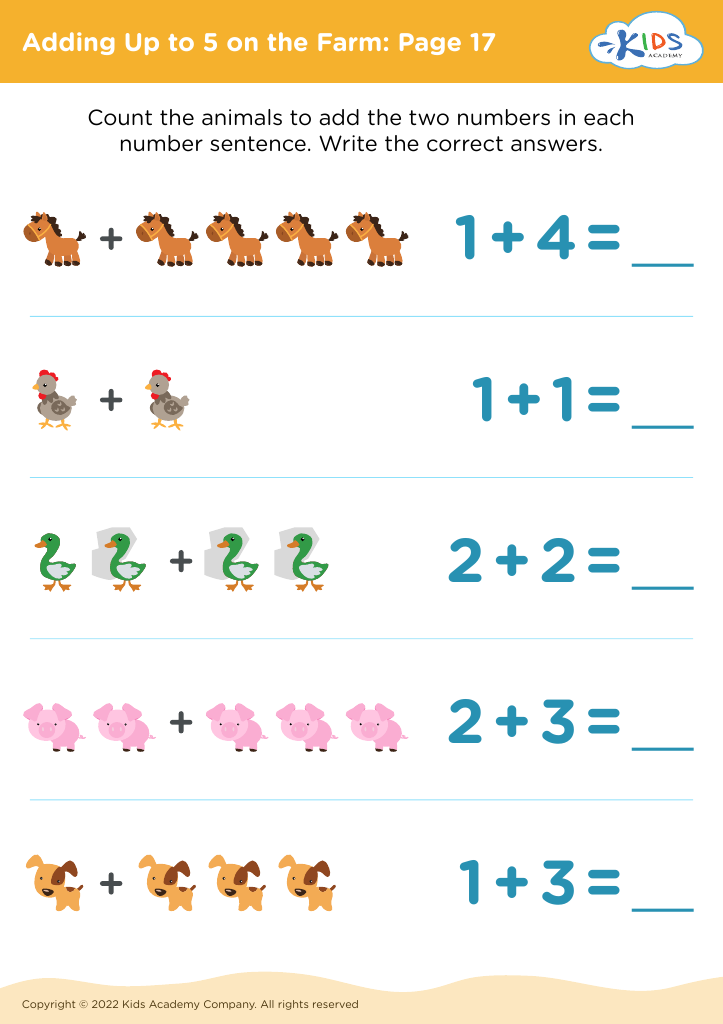
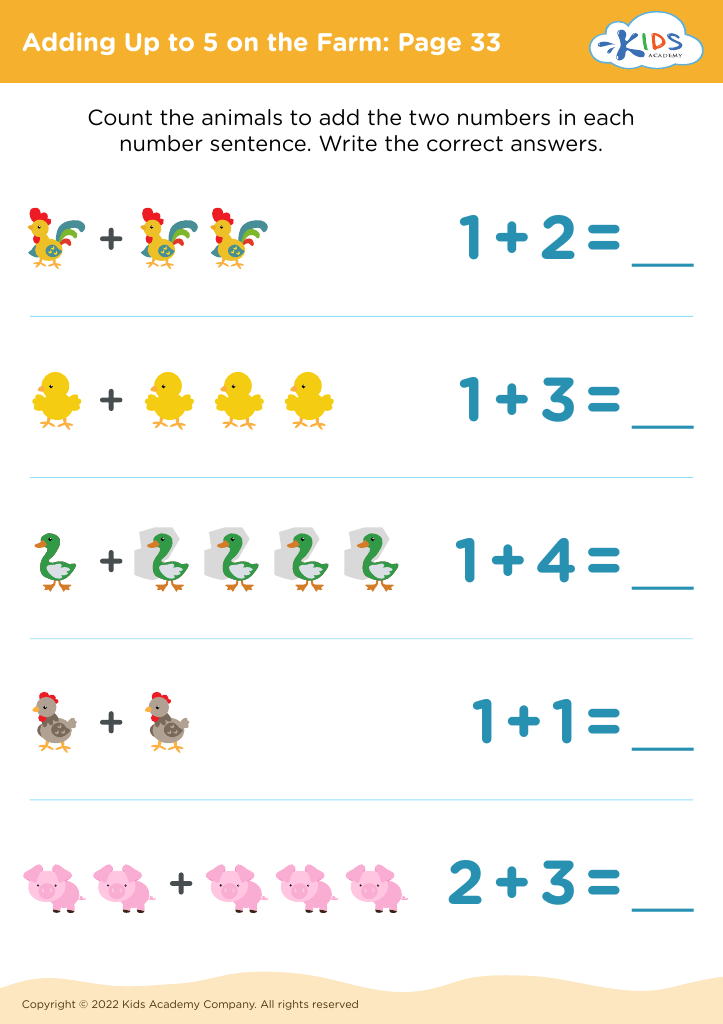
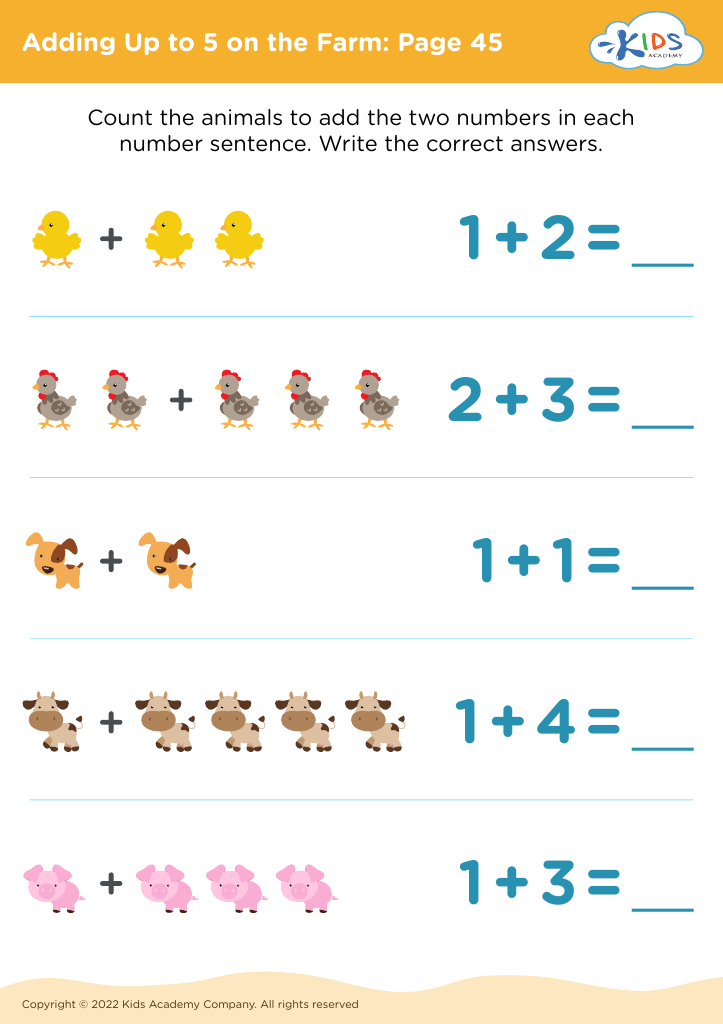



Animal recognition and basic math skills like addition are crucial foundations for young children, typically ages 3-6, as they begin their educational journey. Integrating these concepts on a farm-themed activity can be especially impactful for several reasons.
First, farms offer a diverse array of animals, from cows to chickens, which can captivate children's attention and stimulate their natural curiosity. Recognizing different animals enhances children's observational skills and broadens their understanding of the natural world. As they identify various animals, they also learn related vocabulary, improving their language and communication skills.
Additionally, using farm animals to teach basic math skills like addition introduces children to abstract concepts through concrete, tangible examples. For instance, counting two cows and three chickens to find out the total number of animals provides a fun and meaningful context for addition. This kind of interactive, hands-on learning makes abstract numbers more accessible and comprehensible.
Furthermore, farm activities often inherently incorporate various sensory experiences - touching animal figurines, listening to sounds, or even visiting real farms - enriching learning and memory retention. Emotional bonds with animals can also foster a sense of empathy and respect for living creatures.
Ultimately, by combining animal recognition with early math skills in a farm setting, parents and teachers can offer a holistic, engaging, and enjoyable learning experience that lays the foundation for future academic success and a lifelong love of learning.