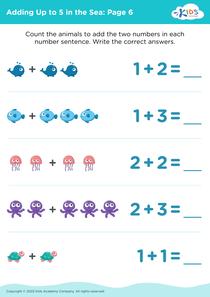
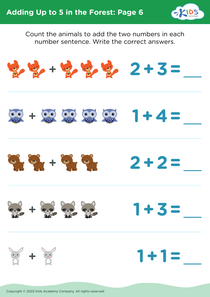
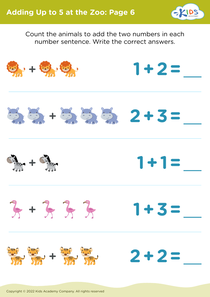
Fine motor skills (writing numbers) Adding on the Farm Worksheets for Ages 3-6
3 filtered results
-
From - To
Enhance your child's math and fine motor skills with our "Adding on the Farm Worksheets for Ages 3-6." Specially designed for preschool to kindergarten children, these engaging sheets focus on writing numbers while adding charming farm-themed graphics. Young learners will have fun improving their number writing abilities, crucial for developing fine motor skills. Ideal for both classroom and home use, our worksheets offer clear instructions and delightful illustrations that captivate children's attention, making learning enjoyable. Give your early math enthusiasts a head-start with these educational, entertaining, and skill-building worksheets!
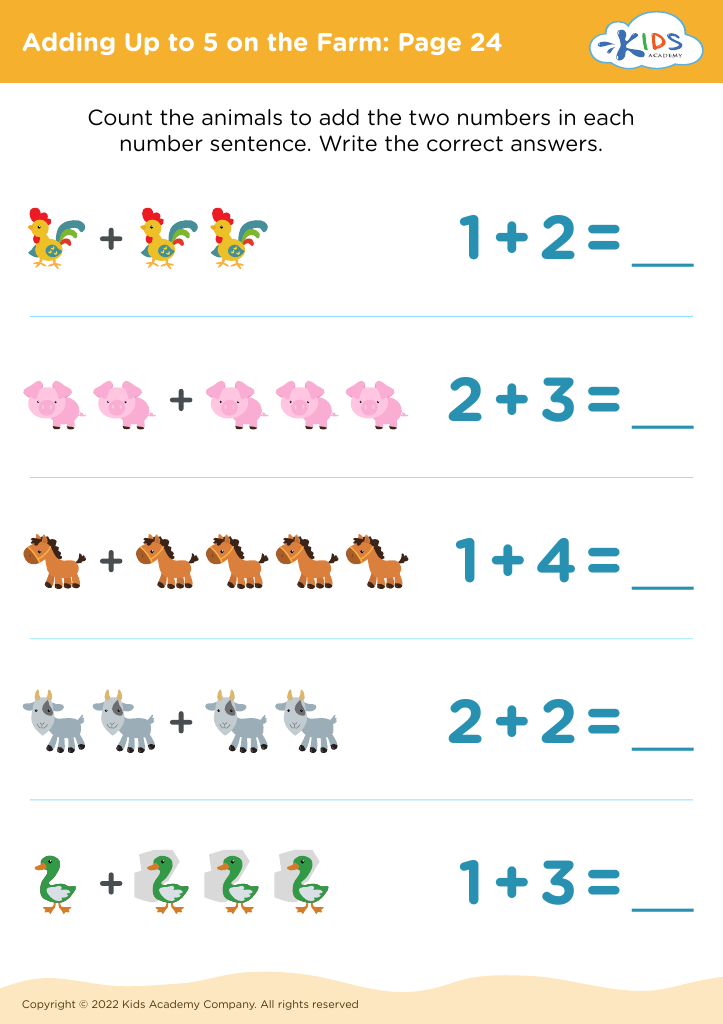
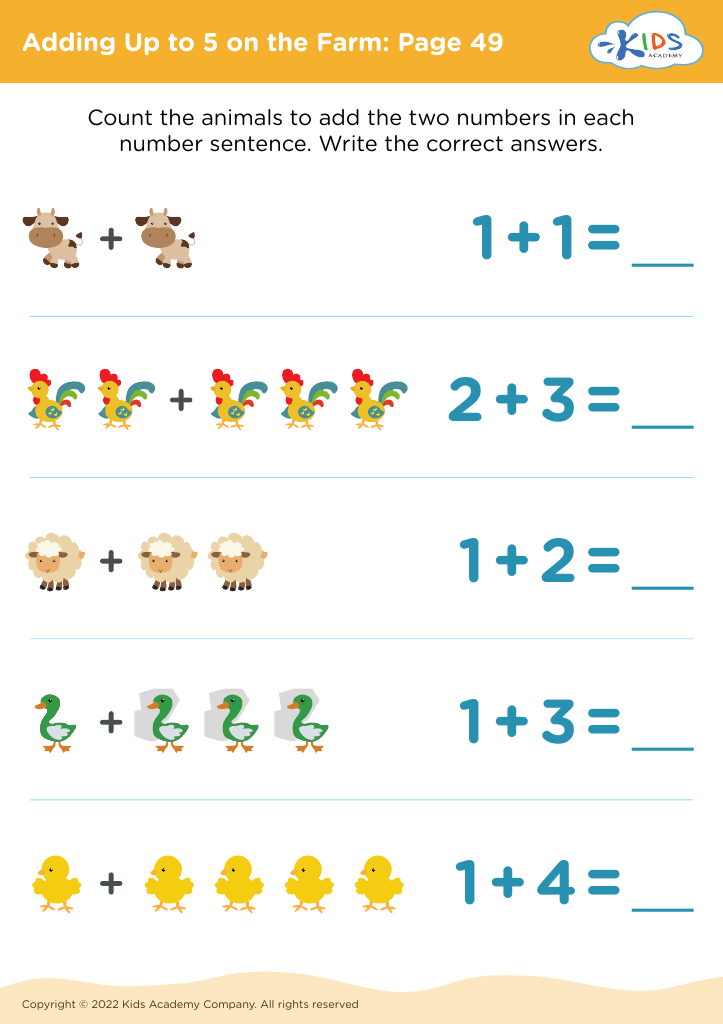
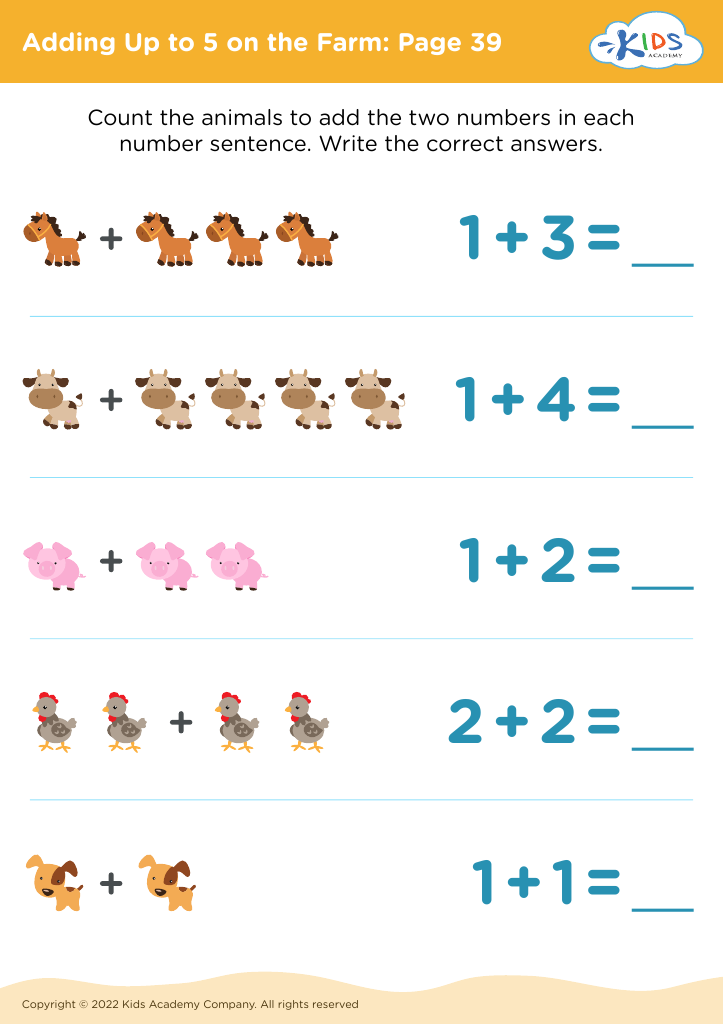



Fine motor skills are essential for early childhood development, enabling children to perform tasks with small movements, such as writing numbers, which require dexterity and coordination. By focusing on activities like "Adding on the Farm" for ages 3-6, parents and teachers can significantly contribute to children’s academic and daily life skills.
Strong fine motor skills enhance the ability to manipulate small objects, a foundational skill for writing, cutting, and buttoning clothes. These activities also strengthen hand muscles and improve control, directly impacting a child's ability to write numbers legibly. Writing numbers are not just a numerical exercise but also a practice in detailed hand-eye coordination and precision, vital for overall handwriting skills.
The thematic activity, "Adding on the Farm," connects motor skills development with early math learning. It encourages children to count and add farm animals or objects, making math concepts tangible and engaging. This dual focus supports cognitive growth and makes learning fun and relevant.
In sum, developing fine motor skills through engaging activities builds a foundation for later success in school and daily tasks. By integrating it with themed, educational content, parents and teachers can foster a holistic developmental approach that benefits a child's academic journey and practical life skills.