Problem-Solving Skills Adding on the Farm Worksheets for Ages 3-6
8 filtered results
-
From - To
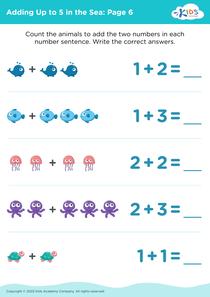
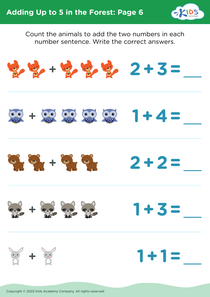
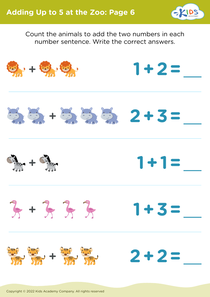
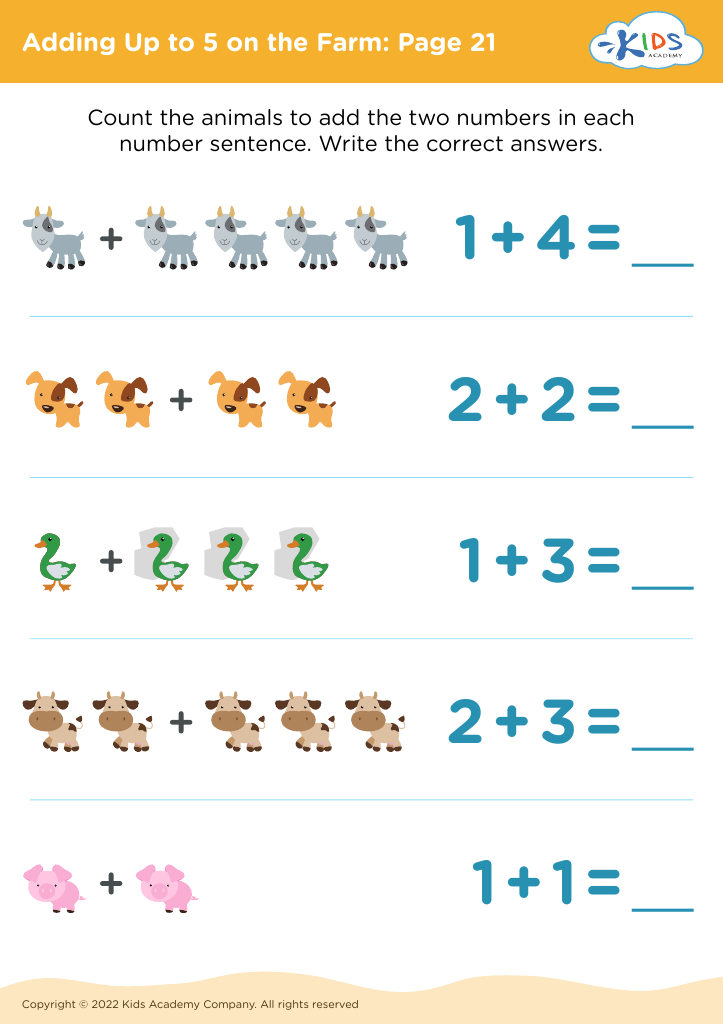
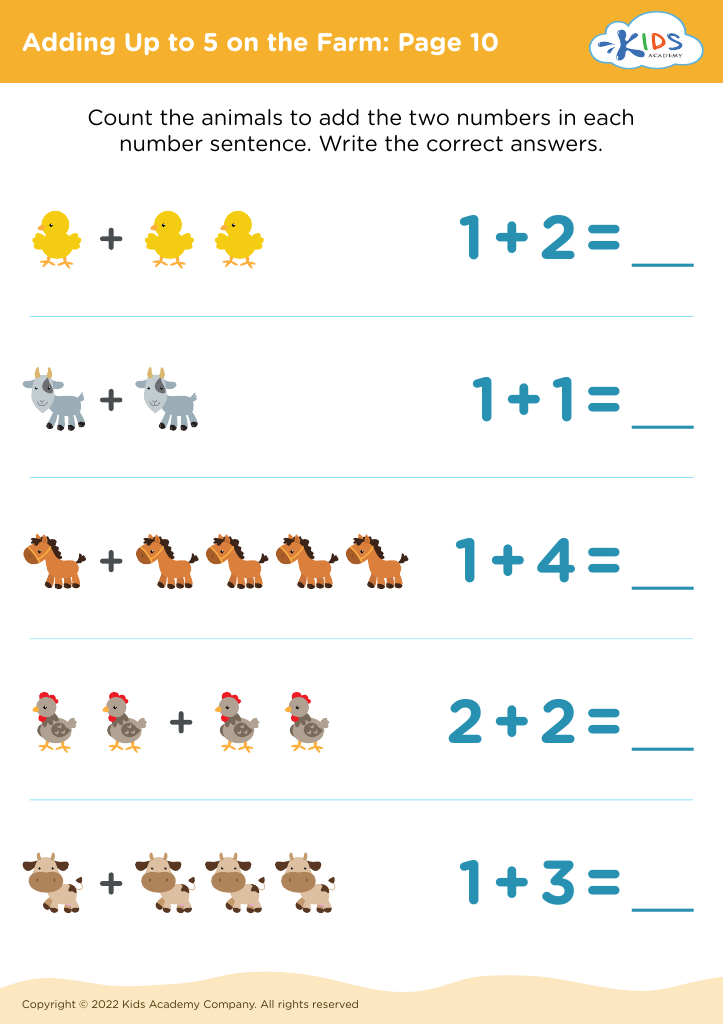
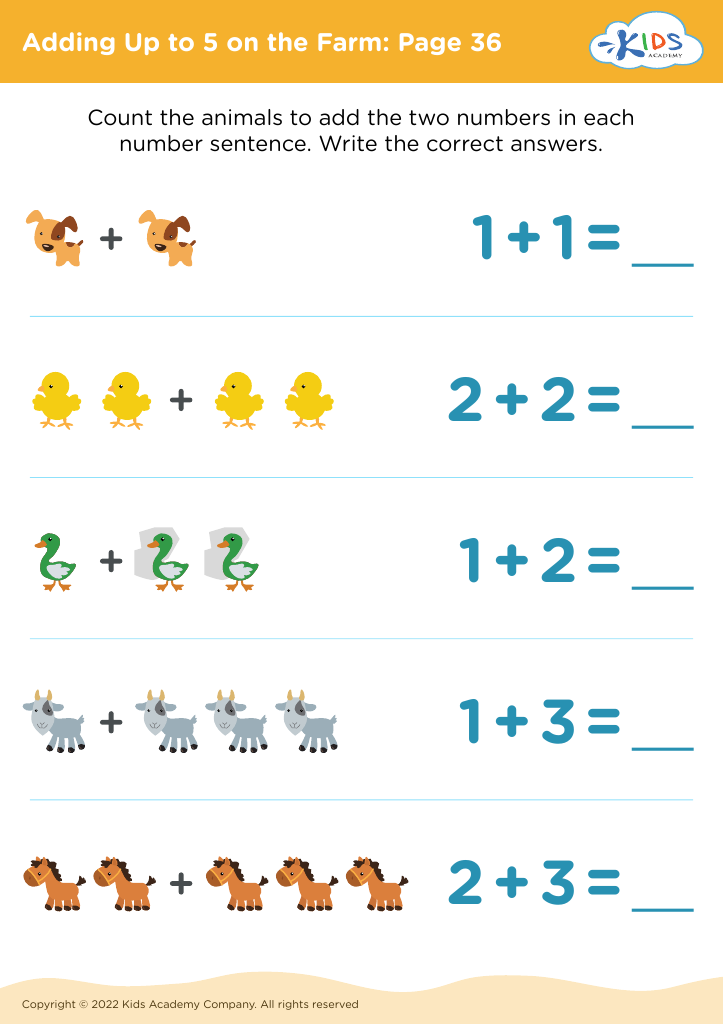
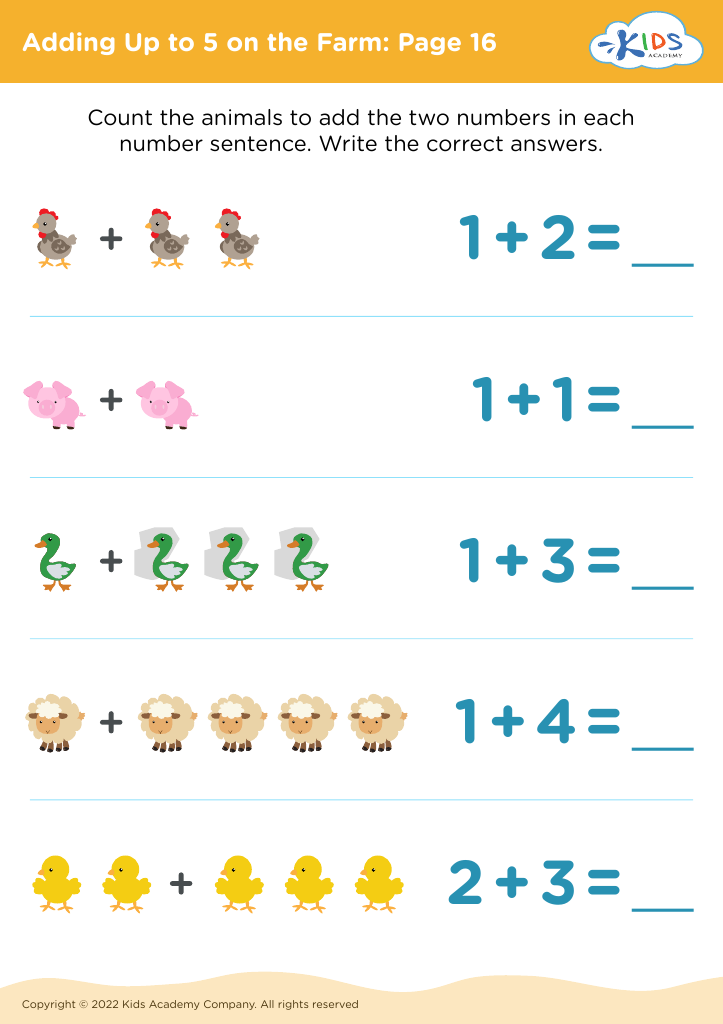
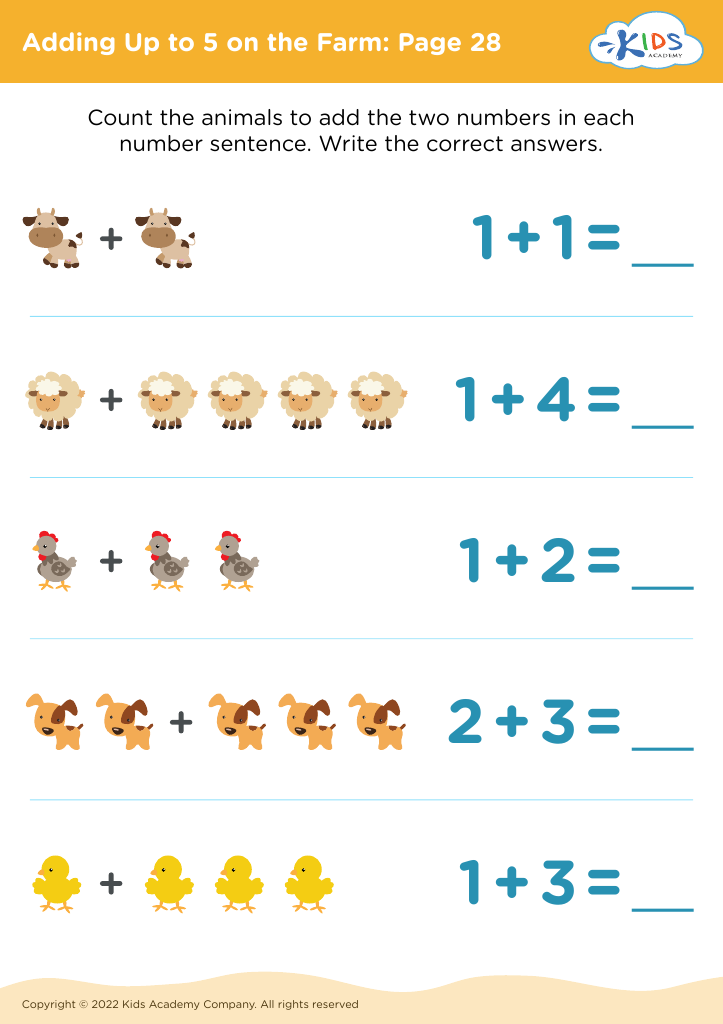
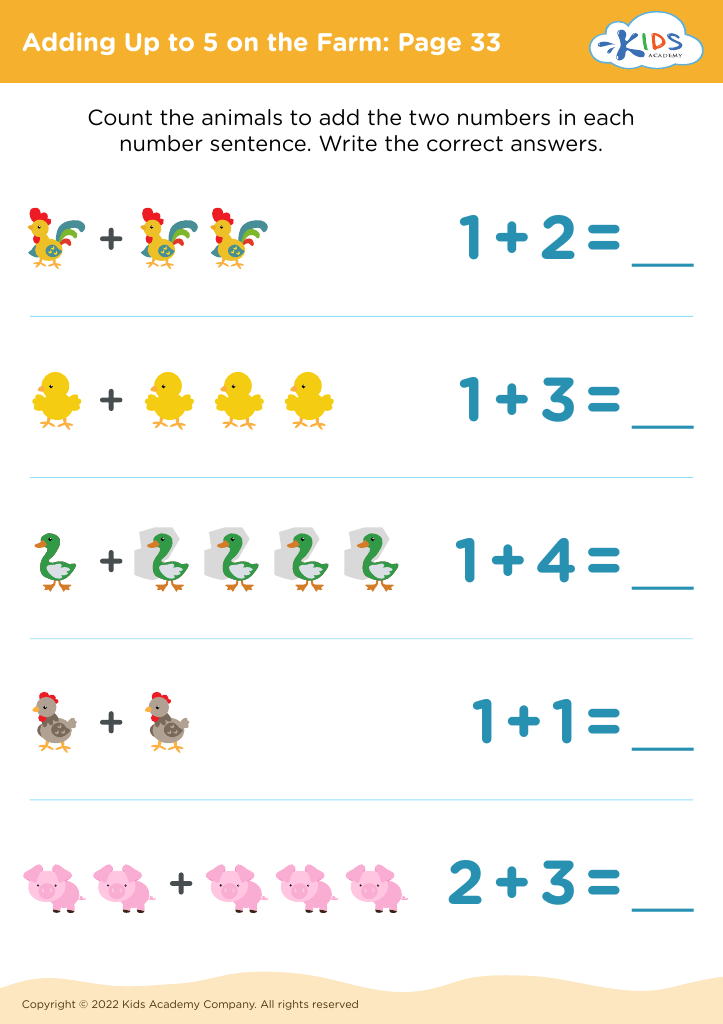
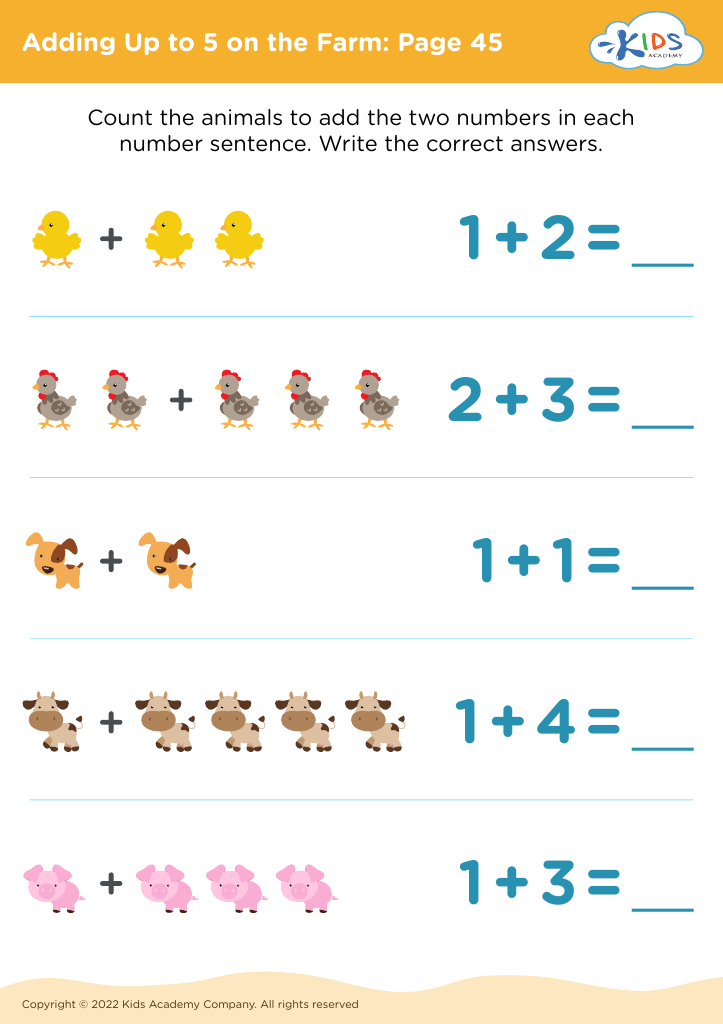
Enhance your child's problem-solving skills with our "Adding on the Farm" worksheets, designed for ages 3-6. These engaging activities introduce basic math concepts by incorporating fun farm-related themes that captivate young learners. Your little ones will practice addition through interactive exercises, fostering critical thinking as they navigate various challenges. Each worksheet encourages independent exploration while building foundational math skills in a playful environment. With colorful illustrations and relatable scenarios, children will love learning as they embark on their farm adventure! Perfect for parents and educators, these worksheets promote cognitive development and lay the groundwork for future success in mathematics.
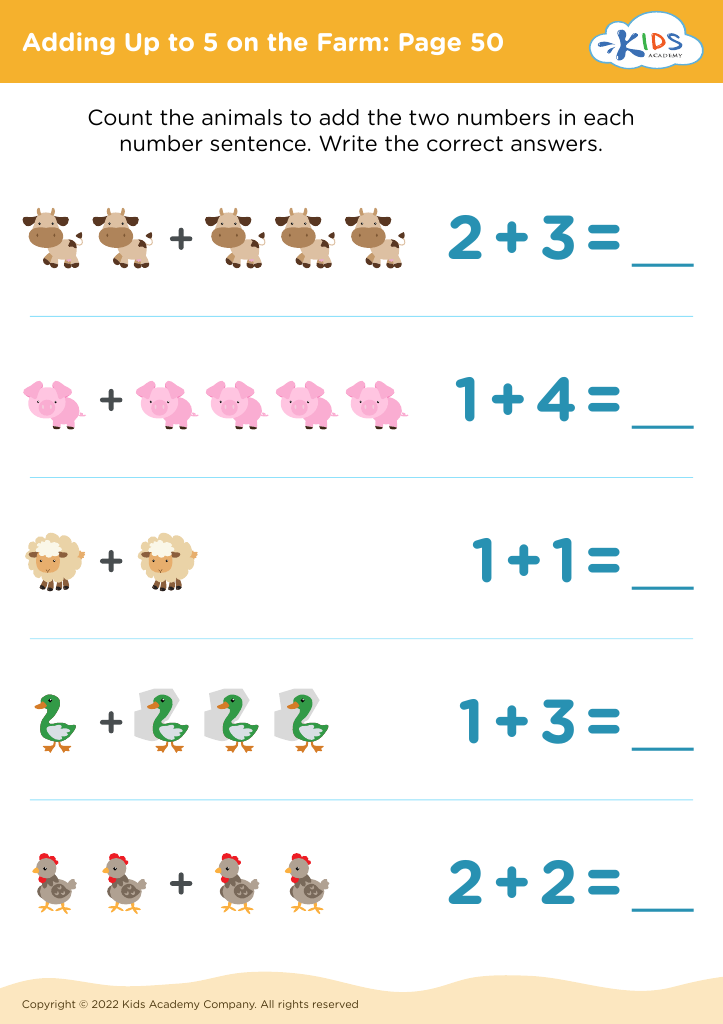



Problem-solving skills are vital for young children, particularly those aged 3-6, as they form the foundation for critical thinking and cognitive development. Engaging children in problem-solving activities, especially in a farm setting, allows them to explore real-world scenarios. For example, sorting fruits and vegetables or figuring out how to care for animals introduces them to basic mathematics and science concepts, fostering curiosity and inquiry.
Moreover, developing problem-solving skills at a young age enhances resilience and adaptability. Children learn to navigate challenges through trial and error, understanding that mistakes are part of the learning process. This promotes a growth mindset, enabling them to tackle difficulties as they progress in their education.
Additionally, farm-based activities encourage collaboration and communication among peers, teaching children the importance of teamwork. In a natural setting, children can also connect with the environment, learning about sustainability and the food cycle.
For parents and teachers, supporting a child’s problem-solving skills helps them cultivate independent thinkers equipped to handle future academic and social challenges. By fostering these skills early, they are laying a strong foundation for lifelong learning and successful interactions in a diverse society. Therefore, incorporating problem-solving activities into young children's routines is essential for their holistic development.