






.jpg)
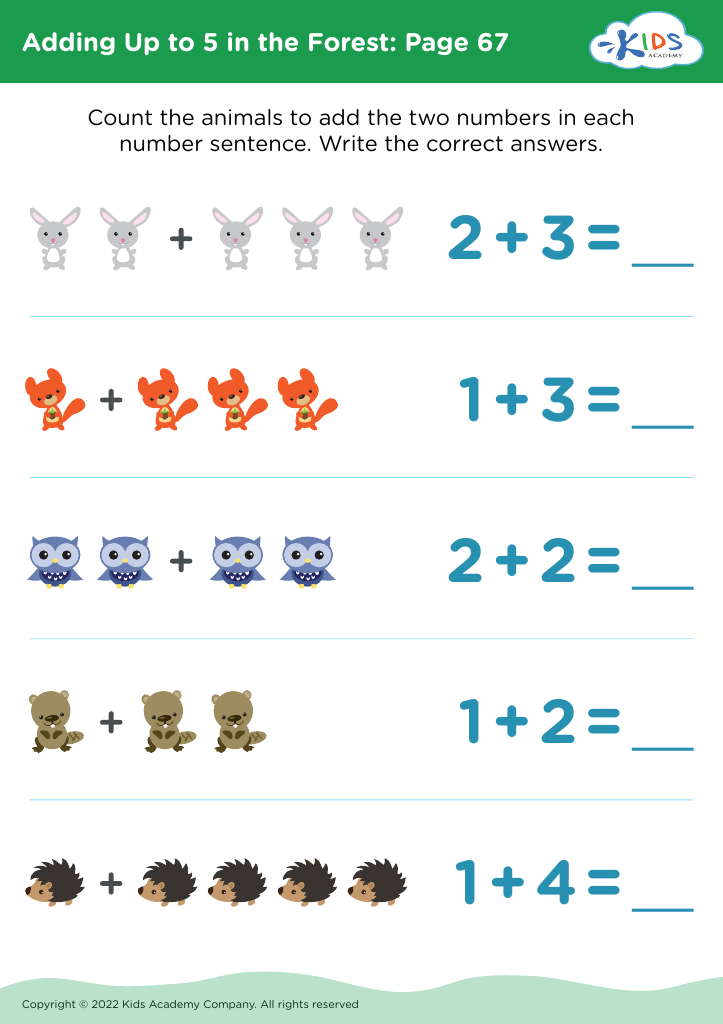
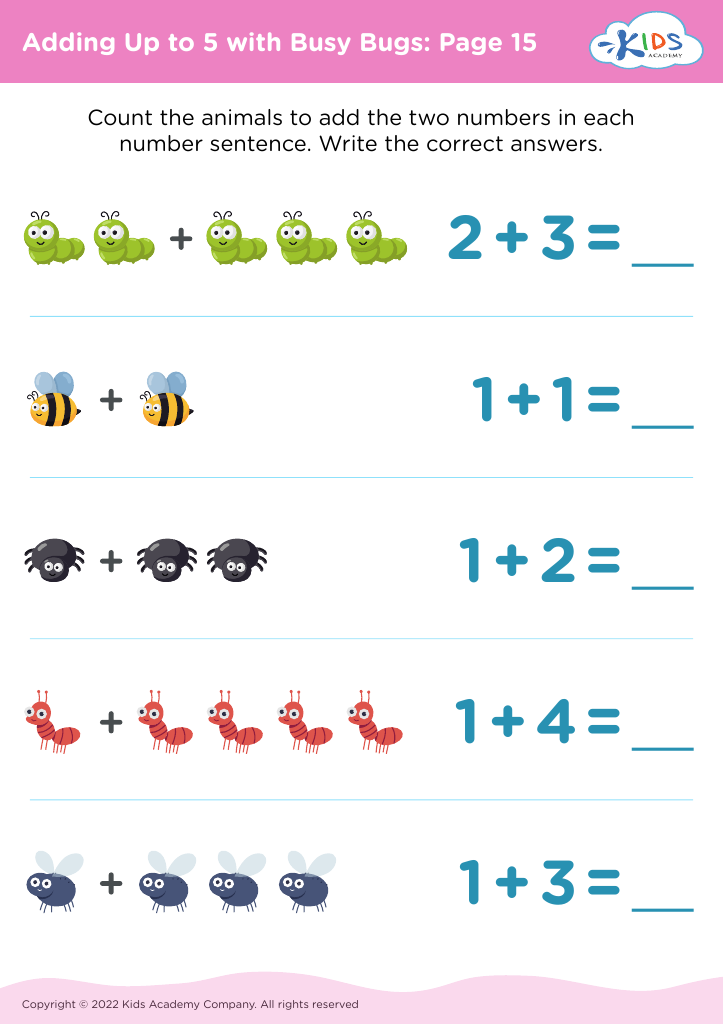
Addition practice, particularly focusing on adding up to 5, is crucial for young learners aged 3-6 for several reasons. This foundational skill helps children understand basic mathematics, laying the groundwork for future mathematical concepts. At this early stage, children are naturally curious and eager to learn, making it the perfect time to introduce simple addition through engaging methods.
Practicing addition in this age group enhances cognitive abilities, including problem-solving and critical thinking. It also fosters number sense, which is the ability to understand and work with numbers effectively. Learning to add up to 5 allows children to grasp the concept of quantity and how numbers relate to each other in everyday situations.
For parents and teachers, emphasizing this skill encourages confidence in children as they develop their math capabilities. Participating in fun, interactive activities builds a positive association with math, making it less intimidating. Additionally, early math skills are linked to academic success later in life, highlighting the long-term benefits of addition practice. Ensuring children grasp these basic concepts sets them on a path to becoming proficient in math, paving the way for more complex mathematical challenges as they grow.








