Addition up to 5 Adding Up to 5 Worksheets for Ages 3-6
4 filtered results
-
From - To
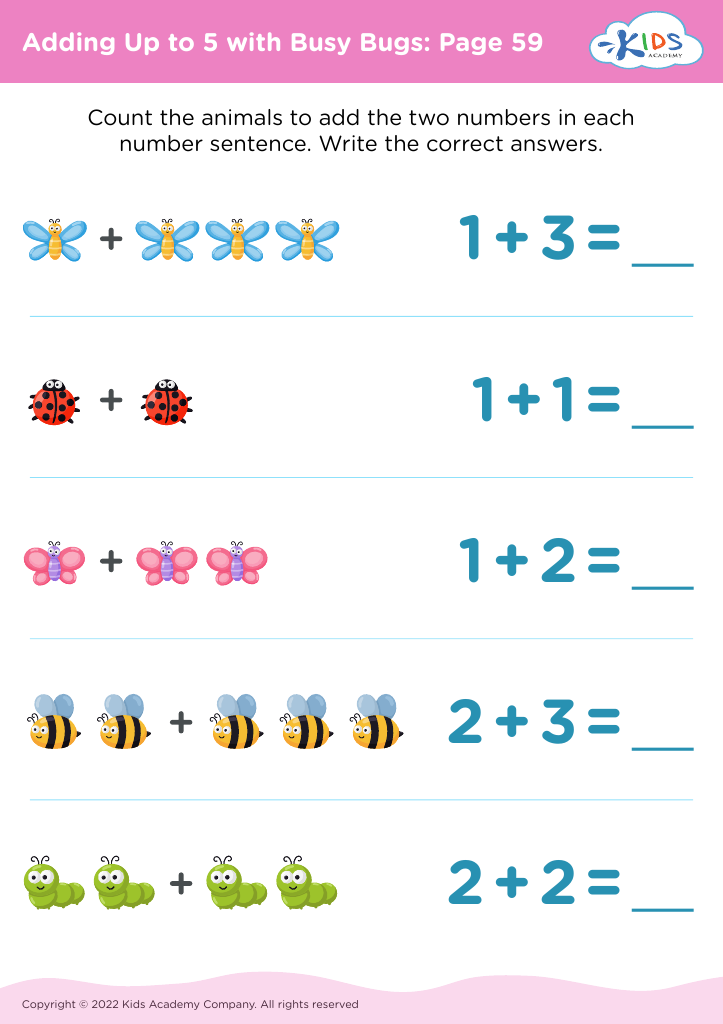
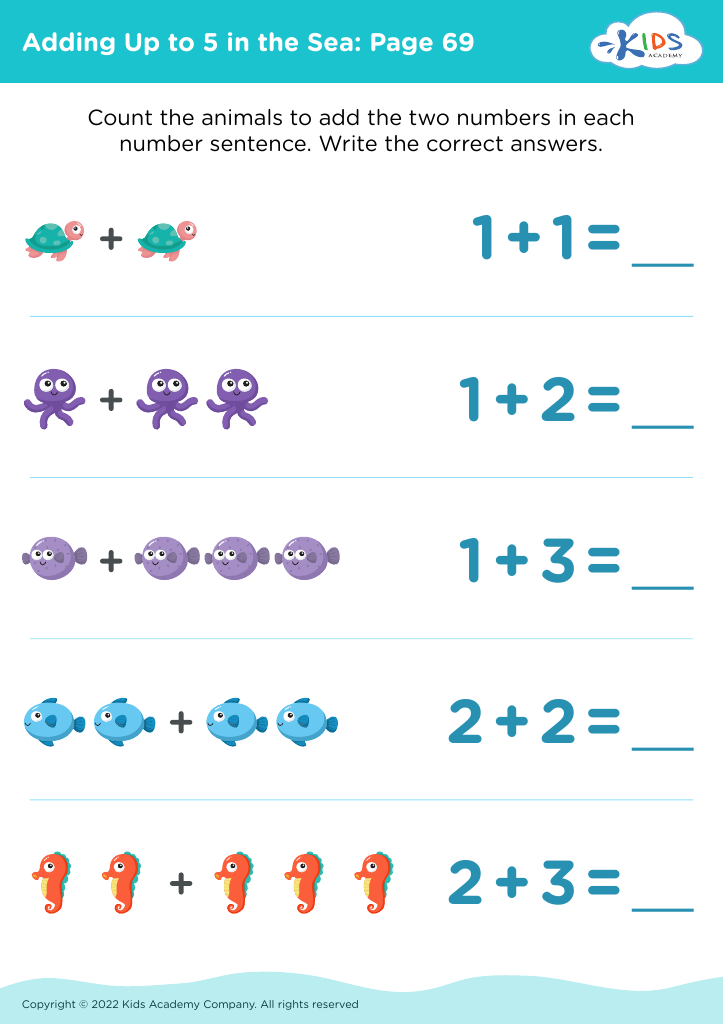
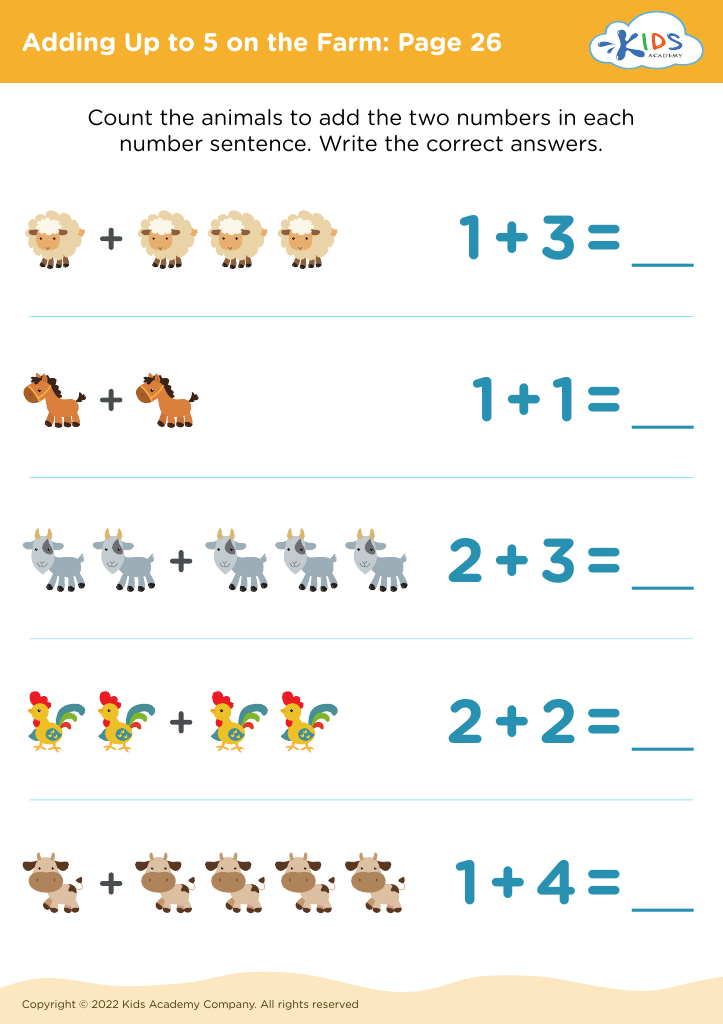
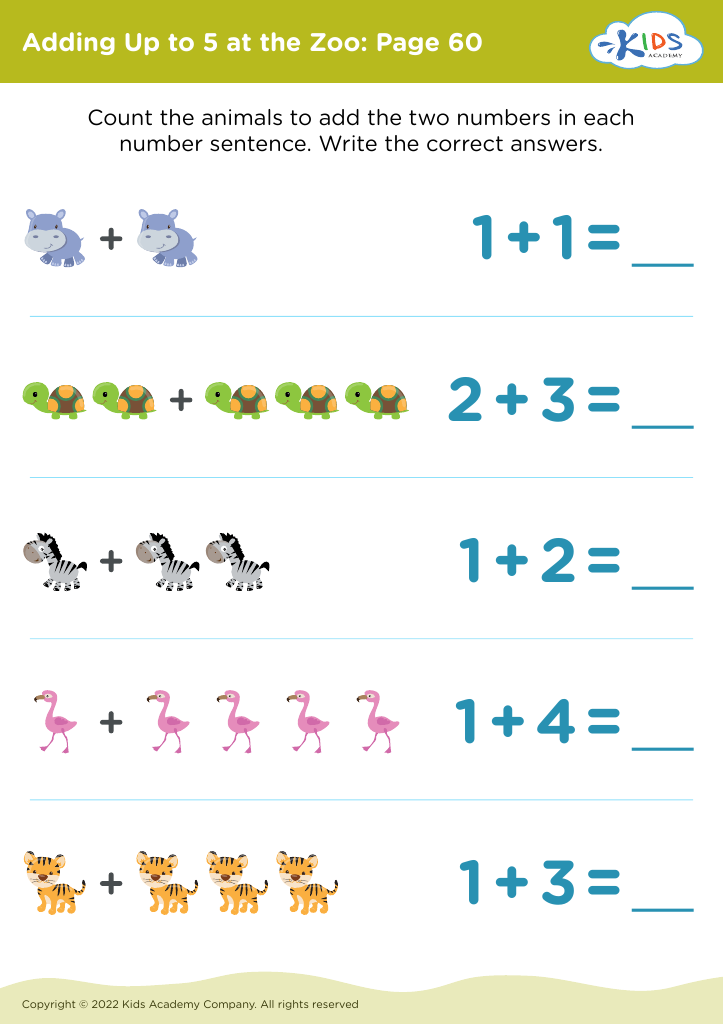
Welcome to our "Addition up to 5" worksheets for ages 3-6, designed to make early math learning fun and engaging! These interactive worksheets introduce young learners to the basics of addition, focusing on sums up to 5. Each worksheet features colorful illustrations and simple exercises that encourage counting, recognition of numbers, and problem-solving skills. From counting objects to completing simple equations, these activities foster a foundational understanding of addition while promoting fine motor skills. Perfect for at-home practice or classroom use, our resource will help your little ones build confidence in math. Start their learning journey with us today!



%20(1).jpg)




Understanding addition up to 5 is a fundamental building block for young children aged 3-6, as it lays the groundwork for all future mathematical learning. At this developmental stage, children are naturally curious about numbers and how they fit together. Teaching them to add numbers up to 5 enhances their number sense, enabling them to recognize patterns and relationships between numbers.
When parents or teachers focus on addition up to 5, they engage children in practical, hands-on activities that make learning enjoyable and meaningful. This can involve using everyday objects, such as blocks or fruits, to physically add items together, thereby reinforcing the concept through visual and tactile experiences.
Moreover, mastering addition fosters confidence in young learners. White they are successful in solving simple addition problems, they build a positive mindset toward math, making it less intimidating as they progress to more complex concepts later.
Overall, a strong grasp of basic addition not only supports early numeracy skills but also cultivates critical thinking, problem-solving abilities, and a love for learning—qualities that carry into future academic pursuits. Therefore, prioritizing this foundational skill is essential for parents and teachers alike.








