Check out this FREE Trial Lesson on Adding Up to 5 for age 3-6!

P

Favorites
With answer key
Interactive
  • 3-6
  • Basic Addition Skills
  • Adding Up to 5
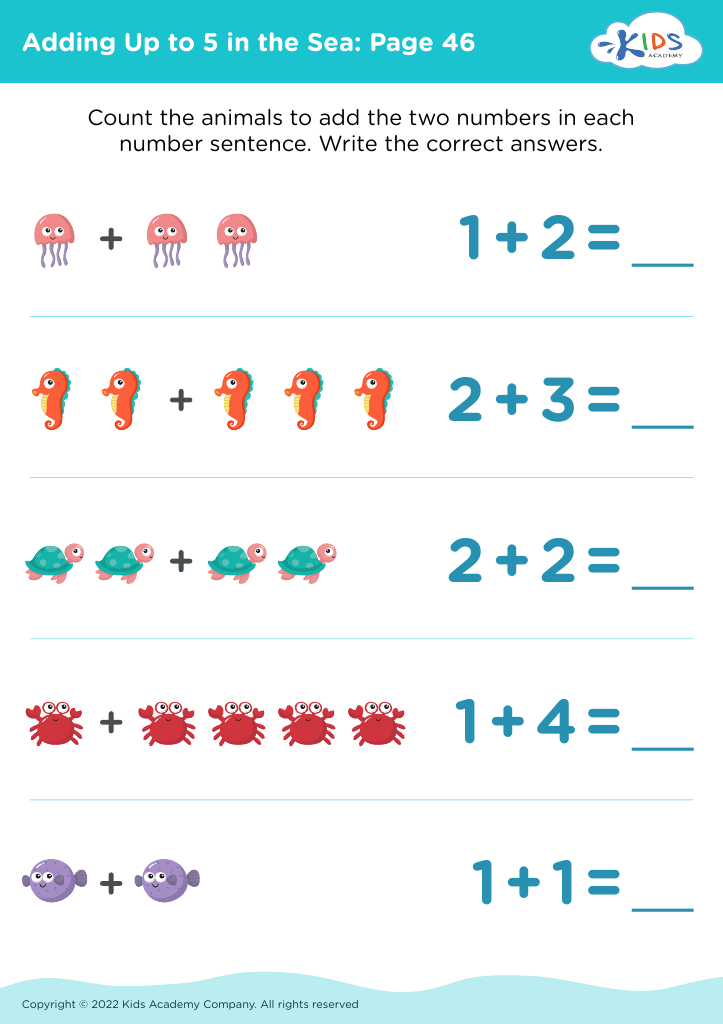
Adding Up to 5 in the Sea: Page 46
Worksheet
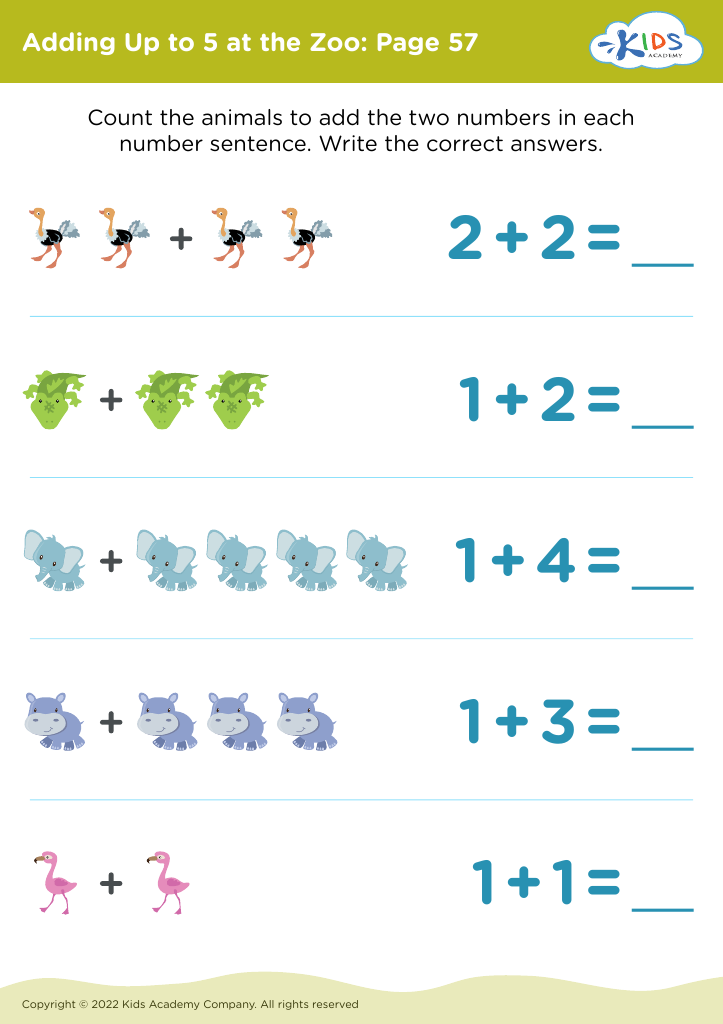
Adding Up to 5 at the Zoo: Page 57
Worksheet
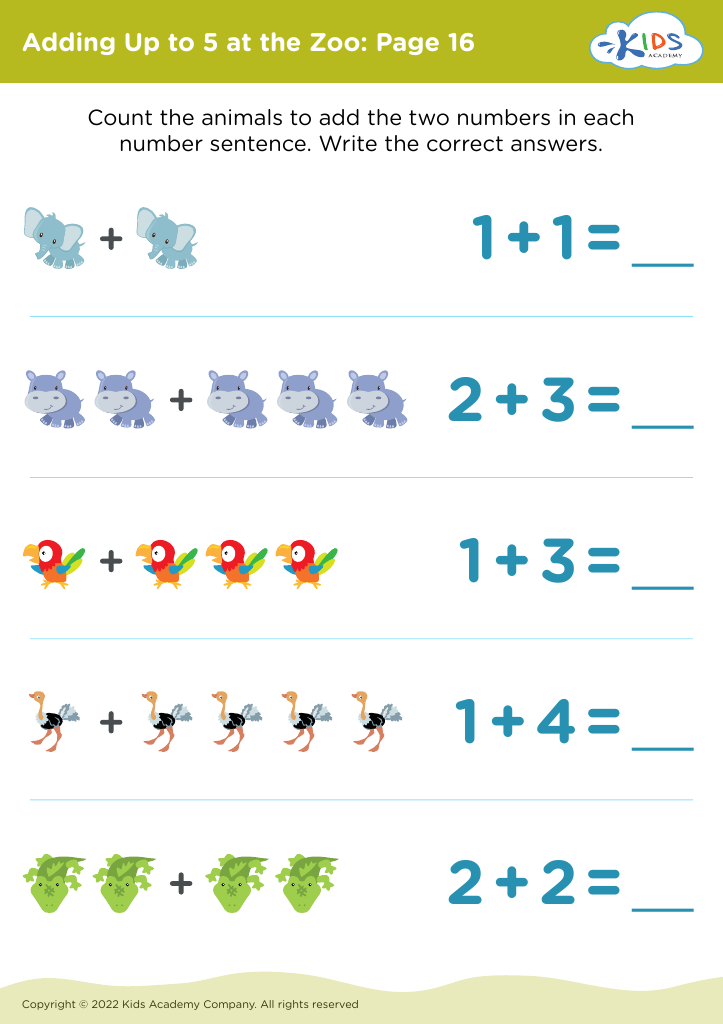
Adding Up to 5 at the Zoo: Page 16
Worksheet
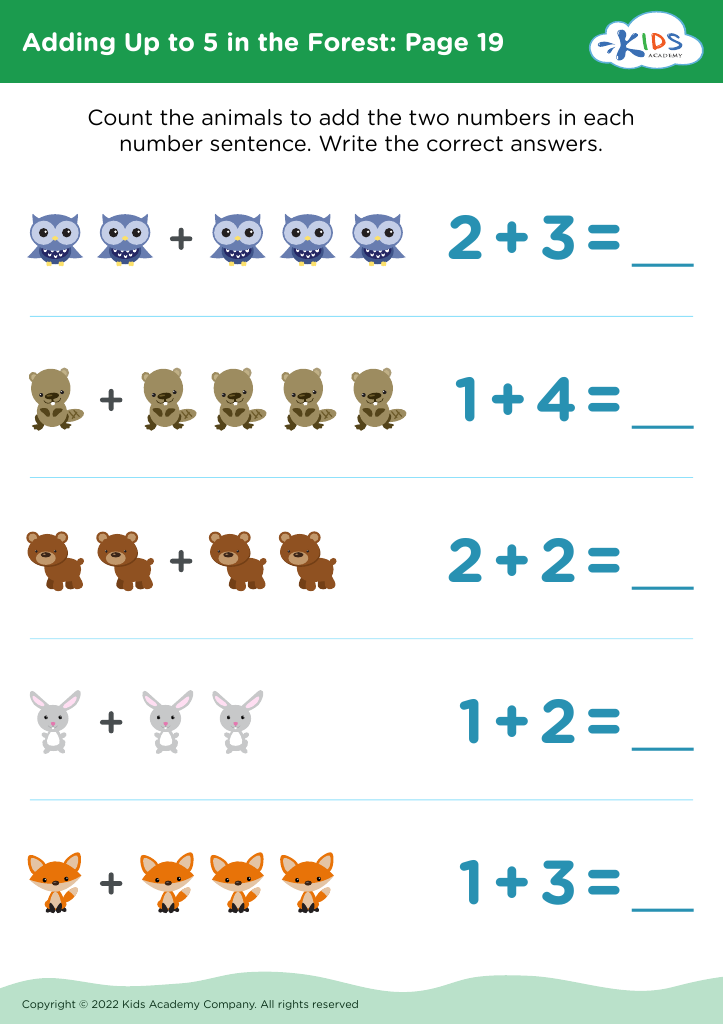
Adding Up to 5 in the Forest: Page 19
Worksheet
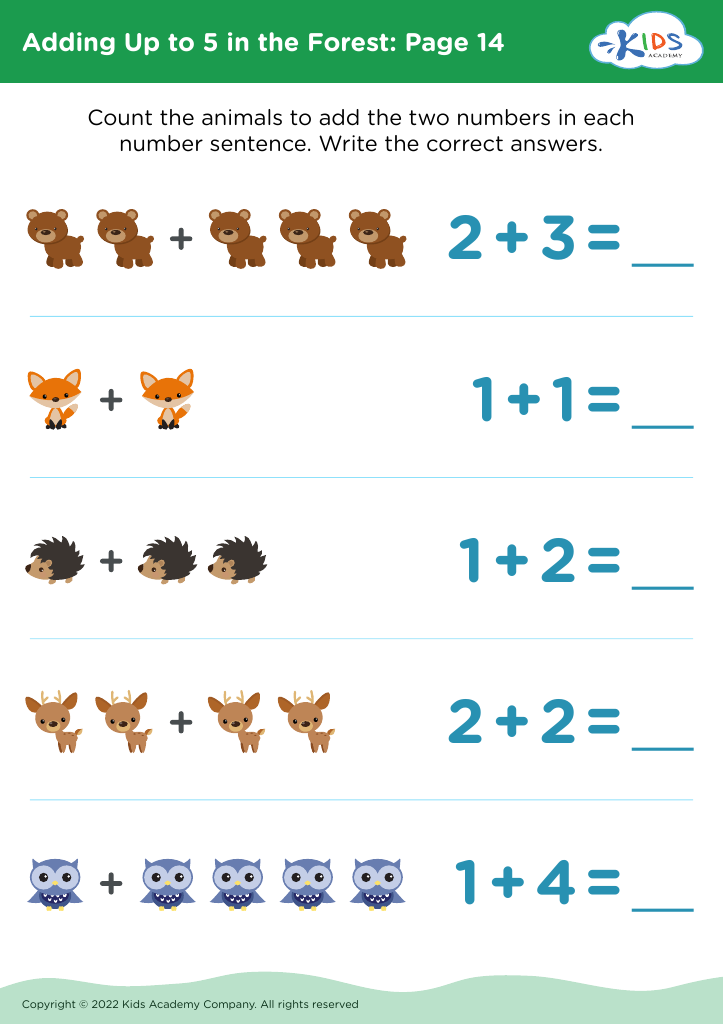
Adding Up to 5 in the Forest: Page 14
Worksheet
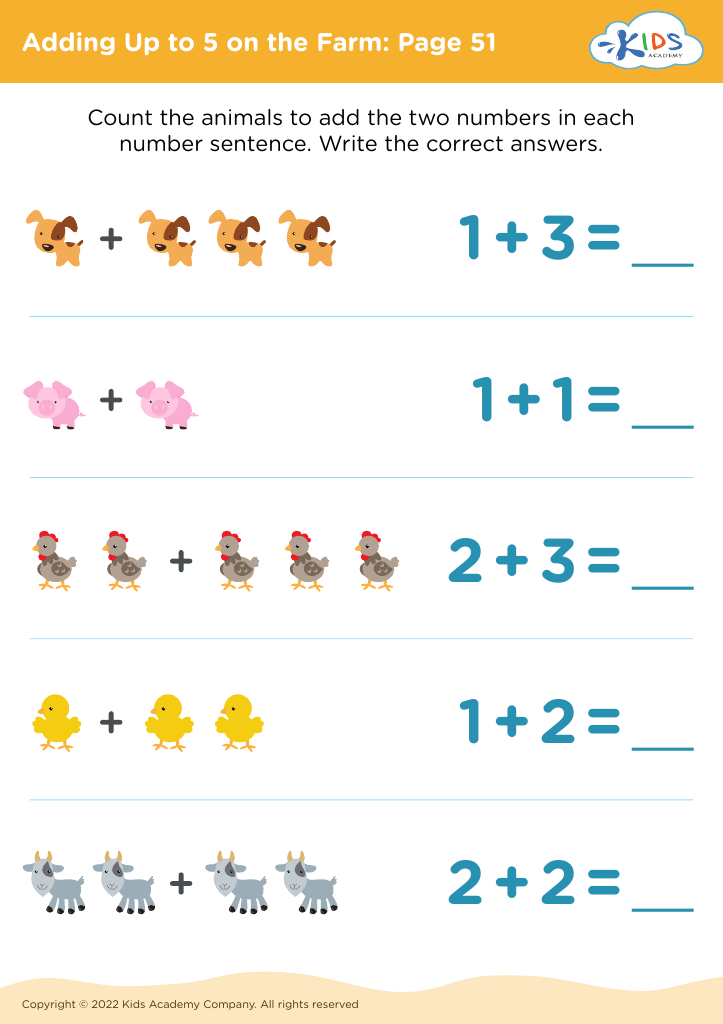
Adding Up to 5 on the Farm: Page 51
Worksheet
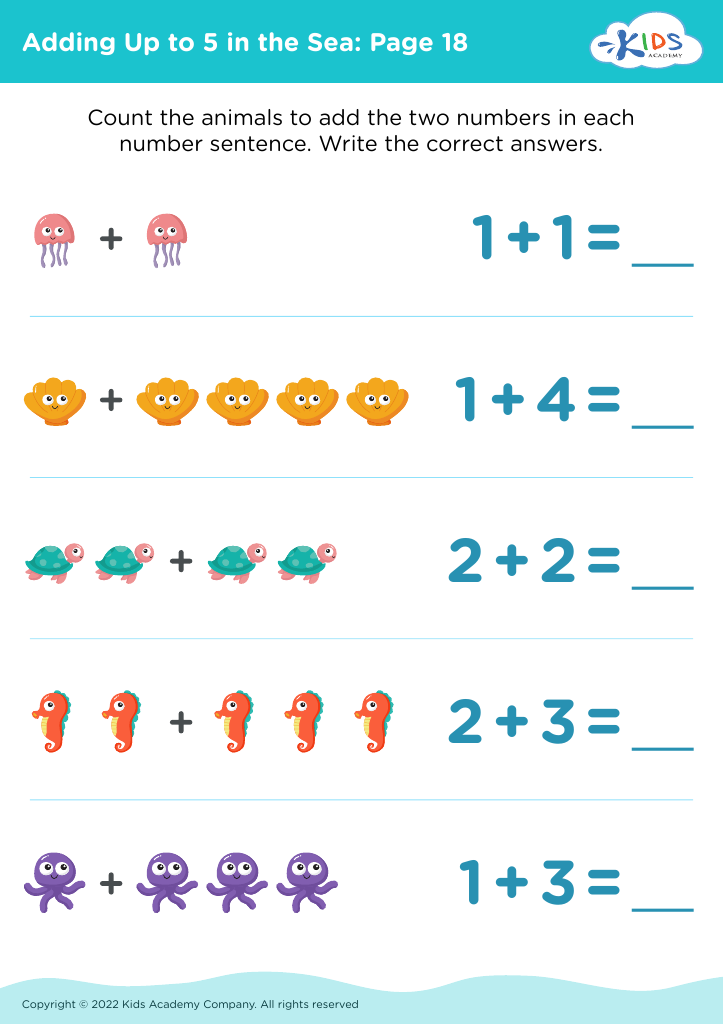
Adding Up to 5 in the Sea: Page 18
Worksheet
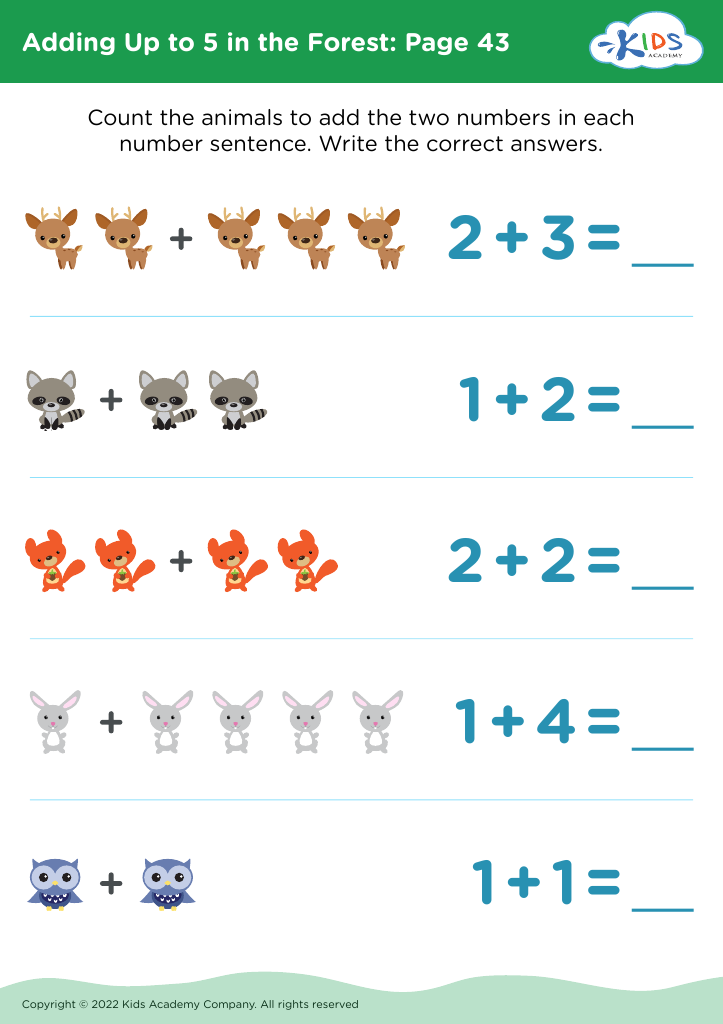
Adding Up to 5 in the Forest: Page 43
Worksheet
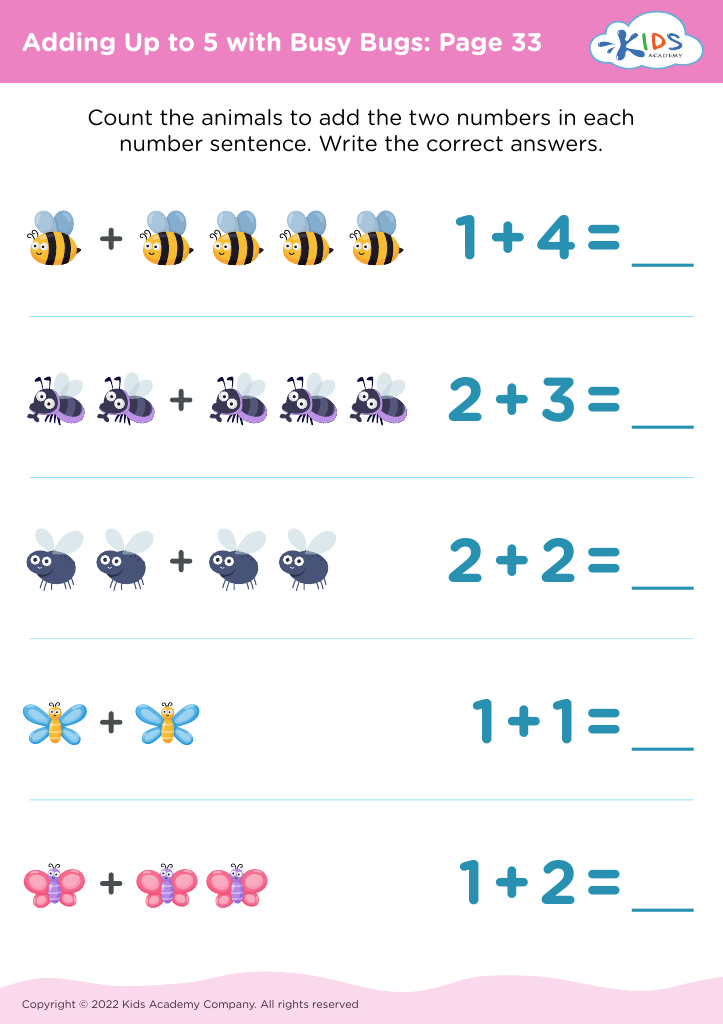
Adding Up to 5 with Busy Bugs: Page 33
Worksheet
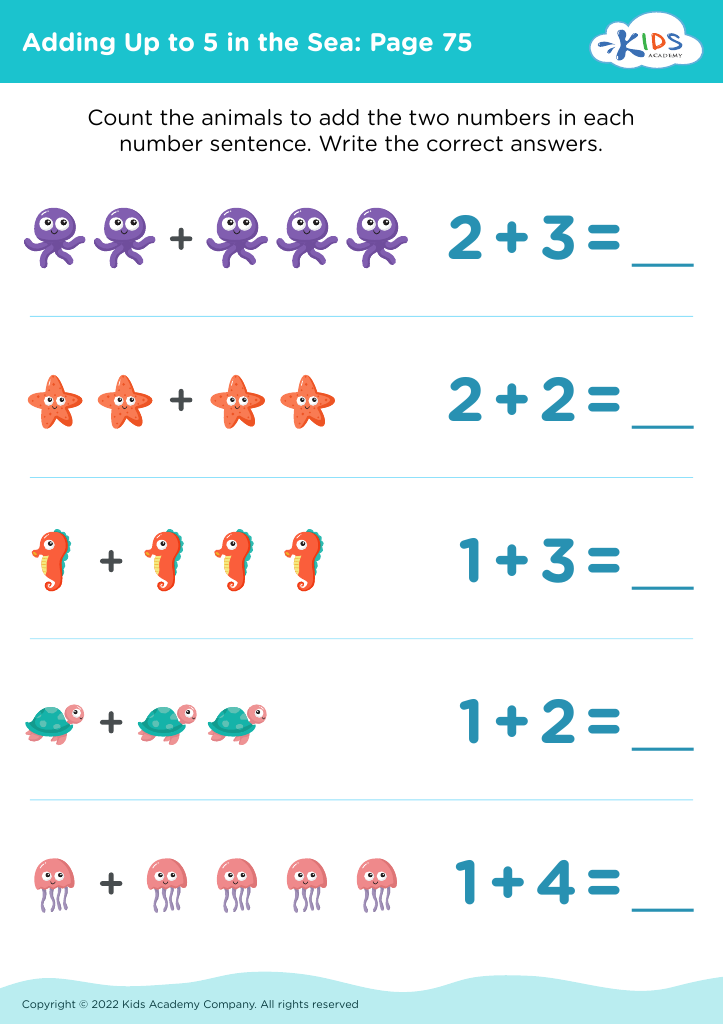
Adding Up to 5 in the Sea: Page 75
Worksheet
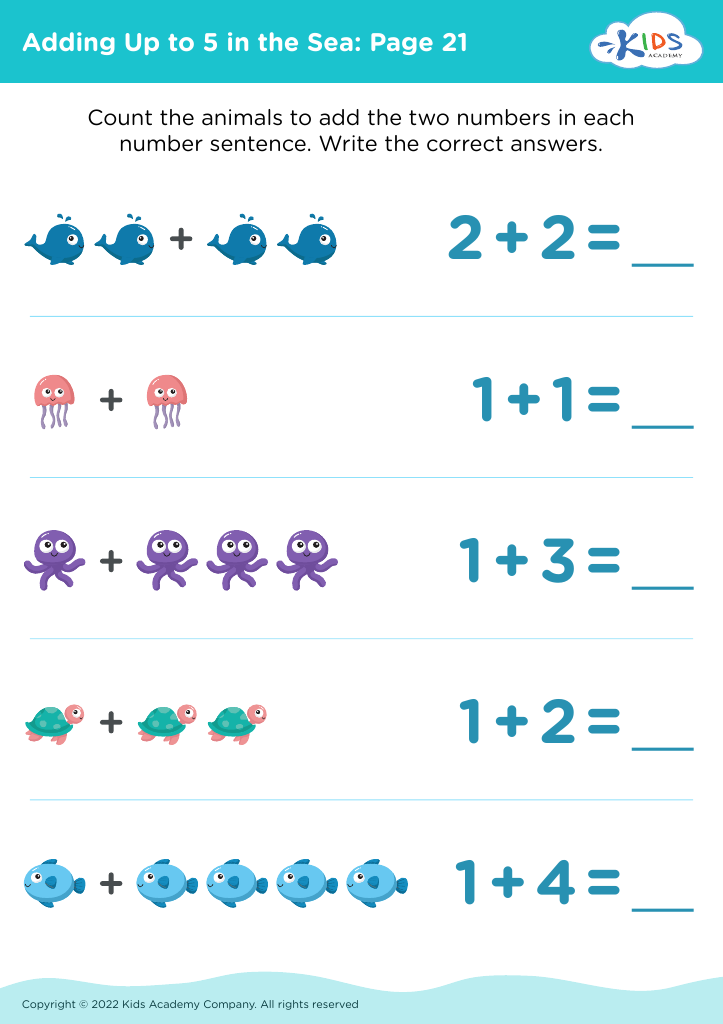
Adding Up to 5 in the Sea: Page 21
Worksheet
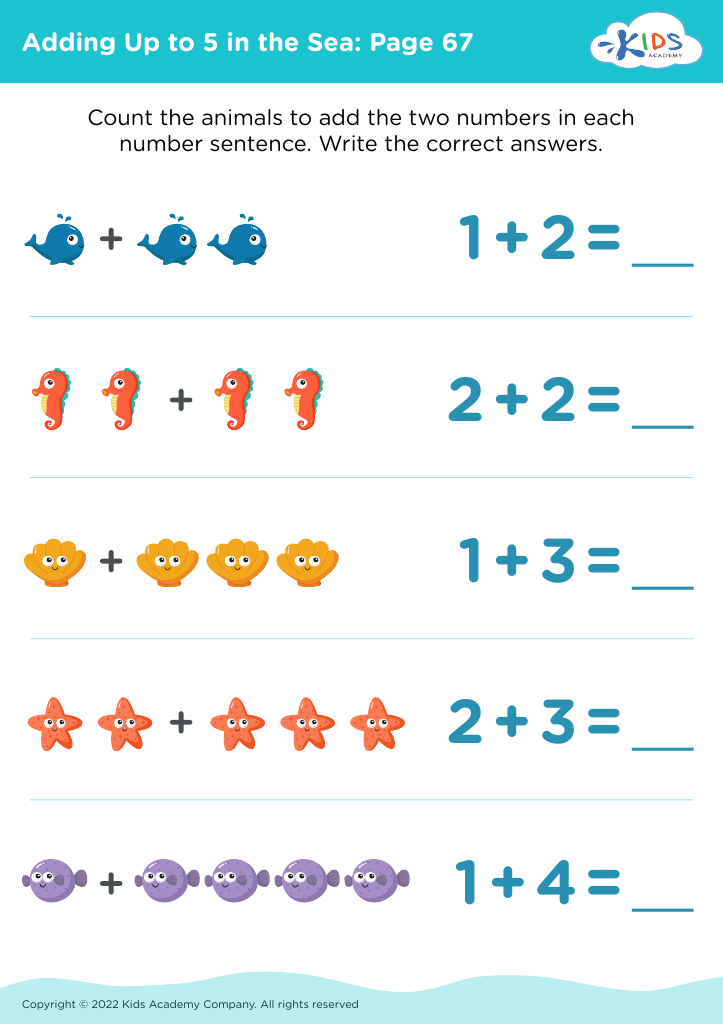
Adding Up to 5 in the Sea: Page 67
Worksheet
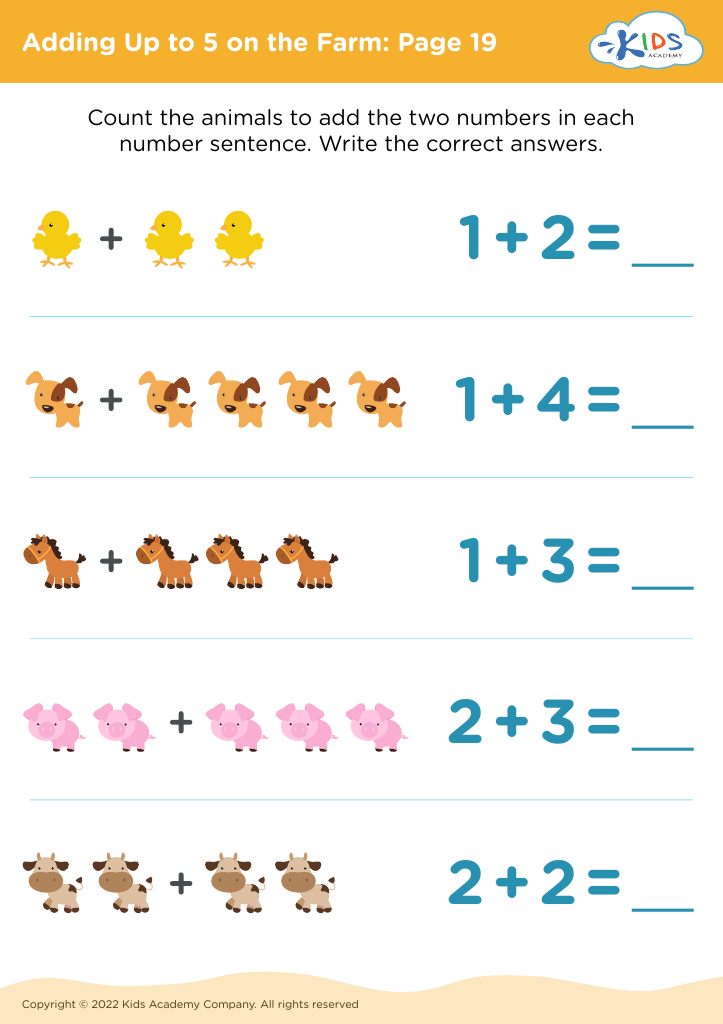
Adding Up to 5 on the Farm: Page 19
Worksheet
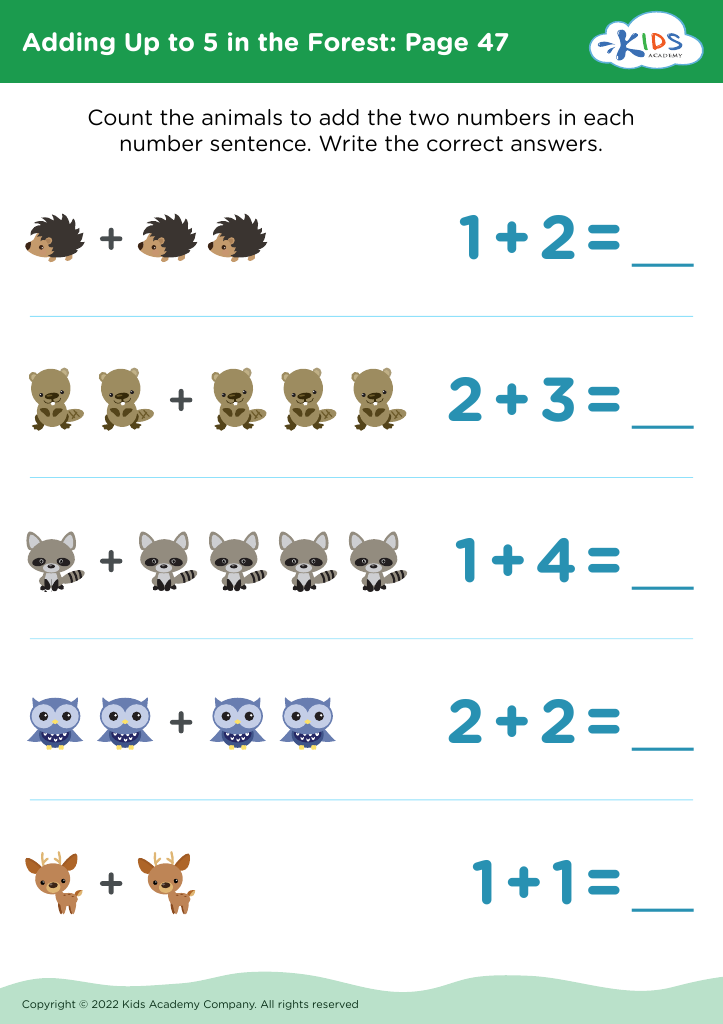
Adding Up to 5 in the Forest: Page 47
Worksheet
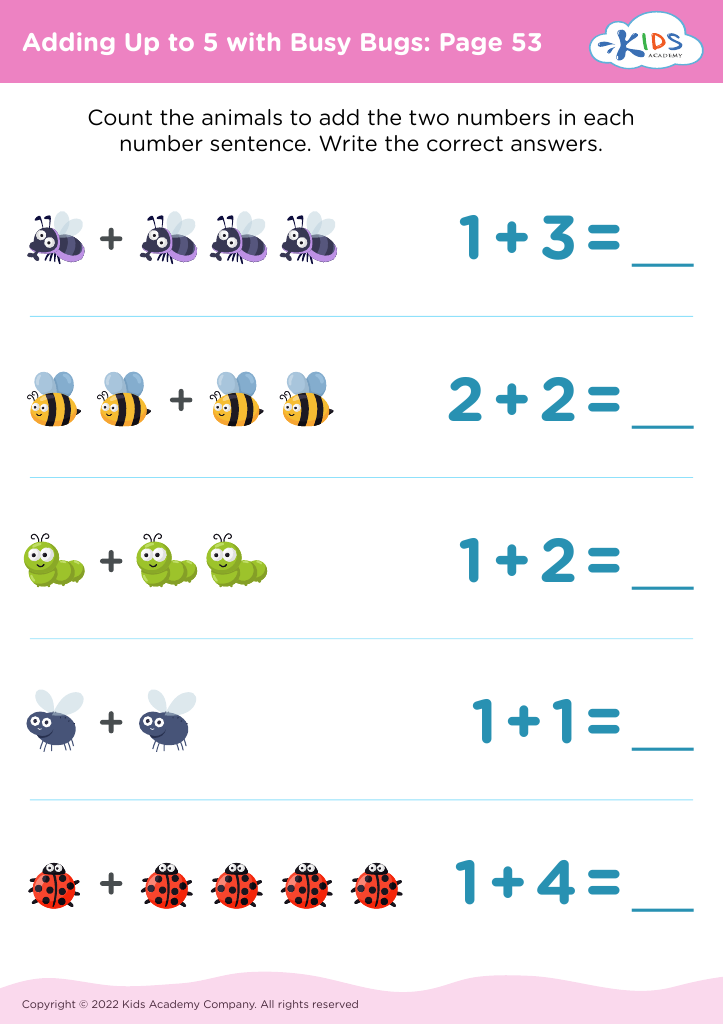
Adding Up to 5 with Busy Bugs: Page 53
Worksheet
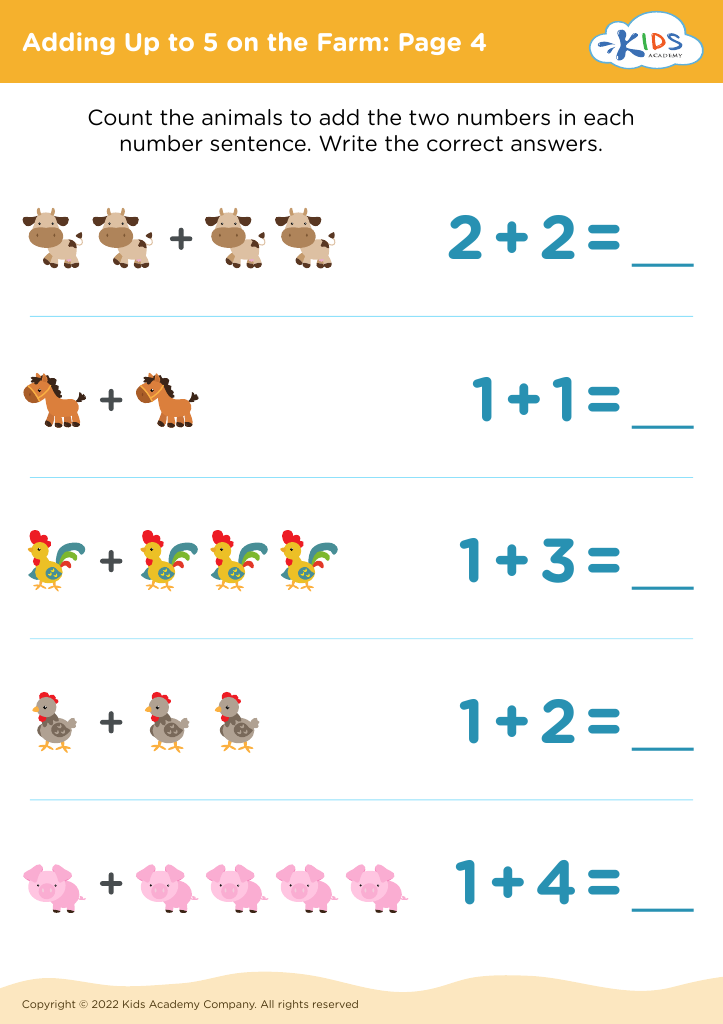
Adding Up to 5 on the Farm: Page 4
Worksheet
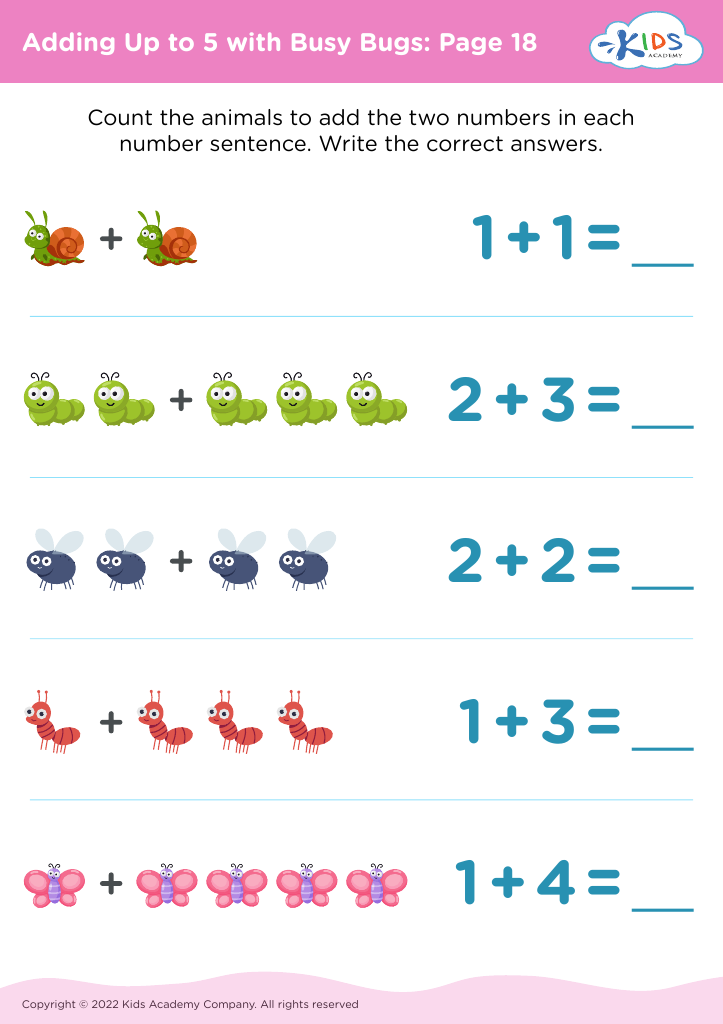
Adding Up to 5 with Busy Bugs: Page 18
Worksheet
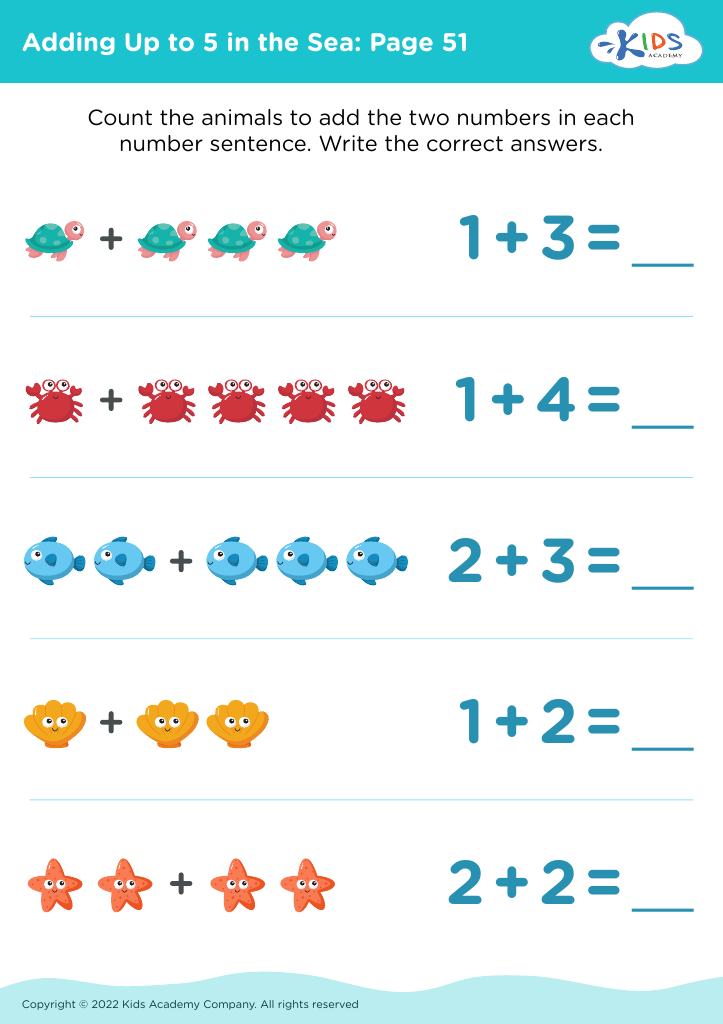
Adding Up to 5 in the Sea: Page 51
Worksheet
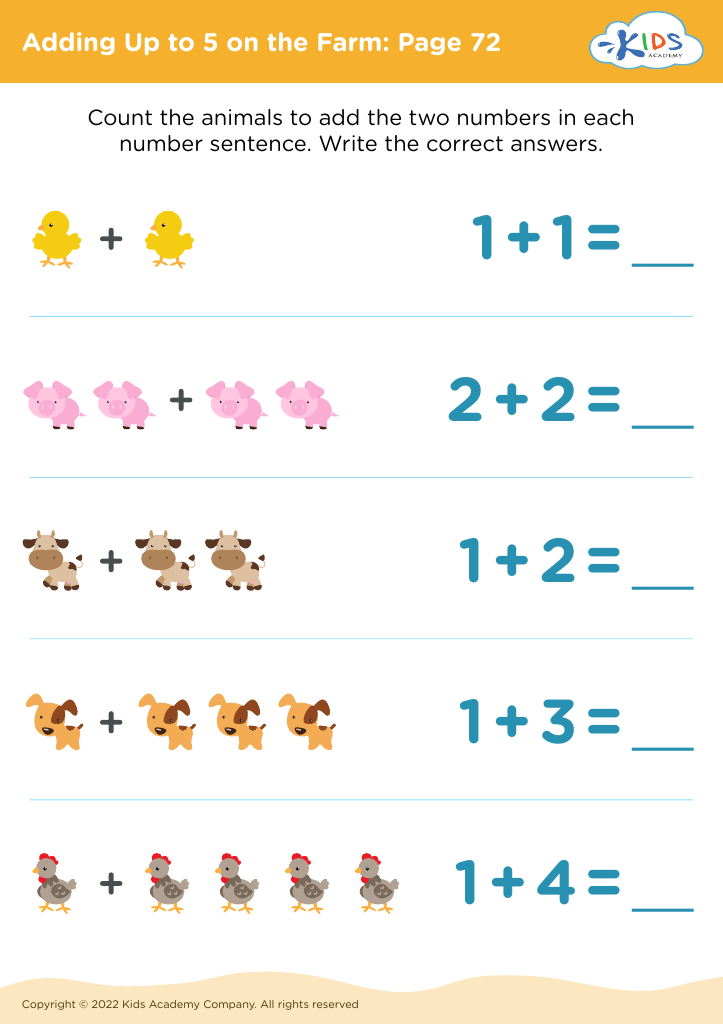
Adding Up to 5 on the Farm: Page 72
Worksheet
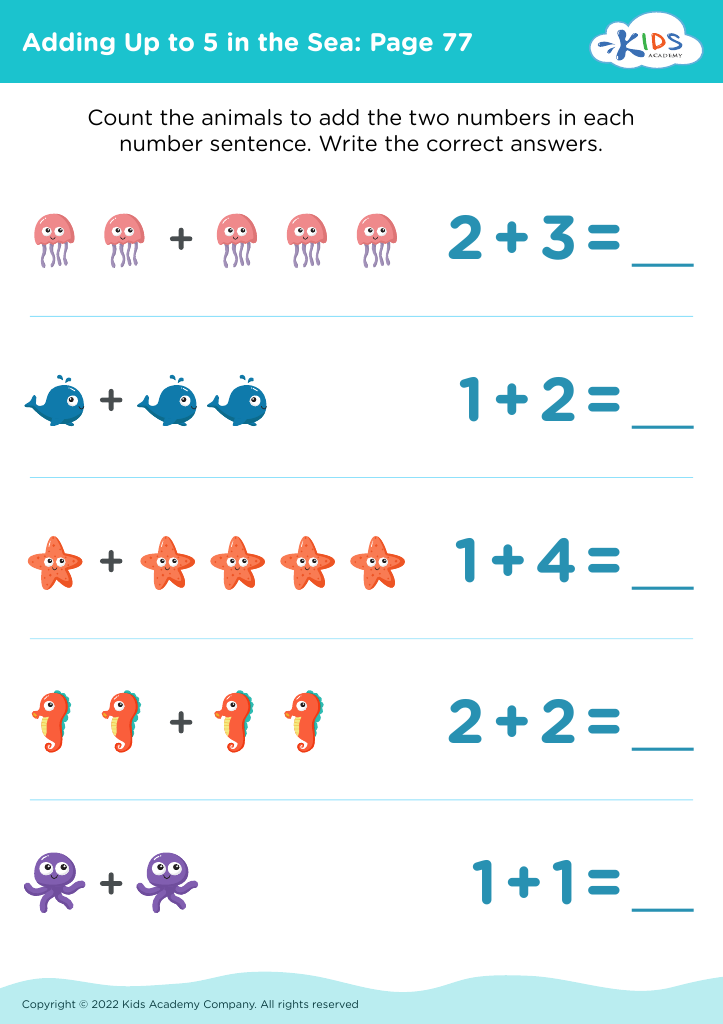
Adding Up to 5 in the Sea: Page 77
Worksheet
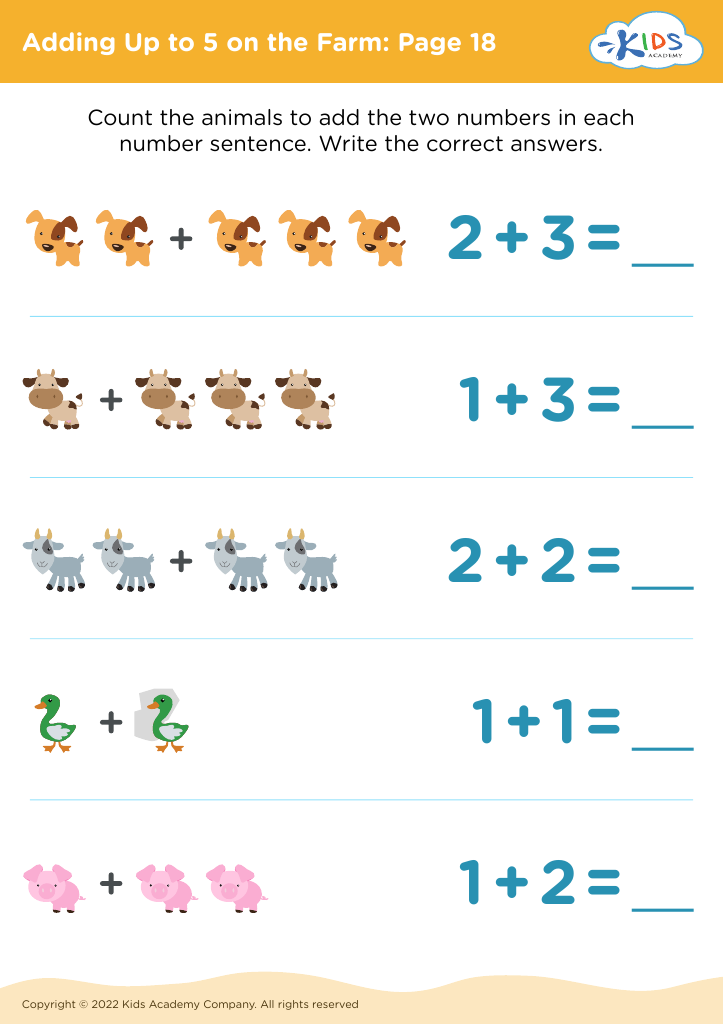
Adding Up to 5 on the Farm: Page 18
Worksheet
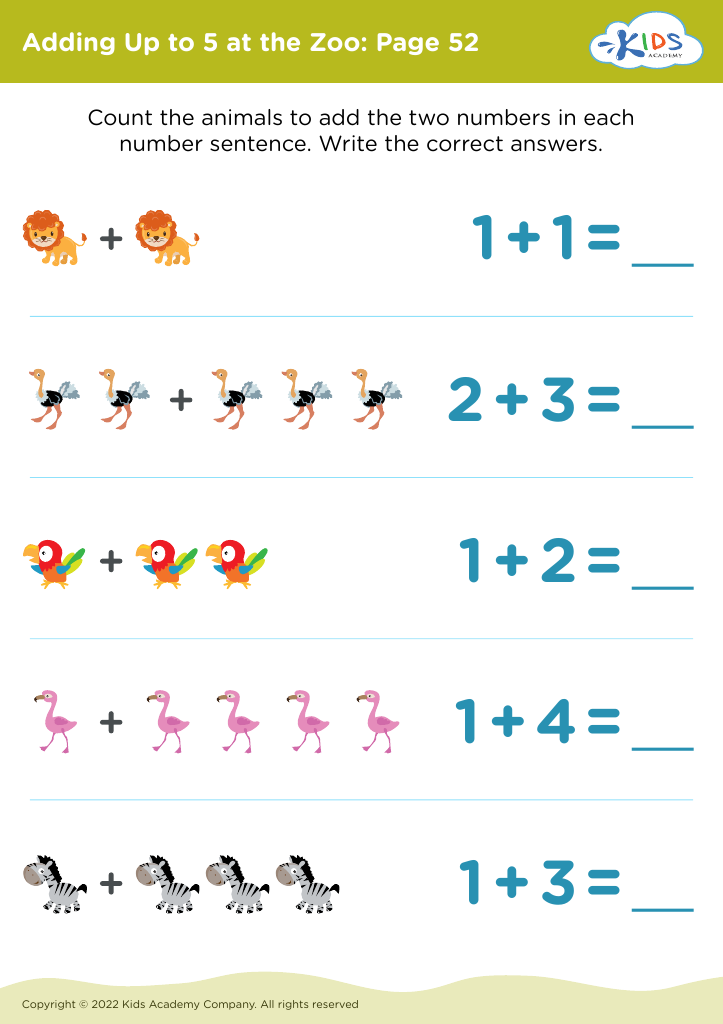
Adding Up to 5 at the Zoo: Page 52
Worksheet
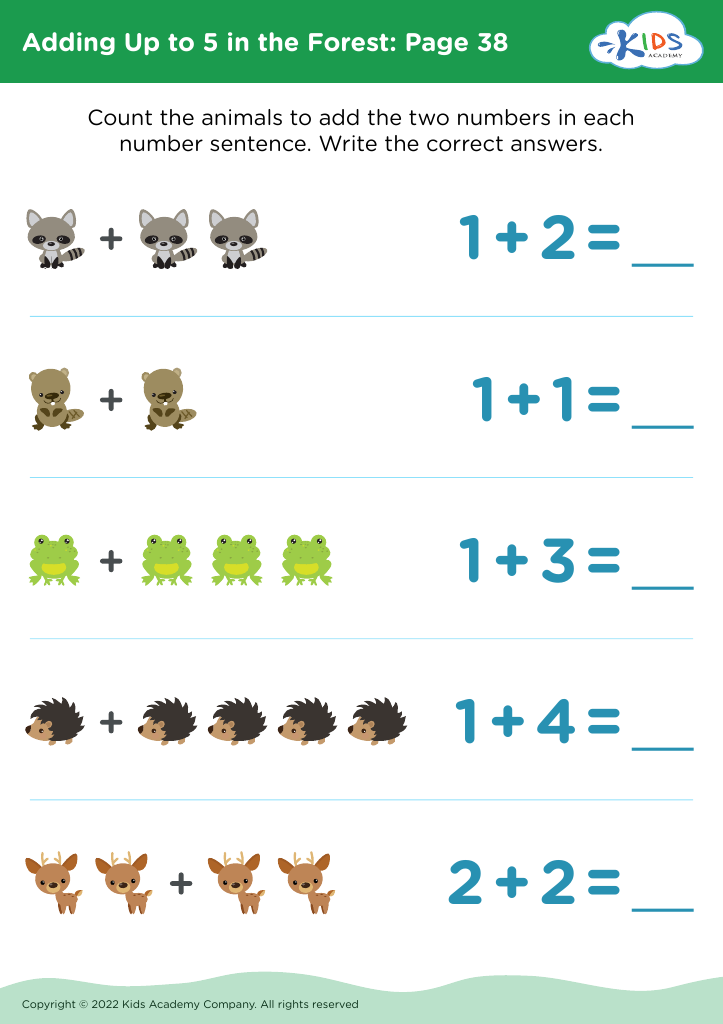
Adding Up to 5 in the Forest: Page 38
Worksheet
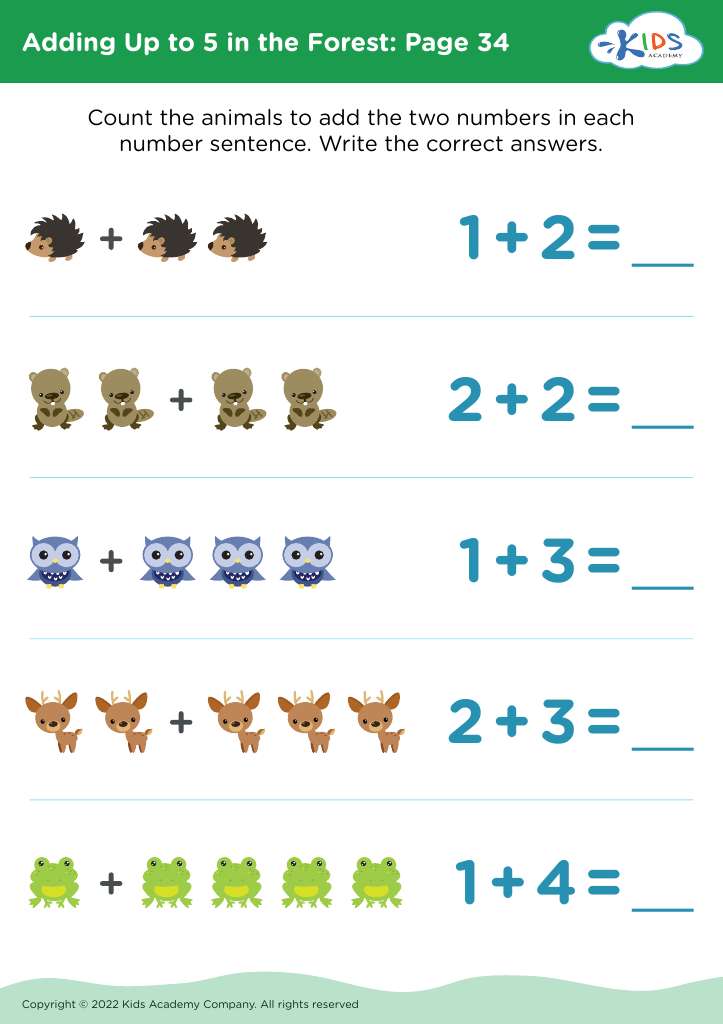
Adding Up to 5 in the Forest: Page 34
Worksheet


Basic addition skills, particularly adding numbers up to 5, are fundamental for young children's cognitive and social development. For ages 3-6, this foundational math skill fosters not just arithmetic knowledge but critical thinking and problem-solving abilities. Mastering addition helps children understand the concept of quantity and encourages logical reasoning, which is essential in broader learning contexts.

Moreover, early math skills can significantly impact a child's academic trajectory. Children who grasp basic addition are more likely to succeed in later math areas, shaping their outcome in school. By equipping kids with these early skills, parents and teachers provide them a solid learning anchor, promoting confidence and enjoyment in learning.

Socially, engaging in addition activities helps children interact with peers and build cooperative skills through shared play and group learning experiences. These interactions are key for developing communication and teamwork skills as they engage in math-related games or problem-solving tasks.

Through simple games, songs, and manipulatives, parents and teachers can make learning this essential skill enjoyable. Investing the time and effort to nurture these basic addition skills at a young age sets the stage for a love of learning and a successful future in education and beyond.