Filters

21 filtered results

Clear all filters
Favorites
With answer key
Interactive

21 filtered results

Difficulty Level

Grade


Welcome to our engaging "Basic Math Skills Adding Up to 5 Worksheets" designed specifically for children aged 3-6! These fun and interactive worksheets provide a playful introduction to addition, helping young learners grasp fundamental math concepts. Featuring vibrant graphics and age-appropriate exercises, your little ones will explore how to combine numbers with ease. As they practice counting and adding up to 5, they build confidence and crucial problem-solving skills. Perfect for at-home learning or classroom activities, these versatile resources make math an enjoyable adventure. Download today and watch your child's math skills grow as they begin their learning journey!
Check out this FREE Trial Lesson on Adding Up to 5 for age 3-6!

My Family

Favorites
With answer key
Interactive
  • 3-6
  • Basic Math Skills
  • Adding Up to 5
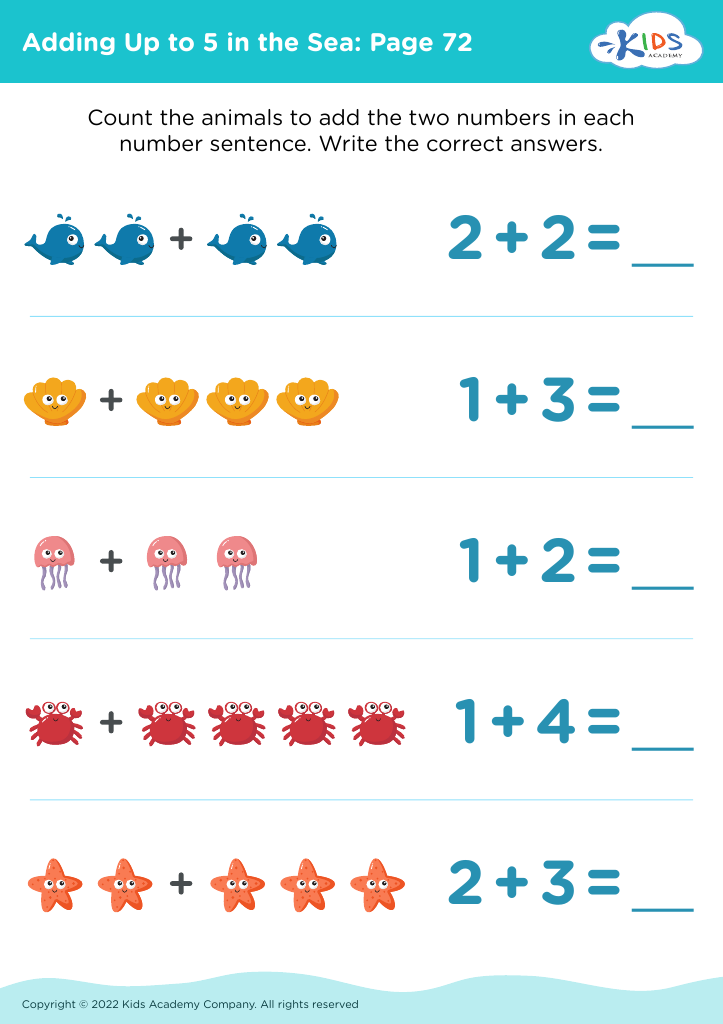
Adding Up to 5 in the Sea: Page 72
Worksheet
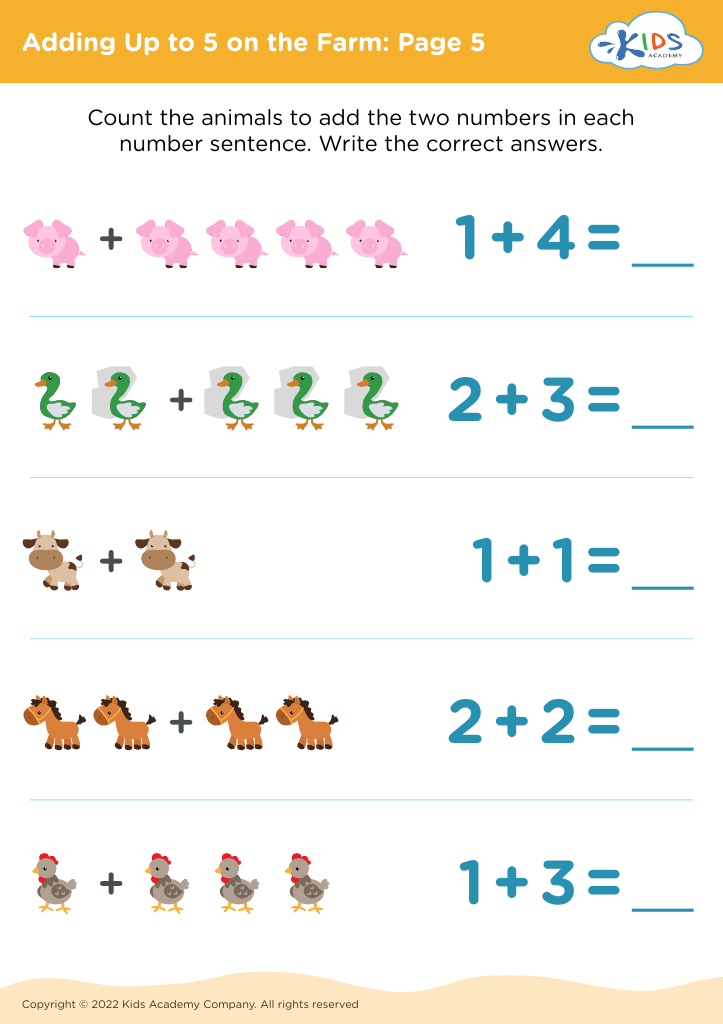
Adding Up to 5 on the Farm: Page 5
Worksheet
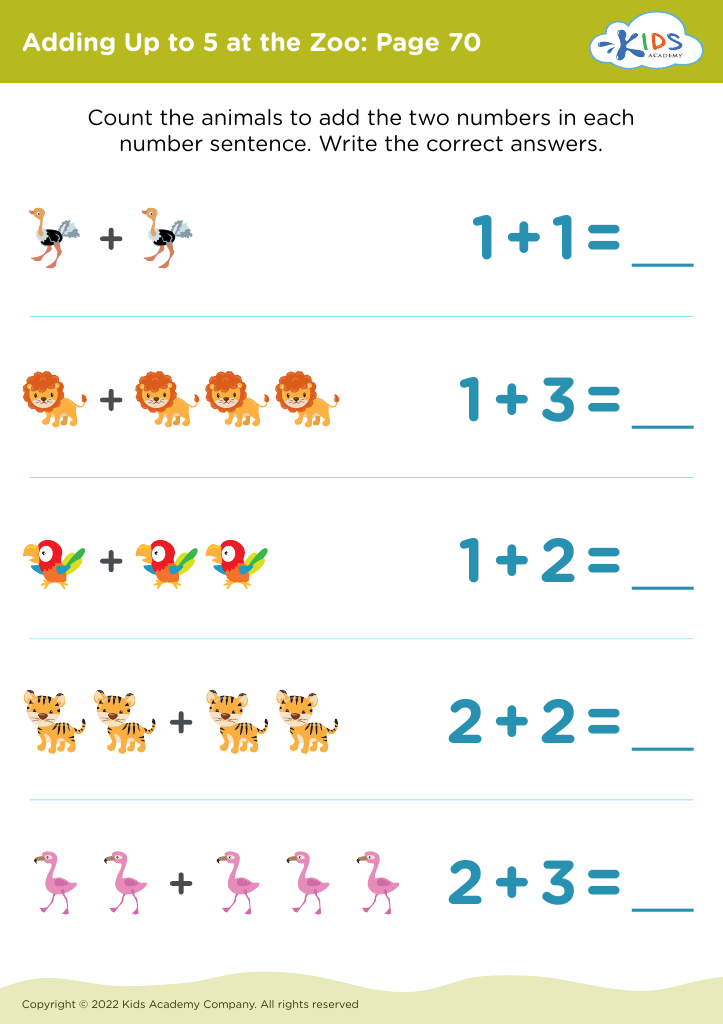
Adding Up to 5 at the Zoo: Page 70
Worksheet
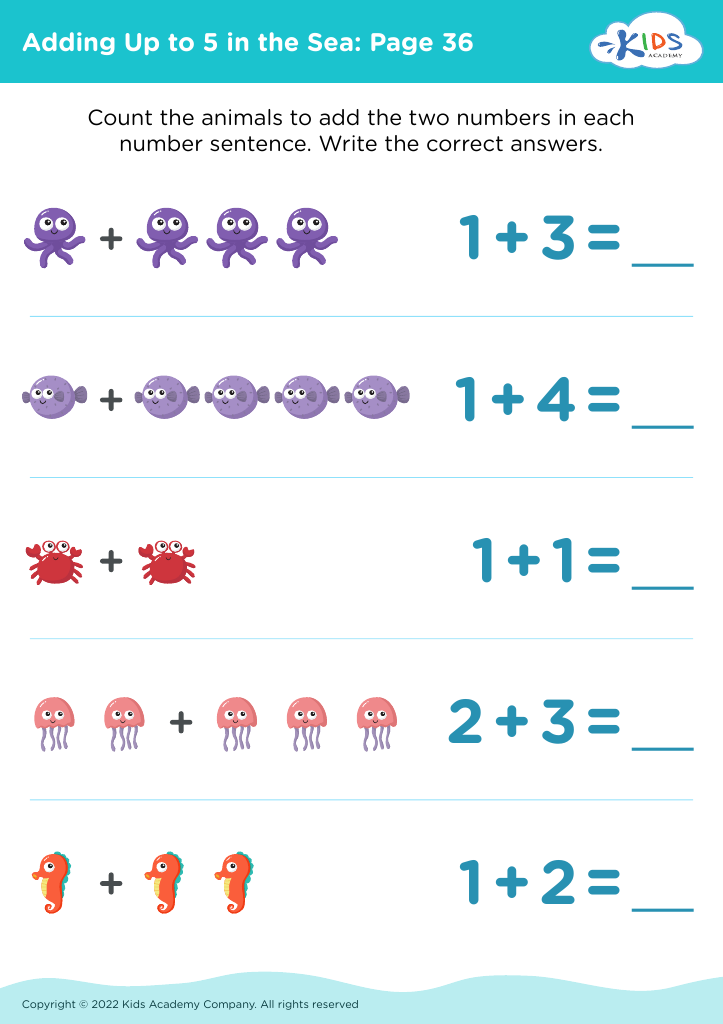
Adding Up to 5 in the Sea: Page 36
Worksheet
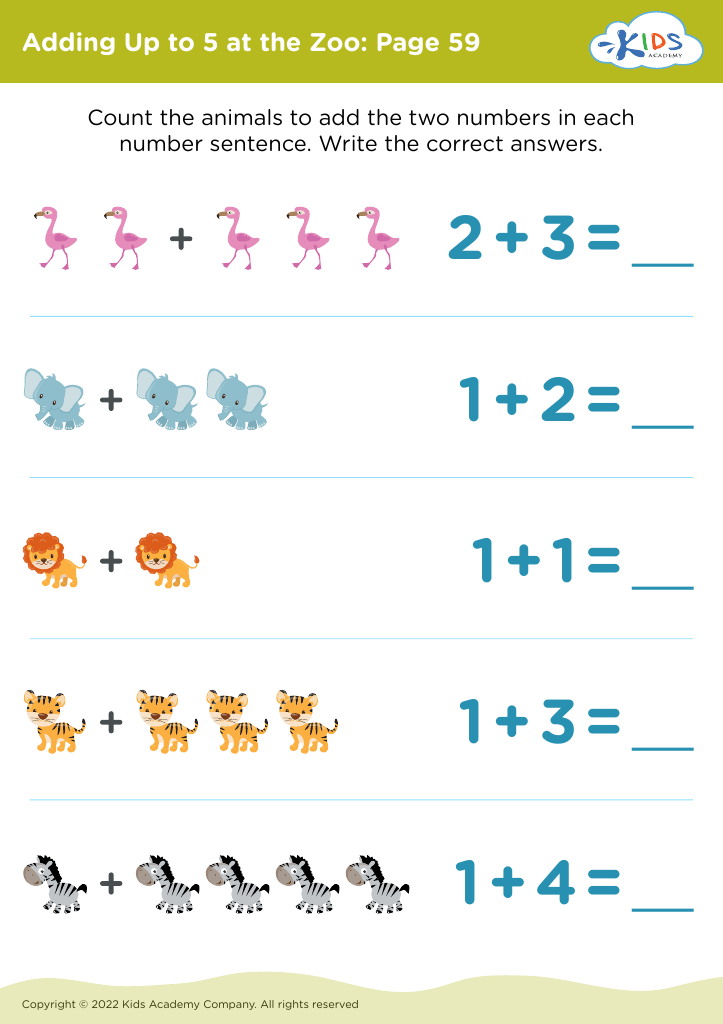
Adding Up to 5 at the Zoo: Page 59
Worksheet
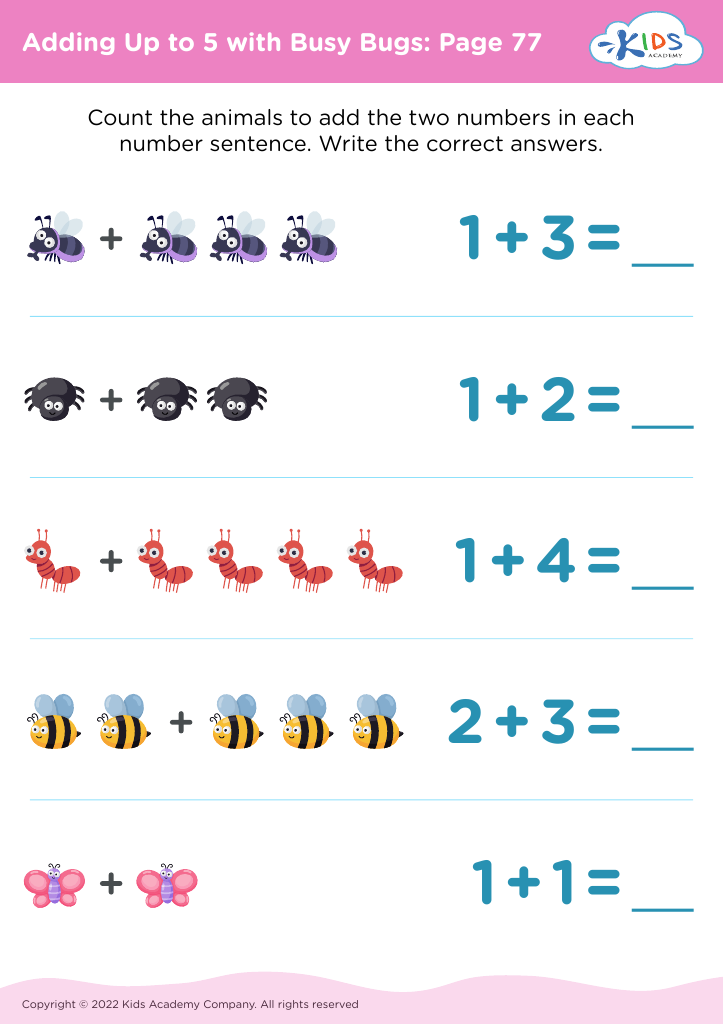
Adding Up to 5 with Busy Bugs: Page 77
Worksheet
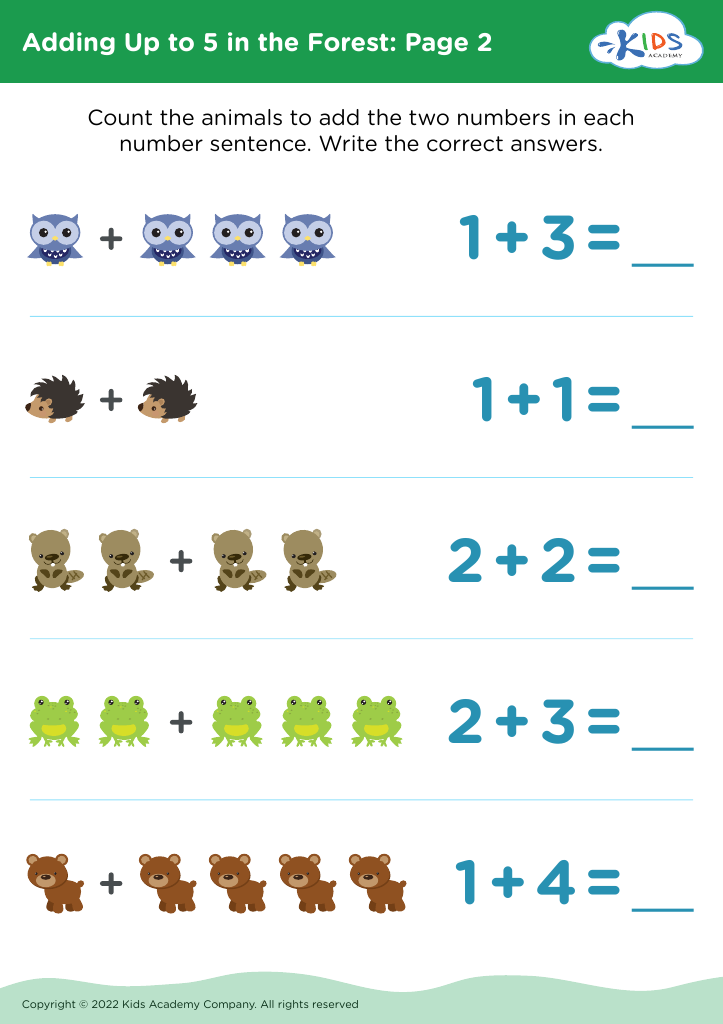
Adding Up to 5 in the Forest: Page 2
Worksheet
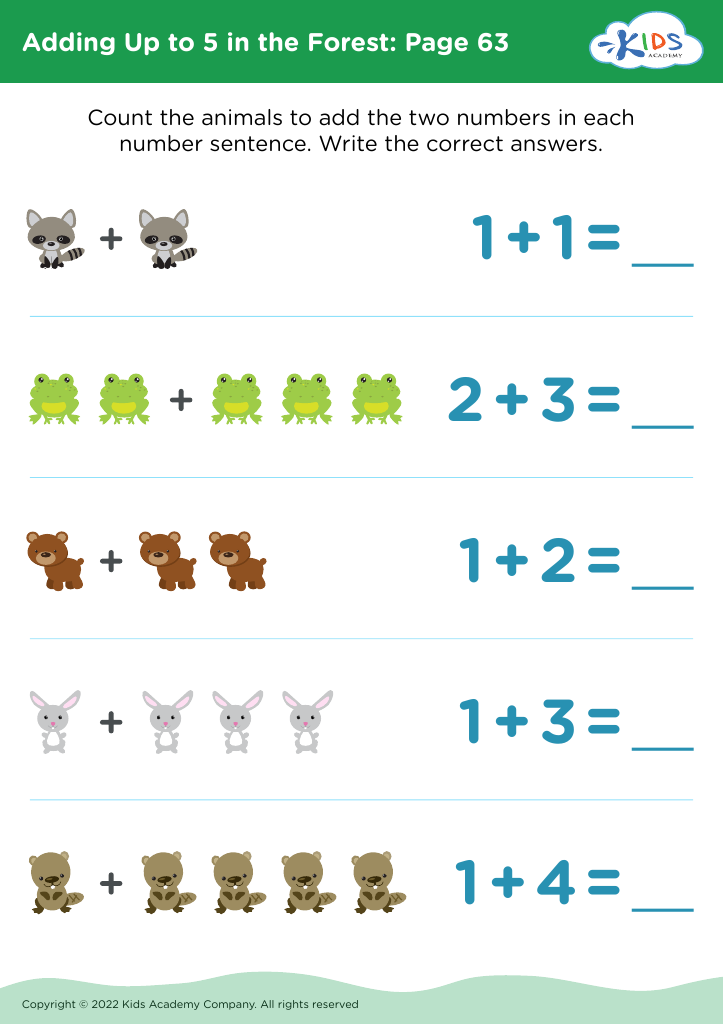
Adding Up to 5 in the Forest: Page 63
Worksheet
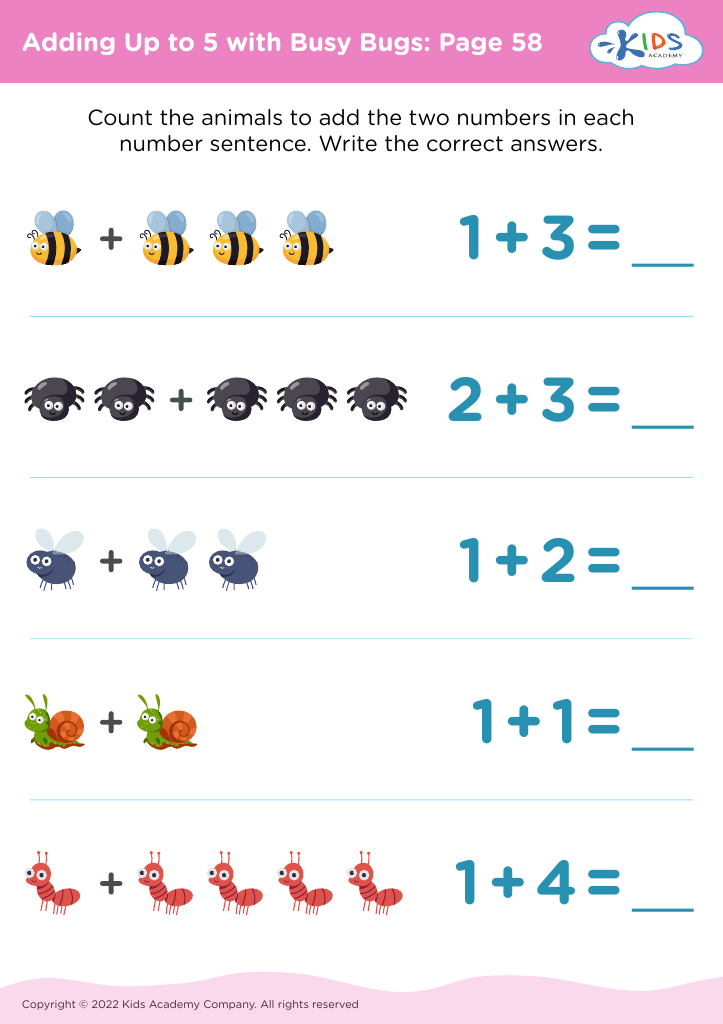
Adding Up to 5 with Busy Bugs: Page 58
Worksheet
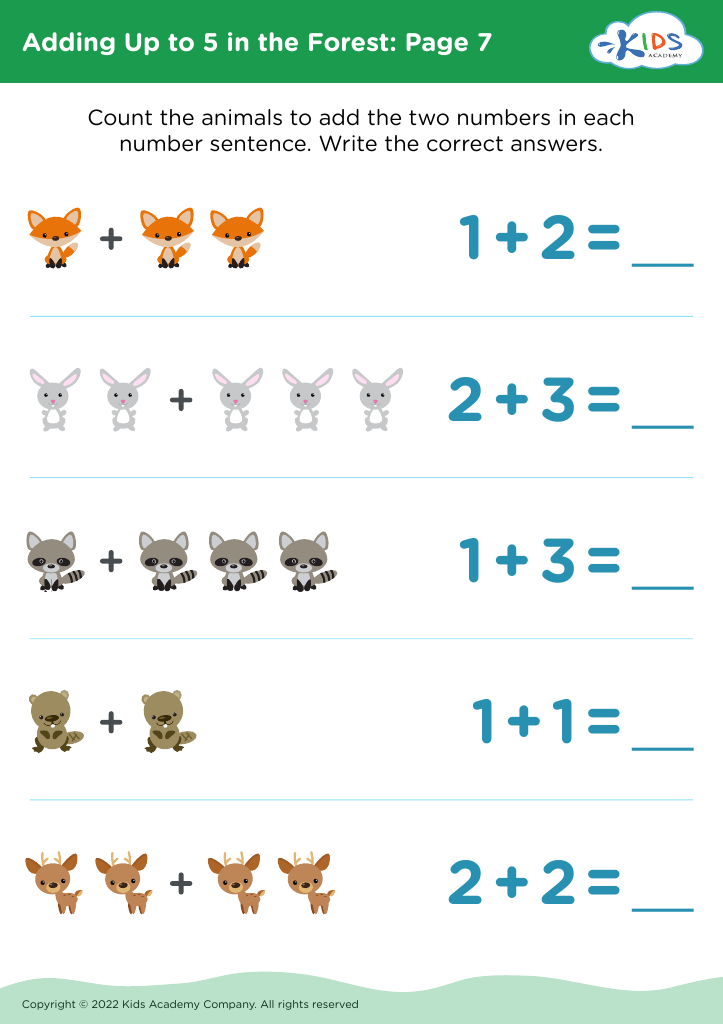
Adding Up to 5 in the Forest: Page 7
Worksheet
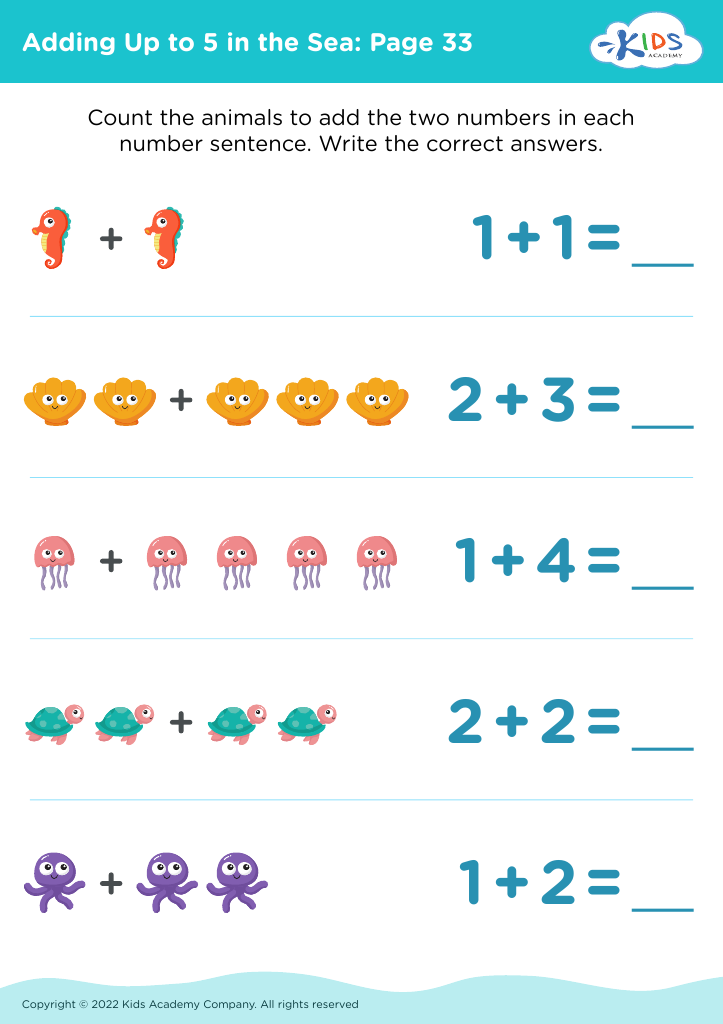
Adding Up to 5 in the Sea: Page 33
Worksheet
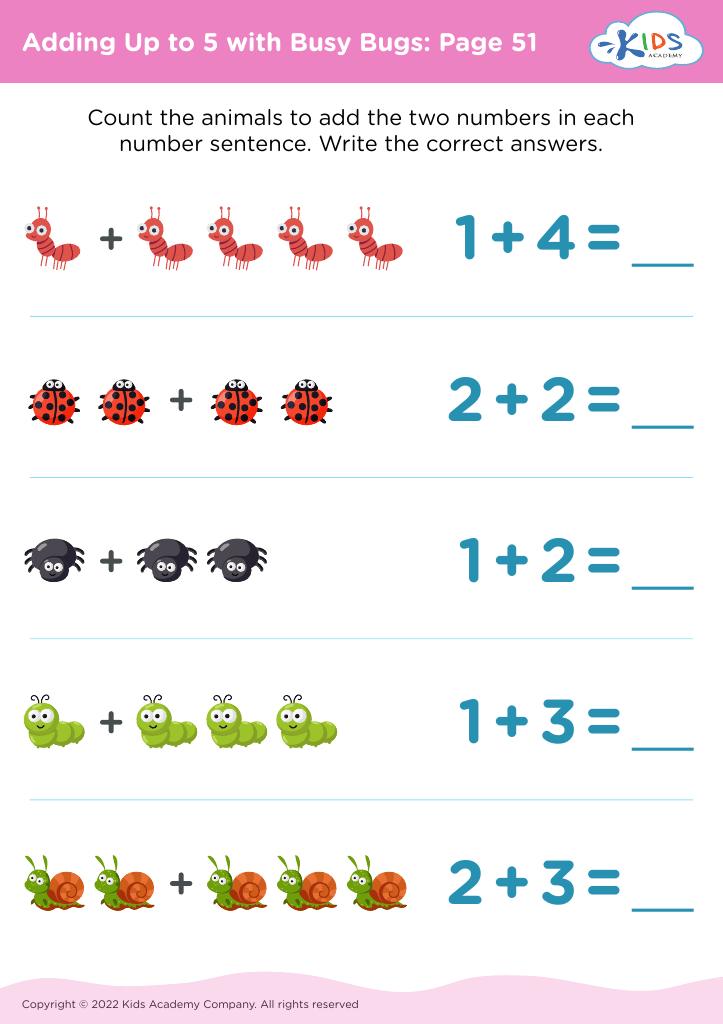
Adding Up to 5 with Busy Bugs: Page 51
Worksheet
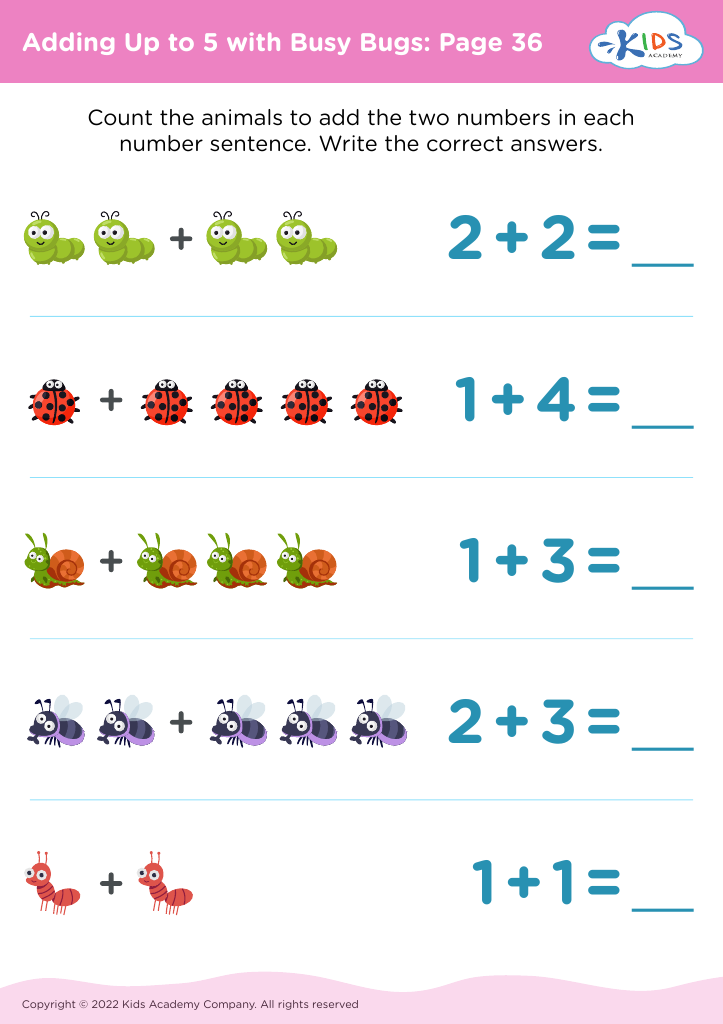
Adding Up to 5 with Busy Bugs: Page 36
Worksheet
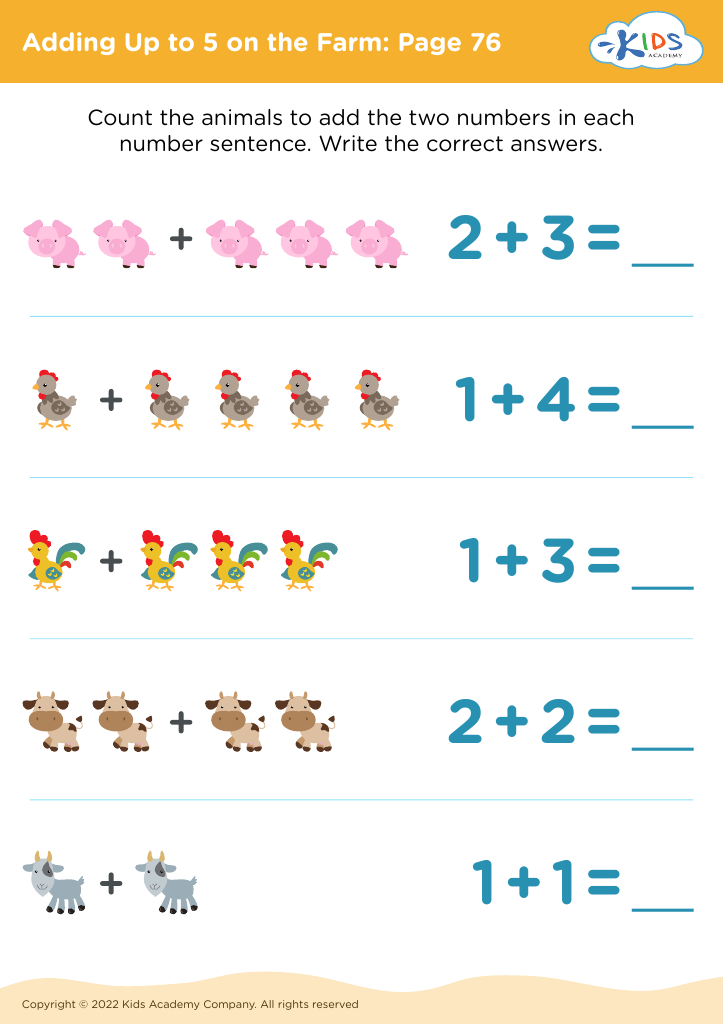
Adding Up to 5 on the Farm: Page 76
Worksheet
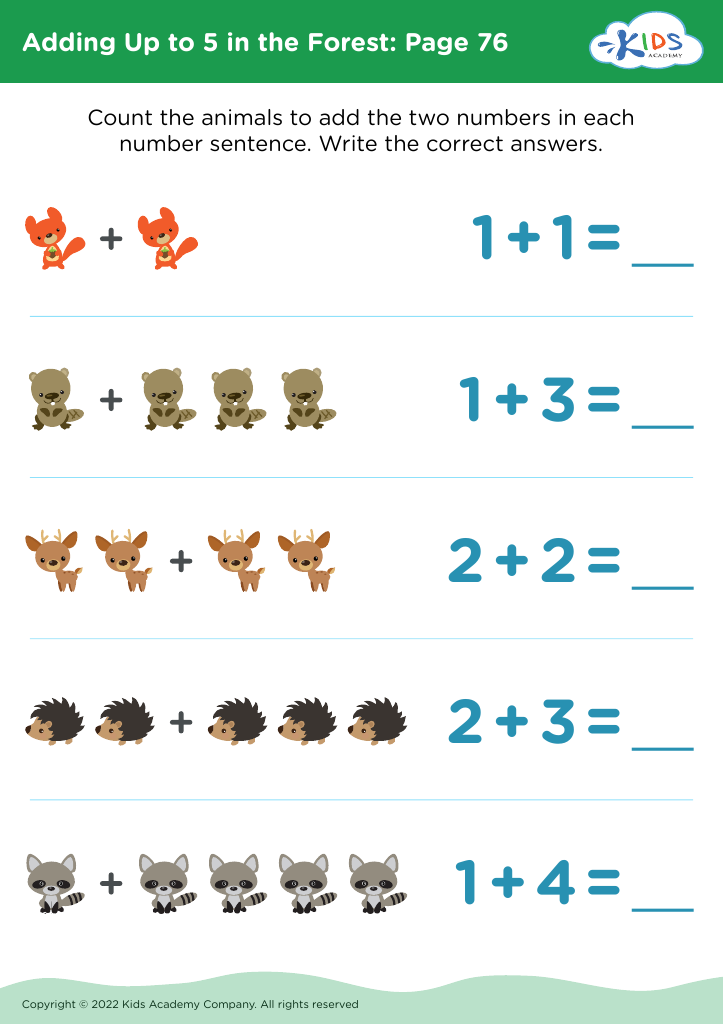
Adding Up to 5 in the Forest: Page 76
Worksheet
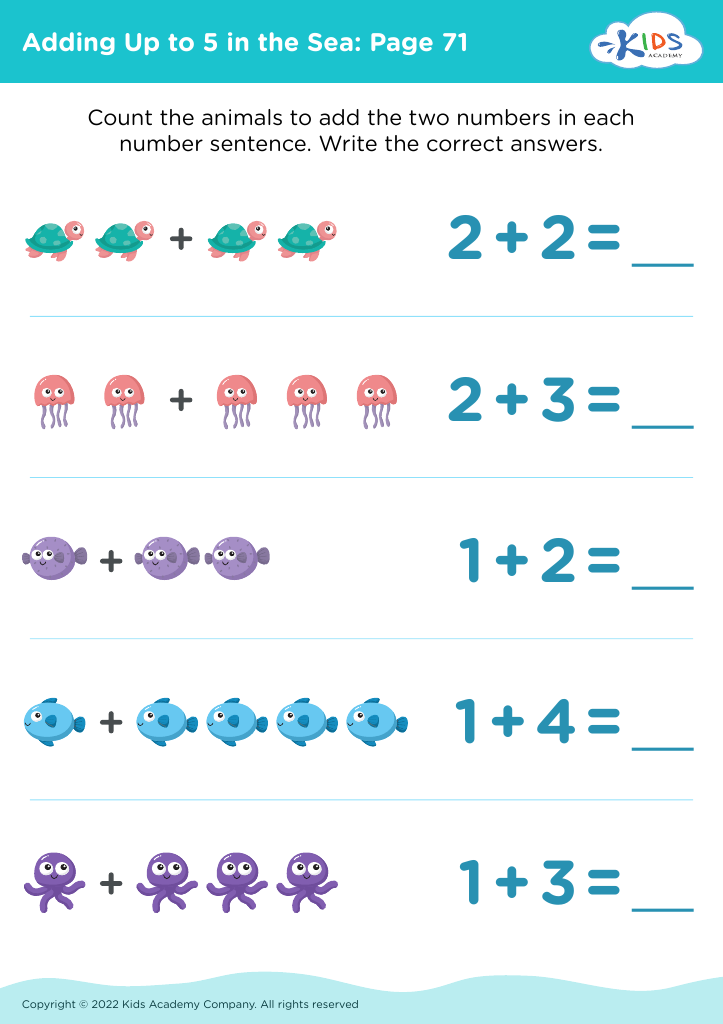
Adding Up to 5 in the Sea: Page 71
Worksheet
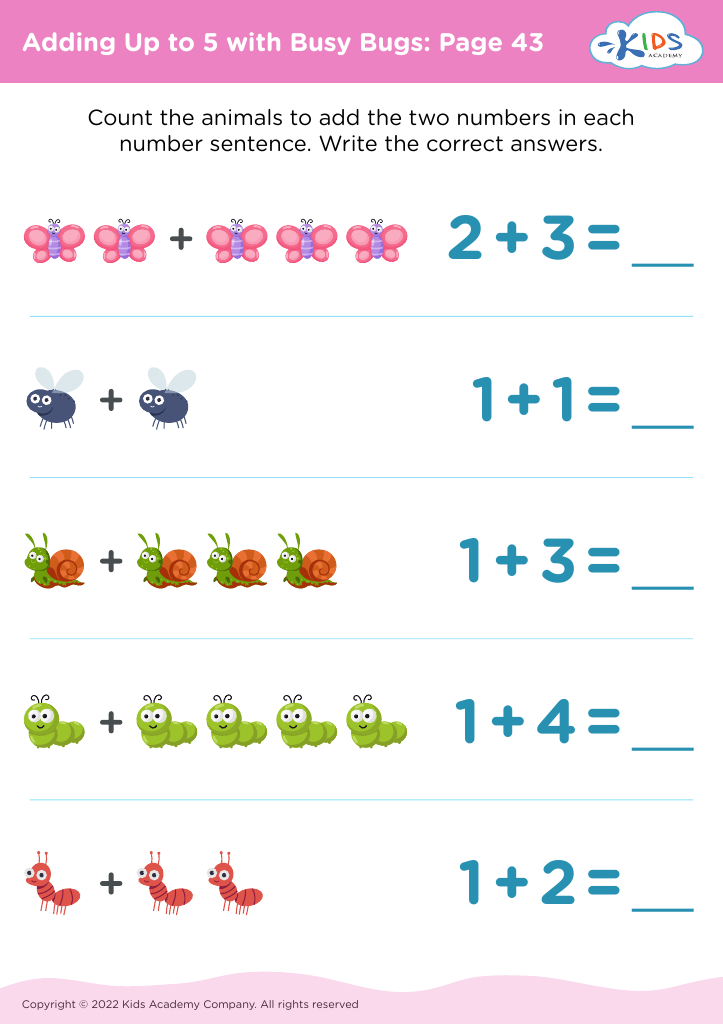
Adding Up to 5 with Busy Bugs: Page 43
Worksheet
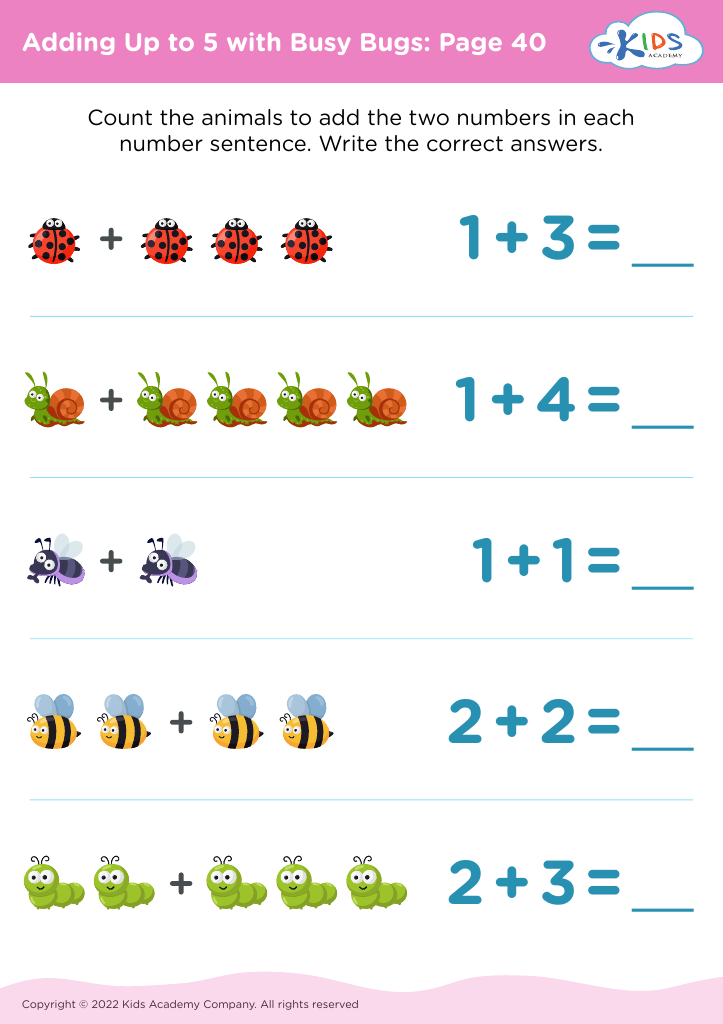
Adding Up to 5 with Busy Bugs: Page 40
Worksheet
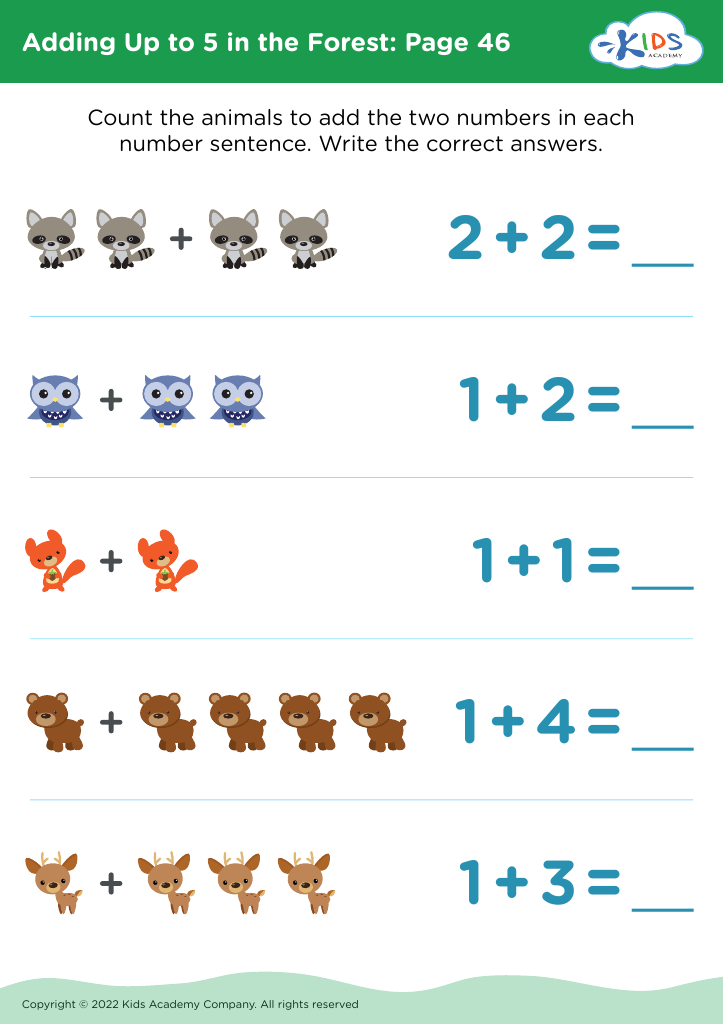
Adding Up to 5 in the Forest: Page 46
Worksheet
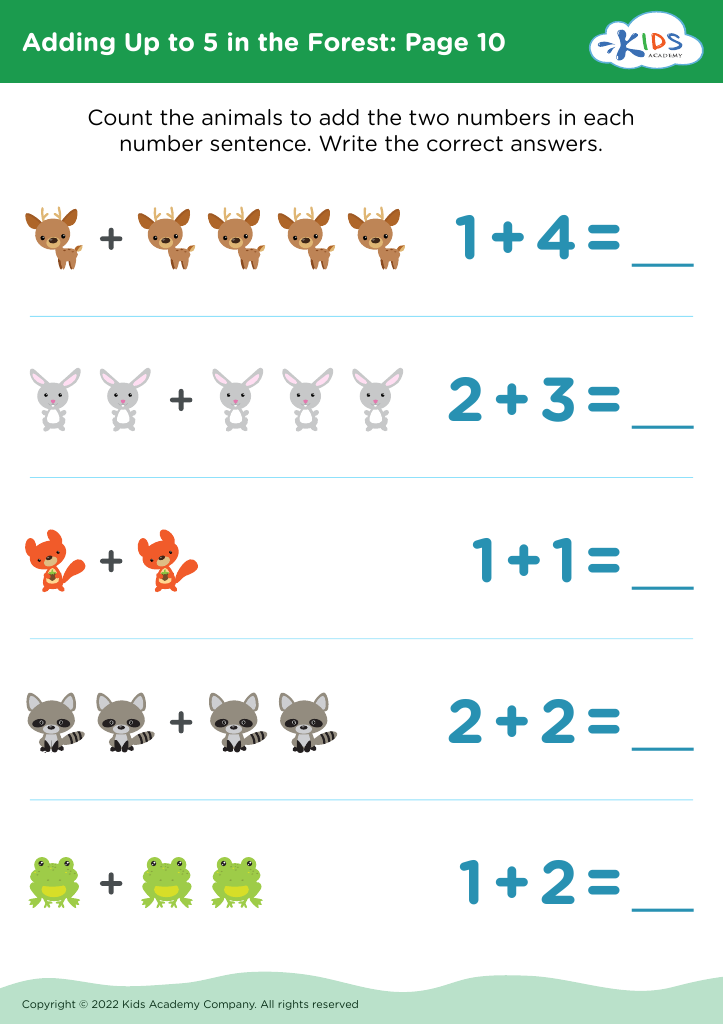
Adding Up to 5 in the Forest: Page 10
Worksheet
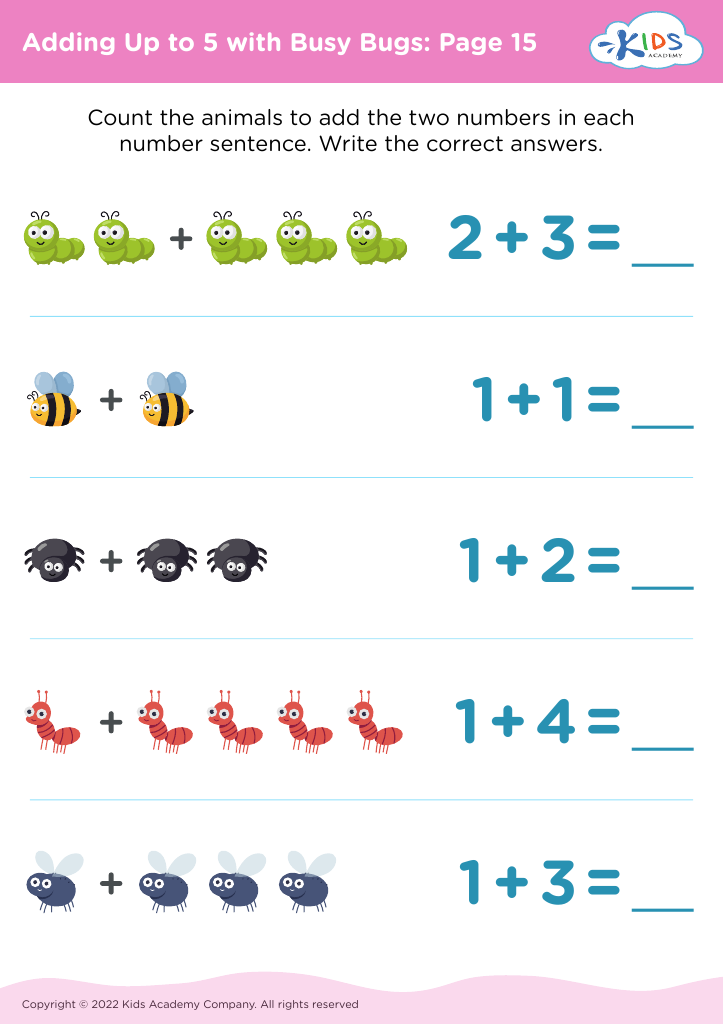
Adding Up to 5 with Busy Bugs: Page 15
Worksheet


Basic math skills, especially those involving addition up to 5, play a crucial role in the foundational development of children aged 3 to 6. At this early age, children are naturally curious and eager to explore numbers, making it an ideal time to introduce fundamental math concepts. Understanding addition lays the groundwork for more complex numerical skills later on, fostering critical thinking and problem-solving abilities.

When children learn to add numbers up to 5, they not only grasp mathematical concepts but also improve their cognitive development. Skills like counting, recognizing patterns, and understanding quantity emerge during this period. Additionally, these basic math skills enhance fine motor skills, as activities often involve physical manipulation of objects, such as counting blocks or moving counters.

For parents and teachers, focusing on addition skills helps create an engaging learning environment that transcends traditional teaching methods, leading to better retention and enthusiasm for math. Furthermore, by encouraging early math skills, adults can help children develop confidence in their abilities, reducing common math anxieties encountered in later years. Ultimately, prioritizing basic math skills at a young age equips children with essential tools for future academic success and everyday problem-solving.