Basic Math understanding Adding Up to 5 Worksheets for Ages 3-6
7 filtered results
-
From - To
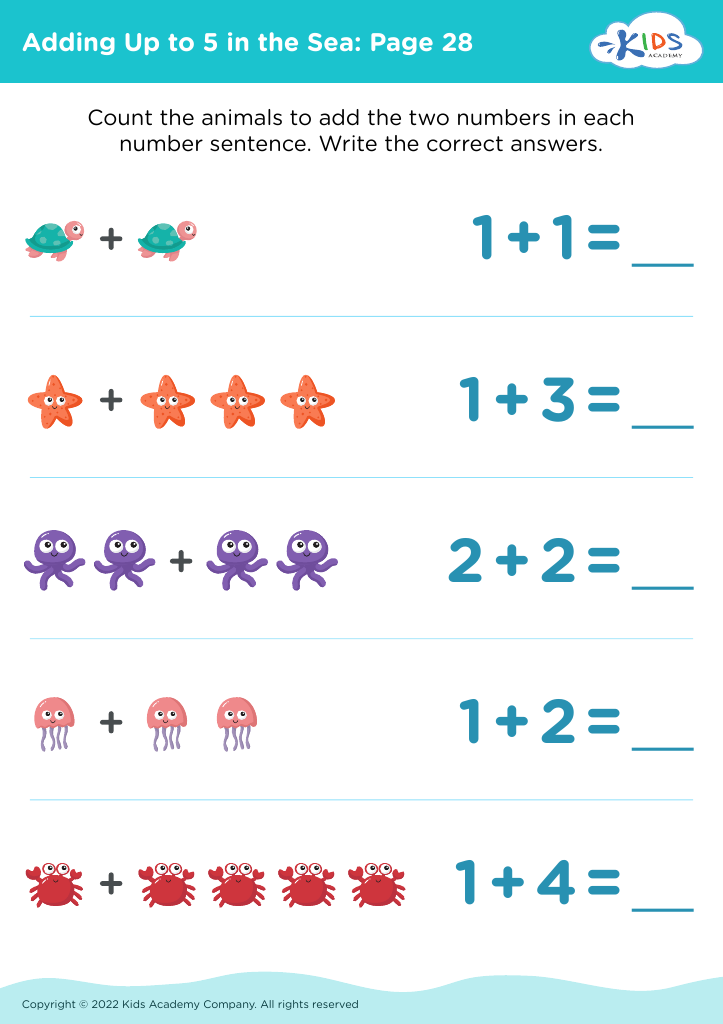
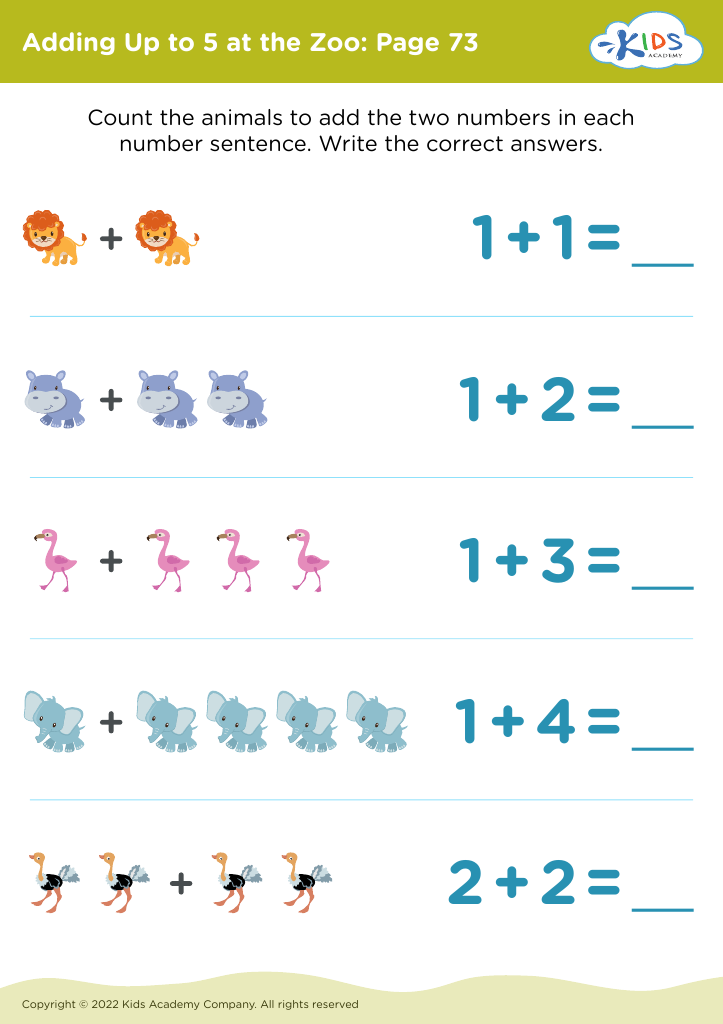
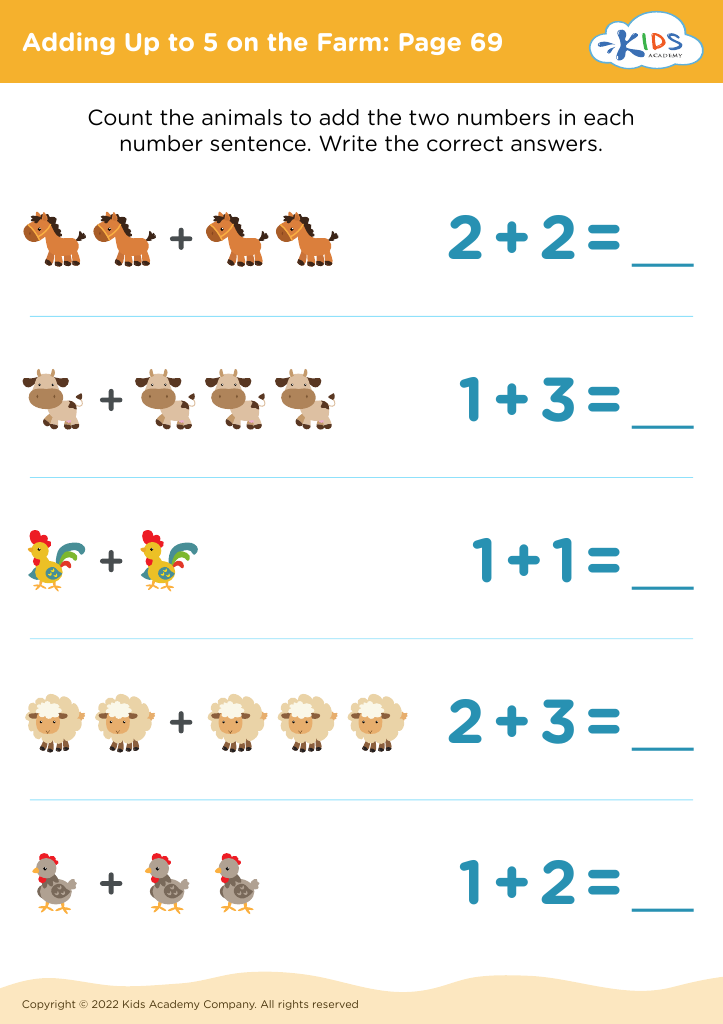
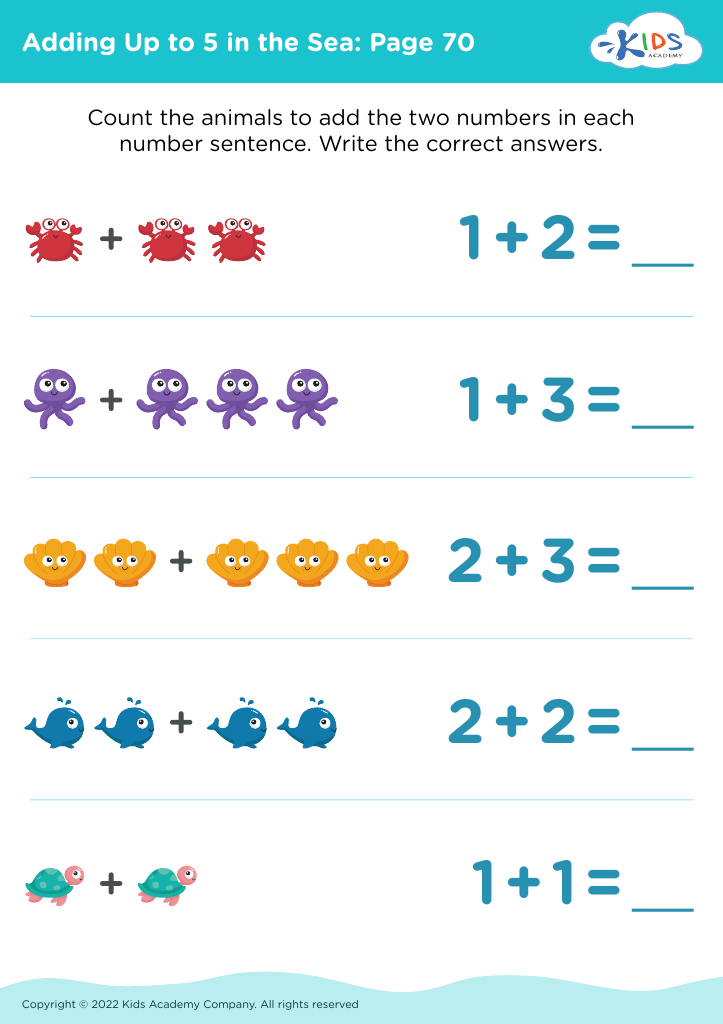
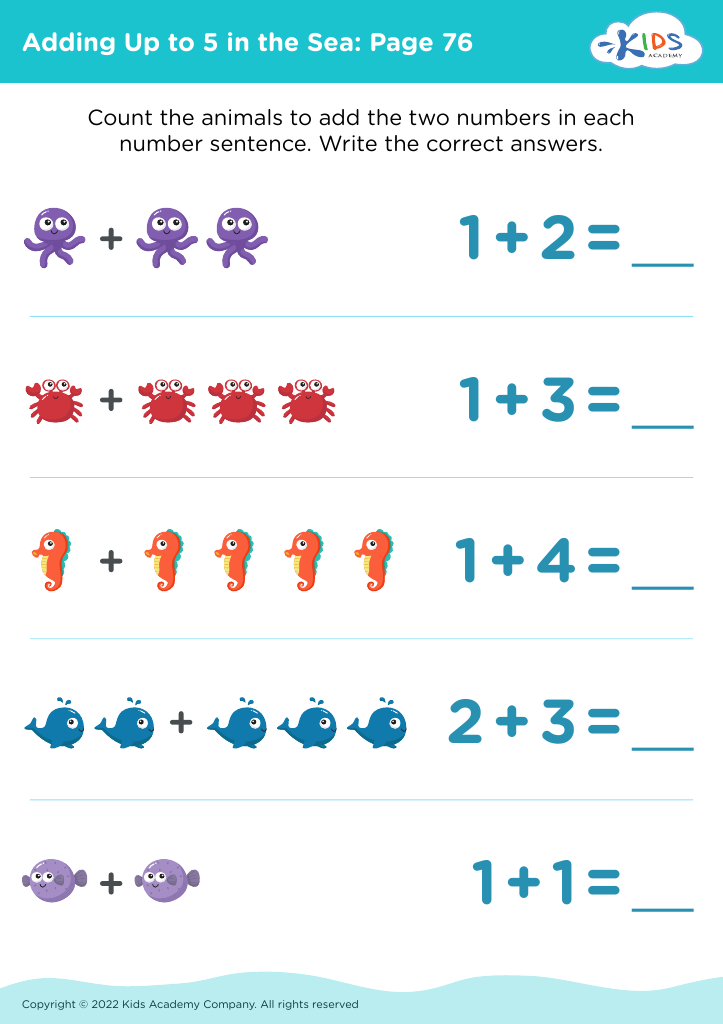
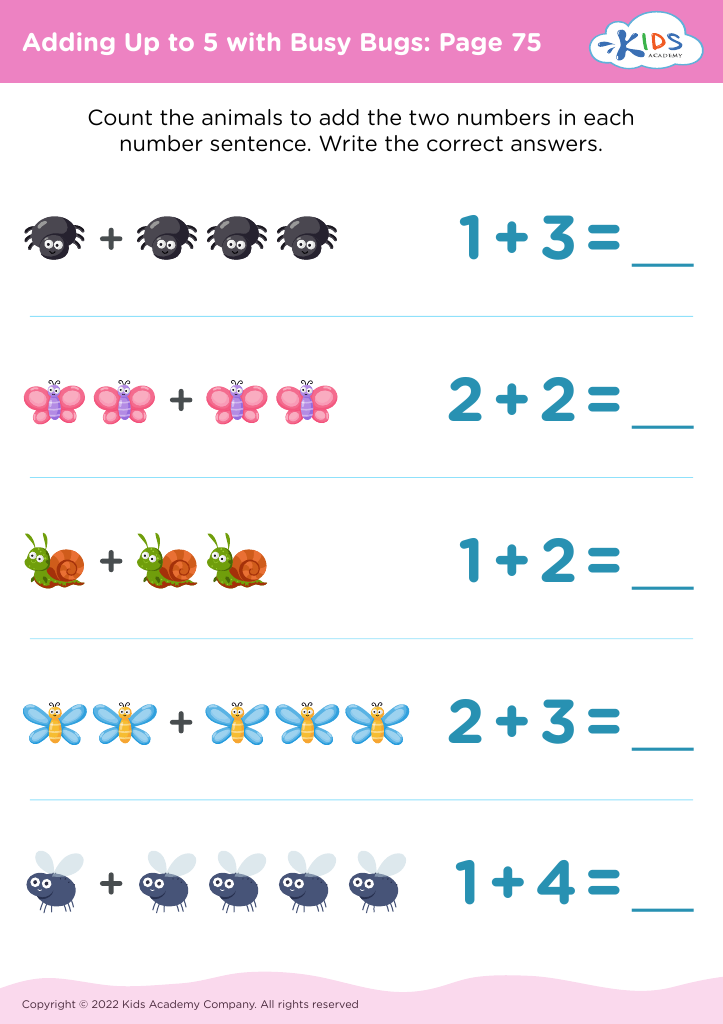
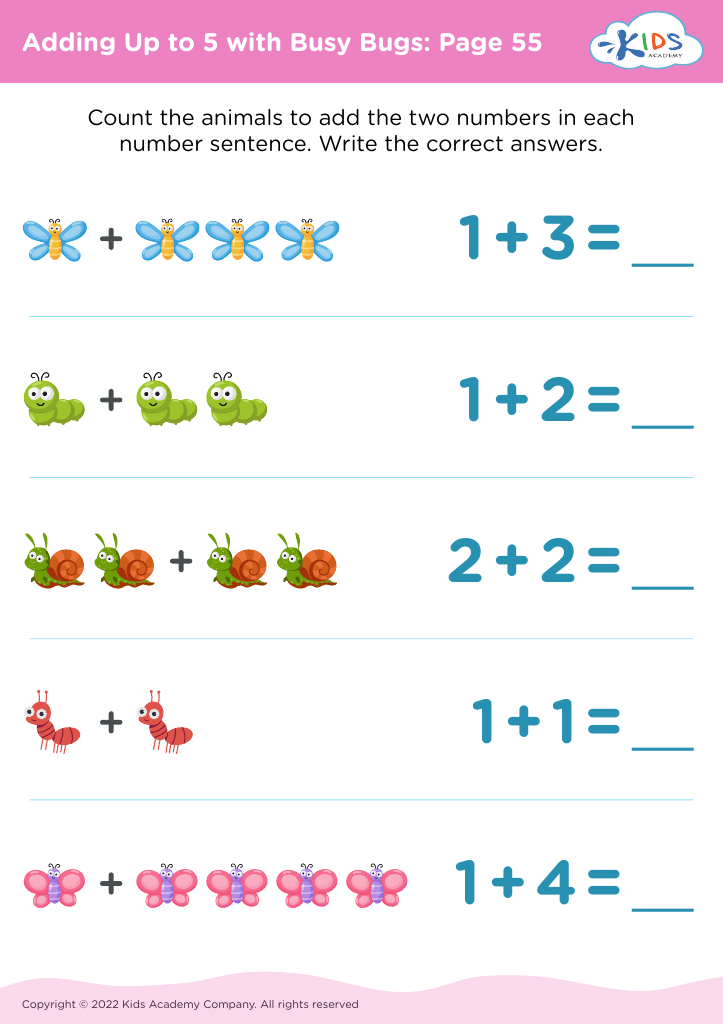
Explore our engaging "Basic Math Understanding: Adding Up to 5 Worksheets" designed specifically for children ages 3 to 6. These worksheets provide a fun and interactive way for young learners to master the fundamentals of addition through colorful illustrations and age-appropriate activities. Featuring captivating exercises that encourage visual learning, kids can comfortably practice adding numbers up to 5, promoting early numeracy skills. Our resources are perfect for homeschool settings or classroom environments, fostering a love for math from an early age. Join us in helping your child build a strong mathematical foundation and develop confidence with numbers today!






%20(1).jpg)
.jpg)
Understanding basic math concepts, such as adding up to 5, is crucial for children aged 3-6 for several reasons. First, early math skills lay the foundation for future academic success and confidence in the subject. Mastering simple addition fosters critical thinking and problem-solving abilities, which are essential throughout education and life.
Moreover, incorporating math into daily activities engages young learners and makes learning feel natural. For instance, counting snacks, toys, or even steps encourages children to see math as part of their everyday experience. This enjoyable learning process builds a positive attitude toward math, reducing anxiety associated with it as they grow.
Additionally, enhancing numerical comprehension nurtures social skills; children learn to share, take turns, and collaborate while engaging in group activities involving counting and simple addition games. This not only strengthens their math skills but also promotes important interpersonal skills.
Lastly, a solid grasp of basic math provides a gateway for exploring more complex concepts in the future, ensuring children are prepared for their academic journey. Therefore, parents and teachers should prioritize teaching basic addition up to 5 as it supports cognitive development, everyday interactions, and a prosperous foundation for lifelong learning.








