Filters

95 filtered results

Clear all filters
Favorites
With answer key
Interactive

95 filtered results

Difficulty Level

Grade


Check out this FREE Trial Lesson on Adding Up to 5 for age 3-6!

T

Favorites
With answer key
Interactive
  • 3-6
  • Cognitive Development
  • Adding Up to 5
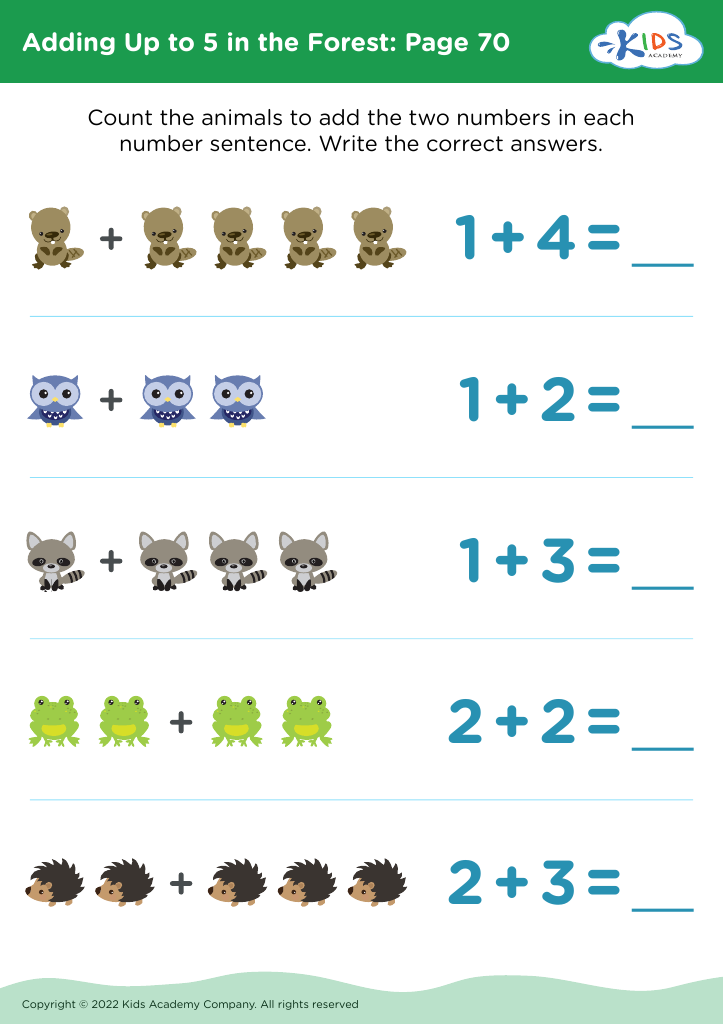
Adding Up to 5 in the Forest: Page 70
Worksheet
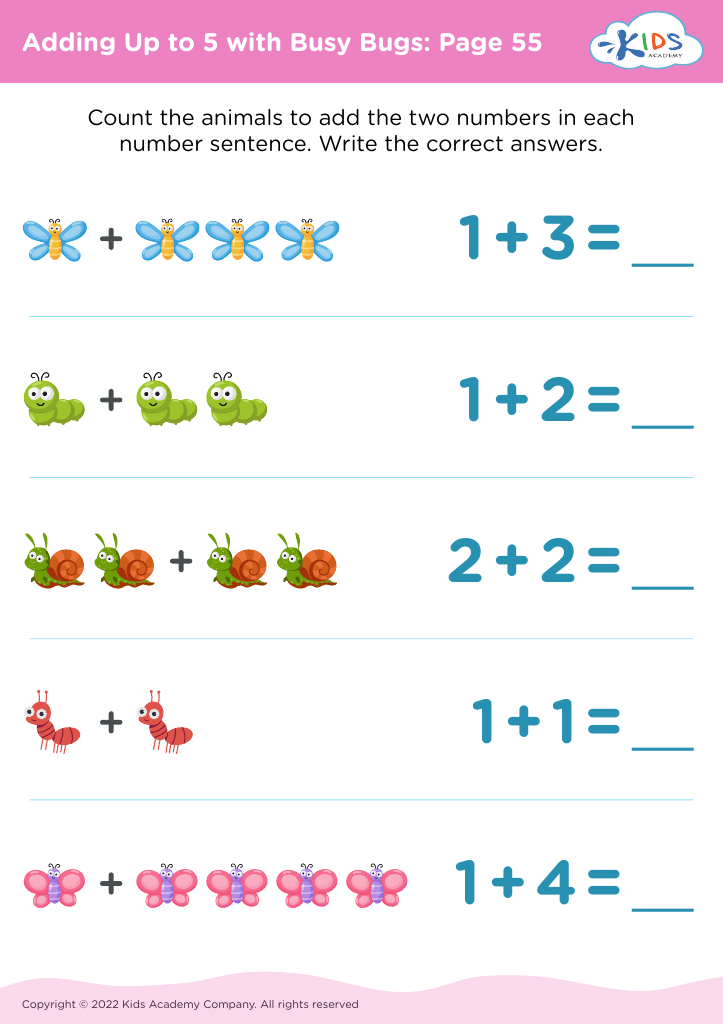
Adding Up to 5 with Busy Bugs: Page 55
Worksheet
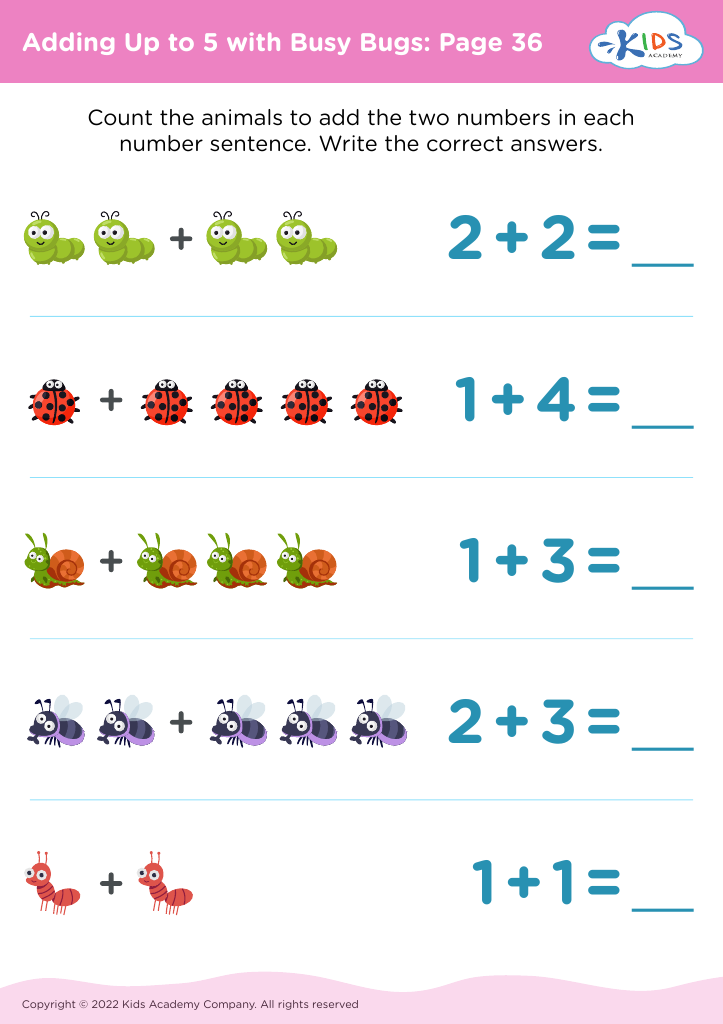
Adding Up to 5 with Busy Bugs: Page 36
Worksheet
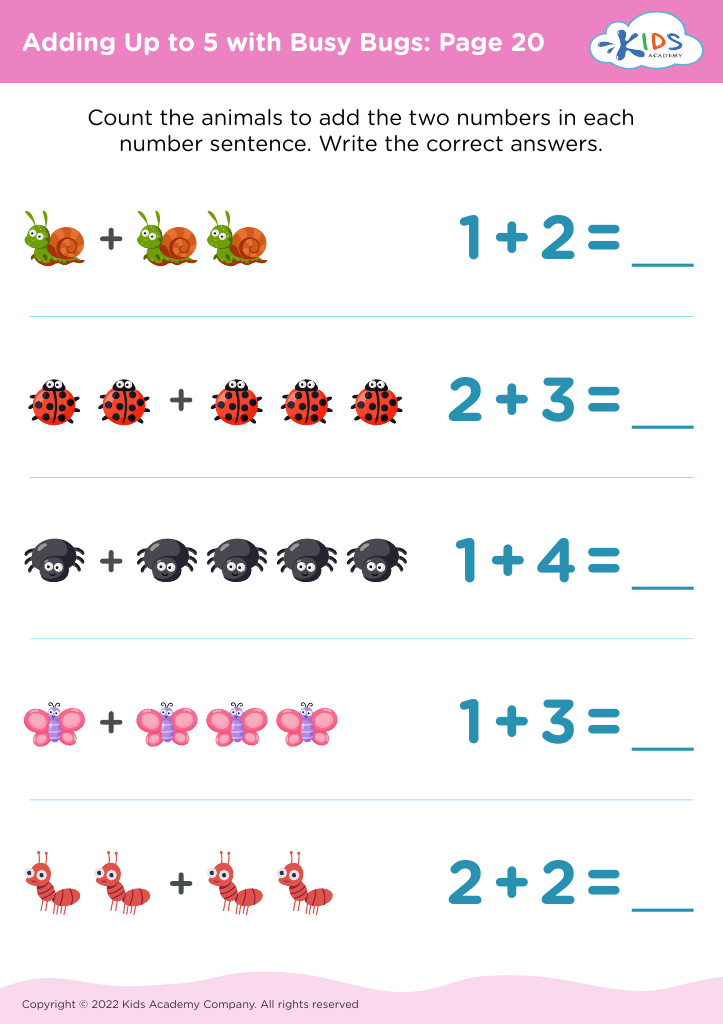
Adding Up to 5 with Busy Bugs: Page 20
Worksheet
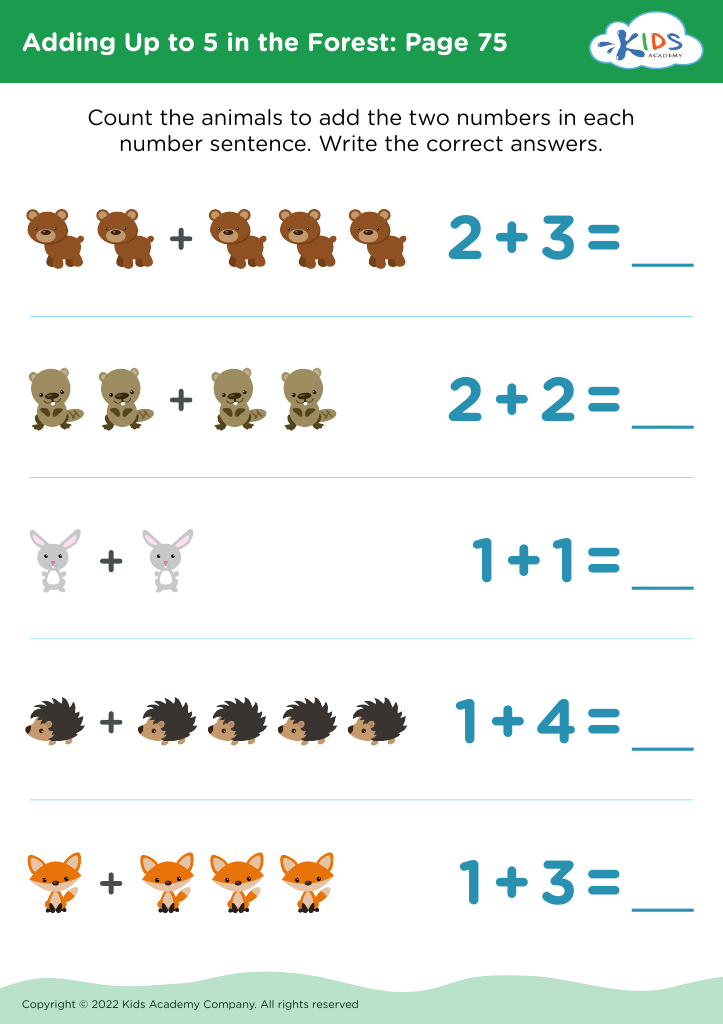
Adding Up to 5 in the Forest: Page 75
Worksheet
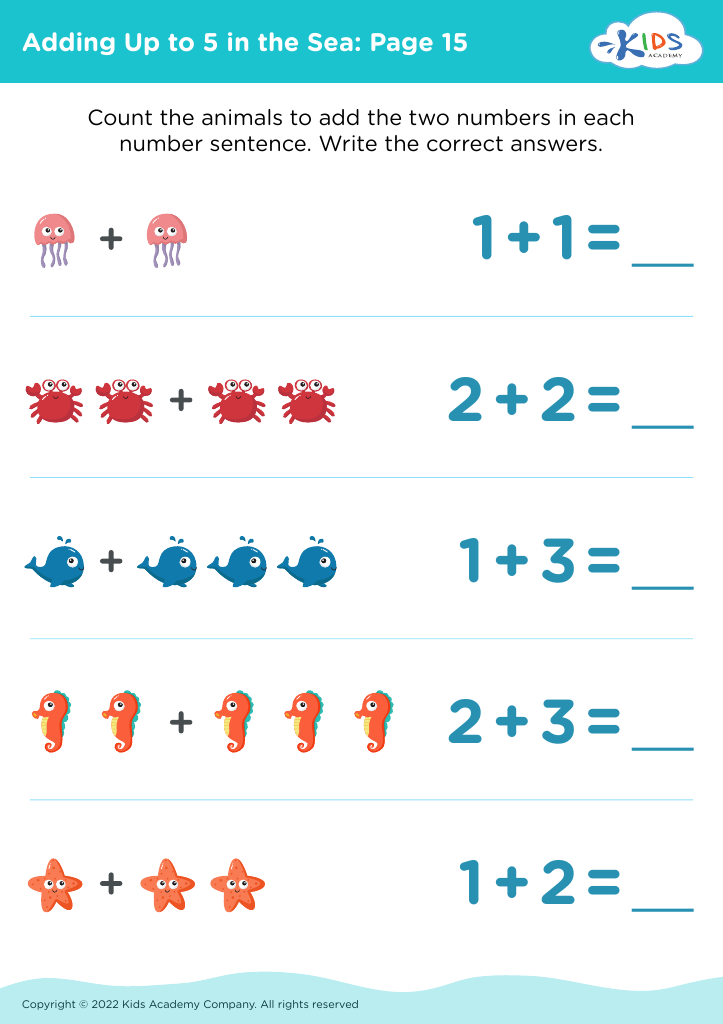
Adding Up to 5 in the Sea: Page 15
Worksheet
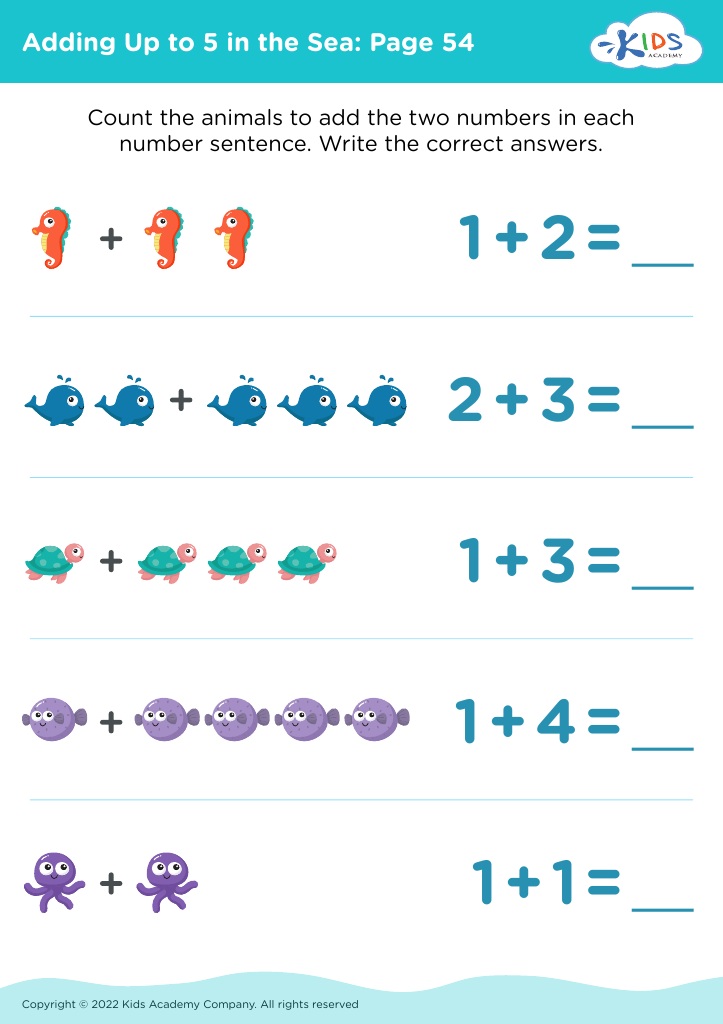
Adding Up to 5 in the Sea: Page 54
Worksheet
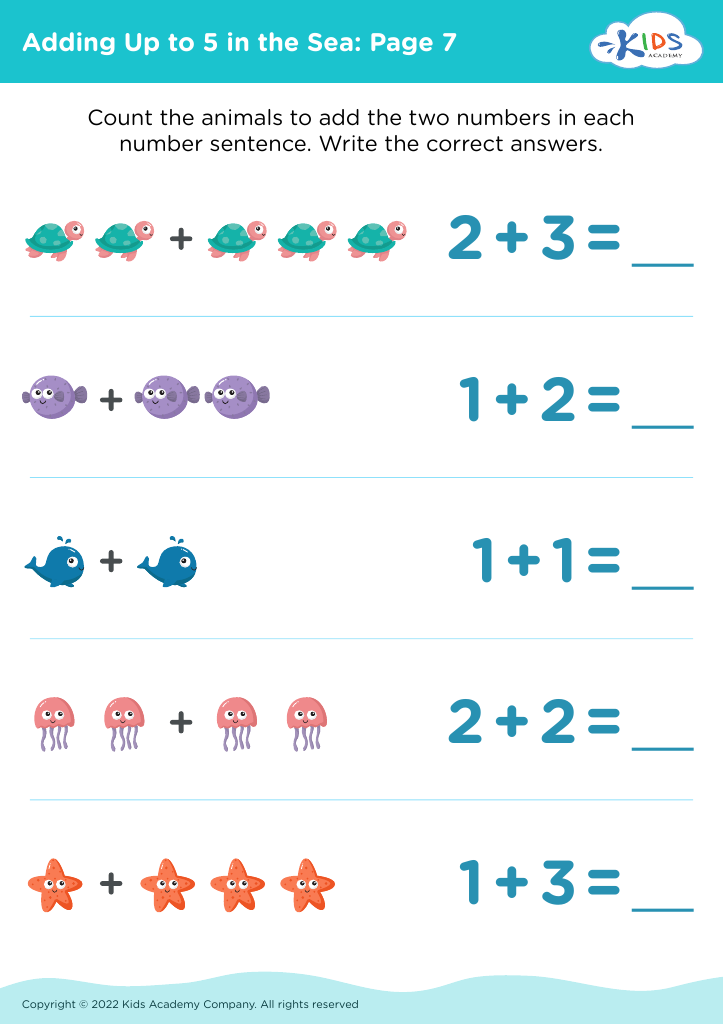
Adding Up to 5 in the Sea: Page 7

Adding Up to 5 in the Sea: Page 7

Adding Up to 5 in the Sea: Page 7
Worksheet
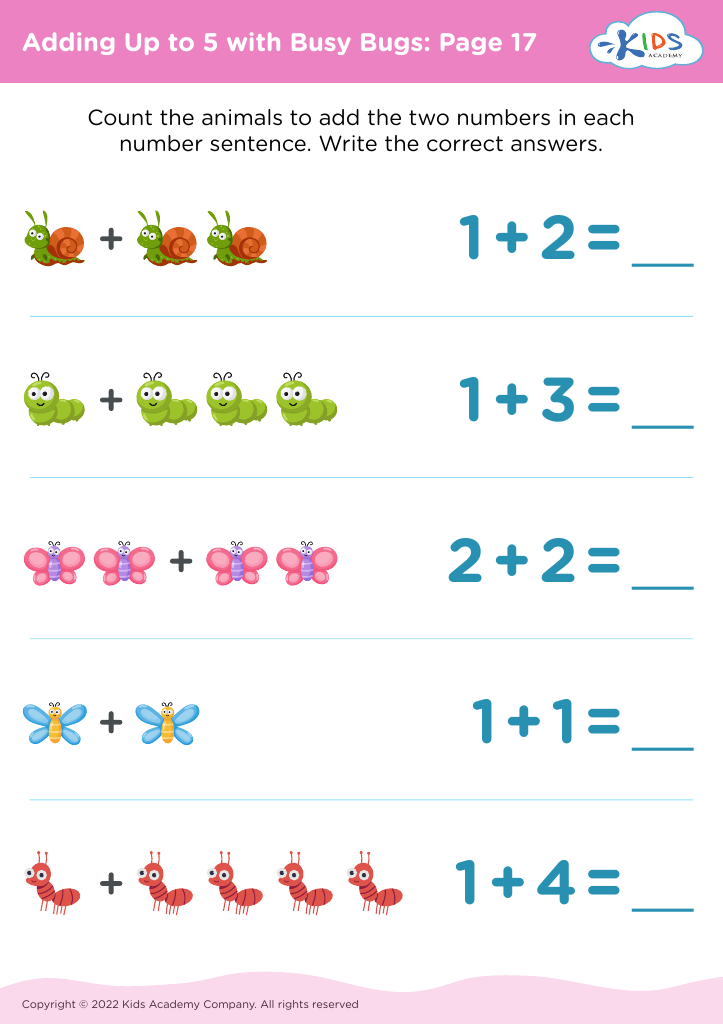
Adding Up to 5 with Busy Bugs: Page 17
Worksheet
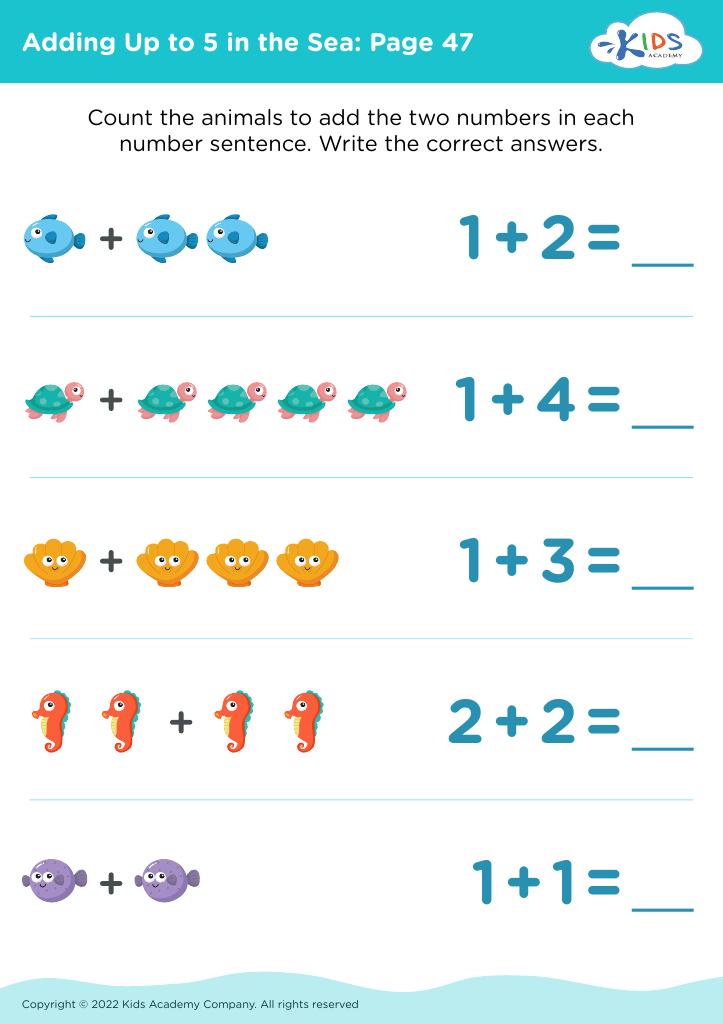
Adding Up to 5 in the Sea: Page 47
Worksheet
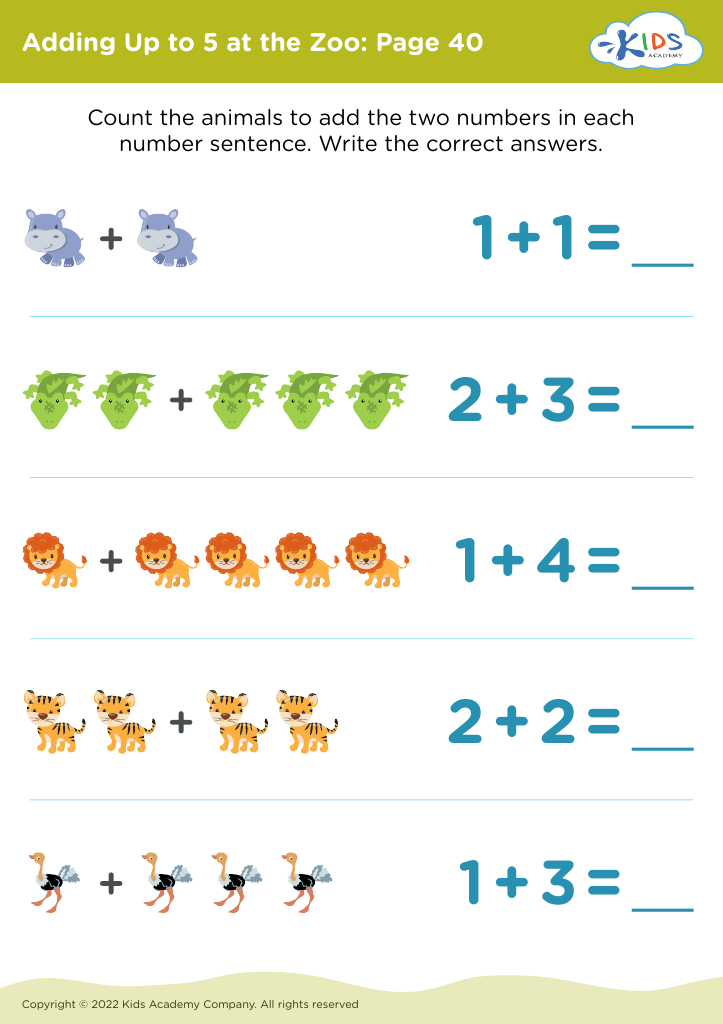
Adding Up to 5 at the Zoo: Page 40
Worksheet
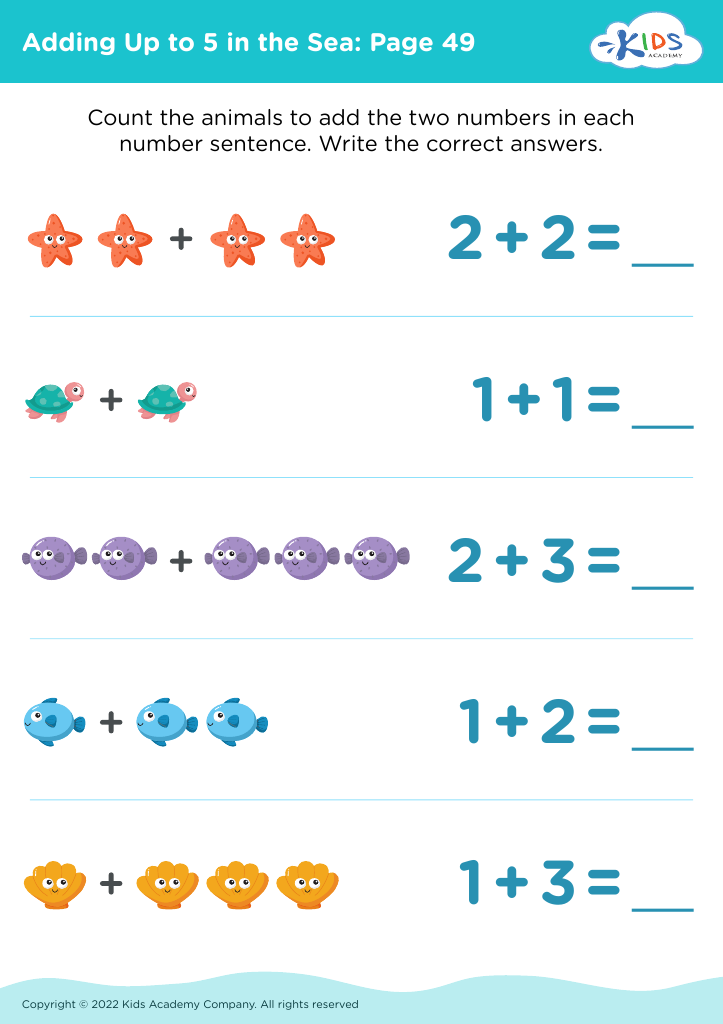
Adding Up to 5 in the Sea: Page 49
Worksheet
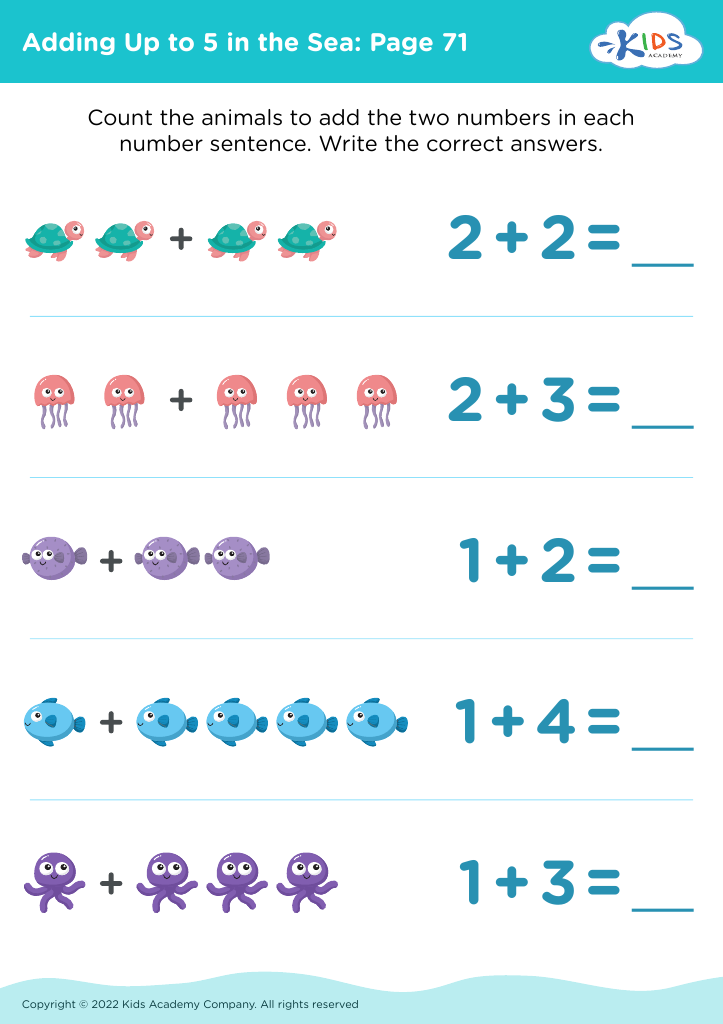
Adding Up to 5 in the Sea: Page 71
Worksheet
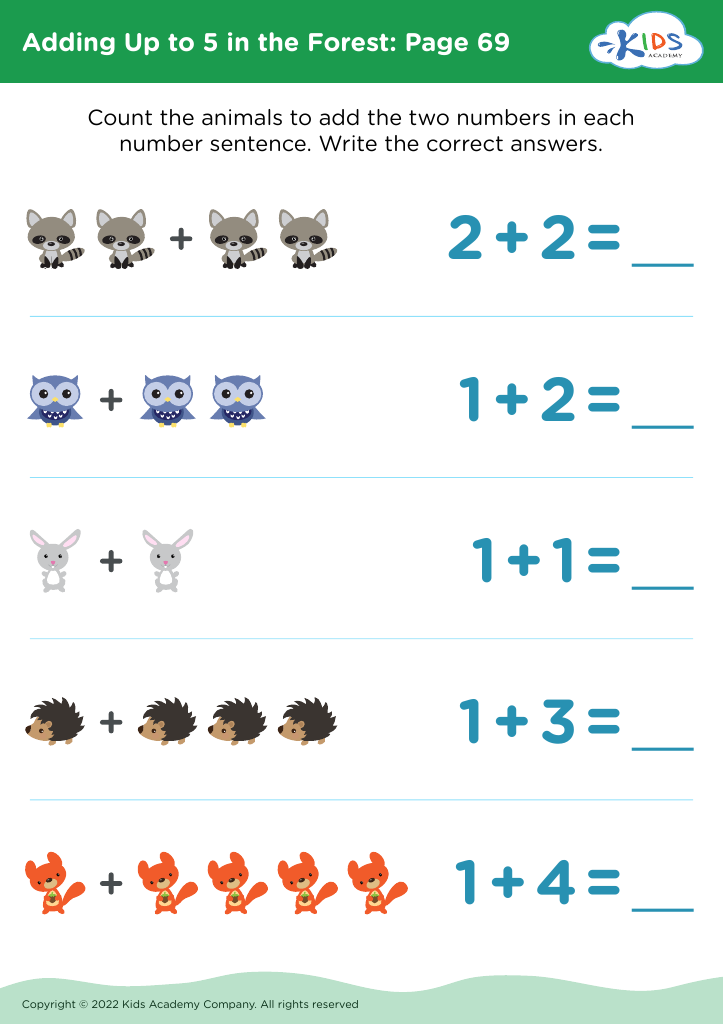
Adding Up to 5 in the Forest: Page 69
Worksheet
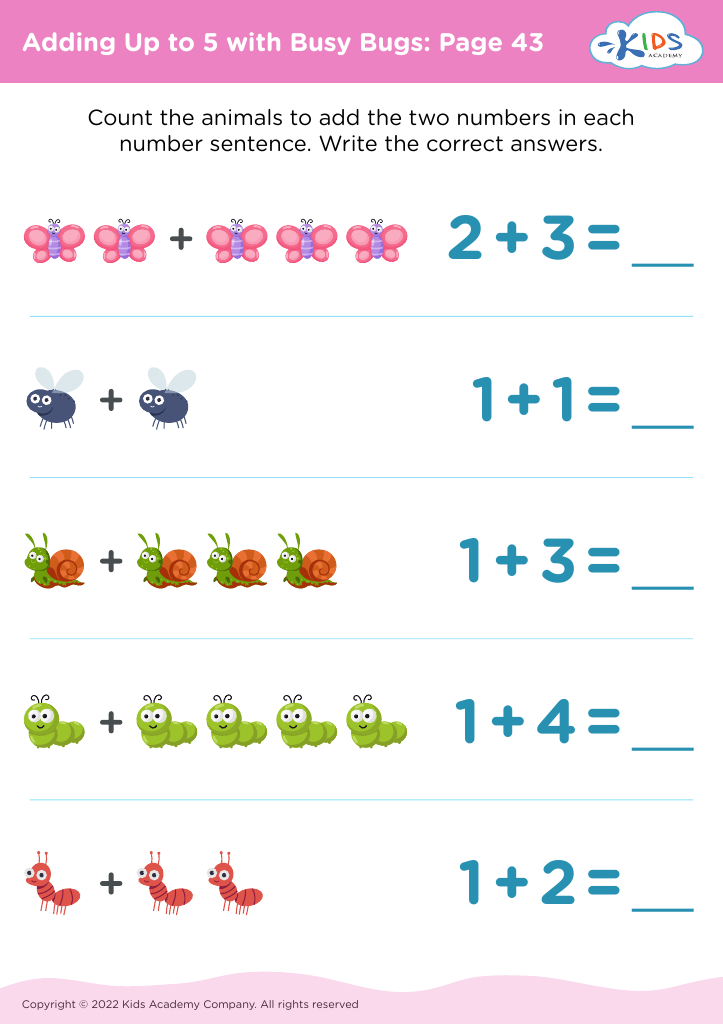
Adding Up to 5 with Busy Bugs: Page 43
Worksheet
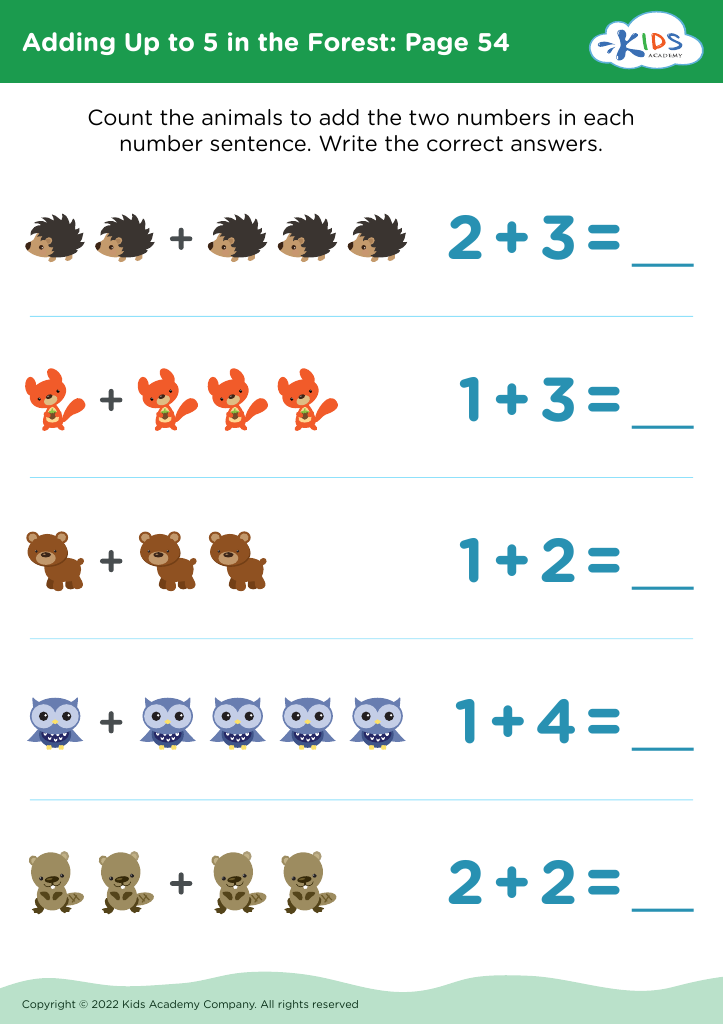
Adding Up to 5 in the Forest: Page 54
Worksheet
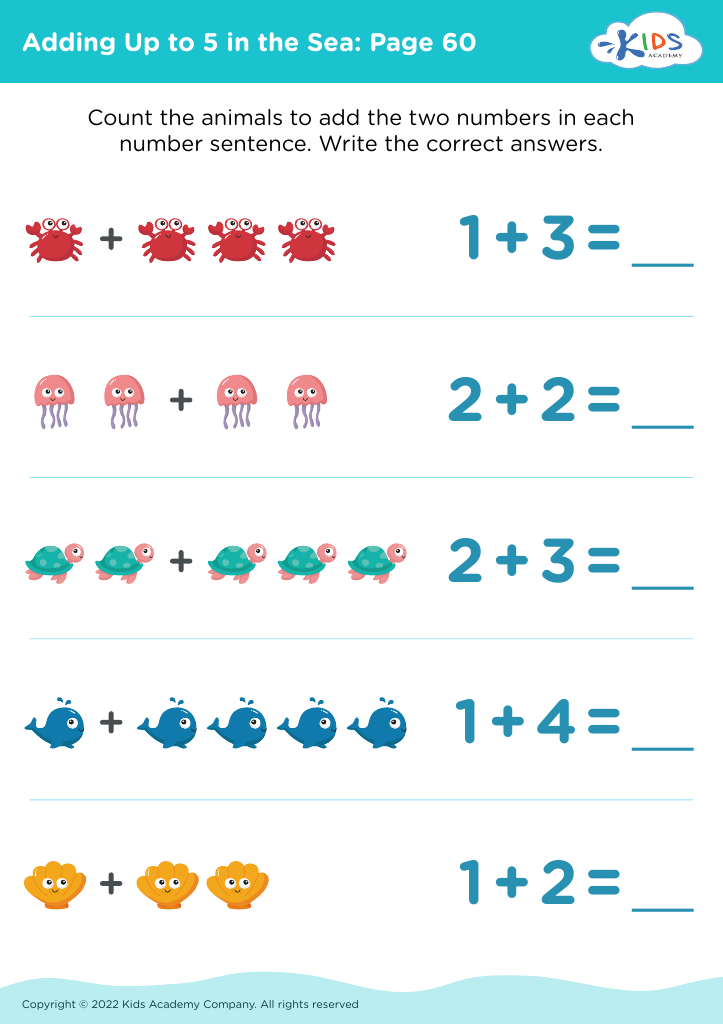
Adding Up to 5 in the Sea: Page 60
Worksheet
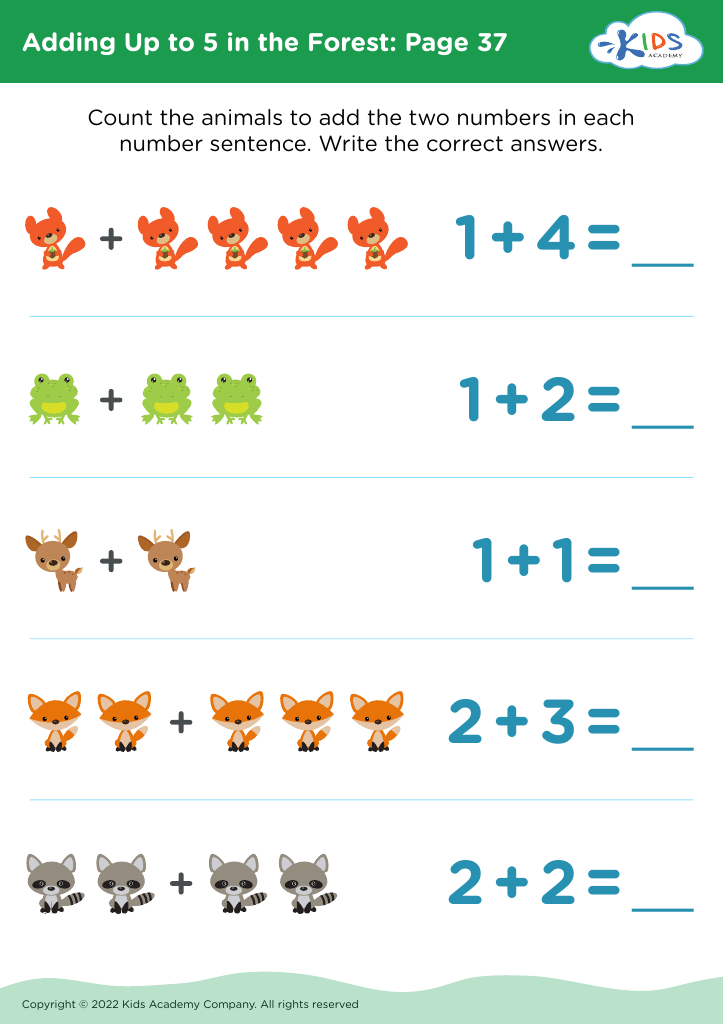
Adding Up to 5 in the Forest: Page 37
Worksheet
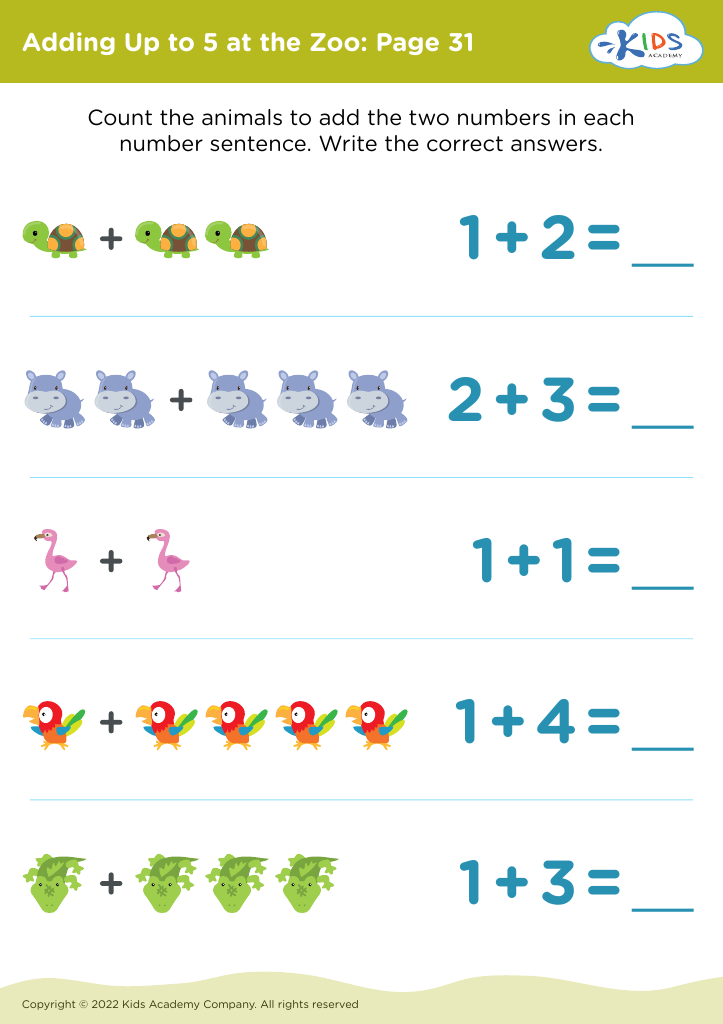
Adding Up to 5 at the Zoo: Page 31
Worksheet
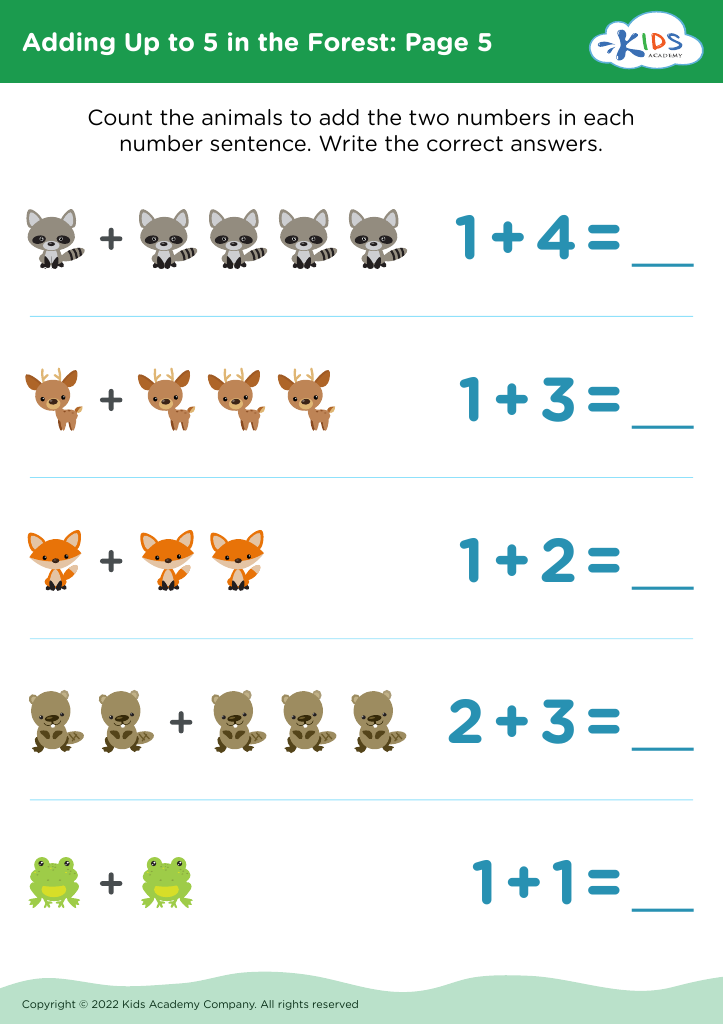
Adding Up to 5 in the Forest: Page 5
Worksheet
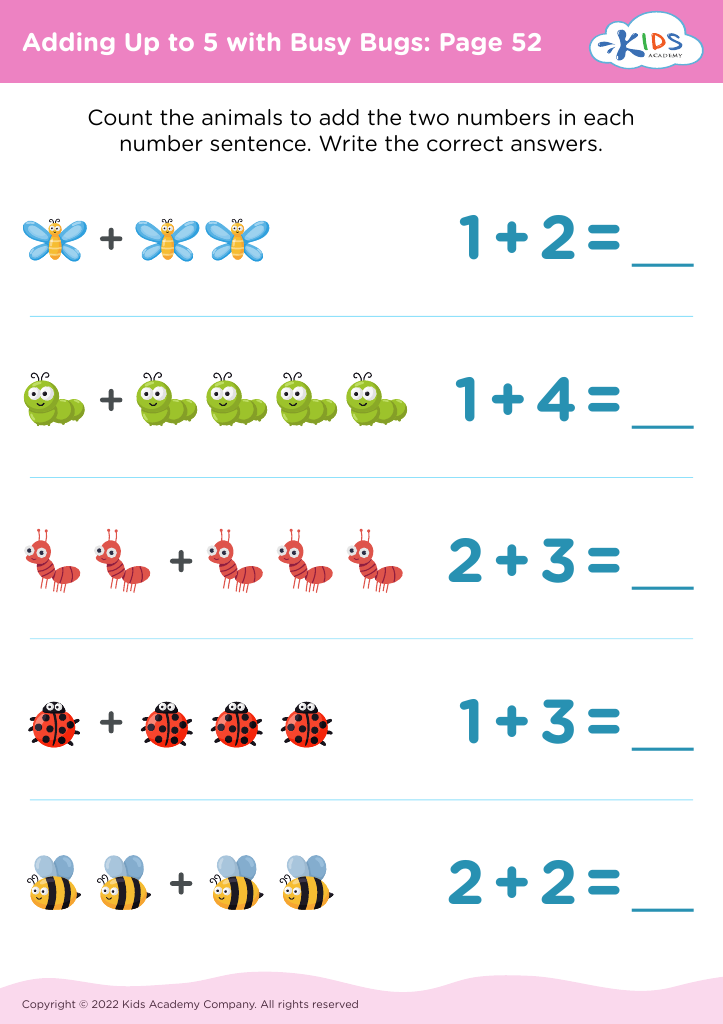
Adding Up to 5 with Busy Bugs: Page 52
Worksheet
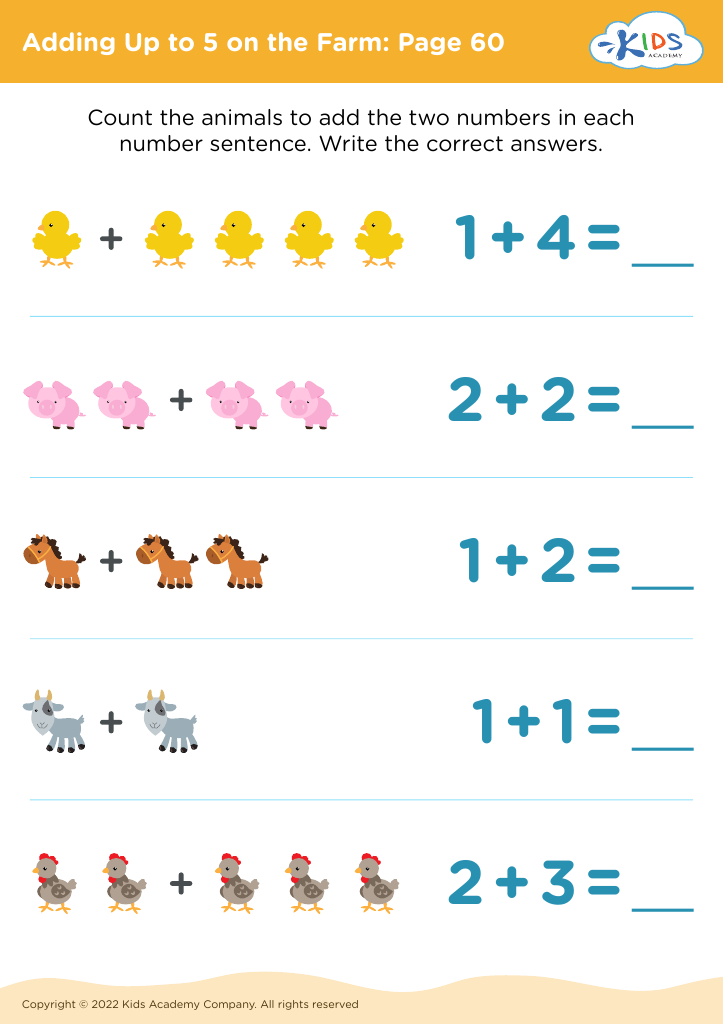
Adding Up to 5 on the Farm: Page 60
Worksheet
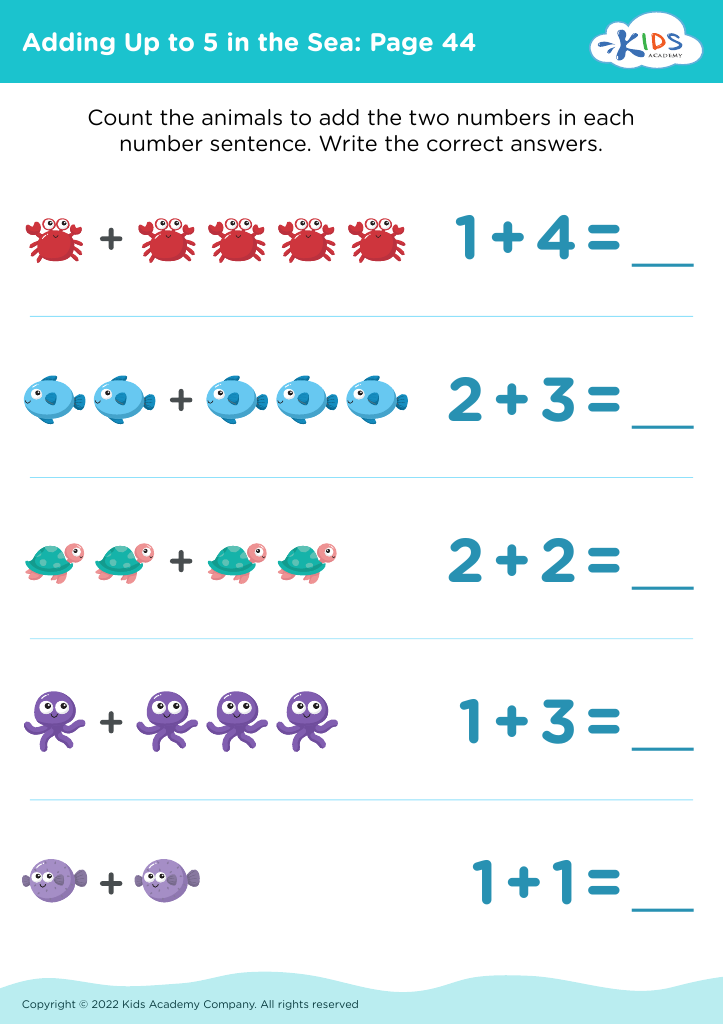
Adding Up to 5 in the Sea: Page 44
Worksheet


... 3 4

Caring about cognitive development, especially in the context of adding up to 5 for children aged 3-6, is crucial for parents and teachers. During these formative years, children are developing essential cognitive skills that lay the foundation for future learning. Engaging with early math concepts like counting and basic addition not only nurtures numerical understanding but also enhances critical thinking and problem-solving abilities.

At this age, children are naturally curious and eager to explore the world around them. By introducing concepts like adding up to 5, educators and caregivers can tap into this curiosity, making learning both fun and meaningful. Developing strong early math skills can significantly boost children's confidence, encouraging a positive attitude towards learning.

Understanding the fundamental concepts of addition enables children to make connections between numbers and real-life situations, fostering their ability to think abstractly. Furthermore, this stage of cognitive development is a prime time to build effective communication skills through discussions about math, promoting language development alongside numerical fluency.

Ultimately, investing time and energy into cognitive development in young children not only prepares them for future academic success but also enriches their overall cognitive growth, allowing them to thrive as lifelong learners.