Counting skills Adding Up to 5 Worksheets for Ages 3-6 - Page 5
102 filtered results
-
From - To


.jpg)





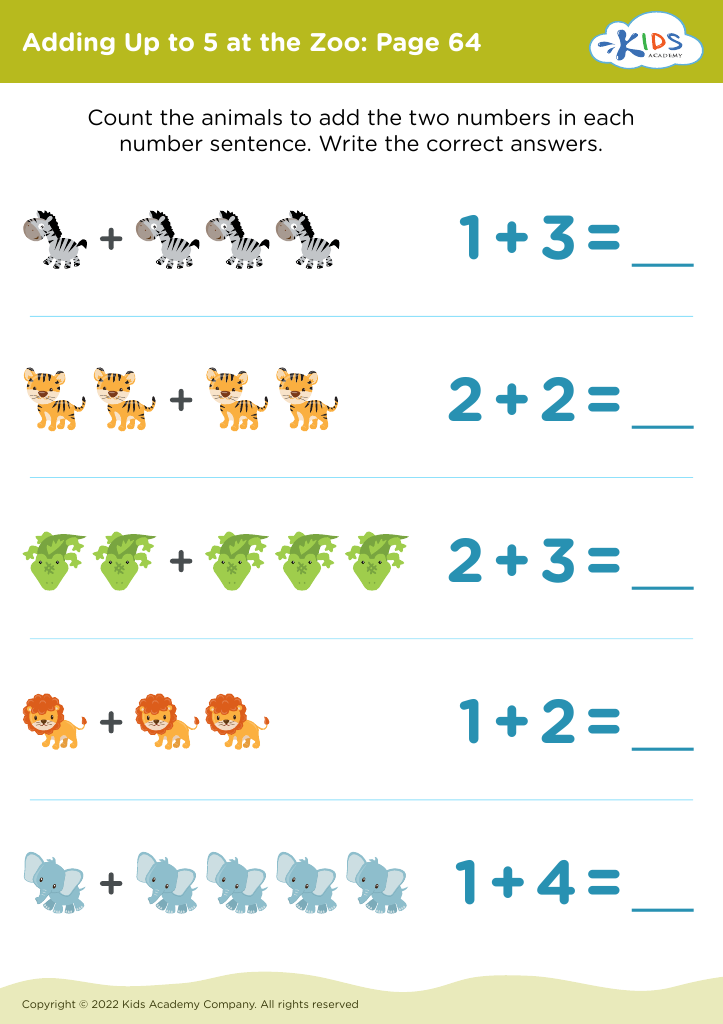
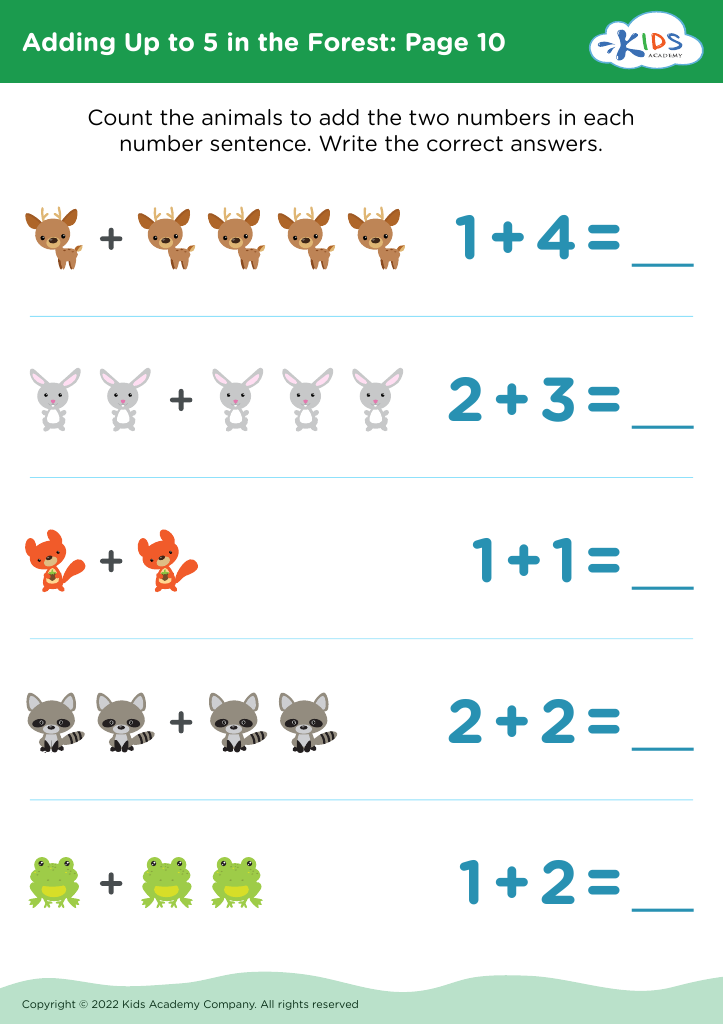
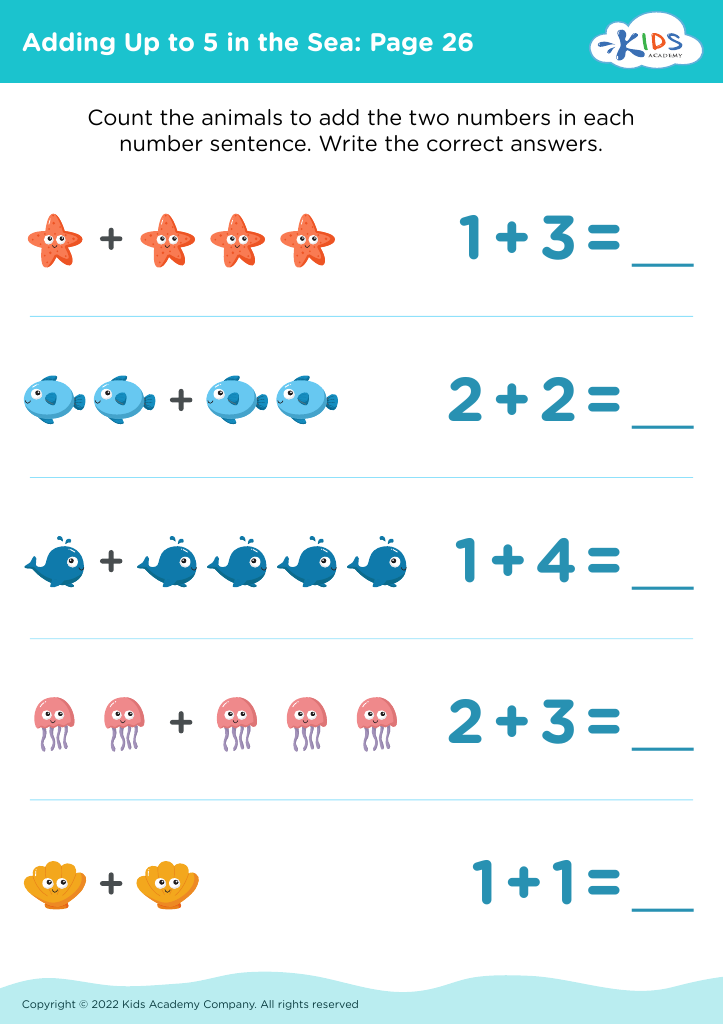
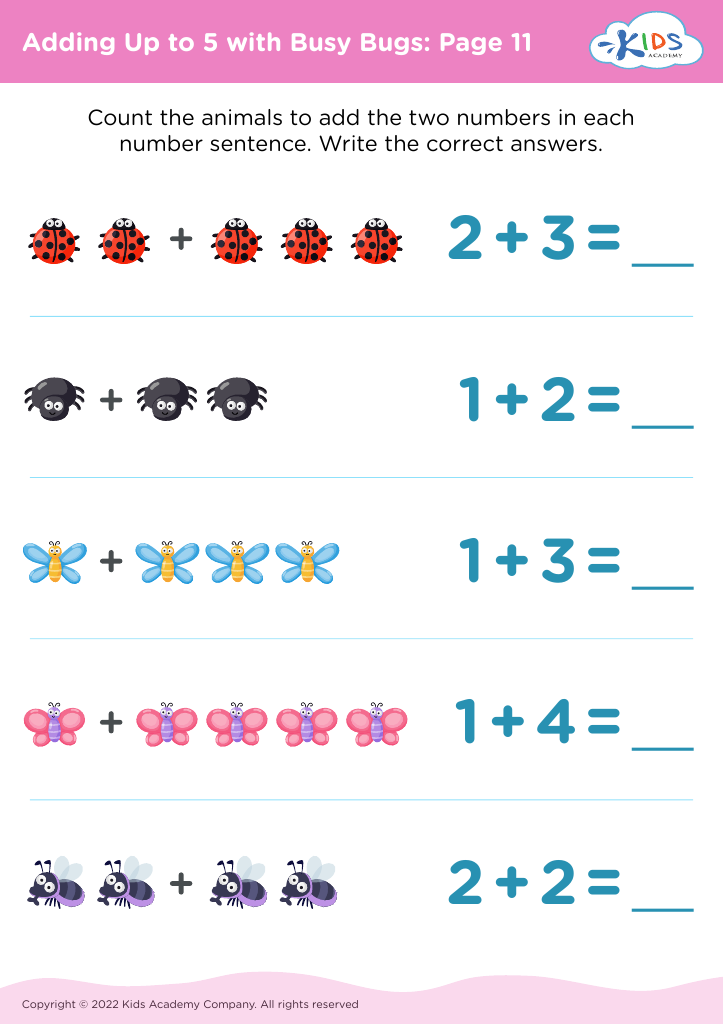
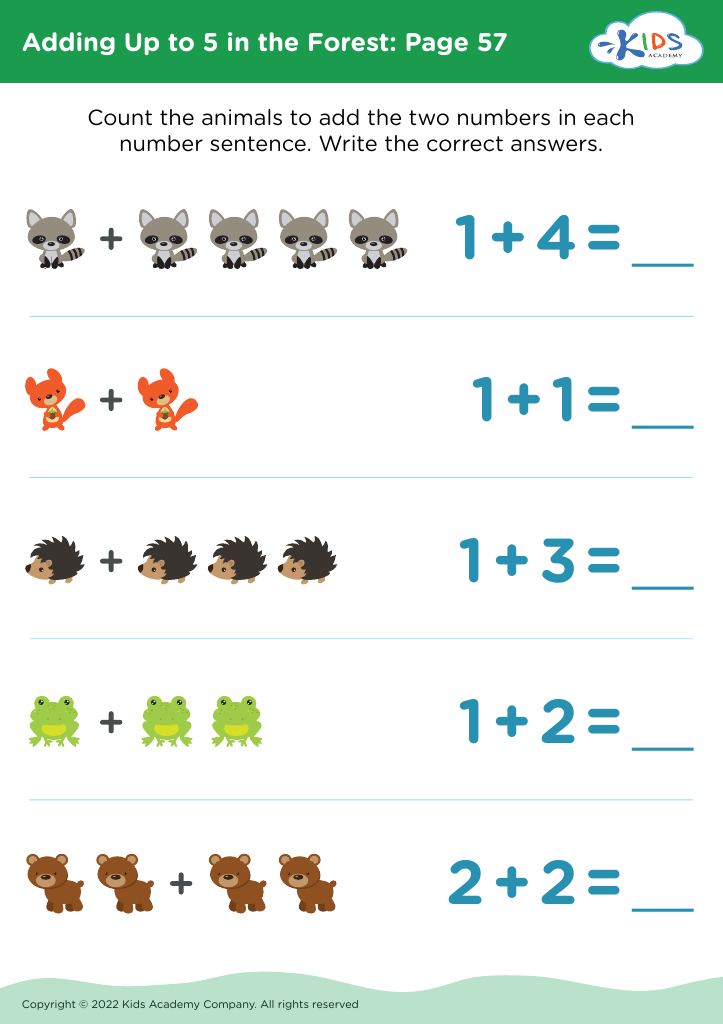
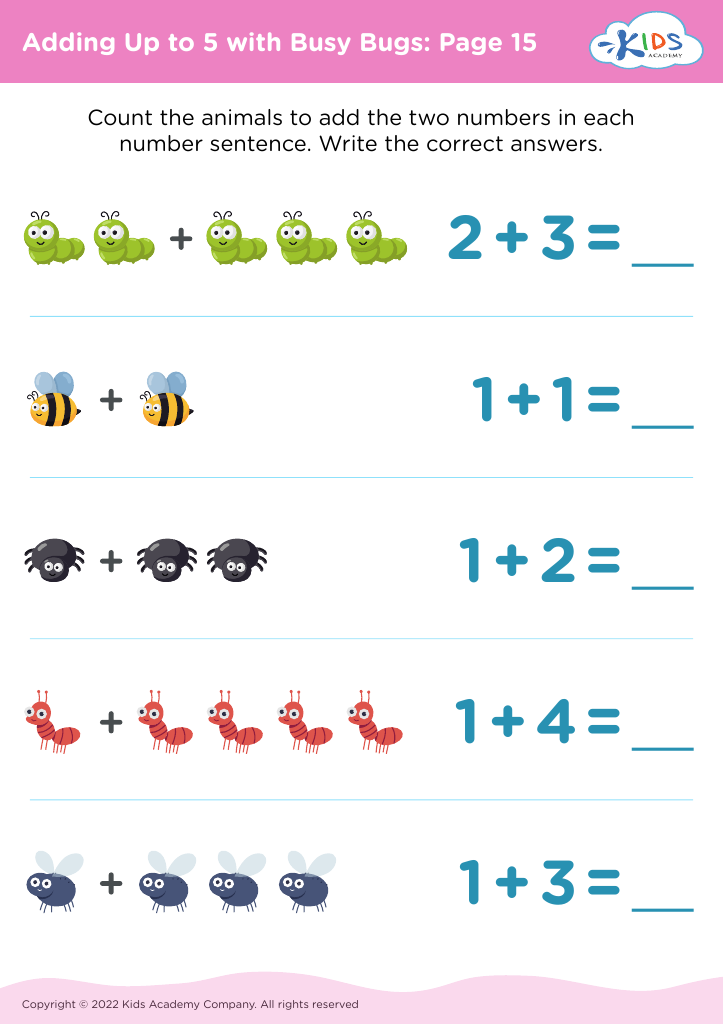
Counting skills and the ability to add up to 5 are foundational aspects of early childhood mathematics education. For children between the ages of 3 to 6, mastering these skills serves as an essential building block for future mathematical concepts and success. These early counting skills help young children develop number sense, which is the intuitive understanding of numbers and their relationships.
When children learn to count and add up to 5, they are not only learning numbers but also important cognitive skills such as memory, attention, and logic. These are key skills needed for a lifelong learning journey. Counting helps children understand the concept of quantity but also introduces them to simple arithmetic, fostering problem-solving skills and logical thinking at a young age.
Furthermore, these skills integrate well with daily activities and enhanced fine motor skills through activities like counting fingers, toes, or toys. It engages them in fun and interactive ways, boosting their confidence and interest in learning.
Parents and teachers should care because strong early numerical foundation sets the stage for school readiness, academic achievement, and can mitigate difficulties in learning. Patient, encouraging practice with counting and simple addition builds resilience and positive attitudes towards mathematics, which can translate into better performance as their education progresses.








