Problem-Solving Skills Adding Up to 5 Worksheets for Ages 3-6
37 filtered results
-
From - To
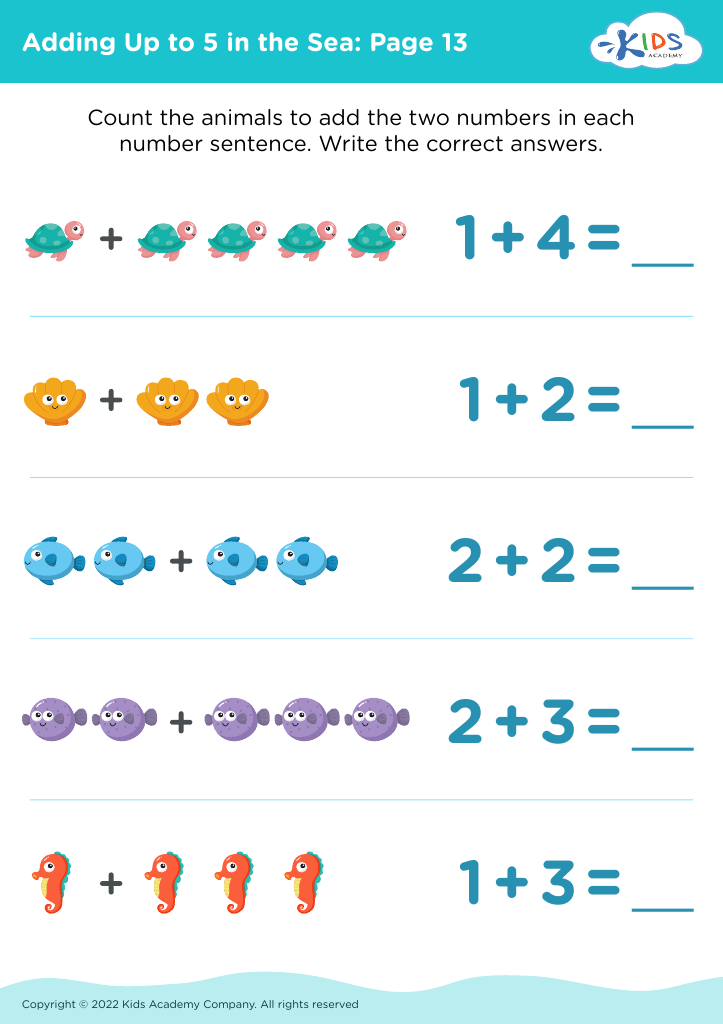
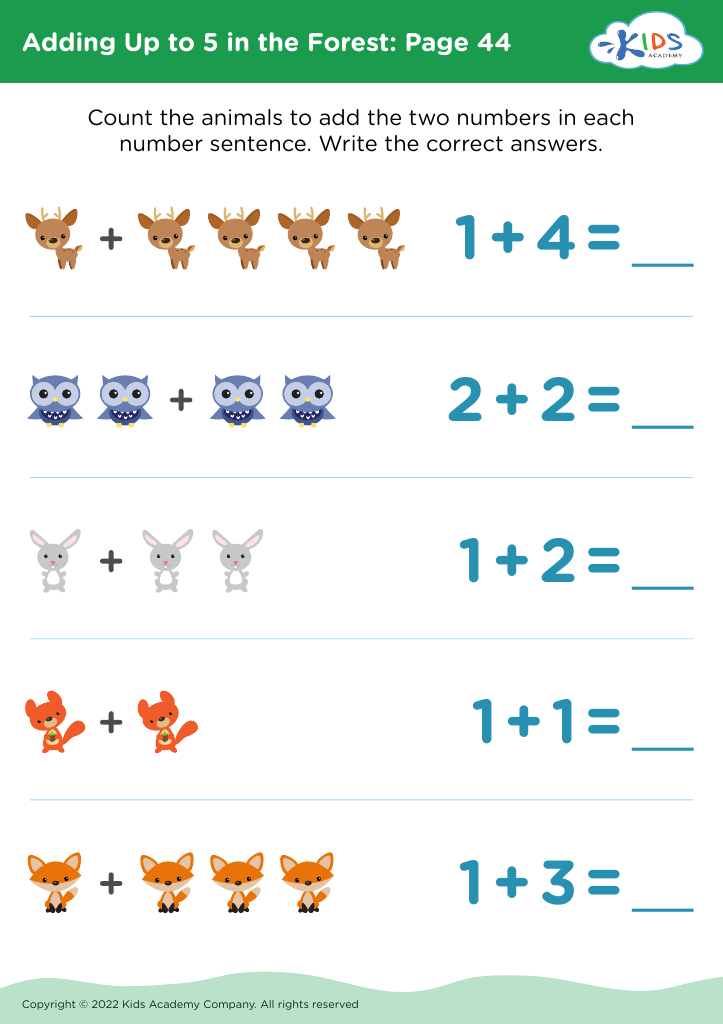
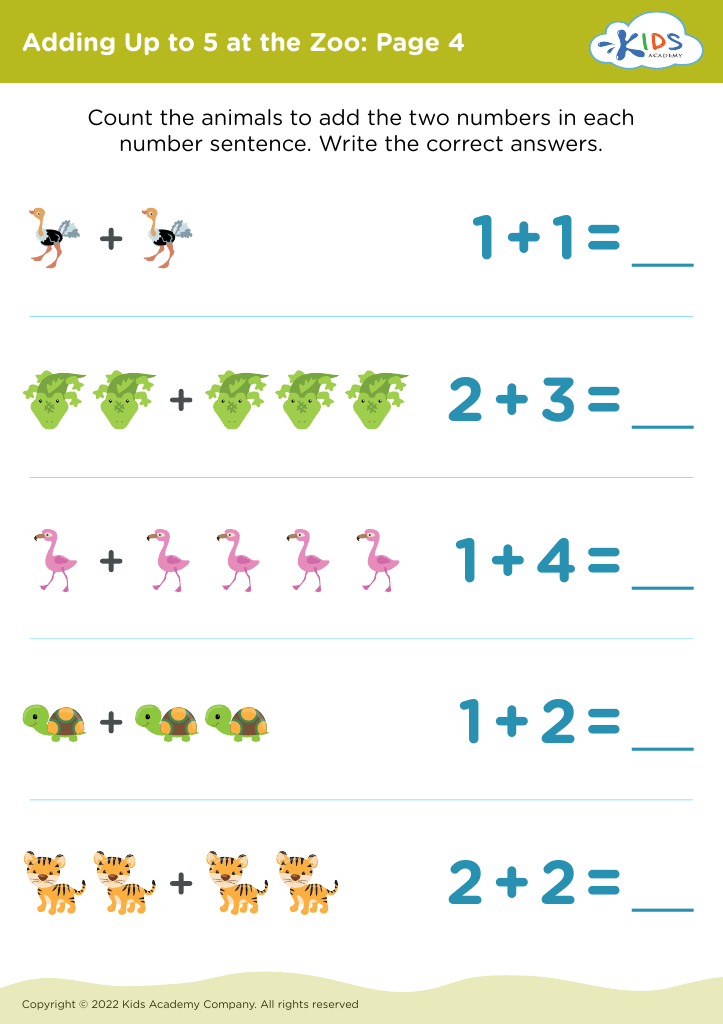
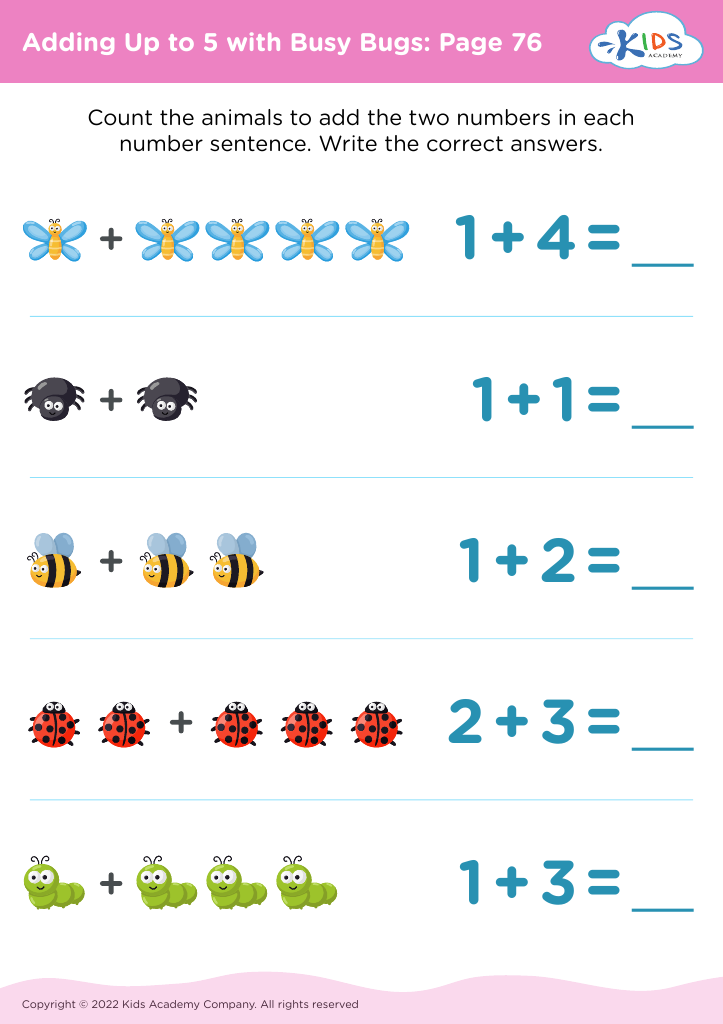
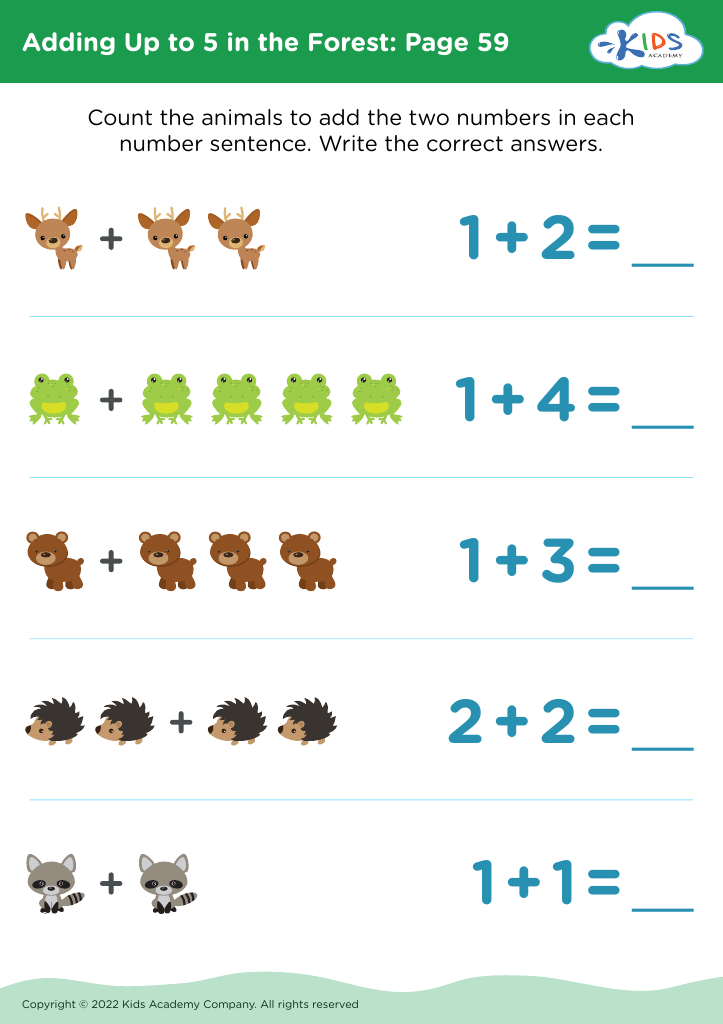
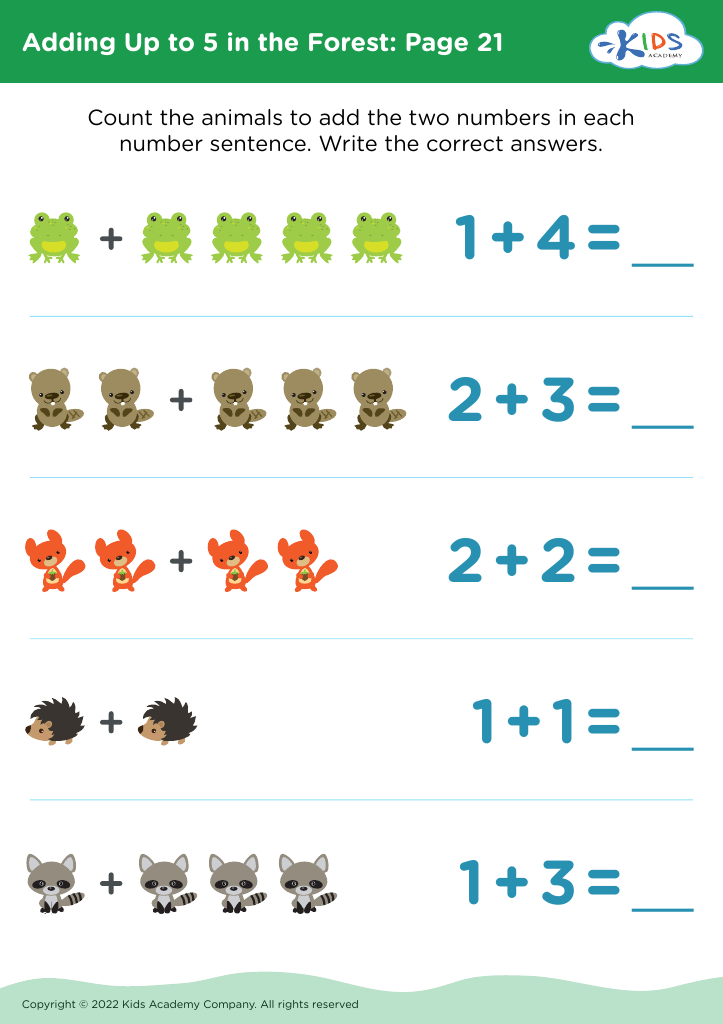
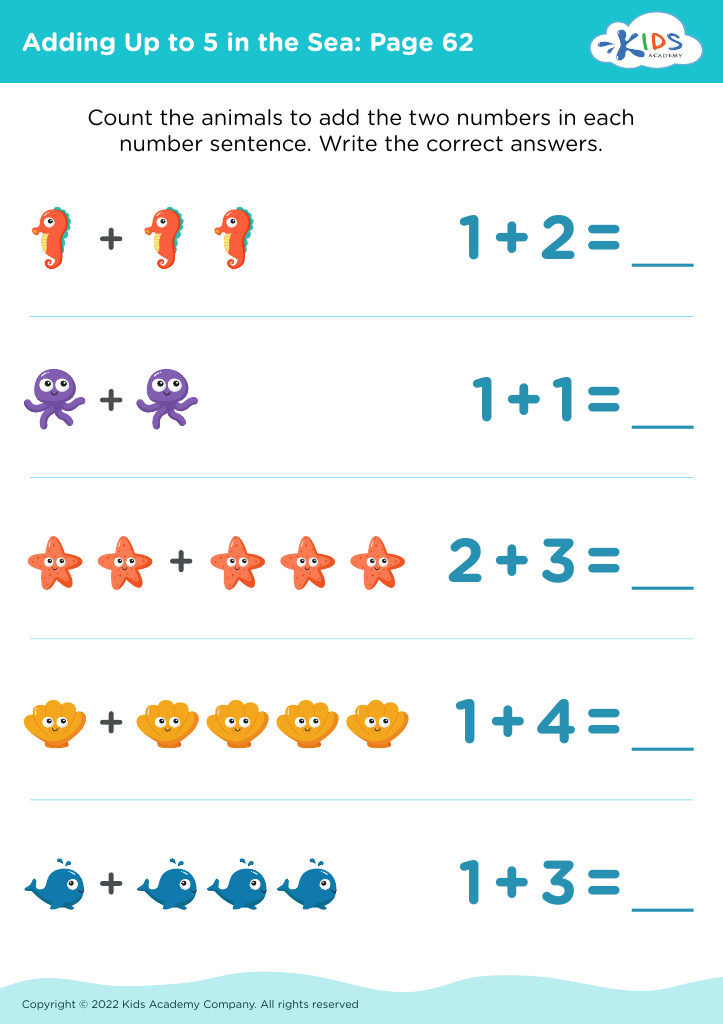
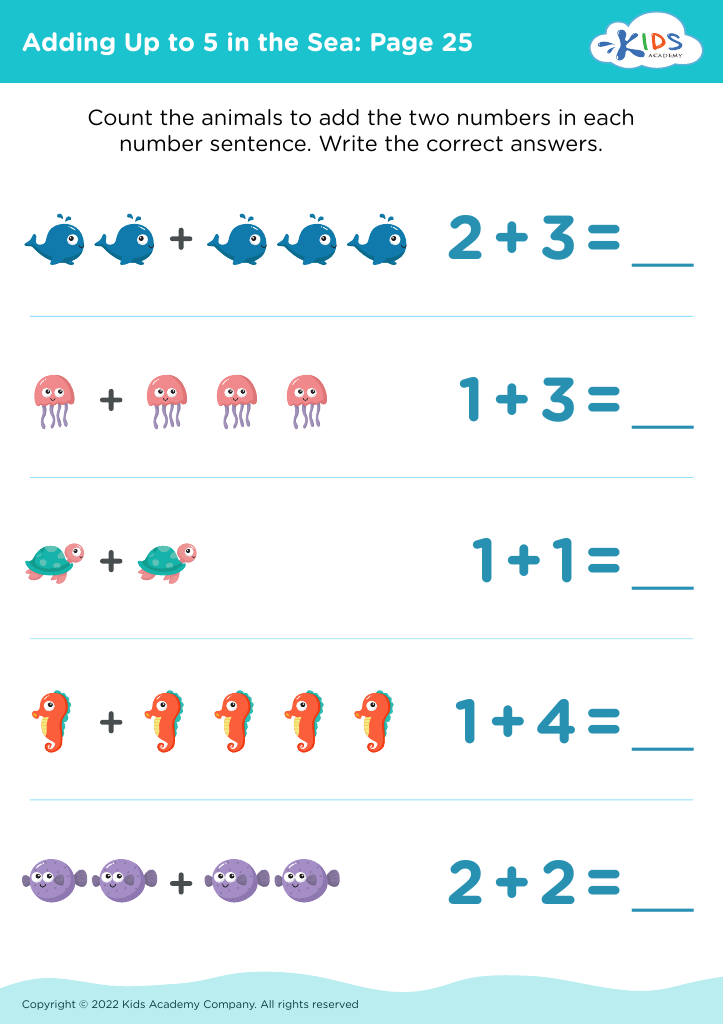
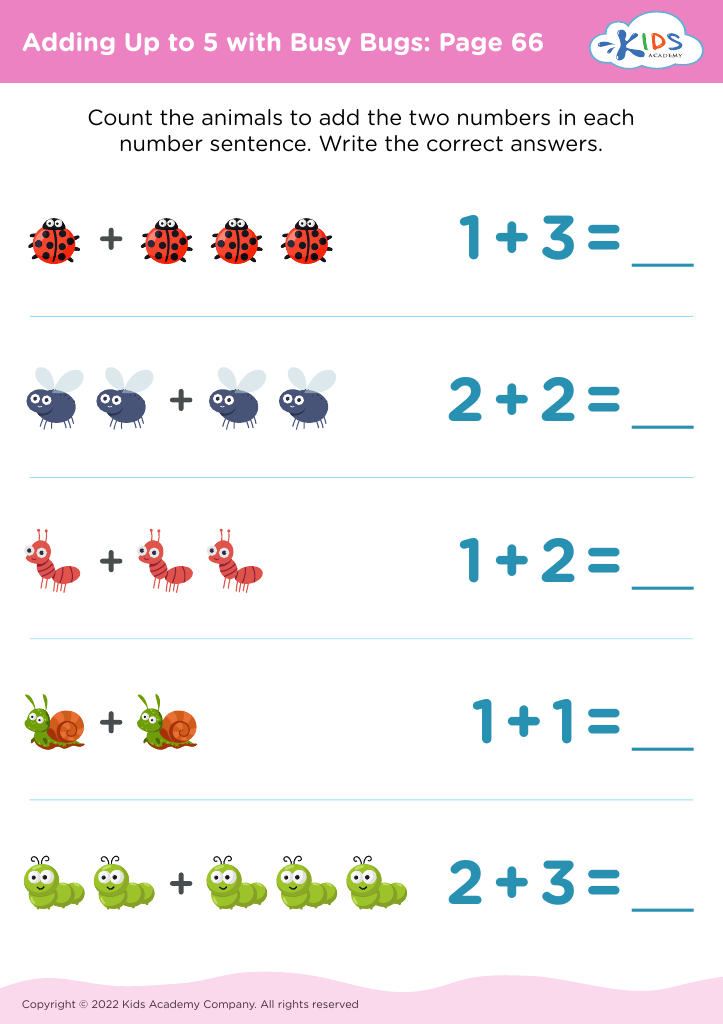
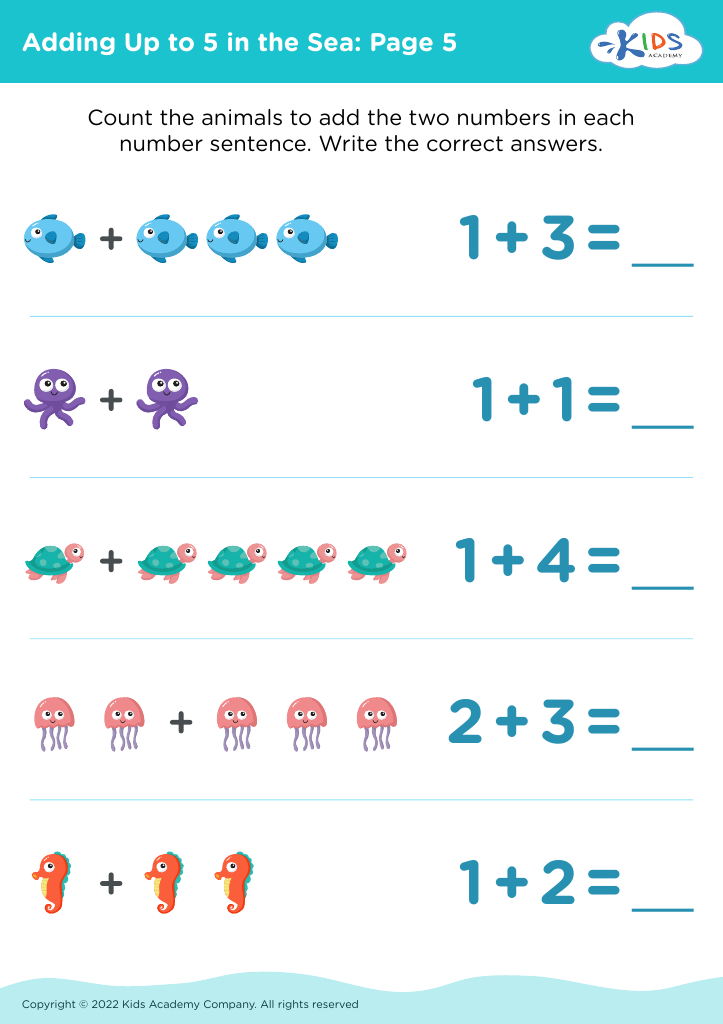
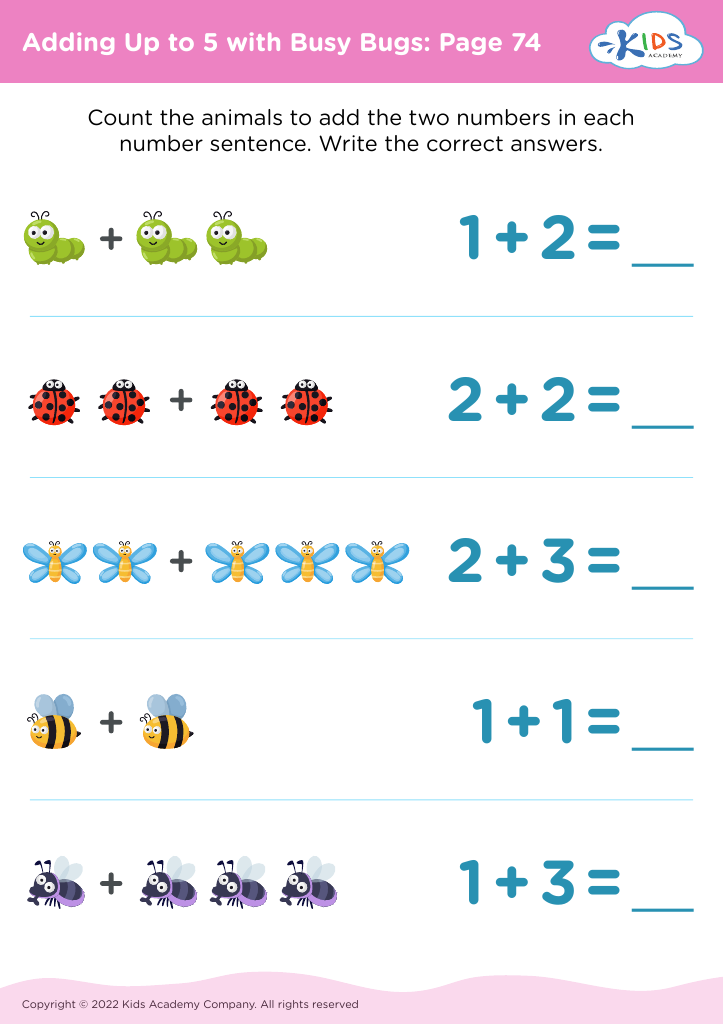
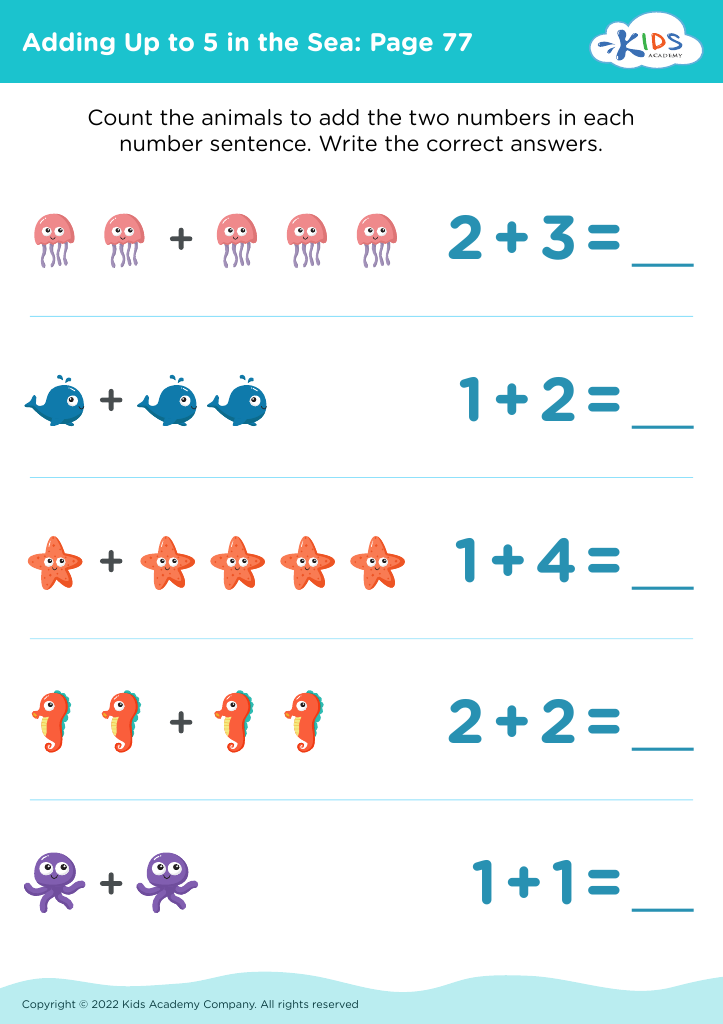
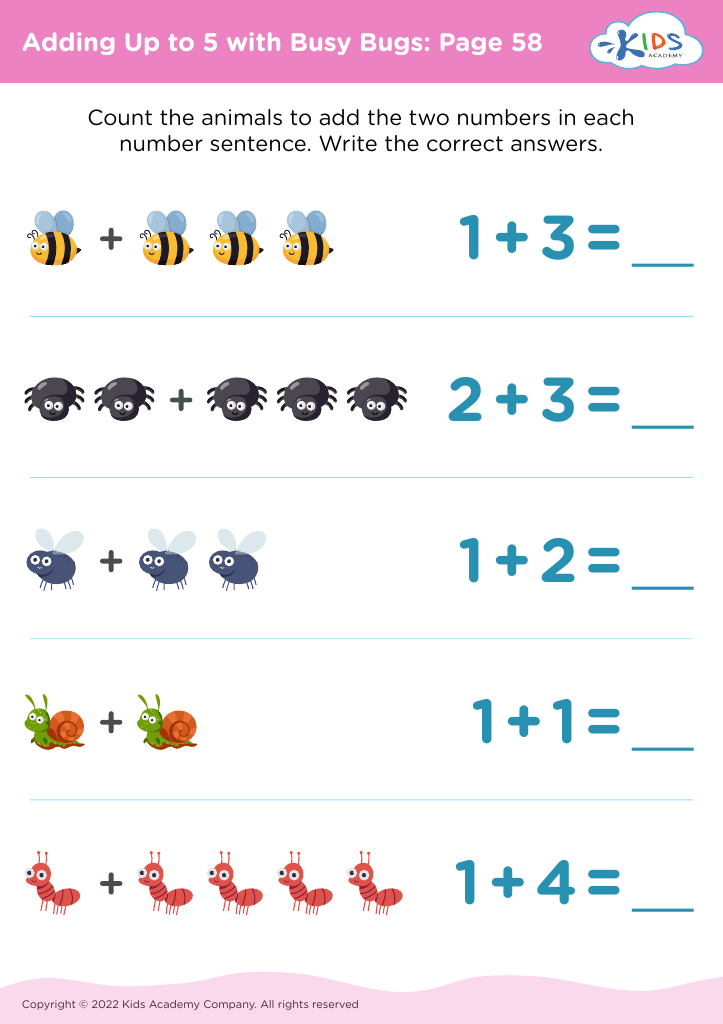
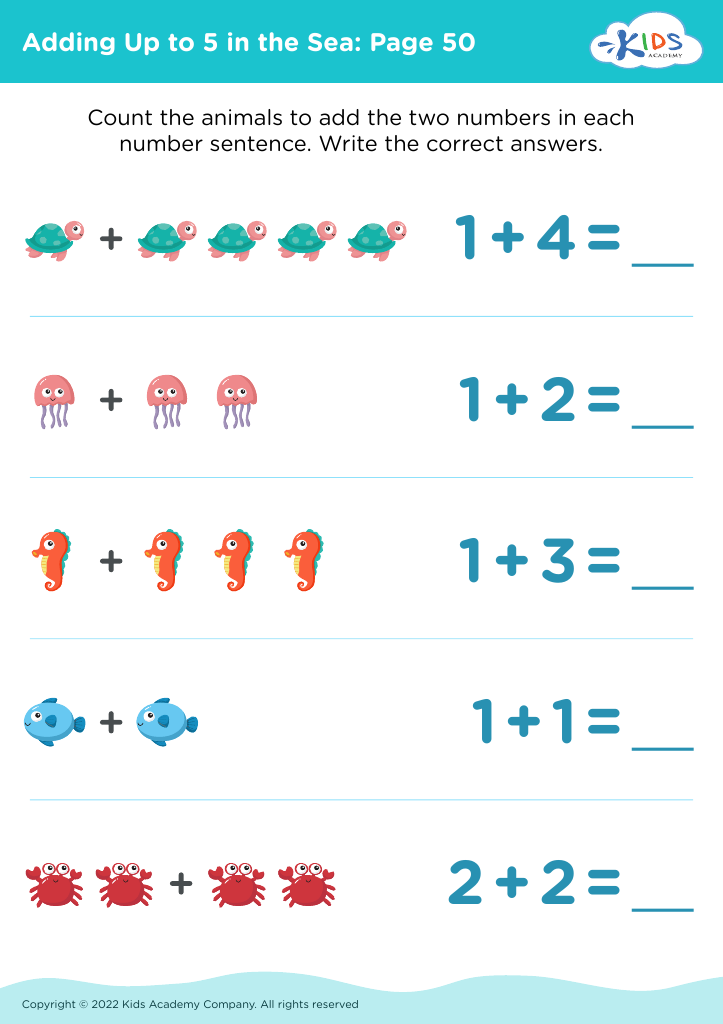
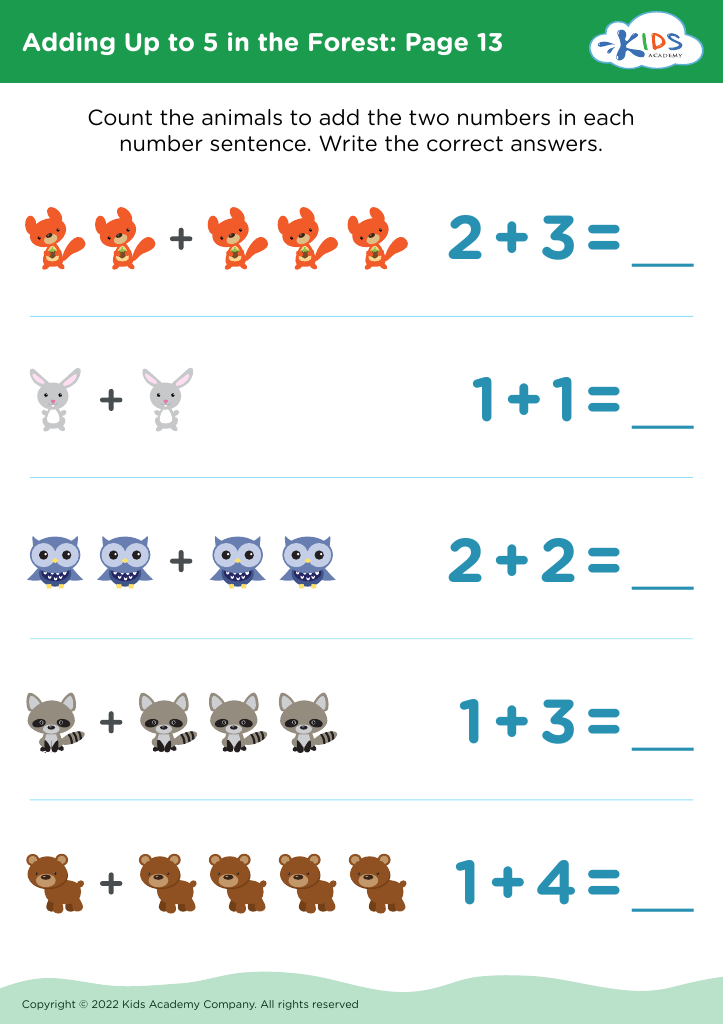
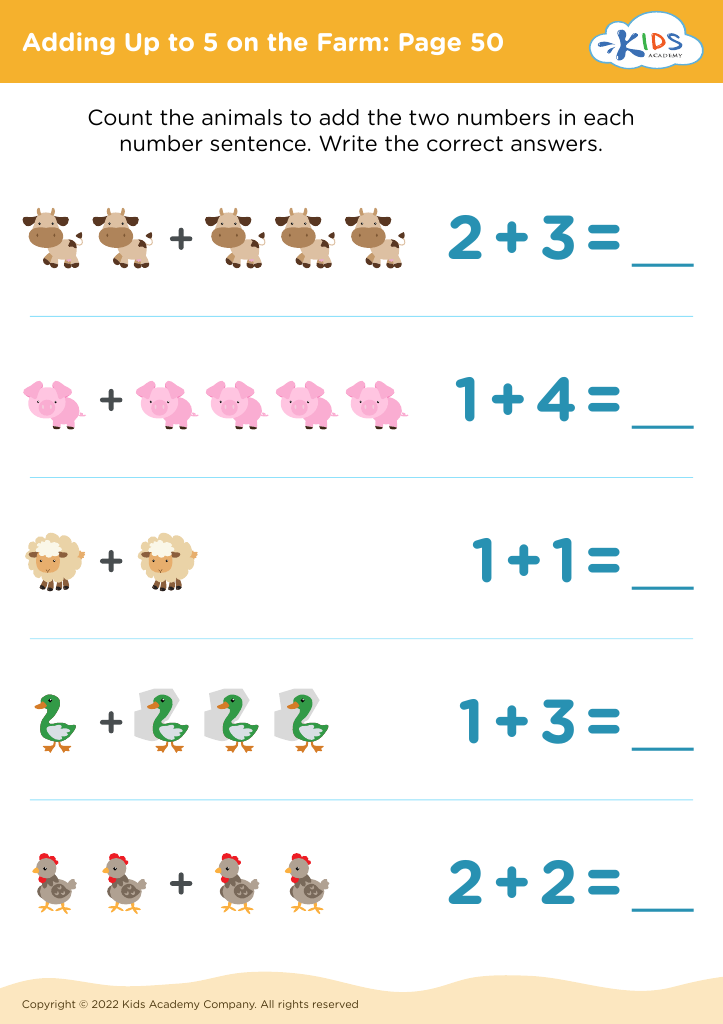
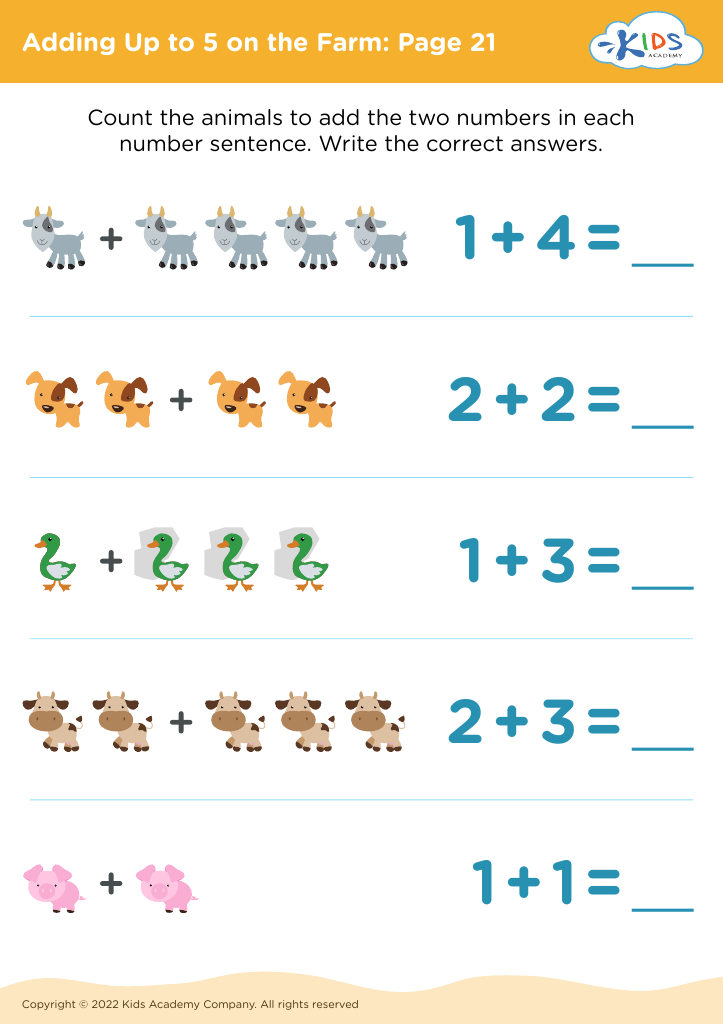
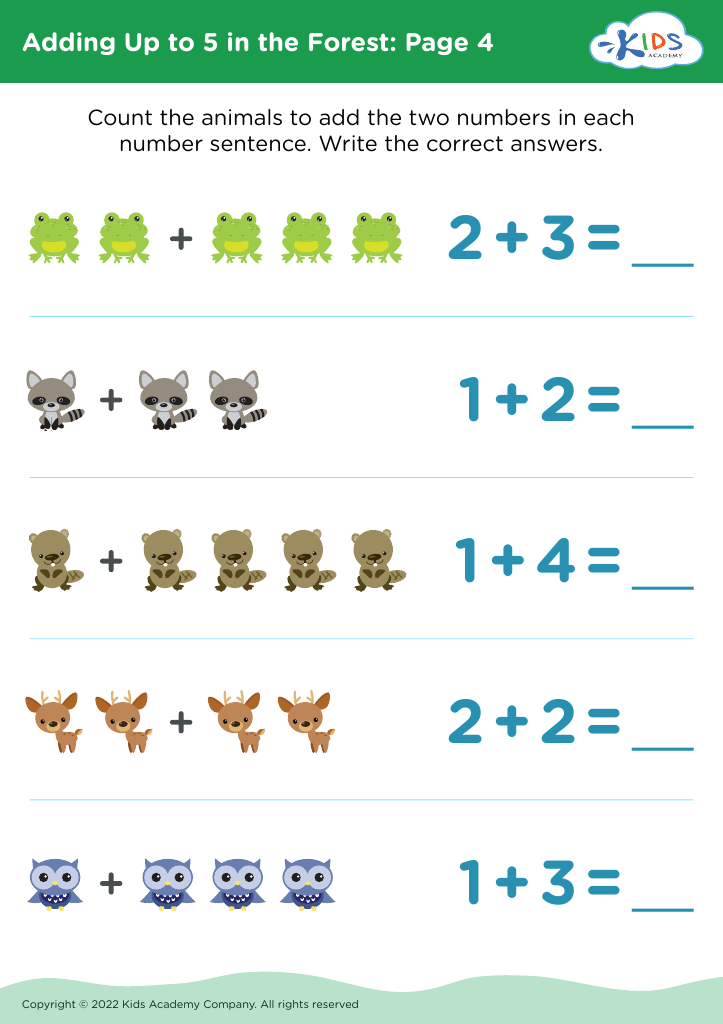
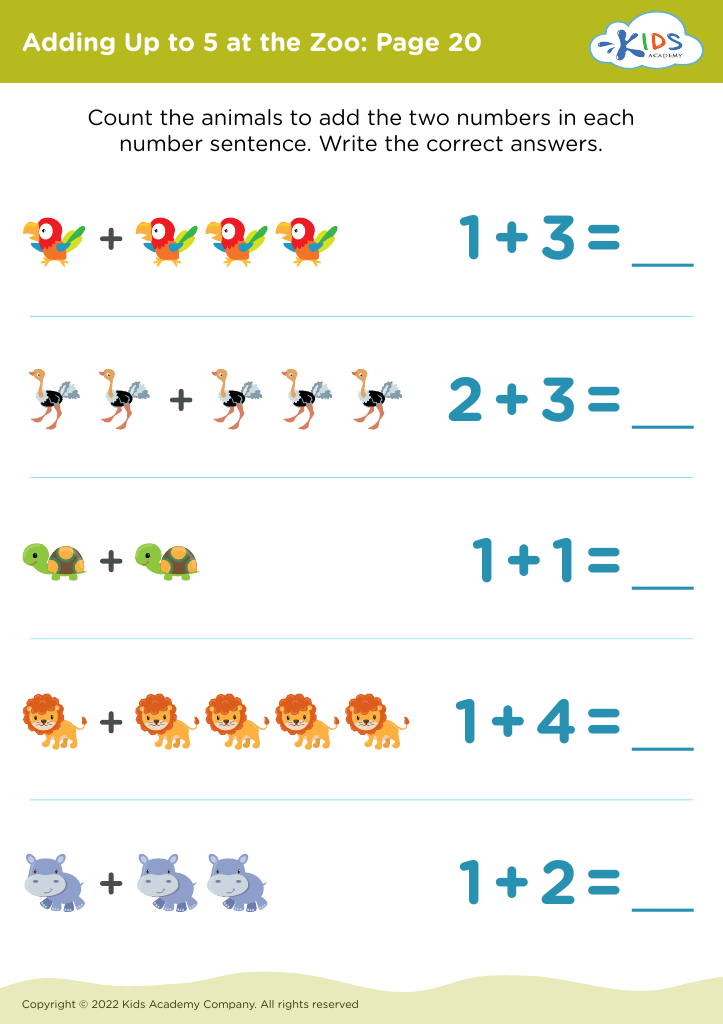
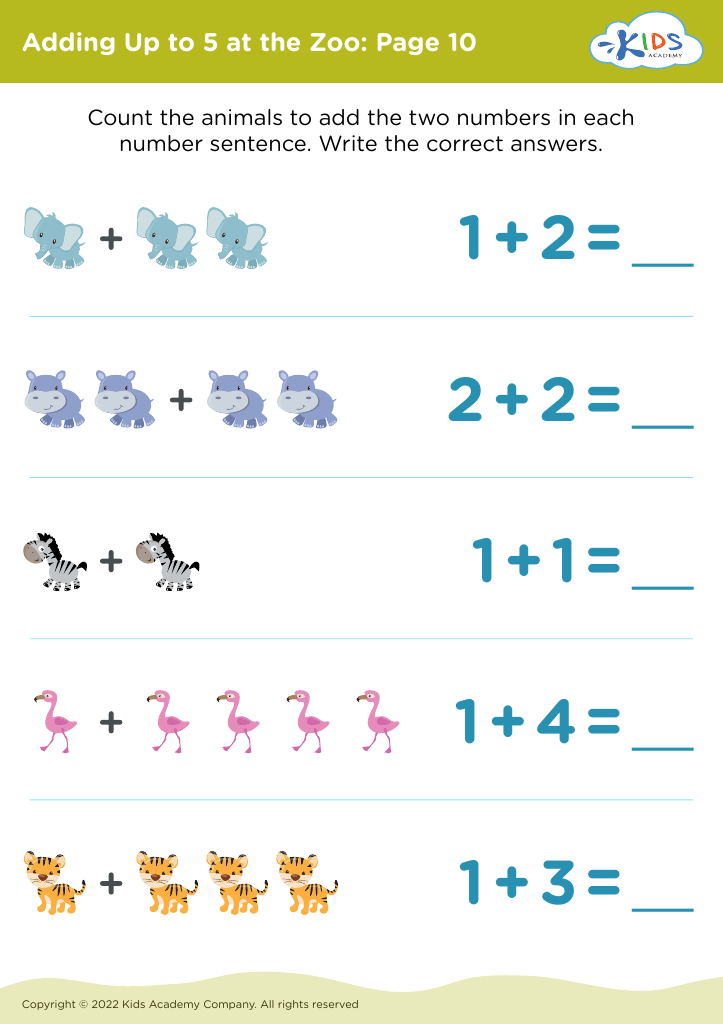
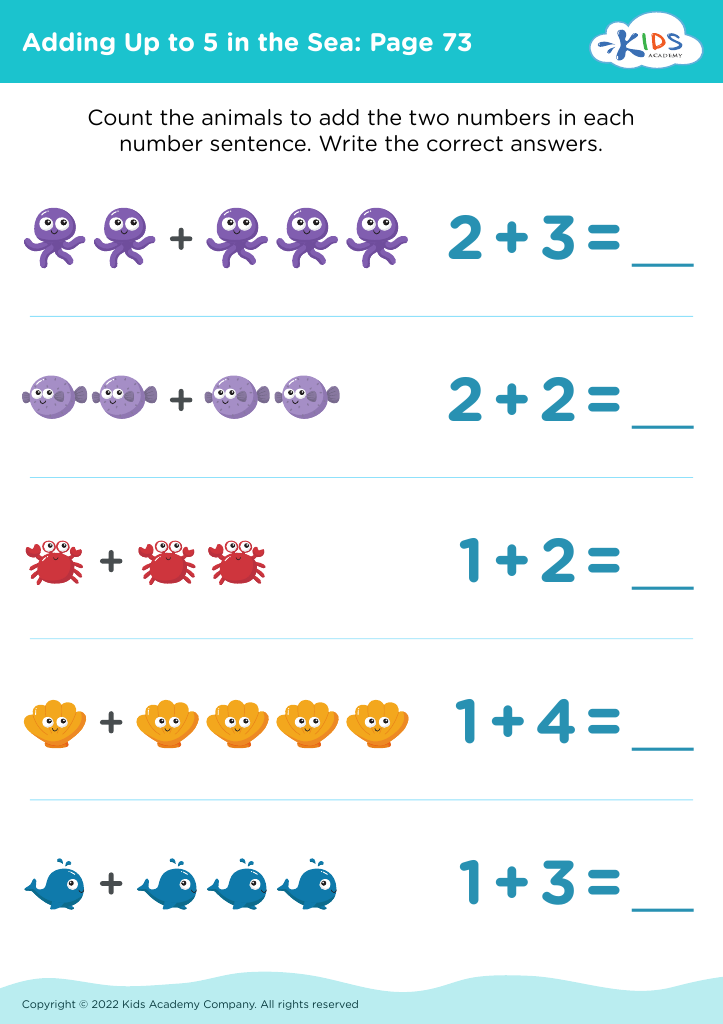
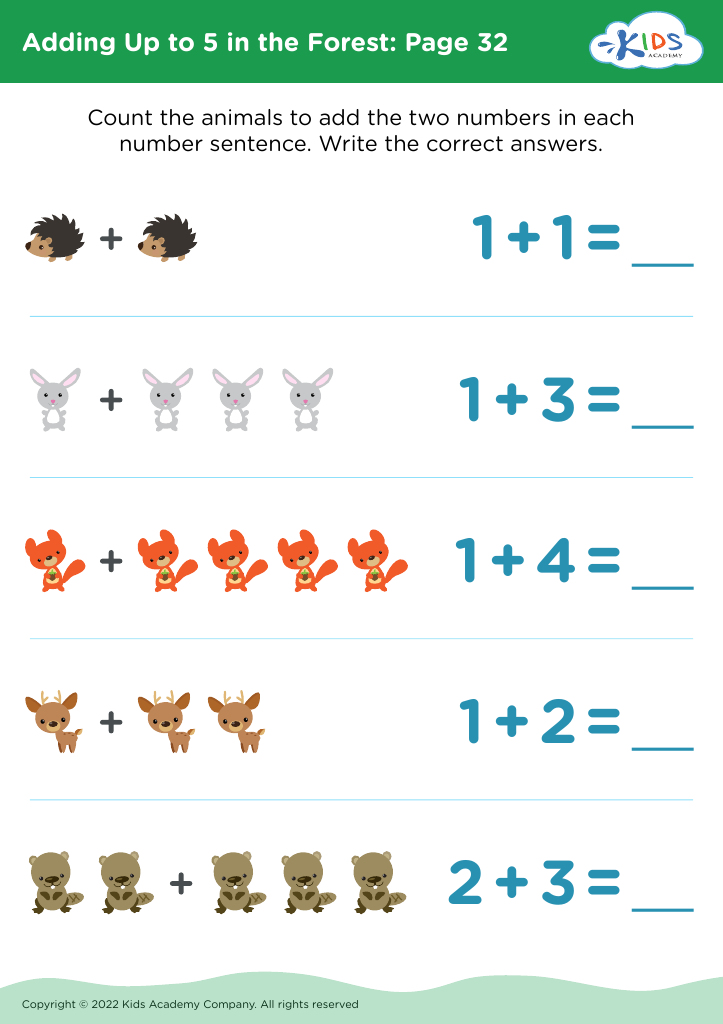
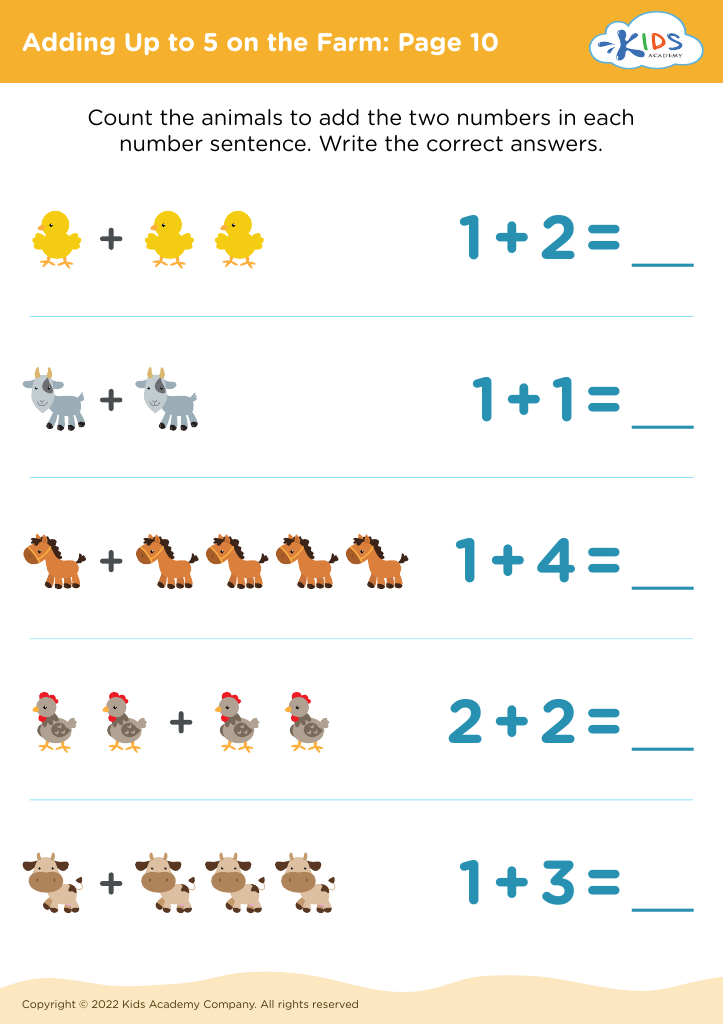
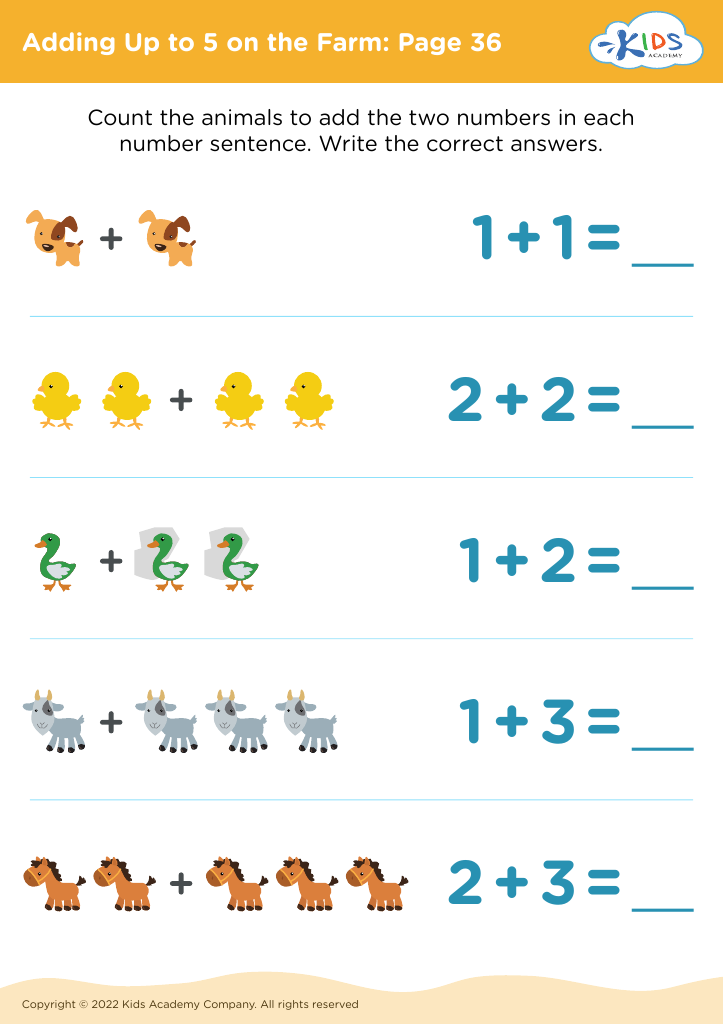
Help your little ones develop essential problem-solving skills with our "Problem-Solving Skills Adding Up to 5 Worksheets" designed for ages 3 to 6. These fun and engaging worksheets provide a perfect introduction to basic addition, fostering critical thinking and analytical skills through simple math problems. With colorful visuals and age-appropriate tasks, children will find learning to add both exciting and rewarding. Ideal for preschool and kindergarten students, our worksheets support early math development and build a strong foundation for future arithmetic success. Download now and watch your child's confidence and skills grow with each completed exercise!


%20(1).jpg)





Fostering problem-solving skills that involve adding up to 5 for children aged 3-6 is crucial for several reasons. Firstly, at this formative stage, young children are rapidly developing their cognitive abilities, so introducing numerical problem-solving in a simple manner lays the foundation for more advanced mathematical concepts. Using familiar and manageable numbers helps solidify their understanding of addition, an essential building block for future arithmetic skills.
Developing these problem-solving skills enhances cognitive growth by encouraging logical thinking, pattern recognition, and the practical application of concepts. When children successfully solve problems, they build confidence, which motivates them to tackle more complex challenges.
Additionally, problem-solving equips children with essential life skills, such as perseverance, critical thinking, and adaptability. As they work through simple addition problems, they learn to approach challenges systematically and search for solutions, skills that are beneficial beyond mathematics.
By caring about their children's or students' ability to solve problems using addition, parents and teachers are nurturing intellectual curiosity and a love for learning. Furthermore, these early experiences with basic math concepts make subsequent educational endeavors more approachable and less intimidating.
Empowering young learners with these foundational skills creates a positive and proactive attitude toward learning and problem-solving, which are pivotal in their overall academic and personal development.








