Understanding numeracy Adding Up to 5 Worksheets for Ages 3-6
4 filtered results
-
From - To
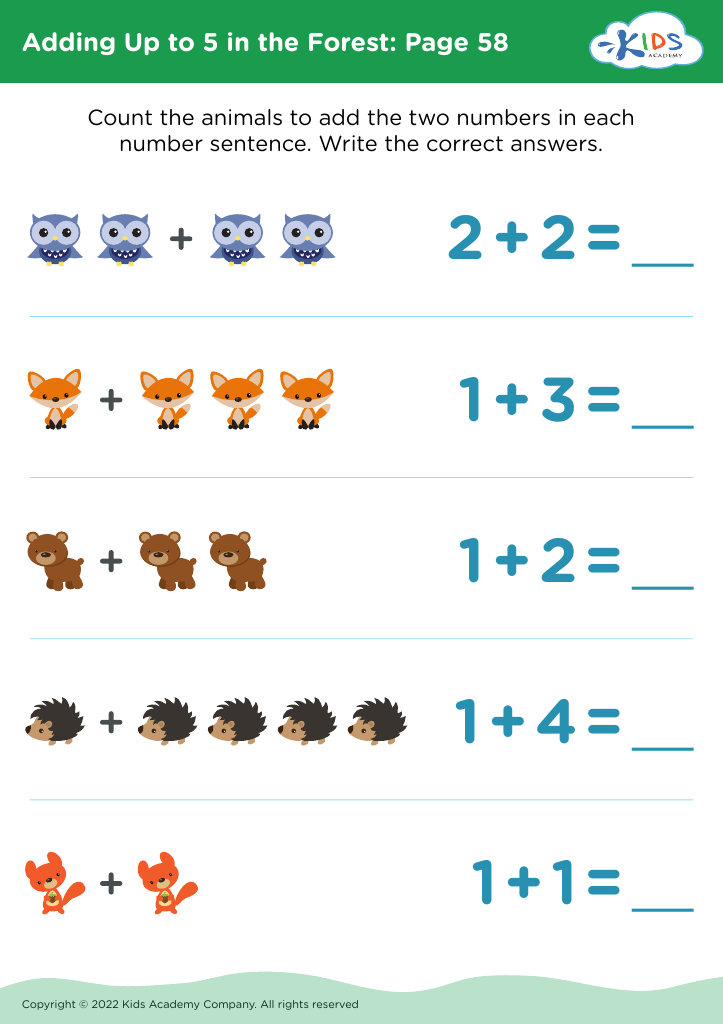
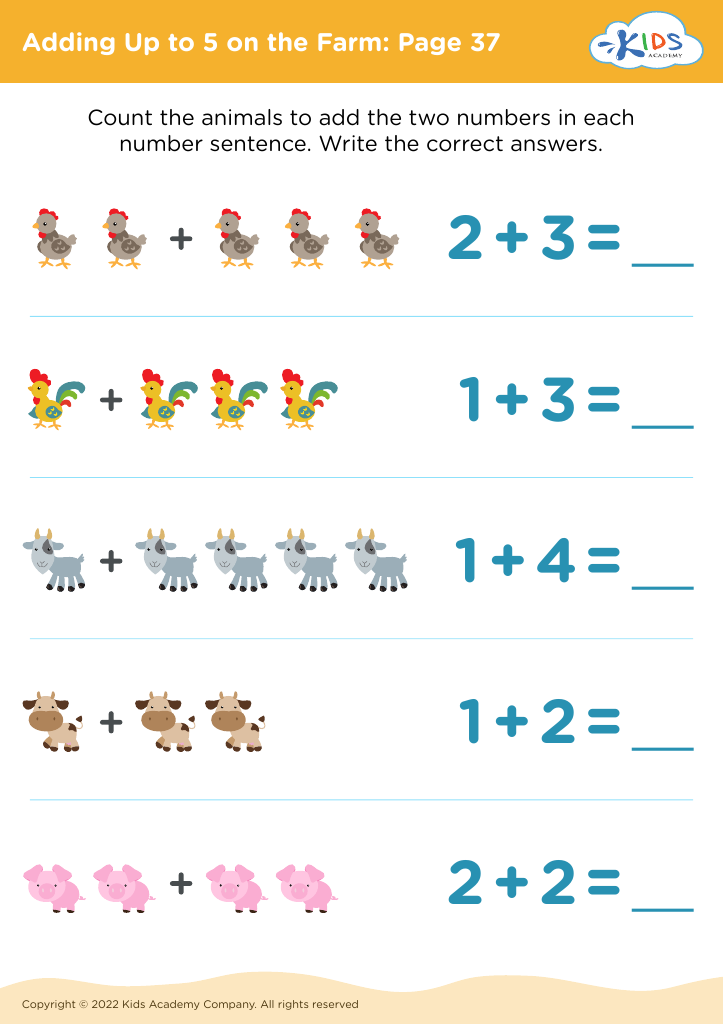
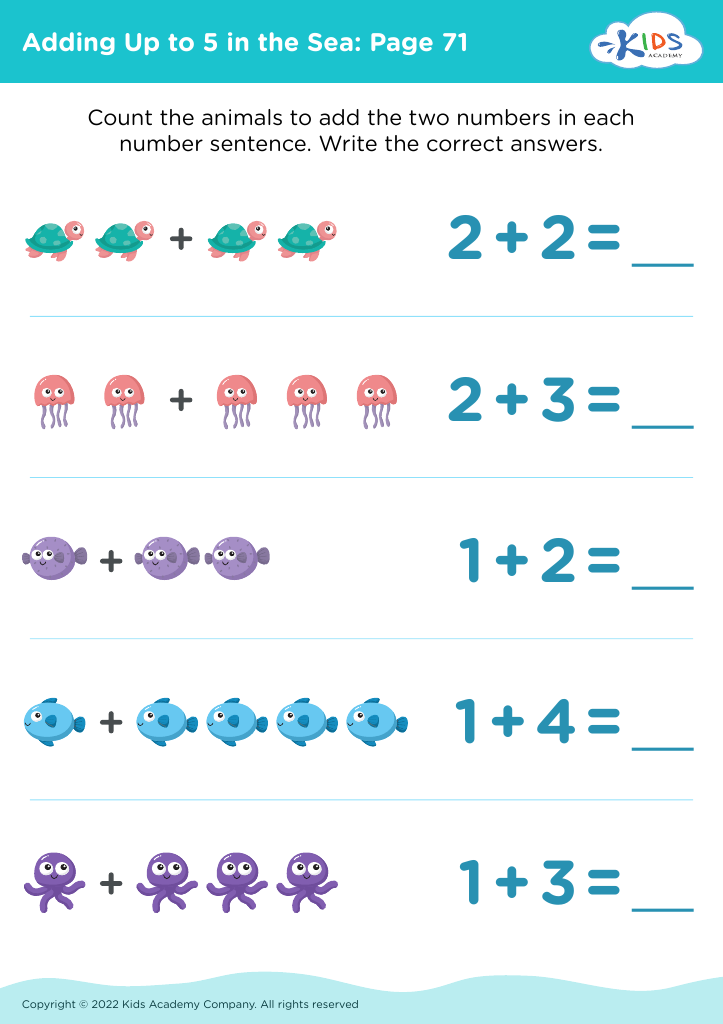
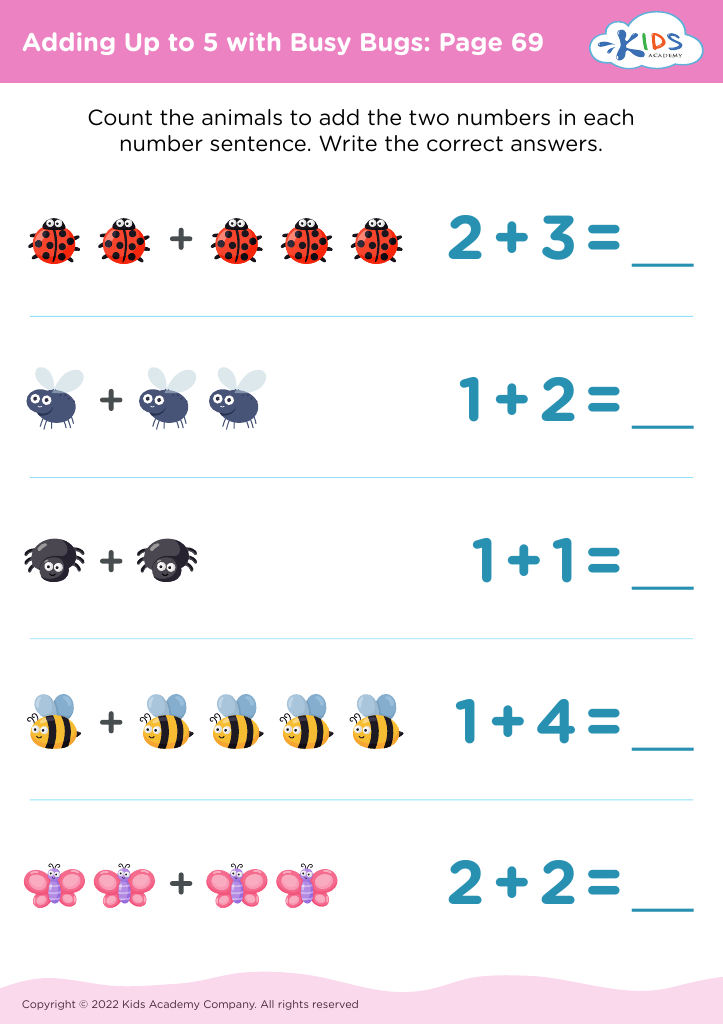
Immerse your child in the fascinating world of numbers with our "Understanding Numeracy: Adding Up to 5" worksheets, designed specifically for ages 3-6. These engaging worksheets help young learners grasp the foundational skills of addition in a fun and interactive way. Children will enjoy colorful activities featuring counting, visual aids, and simple equations to boost their confidence and numeracy skills. By practicing with these worksheets, your child will develop a strong number sense, preparing them for more complex math concepts. Perfect for early learners, our worksheets make learning math enjoyable and effective! Explore more at Kids Academy!


%20(1).jpg)



.jpg)

Understanding numeracy, especially adding up to 5, is foundational for young children ages 3-6 and should be of significant concern for both parents and teachers. At this critical cognitive development stage, numeracy skills lay the groundwork for later mathematical learning and everyday problem-solving. By mastering basic addition, children develop critical thinking, pattern recognition, and logical reasoning abilities.
For parents, engaging in numeracy activities fosters meaningful interactions and supports early bonding while providing children with sensory experiences that are crucial for brain development. Incorporating counting games, using everyday objects like toys or snacks to illustrate addition, can transform learning into a fun and relatable experience.
For teachers, ensuring that students grasp numeracy basics enhances classroom participation and sets up students for future academic success. It aligns with curriculum benchmarks and can close gaps that might arise early, preventing future struggles with more complex math concepts. Effective teaching methods might include visual aids, interactive activities, and hands-on practice that accommodate various learning styles.
Early numeracy fluency builds confidence and promotes a positive attitude towards math, which can endure throughout a child's academic journey. Prioritizing this foundational skill encourages curiosity, persistence, and a lifelong passion for learning.








