Understanding numerical values Adding Up to 5 Worksheets for Ages 3-6
4 filtered results
-
From - To
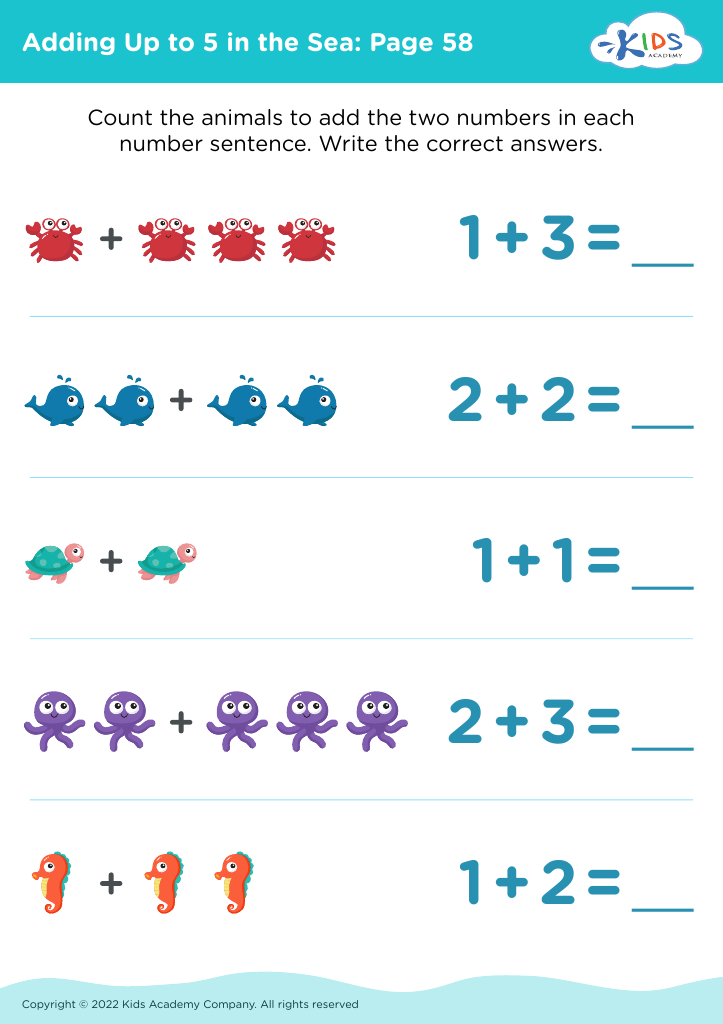
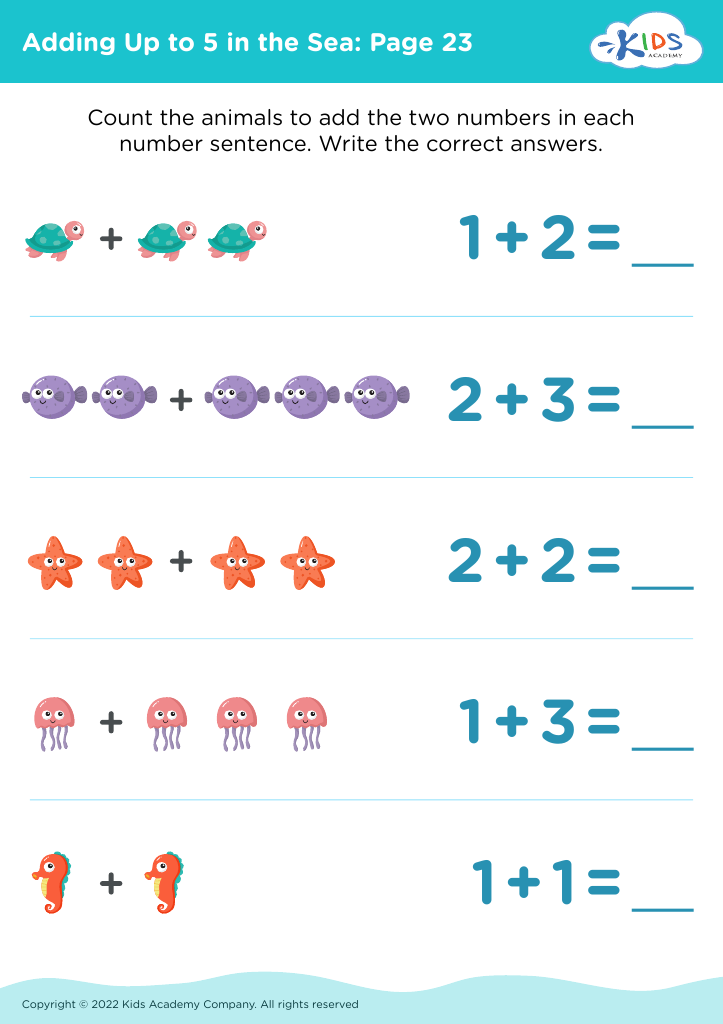
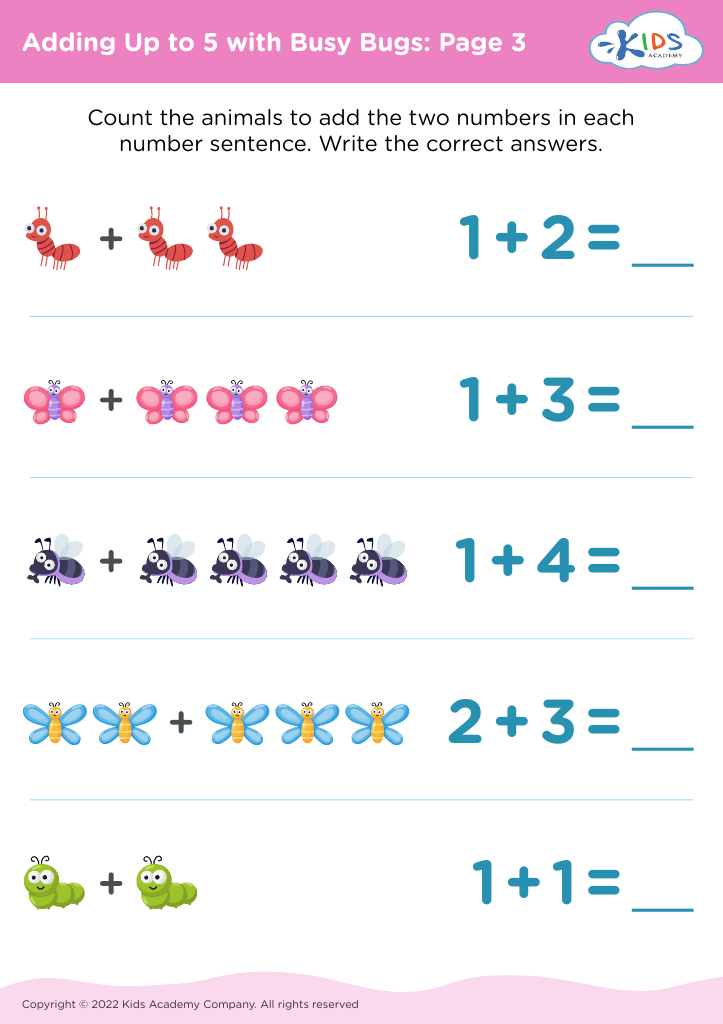
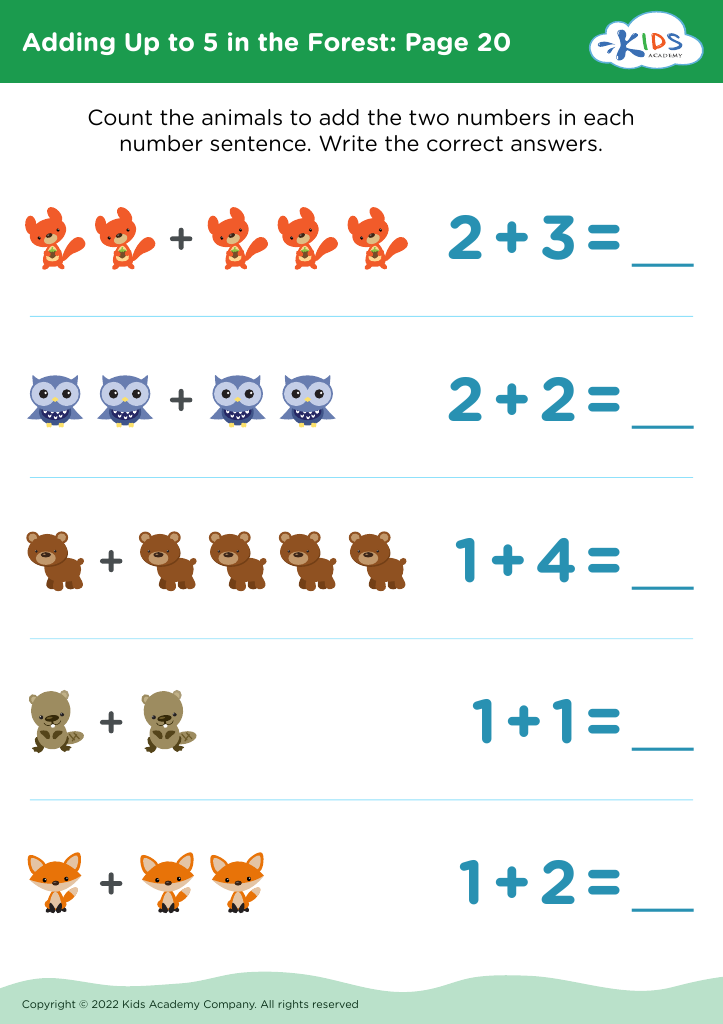
Our "Understanding Numerical Values Adding Up to 5 Worksheets for Ages 3-6" is designed to foster early math skills in young learners. Through engaging activities, children will grasp the basics of addition, building a solid foundation in numerical values. These worksheets are ideal for preschoolers, kindergartners, and first graders, providing an inviting and interactive way to develop counting and number recognition. Their colorful and playful design keeps kids motivated as they learn to sum numbers up to 5. With these pathways to early math success, children will gain confidence and enthusiasm in their abilities.




.jpg)



Understanding numerical values and adding up to 5 for children aged 3-6 is foundational for early math skills. During these formative years, young minds are incredibly receptive and capable of grasping basic numerical concepts. For children, learning to count and perform simple addition helps to build number sense, which is the ability to understand, relate, and connect numbers.
Teaching addition up to 5 sets the groundwork for more complex math, including addition, subtraction, multiplication, and division in later years. It enhances cognitive development, encouraging logical thinking and problem-solving. Simple addition also reinforces the understanding of quantities and relationships between numbers, making future mathematical learning more intuitive.
Parents and teachers play a crucial role in nurturing these skills. Early engagement with numbers can be fun and engaging through interactive activities, games, and hands-on learning. These activities help children recognize numbers in everyday life, developing both their confidence and enthusiasm for math.
Moreover, early numeracy skills are predictors of academic success not just in math, but across other subject areas. They can influence a child’s overall attitude towards learning, promoting sustained academic curiosity and resilience.
In summary, understanding numerical values and simple addition at an early age is vital for children as it establishes strong foundational skills critical for their long-term educational journey.








