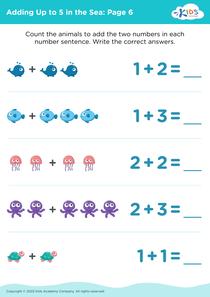
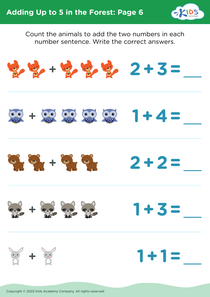
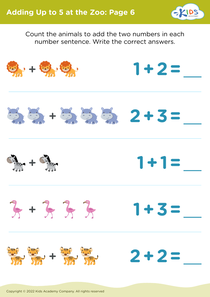
Fine motor skills (writing) Adding with Busy Bugs Worksheets for Ages 3-6
5 filtered results
-
From - To
Enhance your child's fine motor skills with our fun "Adding with Busy Bugs Worksheets" designed for ages 3-6! These engaging worksheets blend math and creativity, helping little hands develop the dexterity needed for writing. Through playful bug-themed activities, children will practice tracing, drawing, and writing while learning basic addition concepts. Each worksheet encourages precision and focus, making learning enjoyable and effective. Foster your child's confidence in both math and motor skills with our interactive resources. Perfect for at-home learning or classroom use, "Adding with Busy Bugs" is an ideal way to support early childhood development while sparking joy and curiosity in little learners.
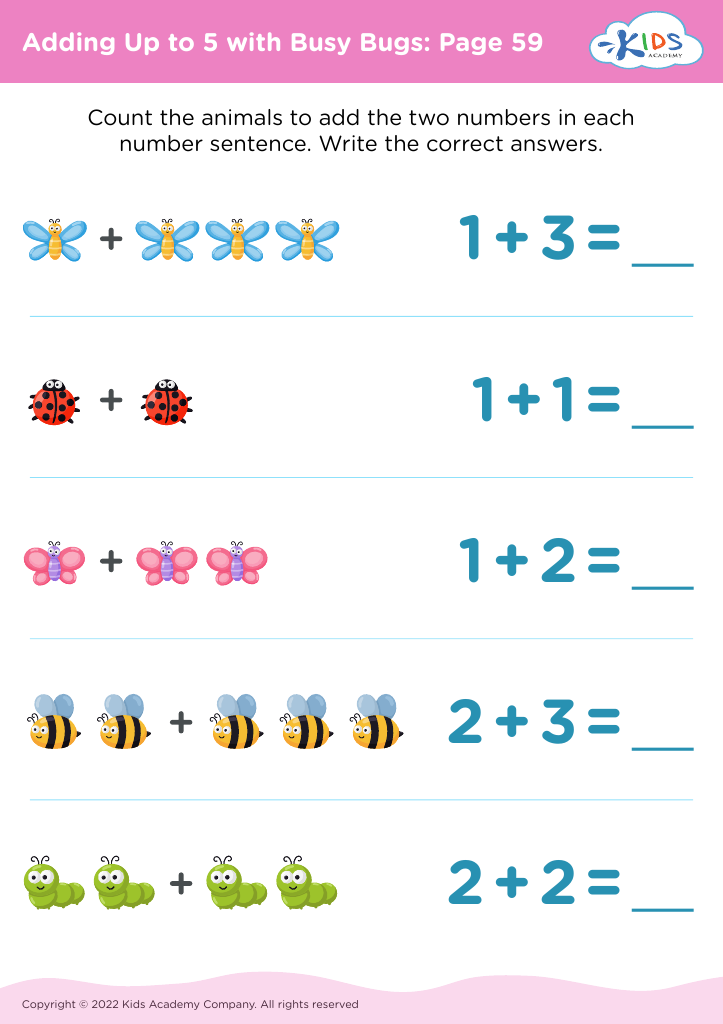
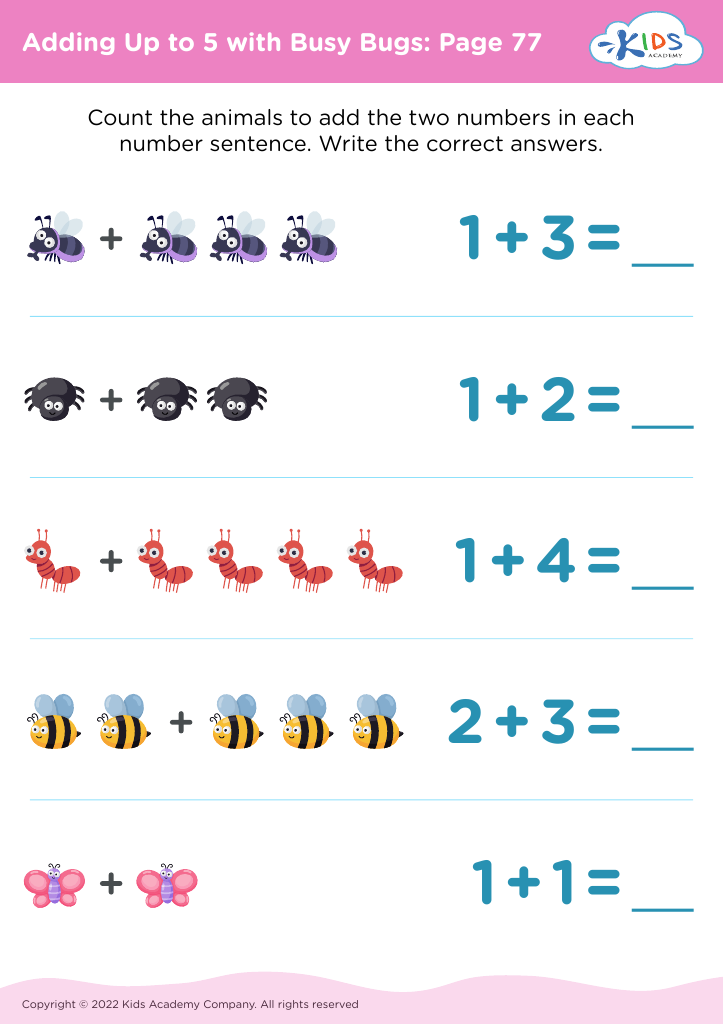
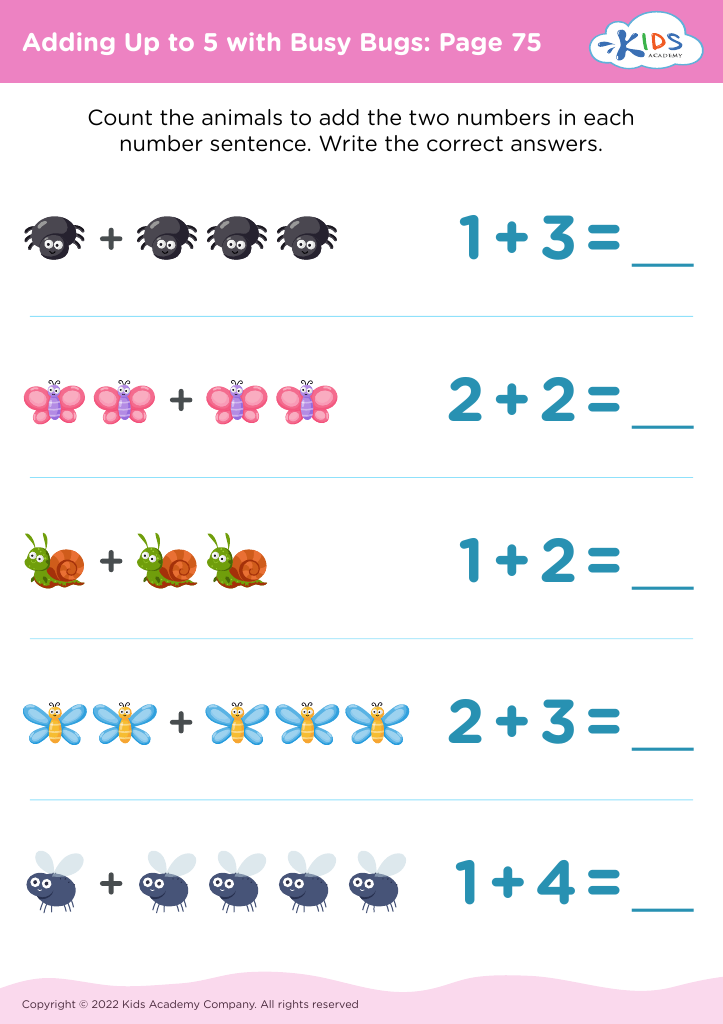
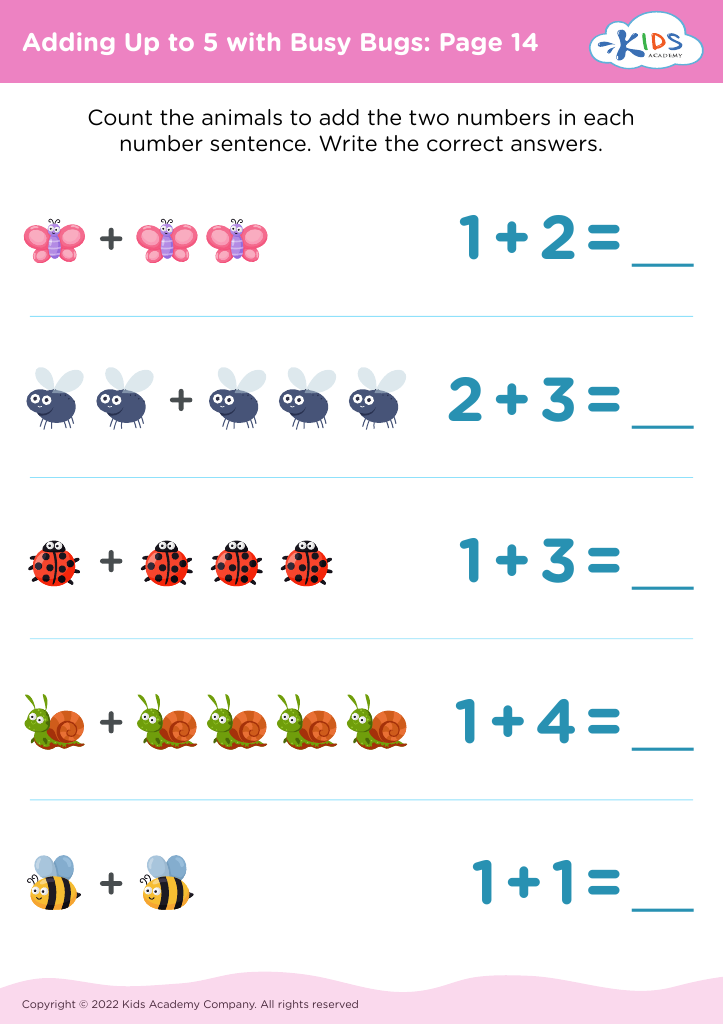
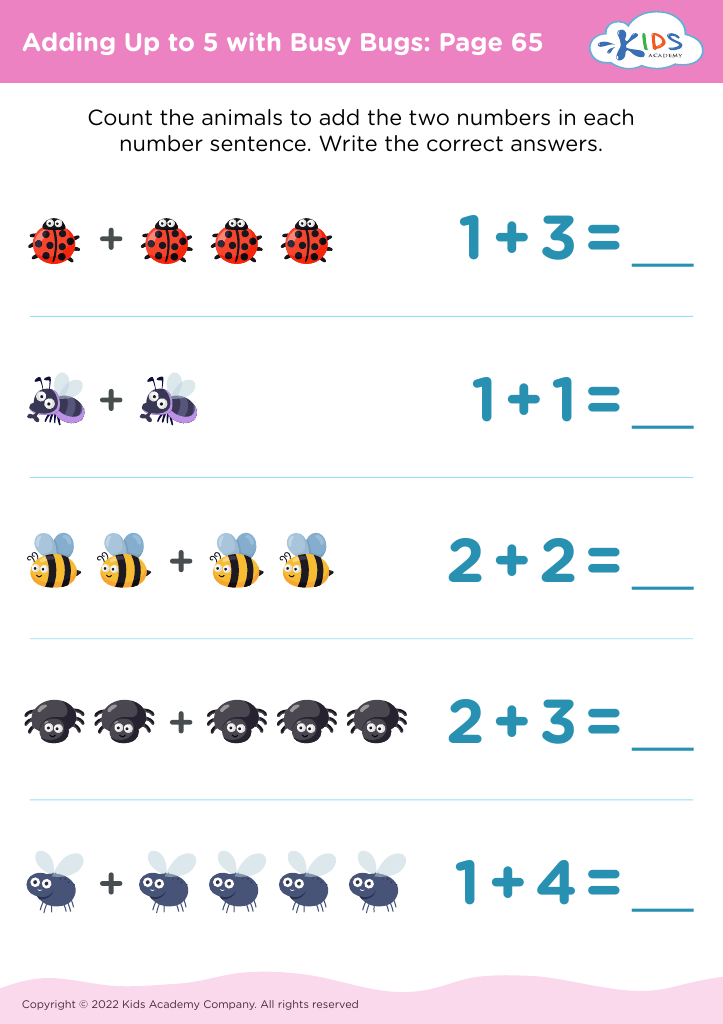



Fine motor skills, particularly writing, play a crucial role in a child’s development, and integrating resources like "Busy Bugs" for ages 3-6 can significantly enhance these skills. Fine motor skills involve the small muscles in the hands and fingers, essential for tasks like writing, buttoning shirts, and using utensils. Encouraging these skills early helps children establish coordination, dexterity, and control, which are vital for academic success and everyday life.
The "Busy Bugs" program offers engaging, hands-on activities that make learning fun. Playing with tools focusing on fine motor movements—like pinchers, scissors, and markers—allows children to explore and develop their skills creatively. These activities foster confidence, improve concentration, and promote a love for learning. Furthermore, strengthening fine motor abilities helps prepare children for writing, which is foundational to communication and literacy.
Parents and teachers should prioritize fine motor development as these skills predict future academic performance, particularly in writing and reading. Engaging resources like "Busy Bugs" alleviate the stress often associated with the learning process and enable children to learn through play. By making fine motor skill development a priority, caregivers can help lay a strong foundation for their children’s lifelong learning journey.