Problem-Solving Skills Adding with Busy Bugs Worksheets for Ages 3-6
6 filtered results
-
From - To
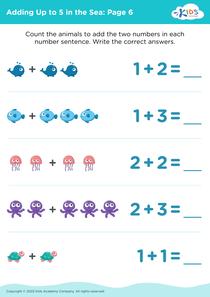
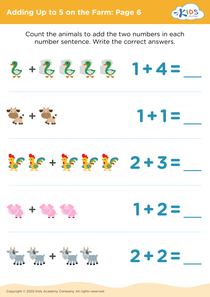
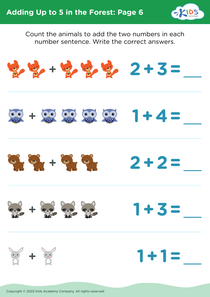
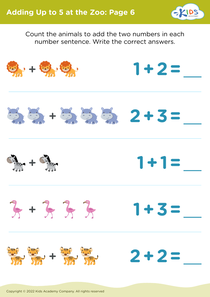
Discover the exciting world of problem-solving skills with Busy Bugs worksheets designed for children ages 3-6! Our engaging activities focus on developing critical thinking and reasoning through fun, colorful illustrations of busy bugs. Each worksheet guides young learners in mastering addition concepts while simultaneously enhancing their ability to solve problems. Whether practicing number recognition, counting, or simple addition, these worksheets foster a love for learning. Ideal for home or classroom use, Busy Bugs worksheets not only support math readiness but also encourage creativity and independent thought. Dive into the adventure and watch your child's problem-solving capabilities soar!
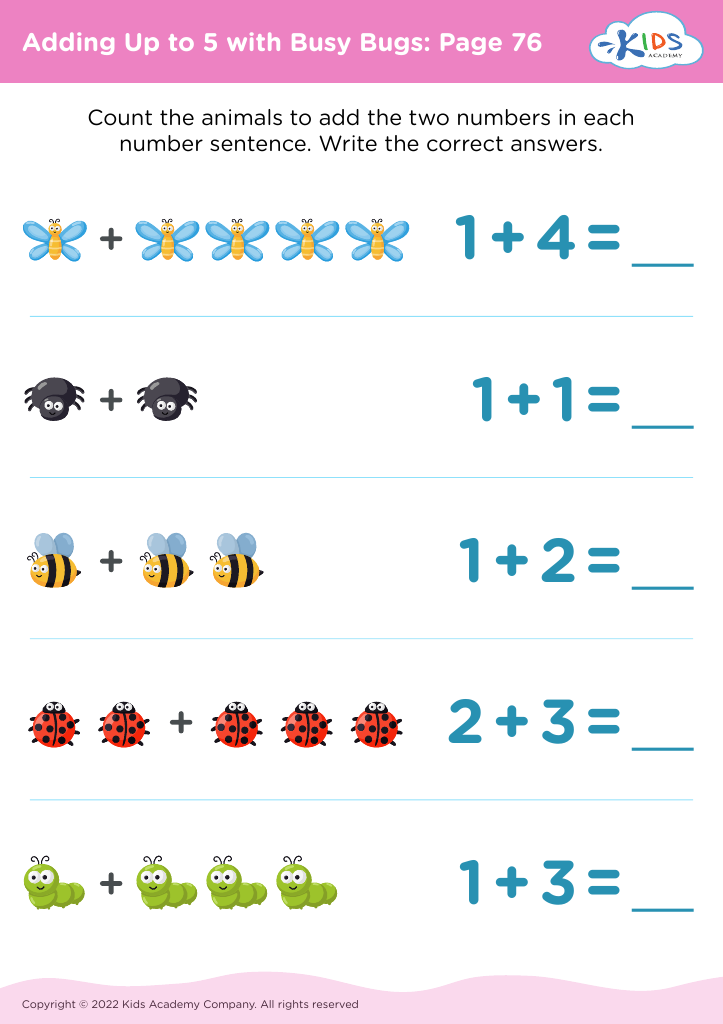
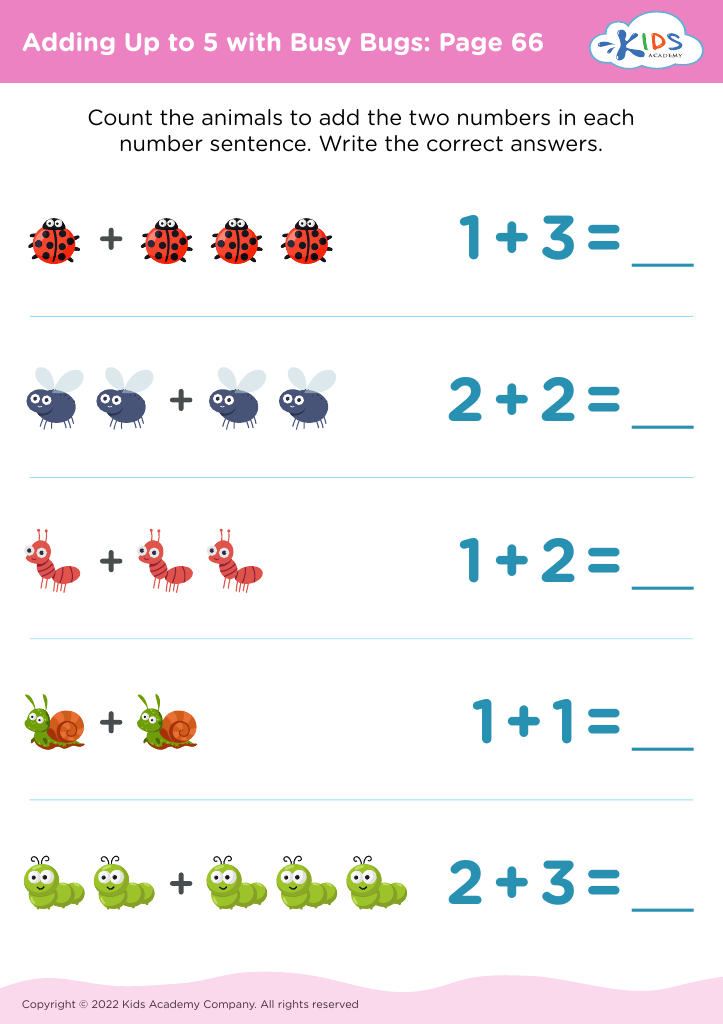
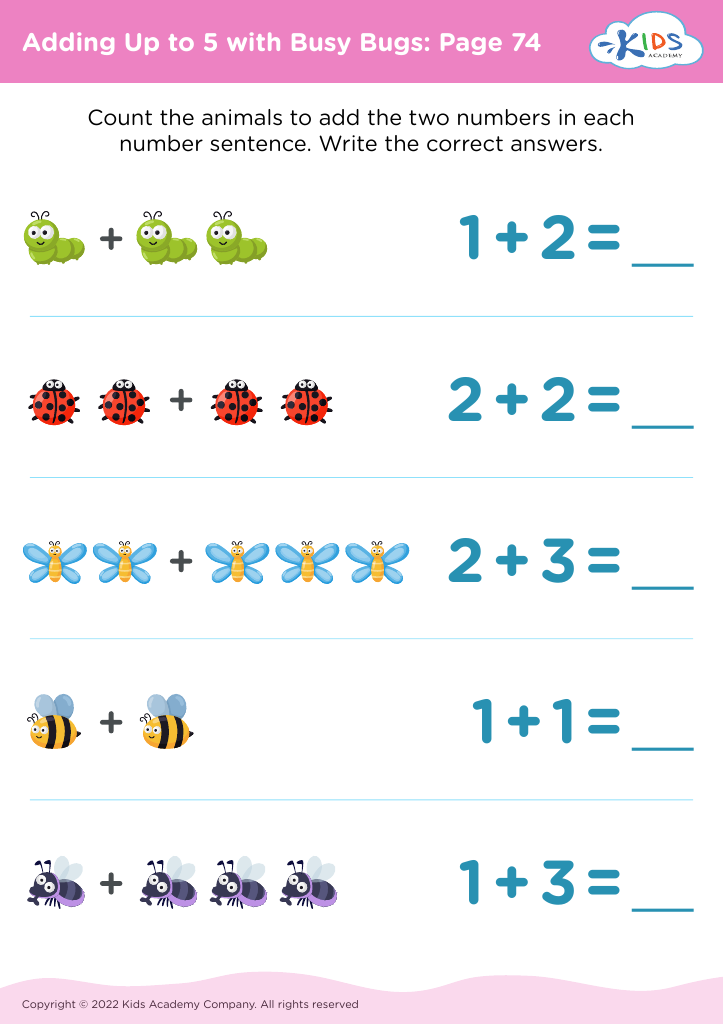
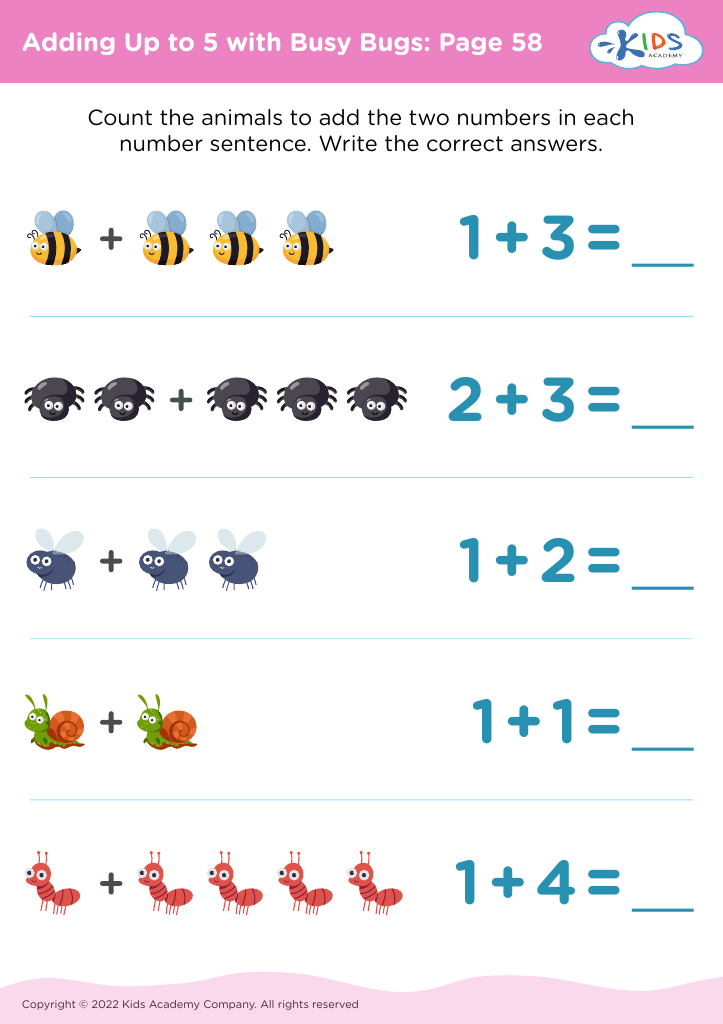
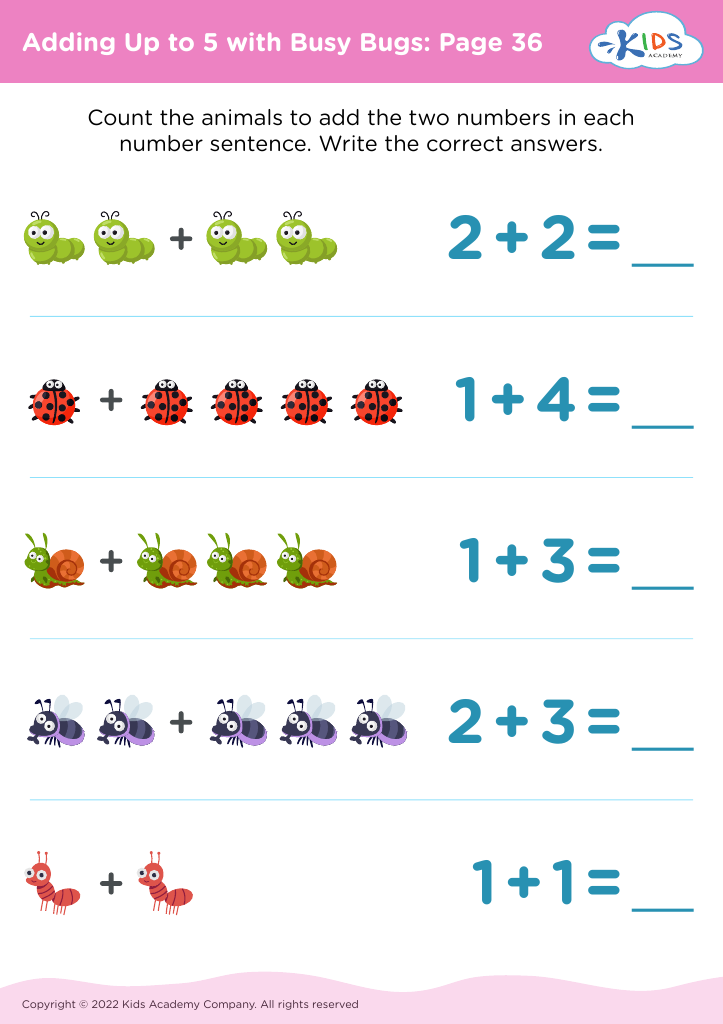
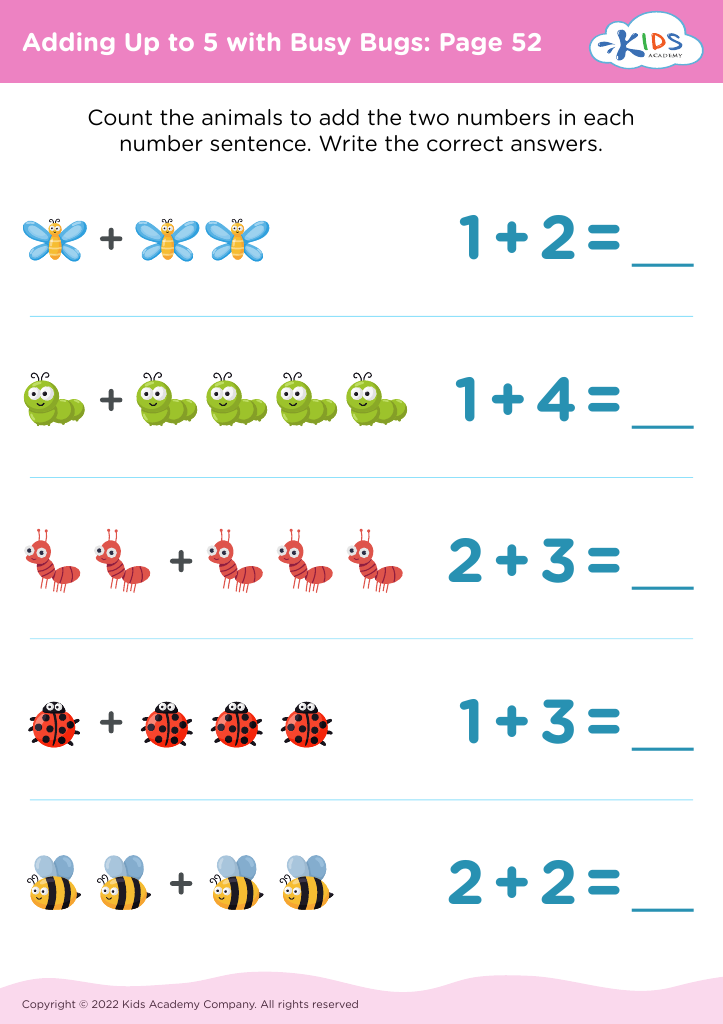



Parents and teachers should prioritize problem-solving skills, particularly through engaging activities like "Busy Bugs" for children aged 3-6, for several compelling reasons. Firstly, early childhood is a crucial developmental stage where foundational cognitive skills are established. Problem-solving activities encourage critical thinking, creativity, and a sense of independence. "Busy Bugs" utilizes interactive, hands-on learning, which captivates young children's attention and correlates play with learning.
Additionally, these skills promote resilience and perseverance. As children navigate various challenges while engaging with "Busy Bugs," they learn valuable lessons about trying new strategies and tackling obstacles, which are essential life skills. Parents and teachers play a pivotal role in reinforcing the importance of these experiences, providing children with the tools they need to become adaptable and resourceful.
Moreover, problem-solving goes beyond academics; it also fosters emotional and social development. Children learn to collaborate, negotiate, and communicate their thoughts while working with peers, building essential interpersonal skills. Encouraging children to engage with "Busy Bugs" not only prepares them for future educational challenges but also aids in shaping confident, thoughtful individuals ready to face the world. Thus, parents and teachers should wholeheartedly support activities that nurture young children's problem-solving abilities.