Problem-solving abilities Addition and Subtraction Word Problems Worksheets for Ages 3-6
4 filtered results
-
From - To
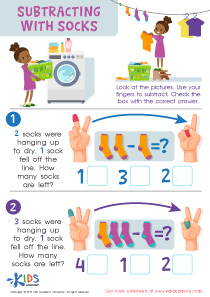
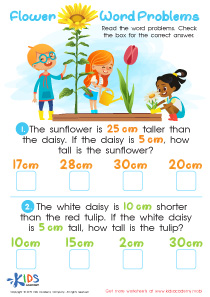
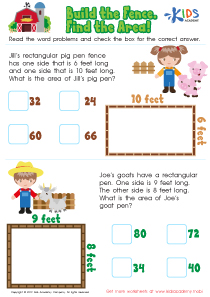
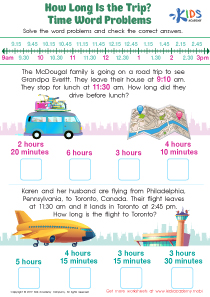
Enhance your child's problem-solving abilities with our Addition and Subtraction Word Problems Worksheets for ages 3-6. Designed to align with early education curriculums, these engaging activities introduce young learners to basic math concepts through relatable scenarios. Each worksheet promotes critical thinking and helps kids apply math skills to real-world situations. With fun illustrations and age-appropriate challenges, our worksheets make learning enjoyable and effective. Ideal for both classroom use and at-home practice, they are a perfect resource to boost your child’s confidence and proficiency in addition and subtraction. Start building a strong math foundation today!
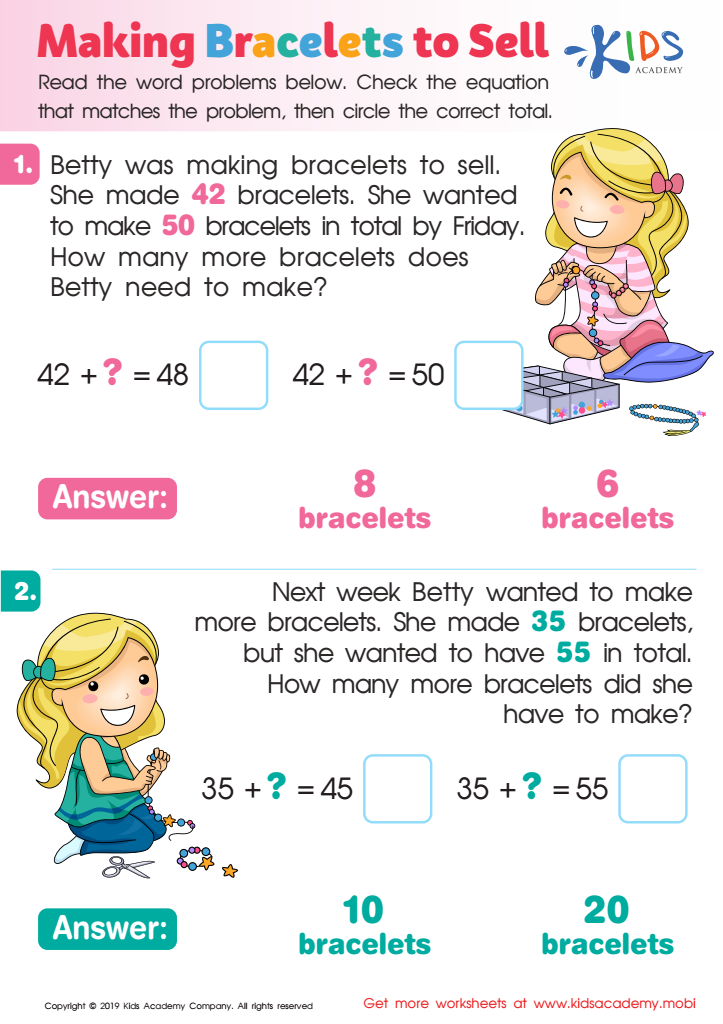
Making Bracelets to Sell Worksheet
 Assign to My Students
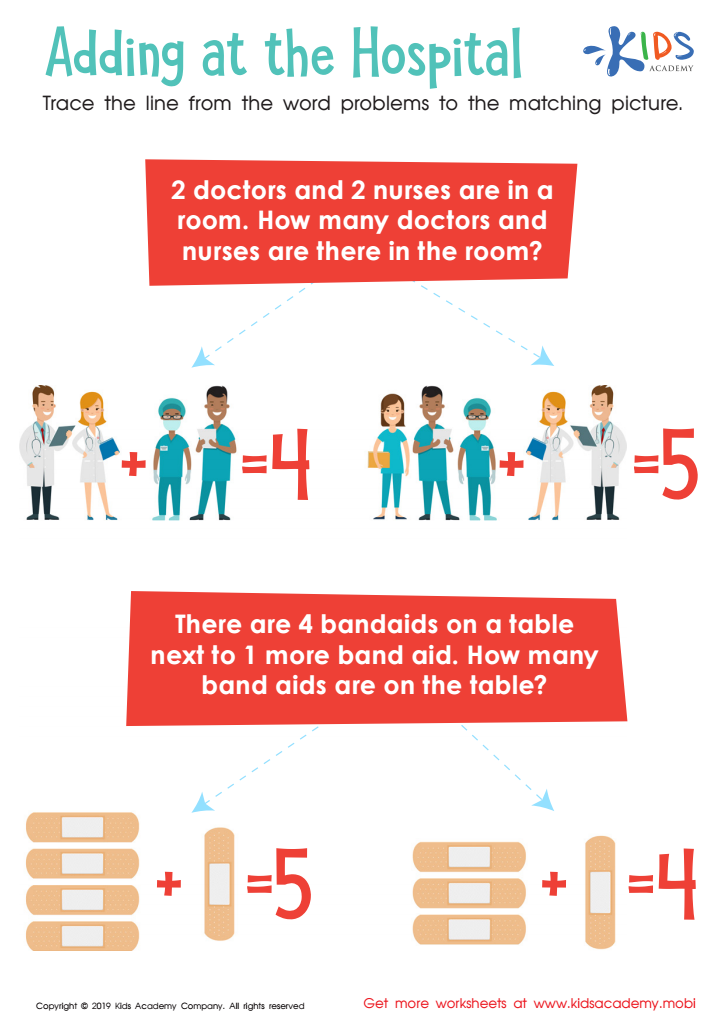
Adding at the Hospital Worksheet
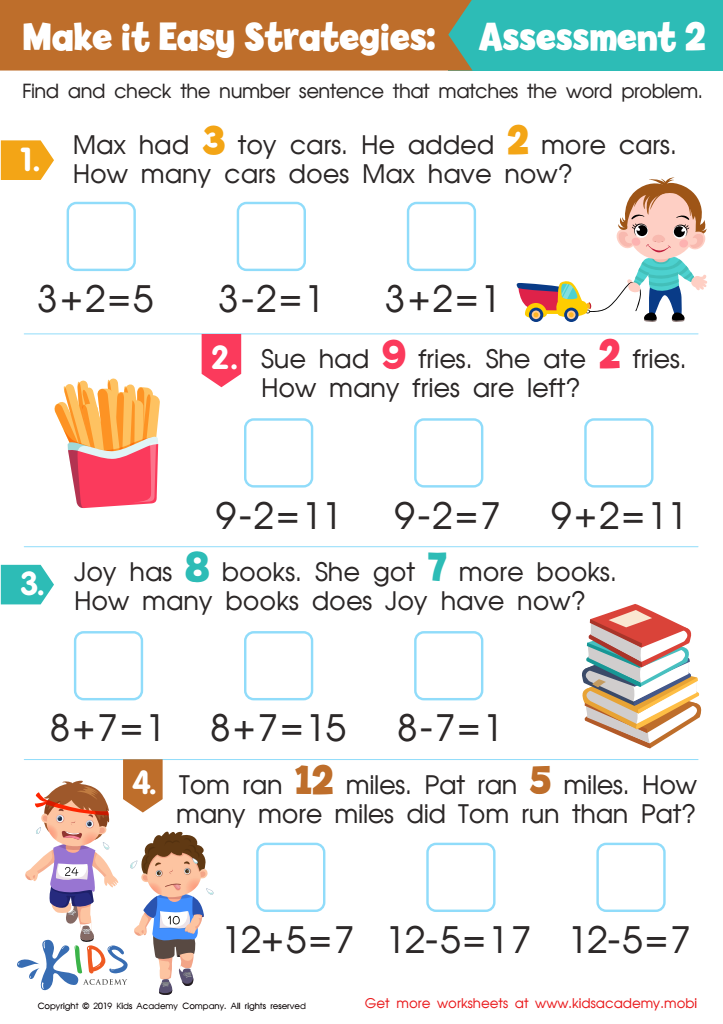
Make it Easy Strategies: Assessment 2 Worksheet
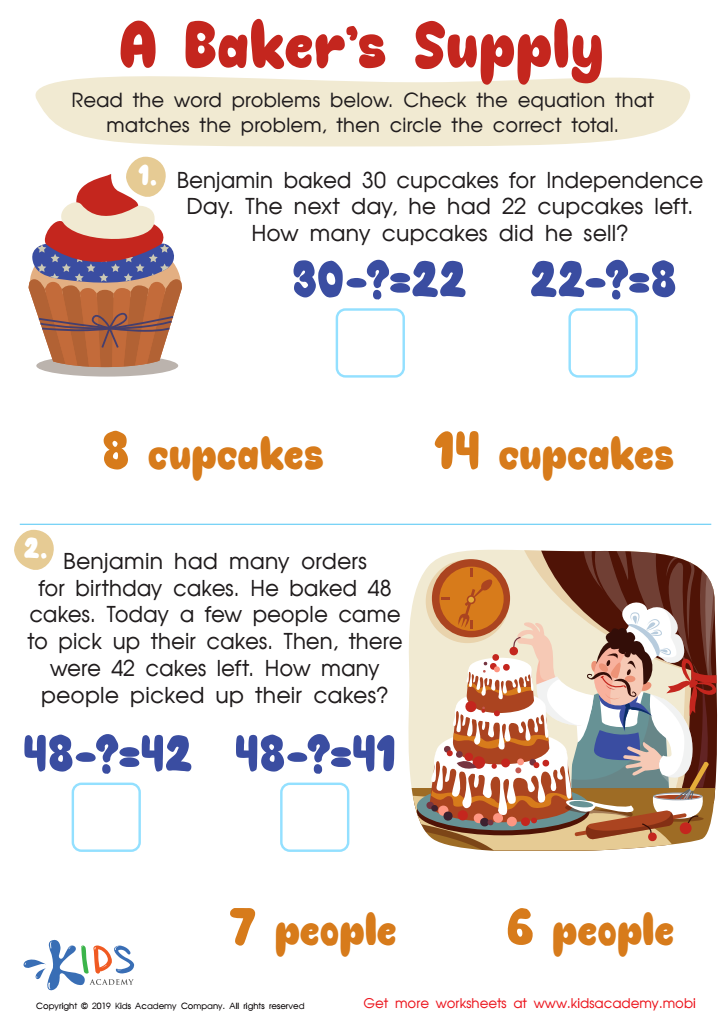
A Baker's Supply Worksheet








Problem-solving skills developed through addition and subtraction word problems are crucial for young children aged 3-6. These early math experiences lay a strong foundation for future academic success and cognitive development. Engaging with such problems promotes critical thinking, logical reasoning, and the ability to make connections between concepts.
Firstly, solving word problems encourages children to understand and interpret real-world scenarios, transforming abstract numbers into meaningful context. This contextual understanding boosts comprehension skills and helps children apply math in practical situations.
Secondly, word problems enhance oral language and vocabulary as children must comprehend the problem statement and articulate their reasoning. This dual focus on language and math promotes overall literacy and academic proficiency.
Moreover, these activities build confidence in young learners by fostering a sense of achievement with each correct solution. This positive reinforcement encourages a growth mindset, where children come to view challenges as opportunities to learn rather than insurmountable obstacles.
Parents and teachers play a pivotal role. By addressing word problems in an interactive and supportive manner, they reassure children that making mistakes is a natural part of learning. Investing in these problem-solving skills early ensures that children develop a robust mathematical foundation, critical life skills, and a lifelong love for learning.