Animal identification Addition & Subtraction Worksheets for Ages 3-6 - Page 2
27 filtered results
-
From - To
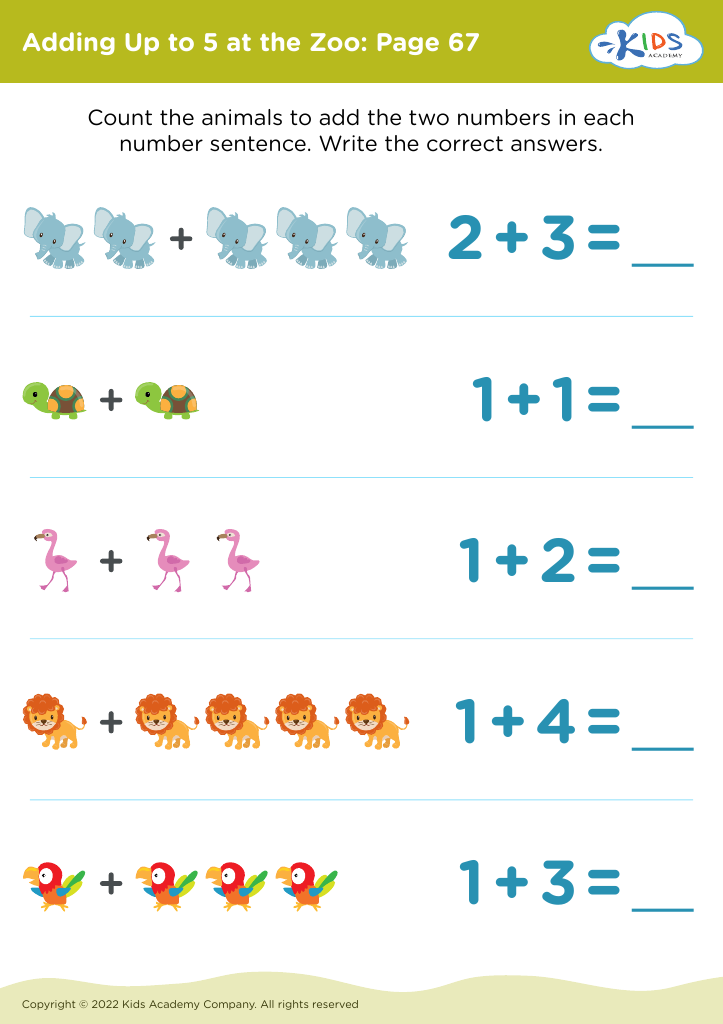
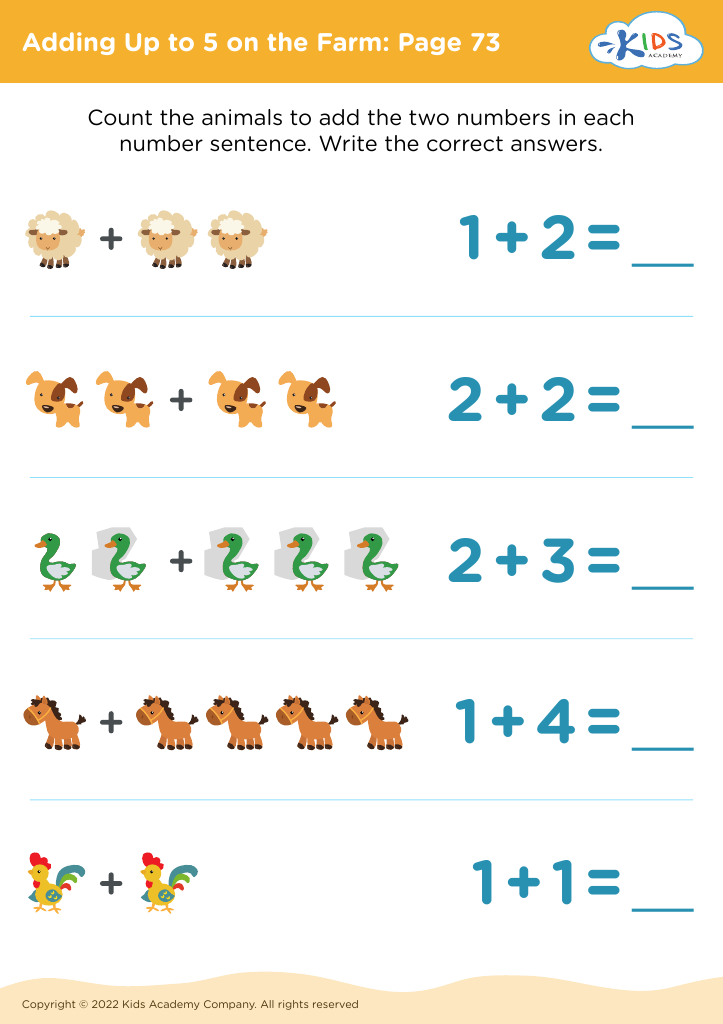
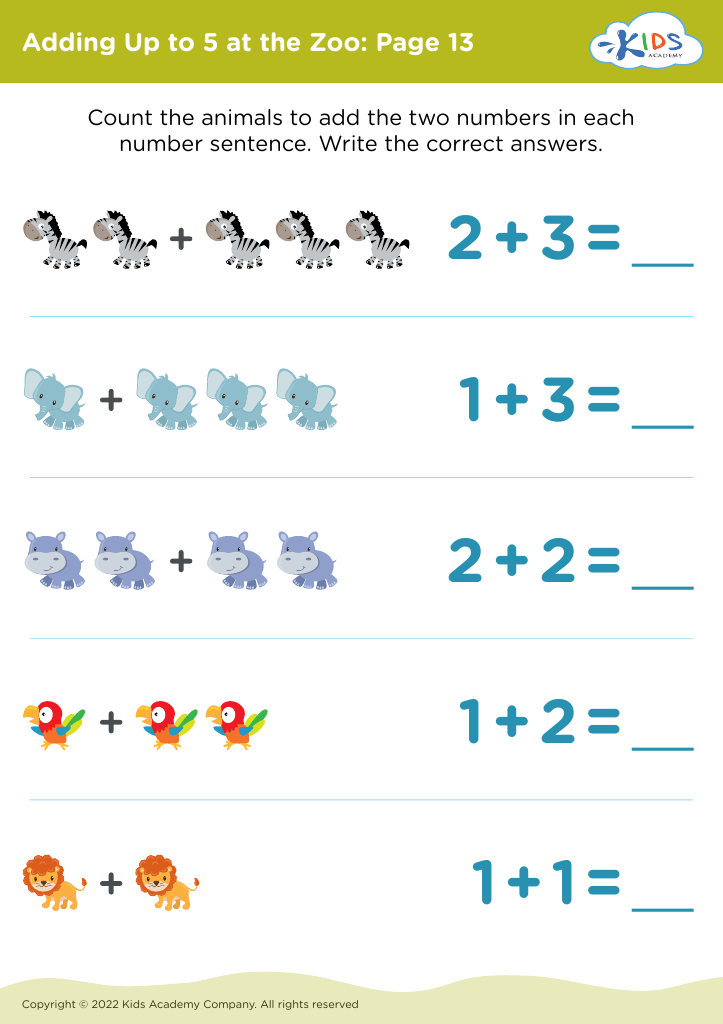








Animal identification through addition and subtraction is essential for early childhood education, capturing the curiosity and imagination of young learners. Parents and teachers should prioritize these concepts, as they play a critical role in cognitive development.
Firstly, identifying animals while learning basic math creates a relatable context for children. Kids love animals, and incorporating them into educational activities makes learning engaging and fun. Themes like counting animals in a zoo or adding up pets at home promote a connection between math and the real world.
Secondly, these activities enhance cognitive skills, including number sense and critical thinking. As children learn to solve simple addition and subtraction problems, they develop foundational math abilities essential for later academic success. This dual focus on identification and computation aids in creating a well-rounded understanding of both concepts.
Moreover, this playful approach fosters social skills, as children can work in groups to tackle math problems involving their favorite animal characters. This interaction encourages communication, collaboration, and a love for learning while improving their emotional and social development.
Ultimately, integrating animal identification with addition and subtraction not only makes math enjoyable but also lays the groundwork for continuous exploration and growth in the early stages of education.








