Problem-solving abilities Addition & Subtraction Worksheets for Ages 3-6 - Page 2
29 filtered results
-
From - To
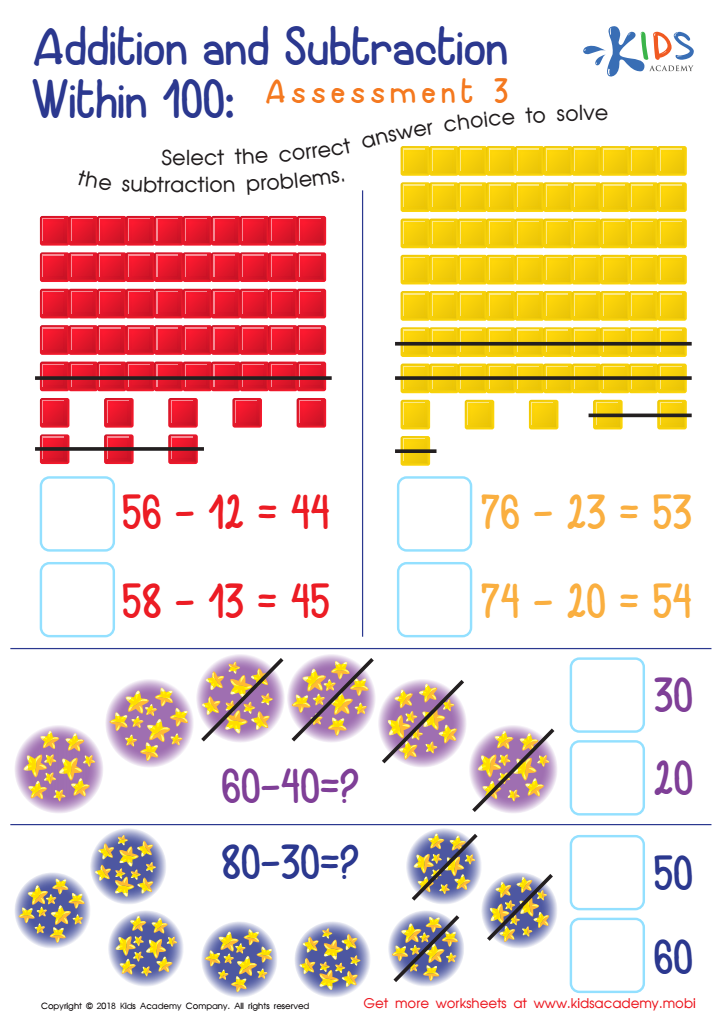
Addition and Subtraction Within 1: Assessment 3 Worksheet
 Assign to My Students
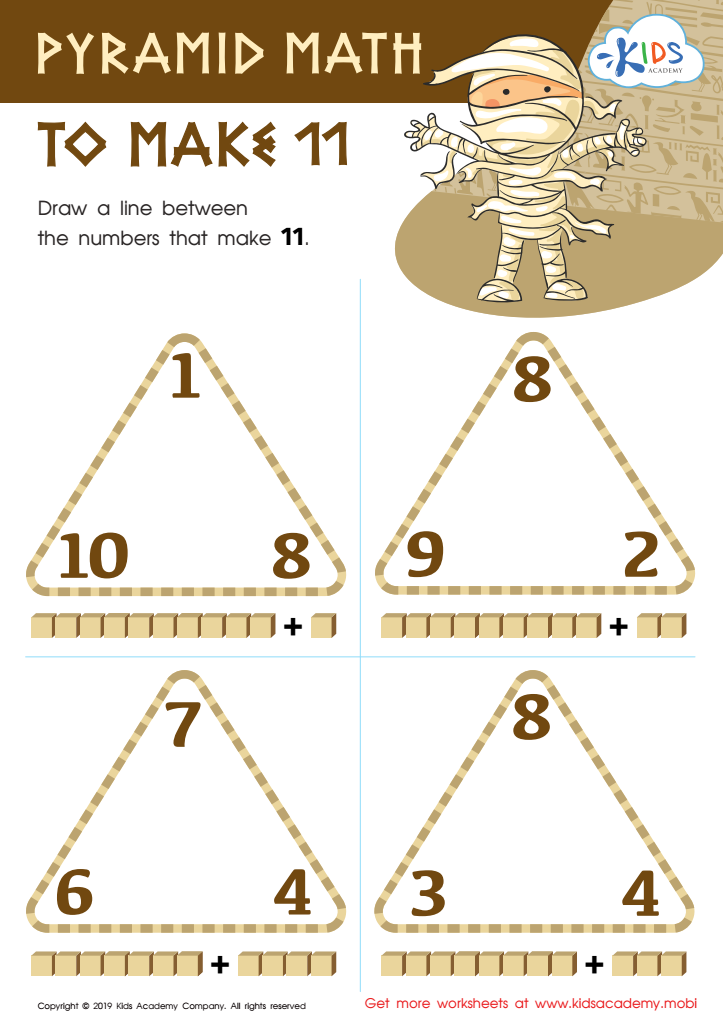
Pyramid Math to Make 11 Worksheet
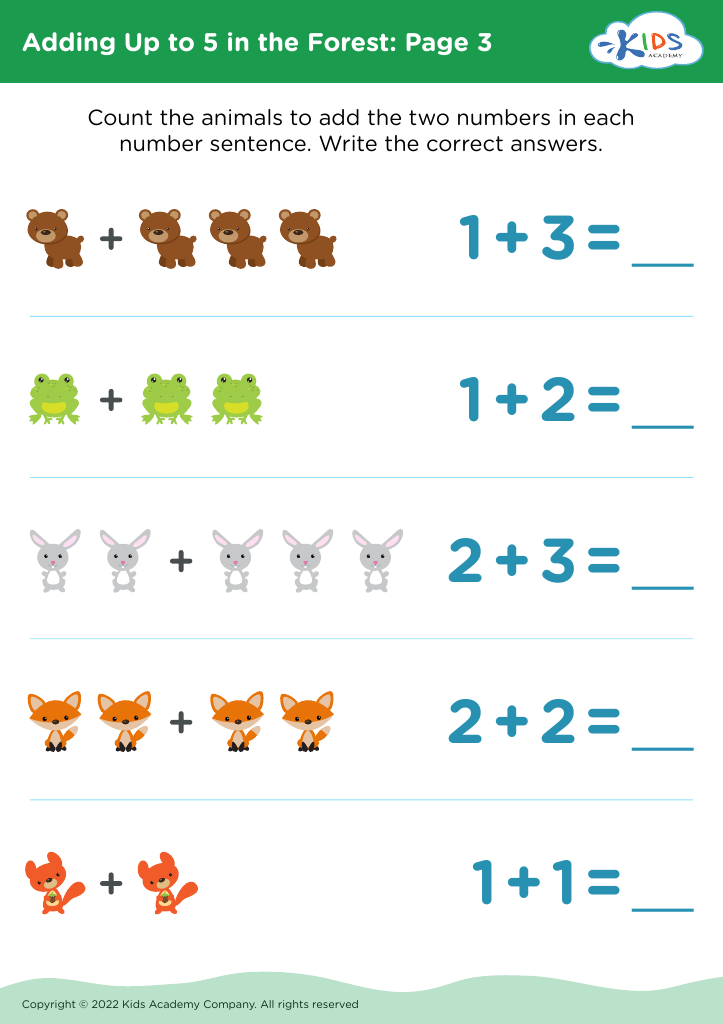








Fostering problem-solving abilities, particularly addition and subtraction skills, in children aged 3-6 is pivotal for several reasons. Firstly, these early mathematical skills form the foundation for more complex arithmetic and reasoning abilities that children will encounter as they progress academically. Developing a strong understanding of addition and subtraction primes young minds for future success in math and related disciplines like science, technology, and engineering.
Additionally, problem-solving skills go beyond numerical understanding. When children engage with addition and subtraction problems, they learn to approach challenges methodically, strategize solutions, and think critically—all crucial life skills. For instance, recognizing patterns, enhancing memory, and practicing perseverance are inherent benefits. These cognitive skills benefit not just academic pursuits, but also everyday activities and personal decision-making.
Rabbit ear techniques, counting fingers, or sharing toys equally are practical engagement methods for children within this age group. Parents and teachers providing positive reinforcement during these activities significantly boost confidence and enthusiasm towards learning. By nurturing these skills early, both in formal educational settings and through everyday interactions, adults set a precedent for lifelong learning habits, preparing children to navigate complex problems smoothly—whether in a school setting or later in life.








