Sea creatures identification Addition & Subtraction Worksheets for Ages 3-6
3 filtered results
-
From - To
Dive into math fun with our Sea Creatures Identification Addition & Subtraction Worksheets for ages 3-6! These engaging printables not only introduce basic arithmetic but also teach little ones about fascinating underwater animals. Designed to make math exciting, each worksheet combines vibrant sea creature imagery with simple addition and subtraction problems, helping kids develop essential math skills in a playful way. Perfect for early learners, our worksheets foster a love for learning while enhancing counting, number recognition, and problem-solving abilities. Let your child's imagination swim free as they explore math through the enchanting world of sea creatures!
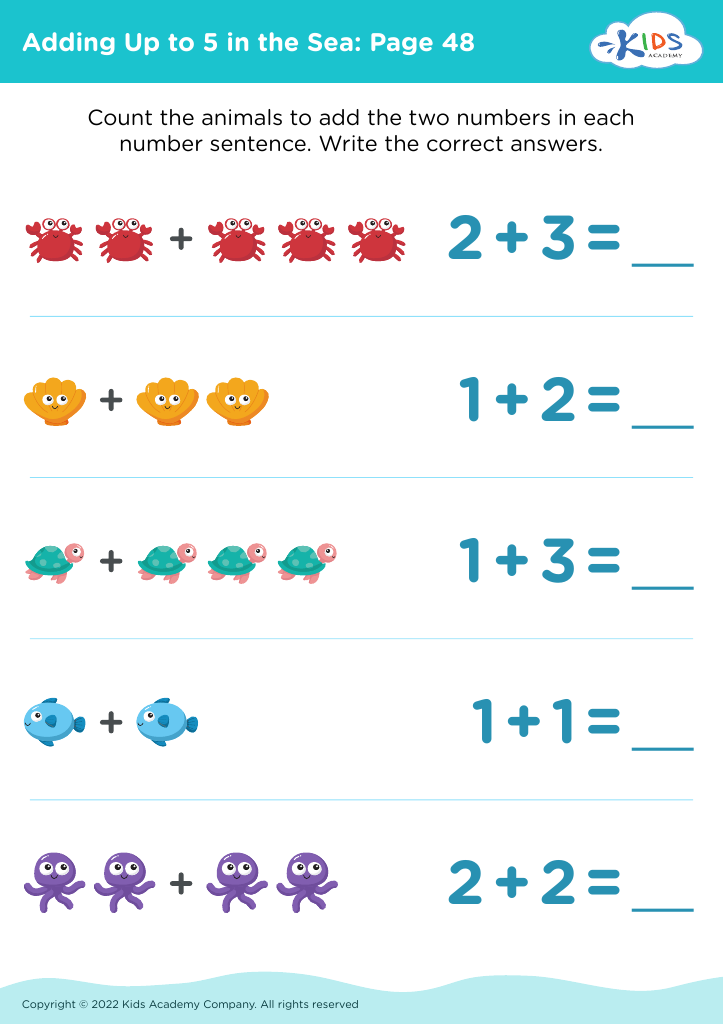
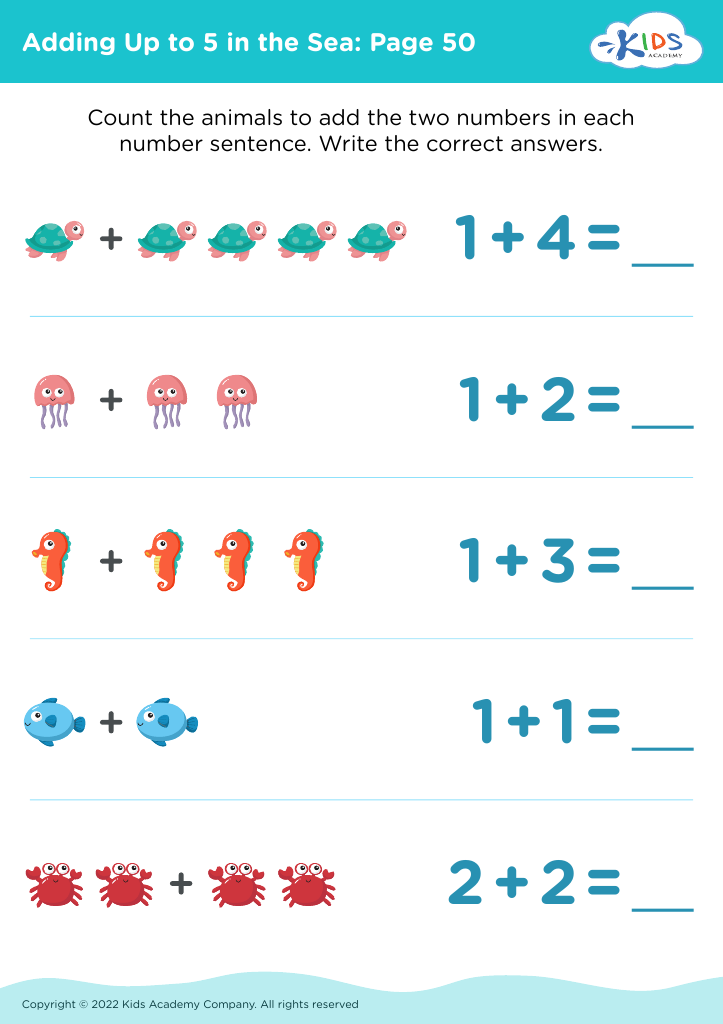
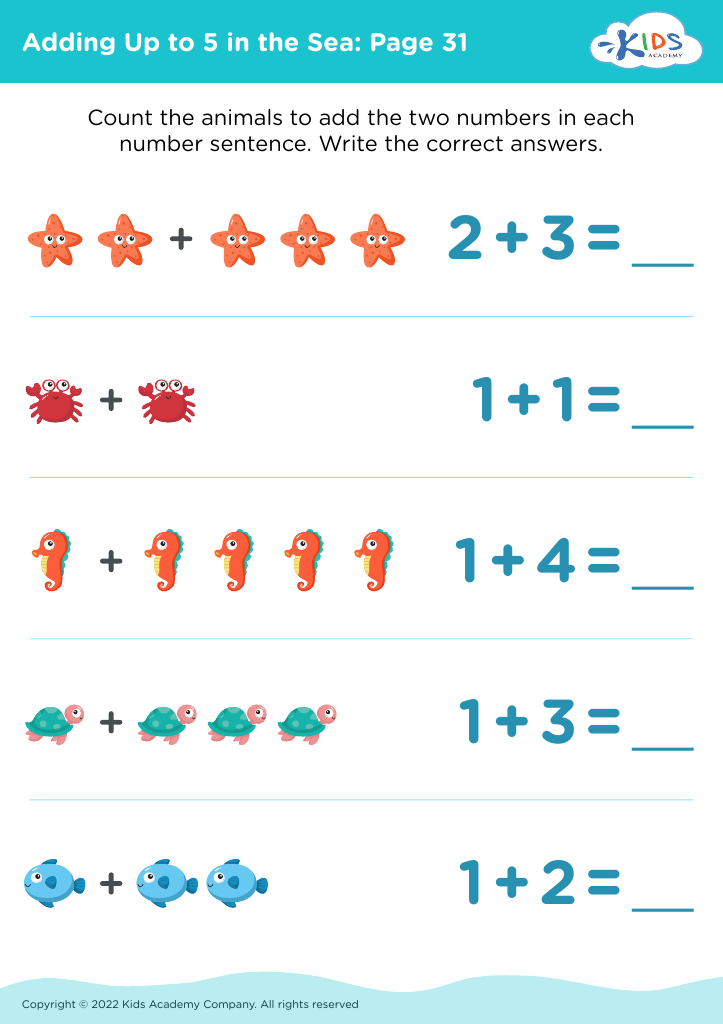








Identifying sea creatures while engaging in addition and subtraction exercises is an educational treasure chest for children aged 3-6, combining cognitive development with the natural allure of ocean life. Parents and teachers should invest in this approach for several compelling reasons.
Firstly, incorporating sea creatures taps into children's natural curiosity and fascination with marine life, making learning more engaging and enjoyable. This thematic approach increases their attentiveness and eagerness to participate, diving into the underwater world with each math problem.
Mathematically, addition and subtraction provide the foundational building blocks for all higher-level math skills. For children aged 3-6, mastering these concepts is crucial for future academic success. By integrating sea creatures, these mathematical operations transform from abstract concepts into tangible and relatable entities, such as counting dolphins or subtracting starfish.
Attention to sea creature identification also enriches their knowledge base, fostering an awareness of biodiversity and the importance of marine conservation from an early age. It instills appreciation for the natural world, which can shape environmentally responsible behaviors in the future.
Importantly, such activities promote fine motor skills through tasks like matching and sorting, and they sharpen visual discrimination abilities by recognizing different sea species. This multi-sensory learning experience provides a holistic approach that nurtures cognitive, emotional, and social development in young learners.








