Shape Recognition Addition & Subtraction Worksheets for Ages 3-6
3 filtered results
-
From - To
Discover our engaging "Shape Recognition Addition & Subtraction Worksheets for Ages 3-6!" Tailored specifically for young learners, these worksheets seamlessly combine math with shape identification. Children will enhance their addition and subtraction skills while recognizing basic shapes, such as circles, squares, and triangles. By solving interactive problems, kids will not only develop foundational math concepts but also improve their visual recognition and critical thinking abilities. Each worksheet is designed with bright colors and playful designs to inspire kids to enjoy learning. Perfect for both classroom use and at-home practice, these worksheets will make math fun and exciting for your little ones!
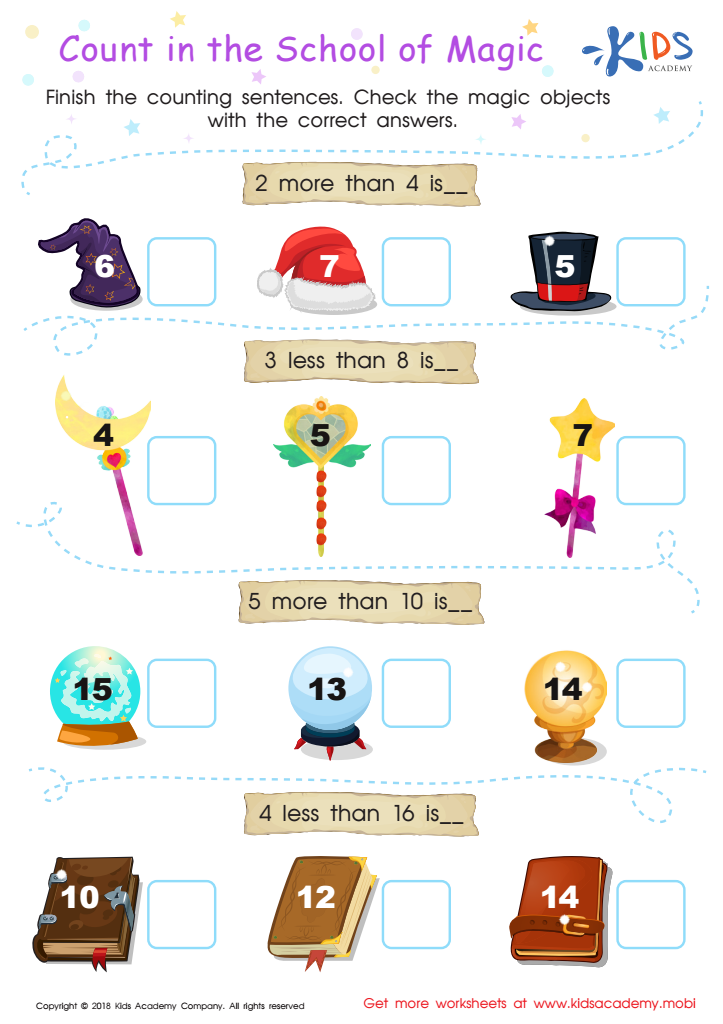
Count in the School of Magic Worksheet
 Assign to My Students
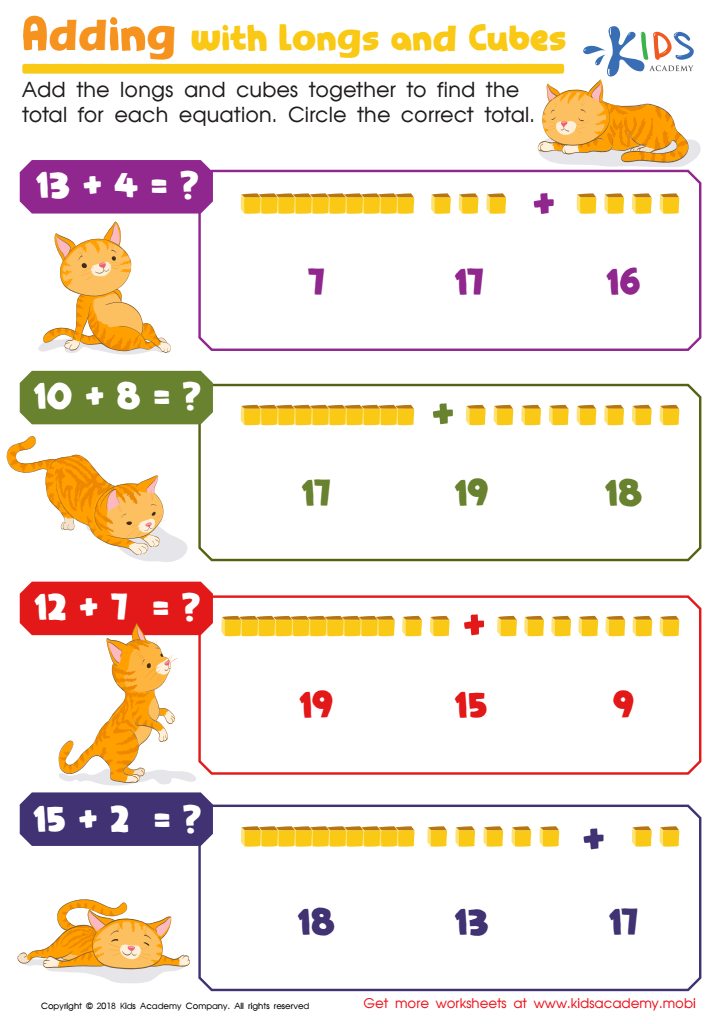
Adding With Longs and Cubes Worksheet
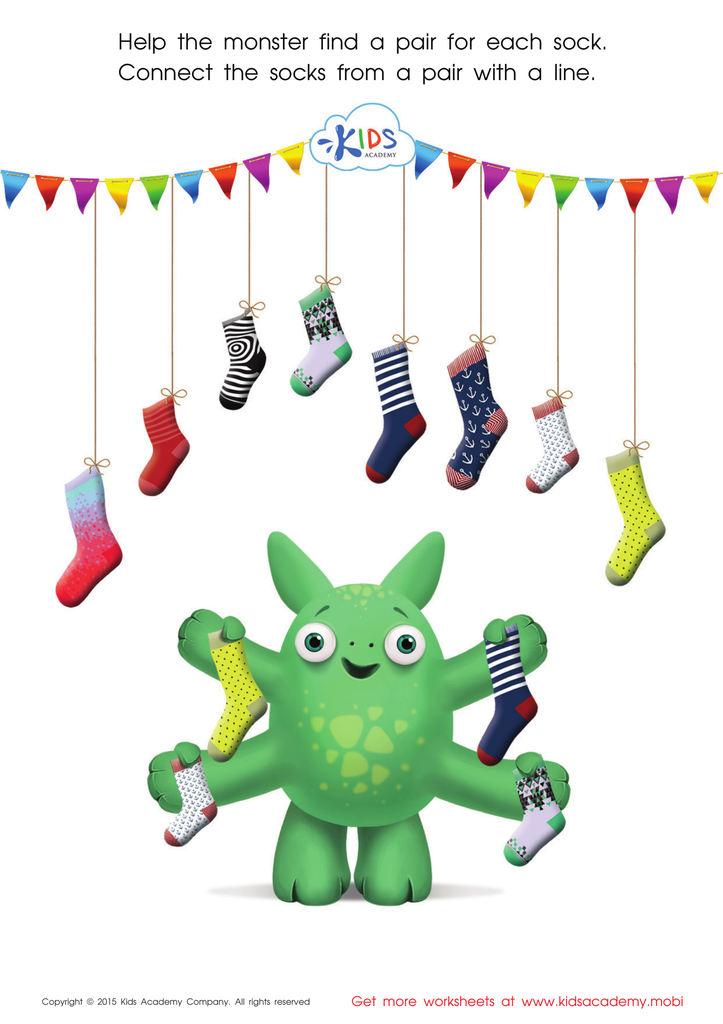
Math Matching Pairs Game: Monsterв's Socks Worksheet








Shape recognition, along with addition and subtraction, plays a crucial role in early childhood education for ages 3-6. Understanding shapes fosters spatial awareness, enhances problem-solving skills, and lays the foundation for later mathematical understanding. When children recognize various shapes, they can classify and compare them, which is essential for developing critical thinking skills.
Linking shapes with basic addition and subtraction challenges sparks interest and engagement. For instance, using shapes to physically representnumbers (e.g., two circles and one square) helps children visualize mathematical concepts, making abstract ideas more concrete. This integrated approach encourages playful learning, turning math into an enjoyable activity rather than a daunting task.
Moreover, fostering these skills in early education promotes confidence and resilience in young learners. When they successfully identify shapes or solve simple equations, they experience a sense of achievement that motivates them to tackle more complex challenges later.
Parents and teachers should also recognize that these foundational skills connect with broader developmental goals. Shape recognition and basic arithmetic serve not only academic purposes but also social interactions and everyday tasks, preparing children for future learning and real-world applications. Caring about these aspects of early education sets the stage for lifelong learners.








