Understanding number relationships Addition & Subtraction Worksheets for Ages 3-6
6 filtered results
-
From - To
Our "Understanding Number Relationships: Addition & Subtraction Worksheets for Ages 3-6" are designed to nurture early mathematical skills. These engaging worksheets help young learners grasp fundamental math concepts through interactive and fun activities. By exploring addition and subtraction within the context of number relationships, children develop critical thinking and problem-solving skills essential for future academic success. Ideal for preschool and early elementary-aged children, these printable worksheets provide a strong foundation in math while making learning enjoyable. Start building your child’s confidence and expertise in math with our thoughtfully crafted addition and subtraction resources!
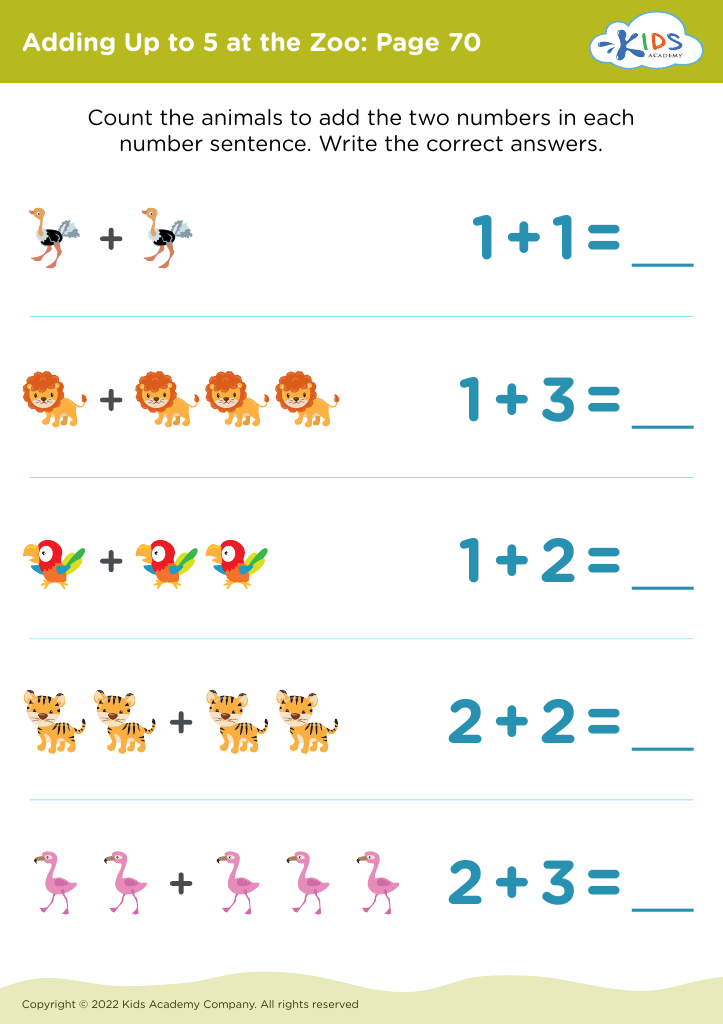
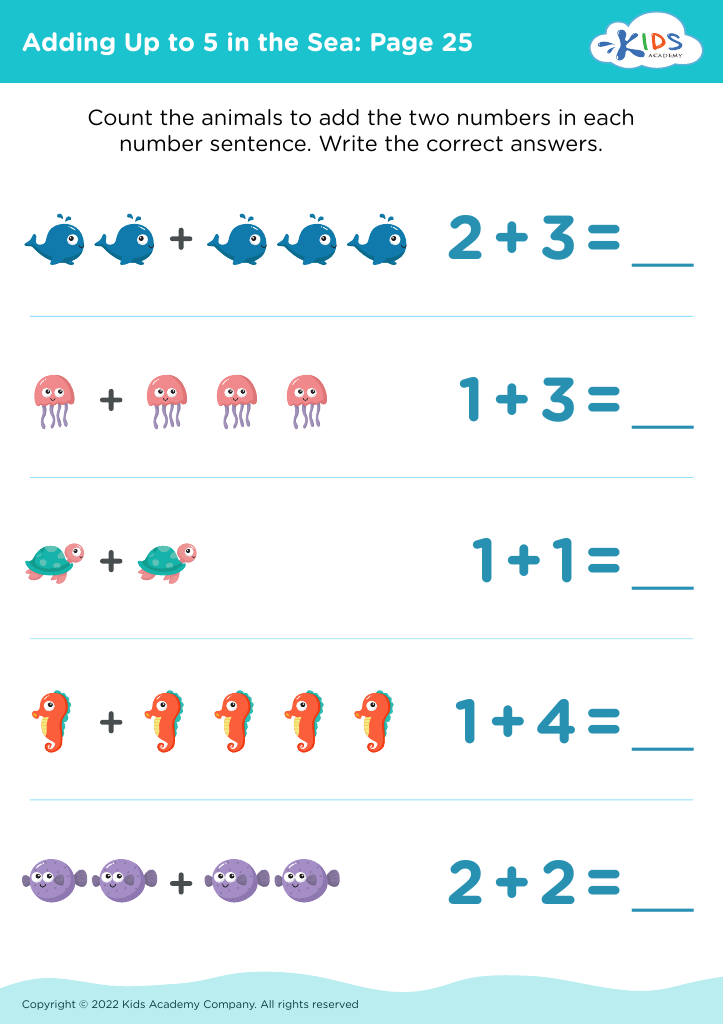
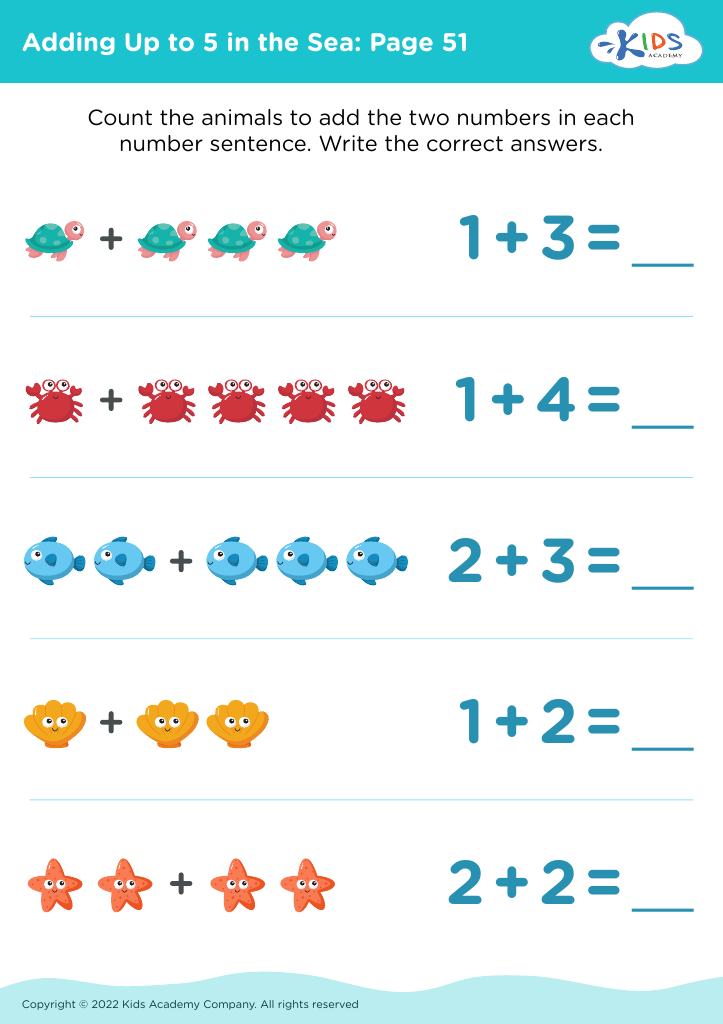
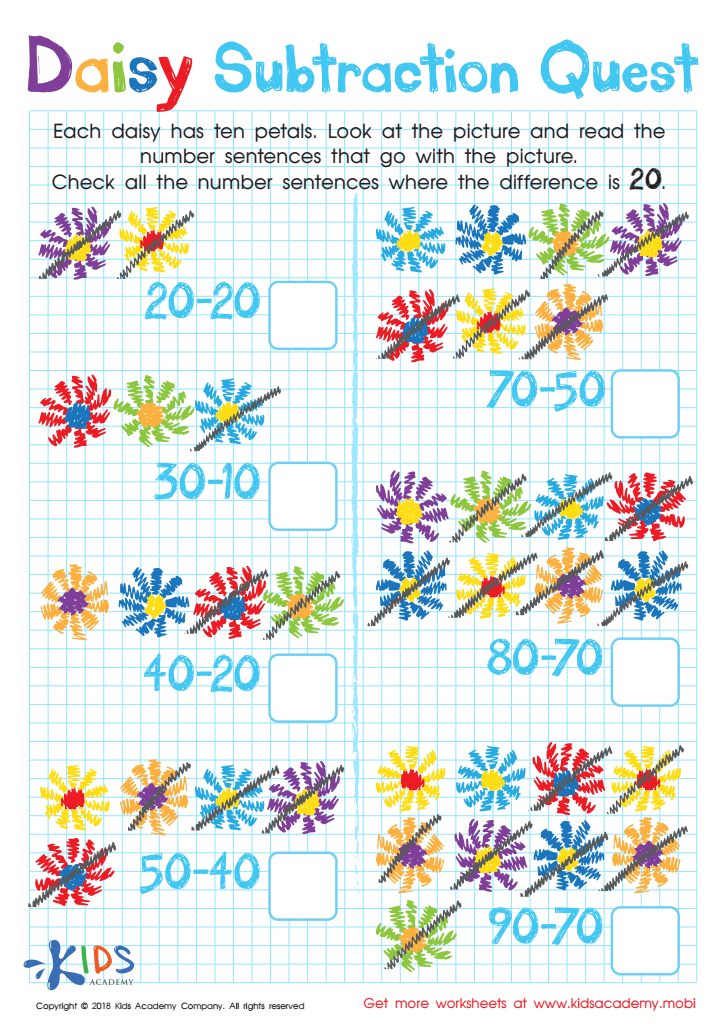
Daisy Subtraction Quest Worksheet
 Assign to My Students
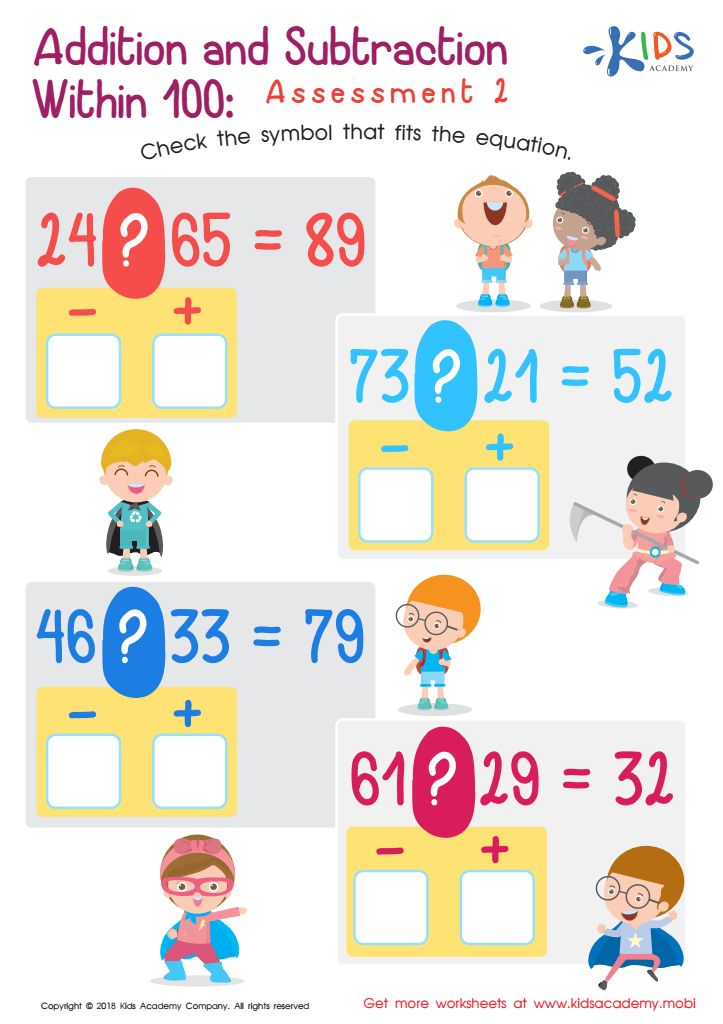
Addition and Subtraction Within 1: Assessment 2 Worksheet
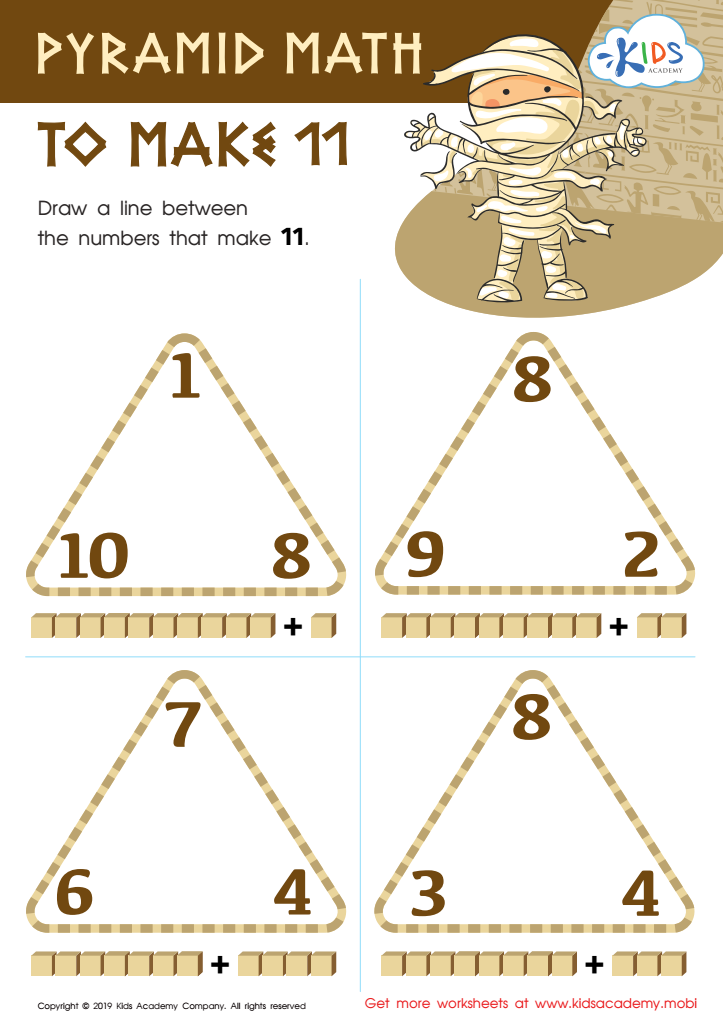
Pyramid Math to Make 11 Worksheet








Understanding number relationships through addition and subtraction is foundational for young children aged 3-6. This early mathematical knowledge is crucial for several reasons. Firstly, it builds essential problem-solving skills and logical reasoning. By learning how numbers relate to each other, children begin to see patterns and understand that numbers can be manipulated in various ways to solve problems.
Additionally, competency in basic addition and subtraction prepares children for more complex mathematical concepts. Just as knowing the alphabet is necessary for reading, understanding number relationships is key to future success in mathematics. It forms the cornerstone upon which more advanced computation and problem-solving skills are built.
From a developmental perspective, early math skills correlate strongly with later academic success, making it vital for kindergarten readiness. Research suggests that preschool children who grasp basic number relationships are more likely to excel in school across multiple subjects.
Moreover, engaging with numbers in enjoyable ways can foster a positive attitude towards math. Activities like counting objects, simple games, or using visual aids help children see math as fun and approachable.
Parents and teachers can foster this understanding through everyday interactions, creating a math-rich environment that encourages curiosity and a love for learning from a young age. Thus, emphasizing addition and subtraction in early childhood sets a strong educational foundation, promoting both academic achievement and a lifelong appreciation for math.








