Understanding number values Addition & Subtraction Worksheets for Ages 3-6
3 filtered results
-
From - To
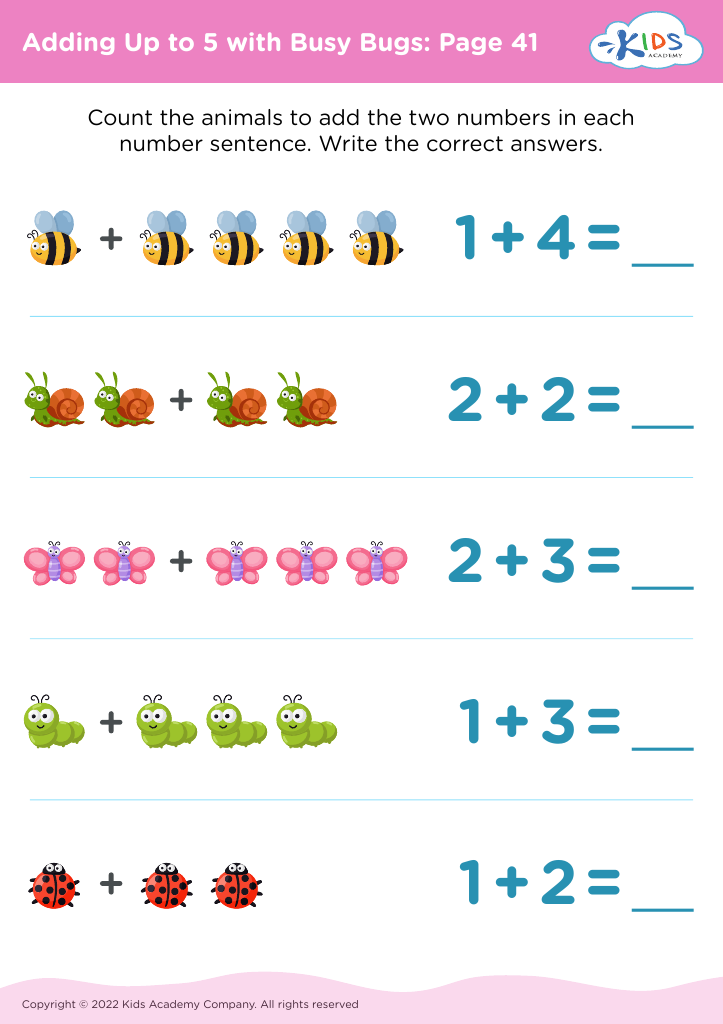
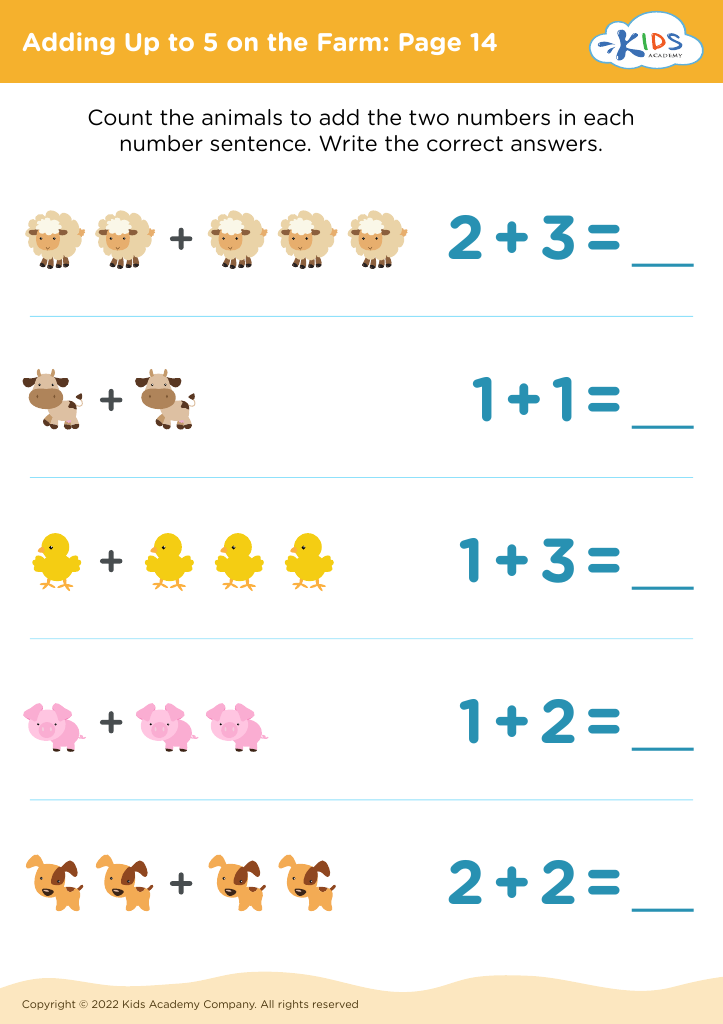
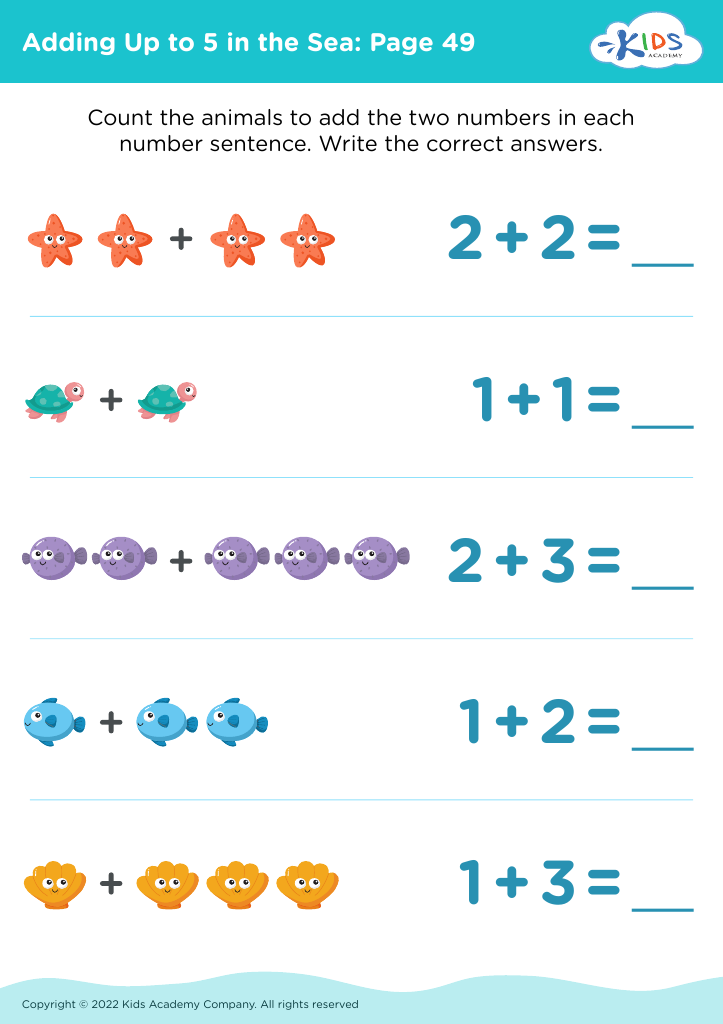
Explore our engaging "Understanding Number Values: Addition & Subtraction Worksheets" designed for children ages 3-6. These colorful, interactive worksheets help young learners grasp the fundamentals of number values while practicing basic addition and subtraction concepts. With age-appropriate exercises, kids will develop their understanding of quantities, enhance their mathematical skills, and build a strong foundation for future learning. Our worksheets feature fun themes and appealing visuals to captivate your child's attention and inspire a love for math. Perfect for at-home learning or in the classroom, these resources support early childhood education and foster confidence in young mathematicians. Start mastering numbers today!








Understanding number values and basic addition and subtraction is crucial for young children aged 3-6 for several reasons. First, this foundational knowledge helps children develop essential mathematical skills that they will build on throughout their education. Mastering these concepts early on lays the groundwork for more complex mathematical operations and problem-solving abilities.
Moreover, early number sense enhances cognitive development, promoting logical thinking and reasoning skills. Familiarity with numbers helps children recognize patterns, make comparisons, and develop critical thinking, which are vital for success in various subjects beyond mathematics.
For parents and teachers, engaging children in number values and simple arithmetic fosters a love for learning. When children connect numbers to real-life situations, such as counting toys or sharing snacks, they see practical applications of math, making it enjoyable and relatable. This interactive approach to learning nurtures curiosity and encourages children to ask questions, explore, and identify solutions.
Lastly, early exposure to number values can help identify any learning difficulties, allowing for timely interventions. Ultimately, by emphasizing early number skills, parents and teachers play an essential role in shaping confident, capable learners prepared for future academic challenges.








