Filters

101 filtered results

Clear all filters
Favorites
With answer key
Interactive

101 filtered results

Difficulty Level

Grade


Check out this FREE Trial Lesson on Addition for age 3-6!

Z

Favorites
With answer key
Interactive
  • 3-6
  • Cognitive Development
  • Addition
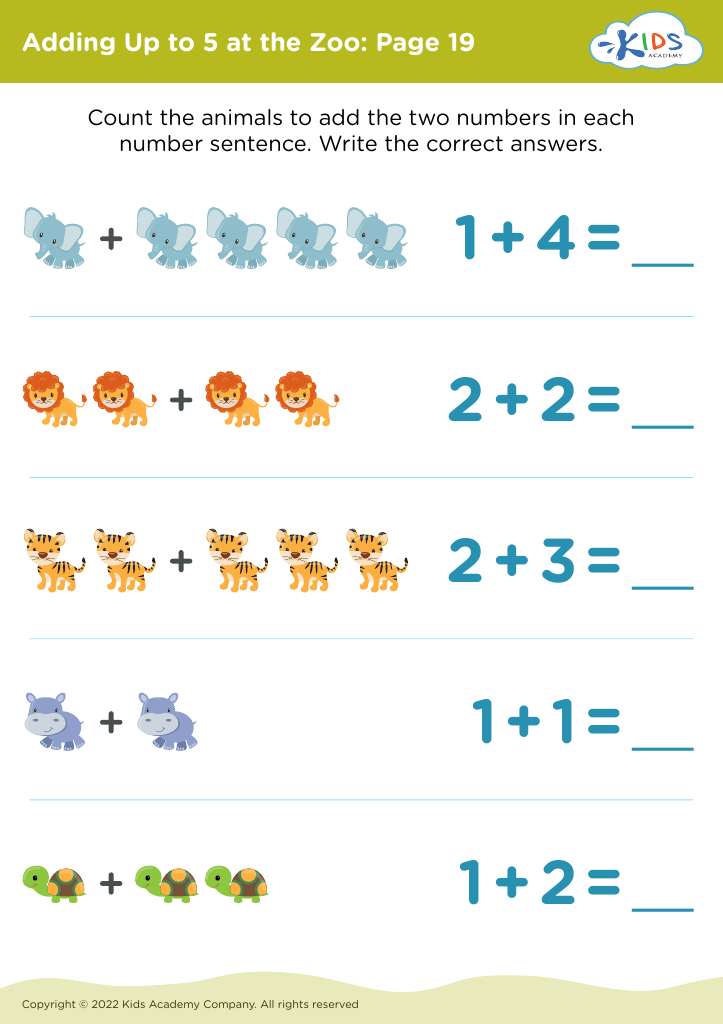
Adding Up to 5 at the Zoo: Page 19
Worksheet
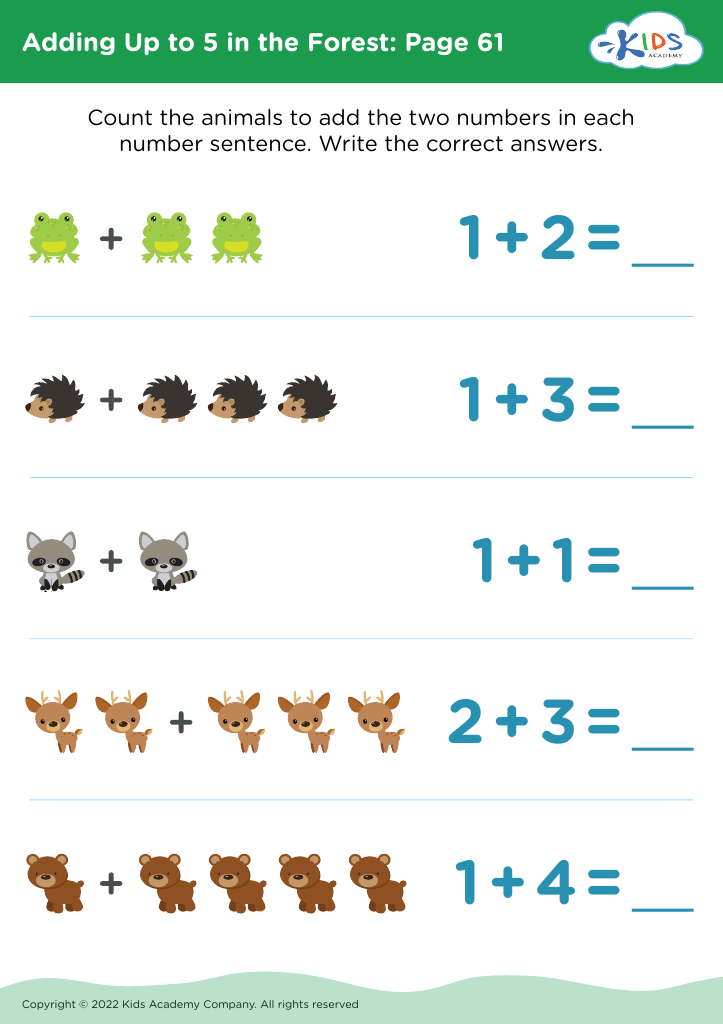
Adding Up to 5 in the Forest: Page 61
Worksheet
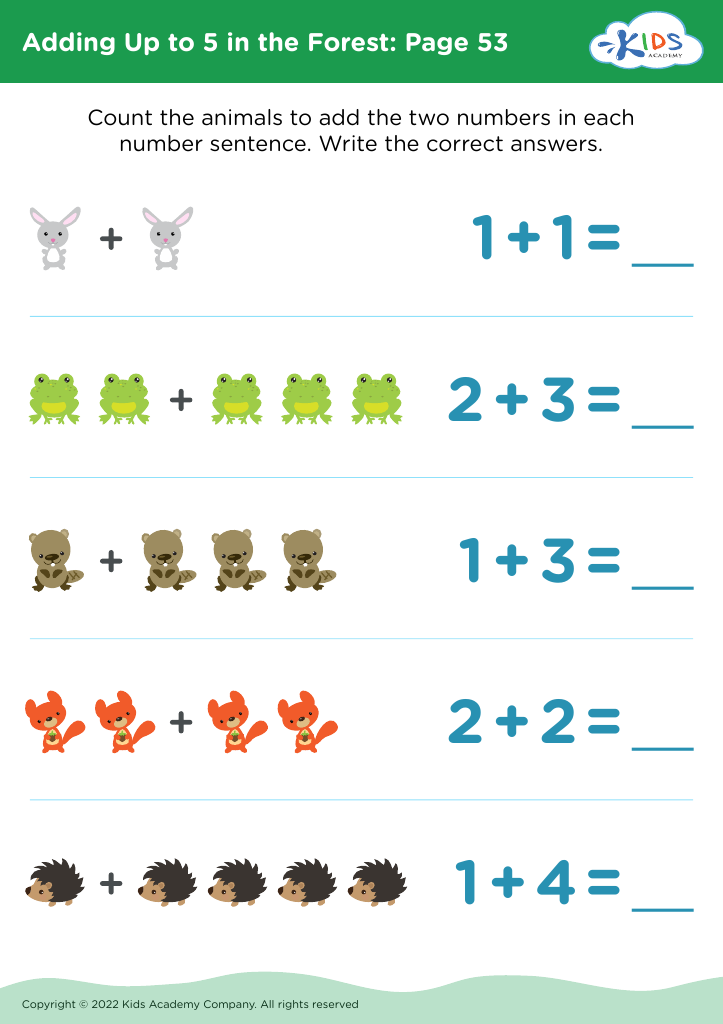
Adding Up to 5 in the Forest: Page 53
Worksheet
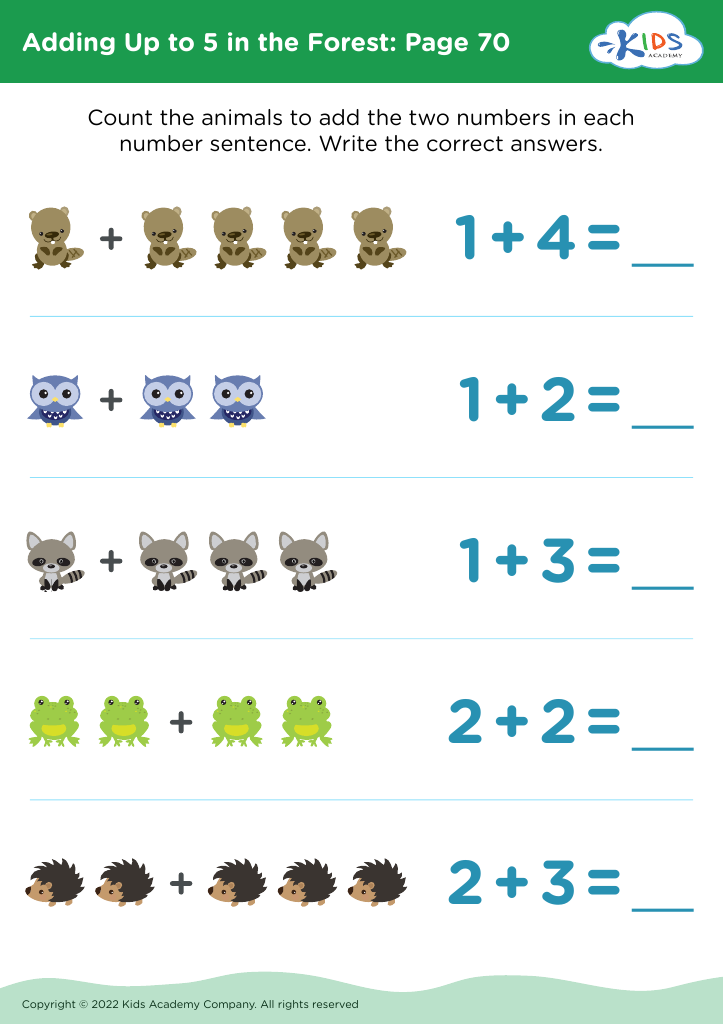
Adding Up to 5 in the Forest: Page 70
Worksheet
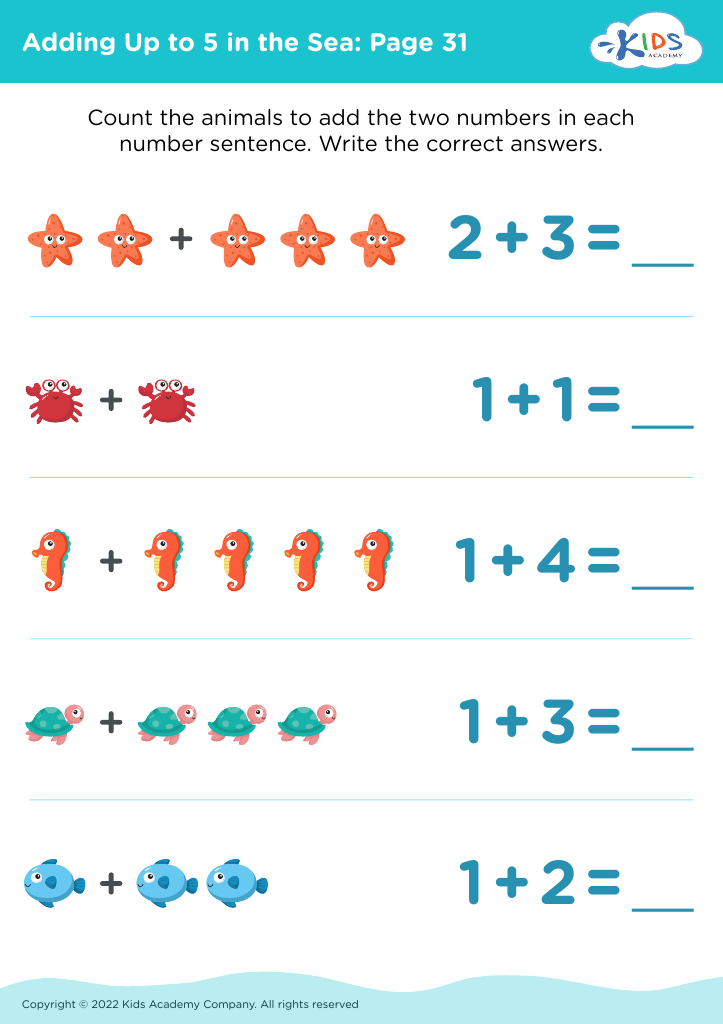
Adding Up to 5 in the Sea: Page 31
Worksheet
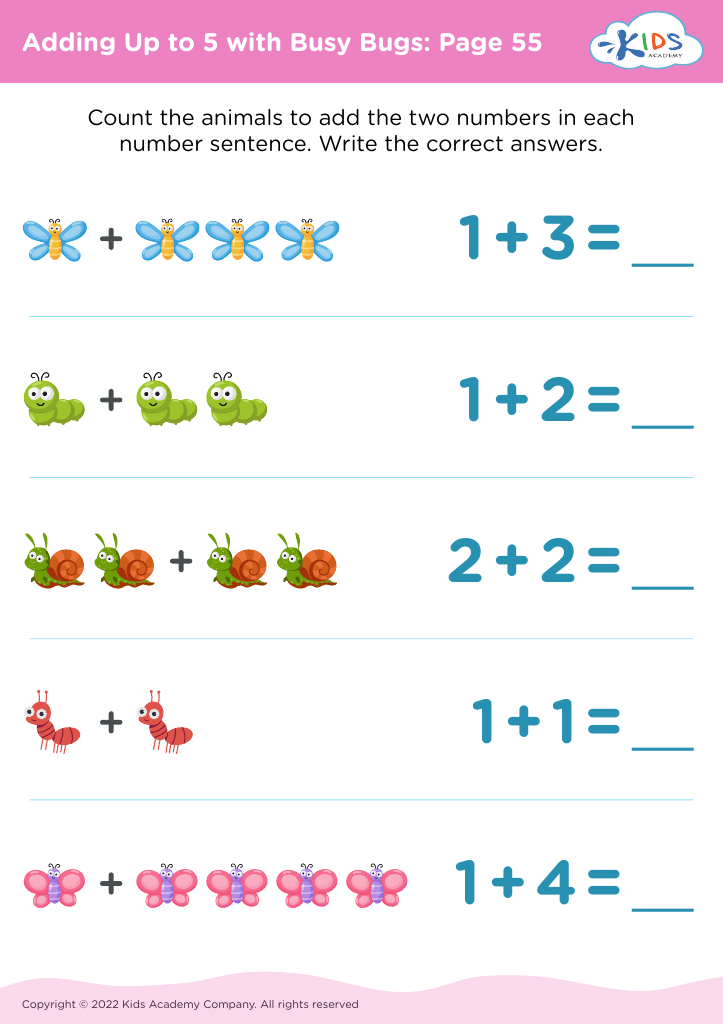
Adding Up to 5 with Busy Bugs: Page 55
Worksheet
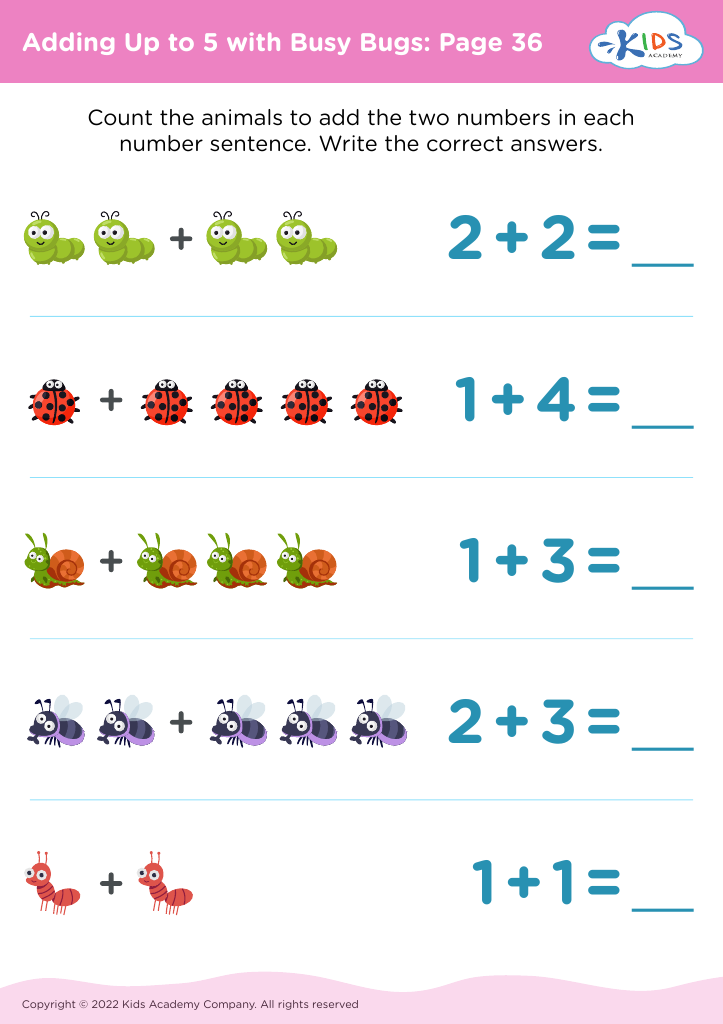
Adding Up to 5 with Busy Bugs: Page 36
Worksheet
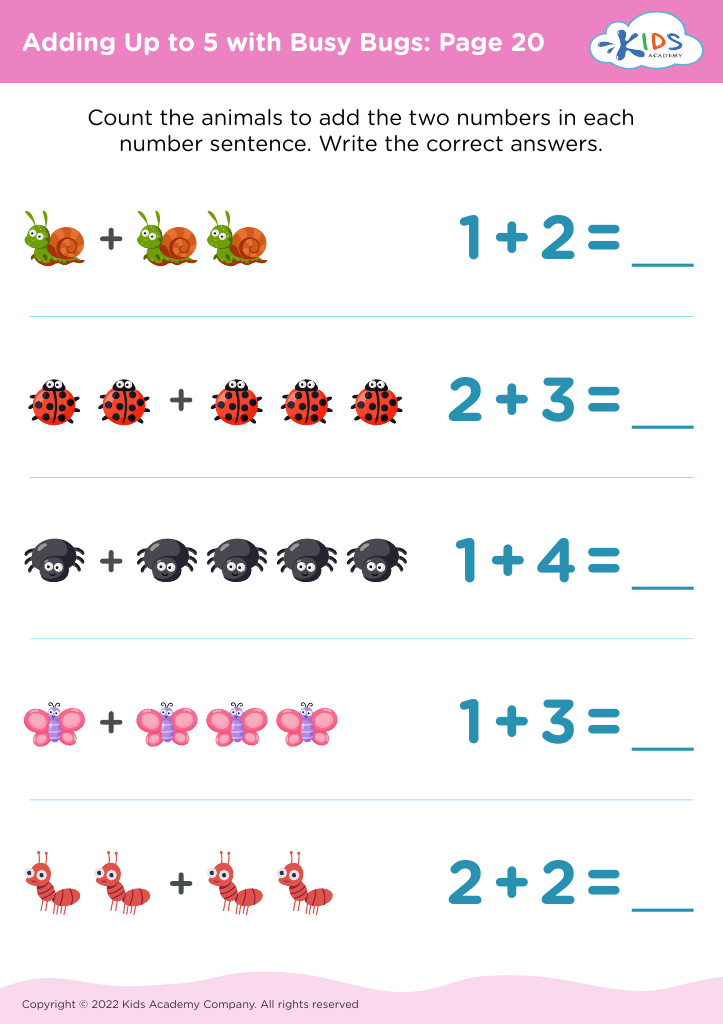
Adding Up to 5 with Busy Bugs: Page 20
Worksheet
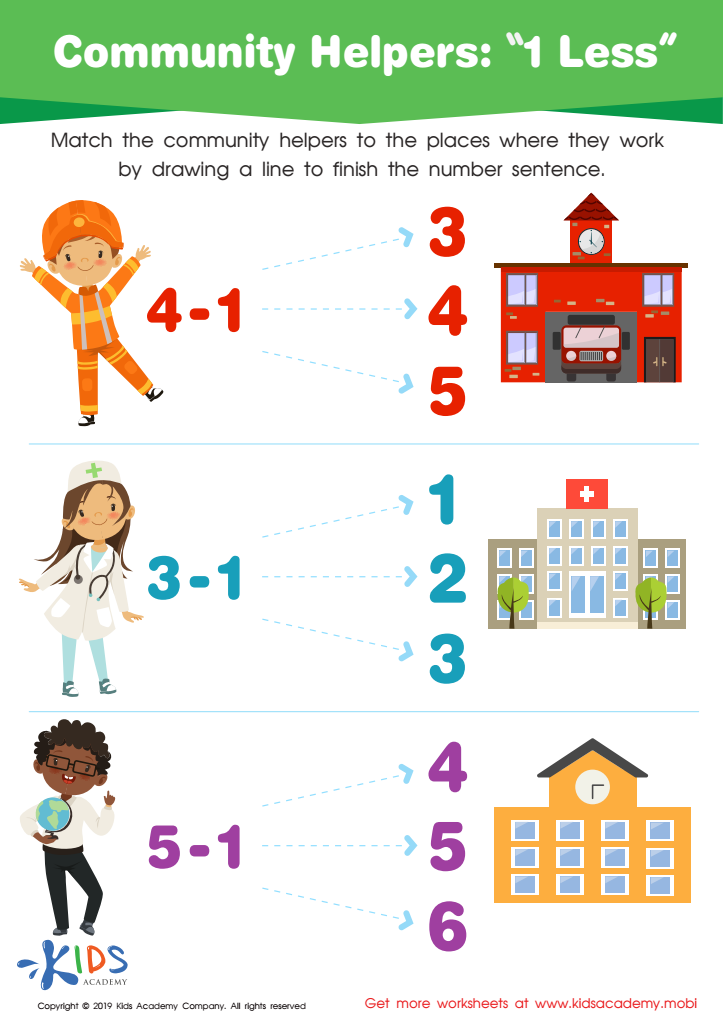
Community Helpers: 1 less Worksheet

Community Helpers: 1 less Worksheet

Look at this worksheet with your child and ask them to identify the different community helpers. Match them to the places where they work by drawing a line to finish the number sentence. This helps them identify the people that help keep the community organized and running smoothly. Examples of community helpers include doctors, police officers, firefighters, teachers, etc.
Community Helpers: 1 less Worksheet
Worksheet
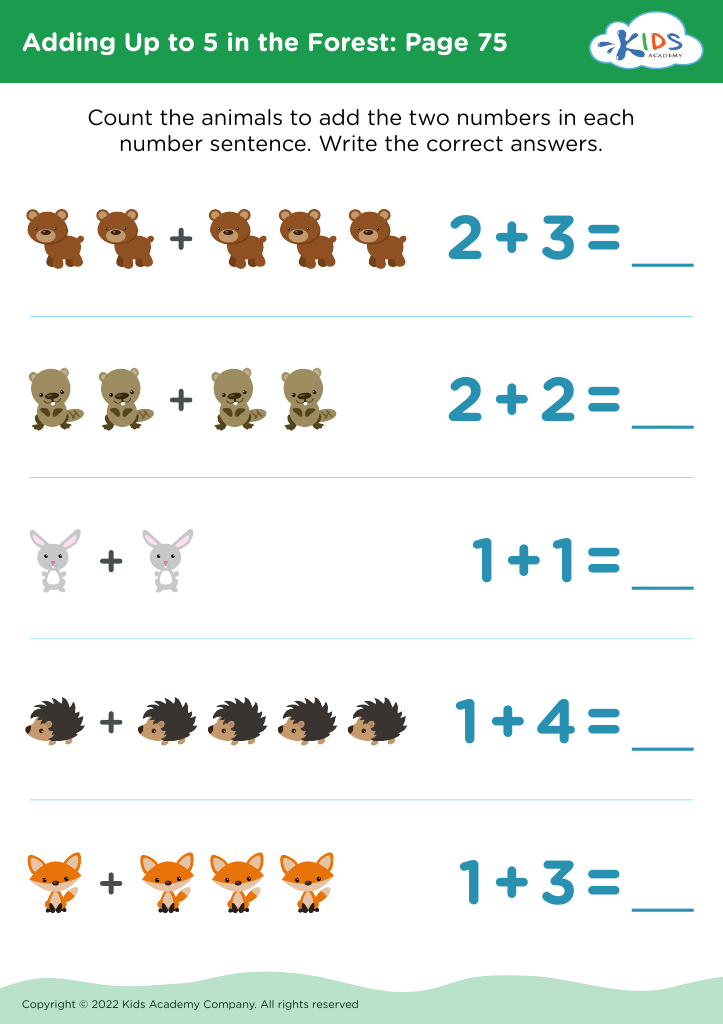
Adding Up to 5 in the Forest: Page 75
Worksheet
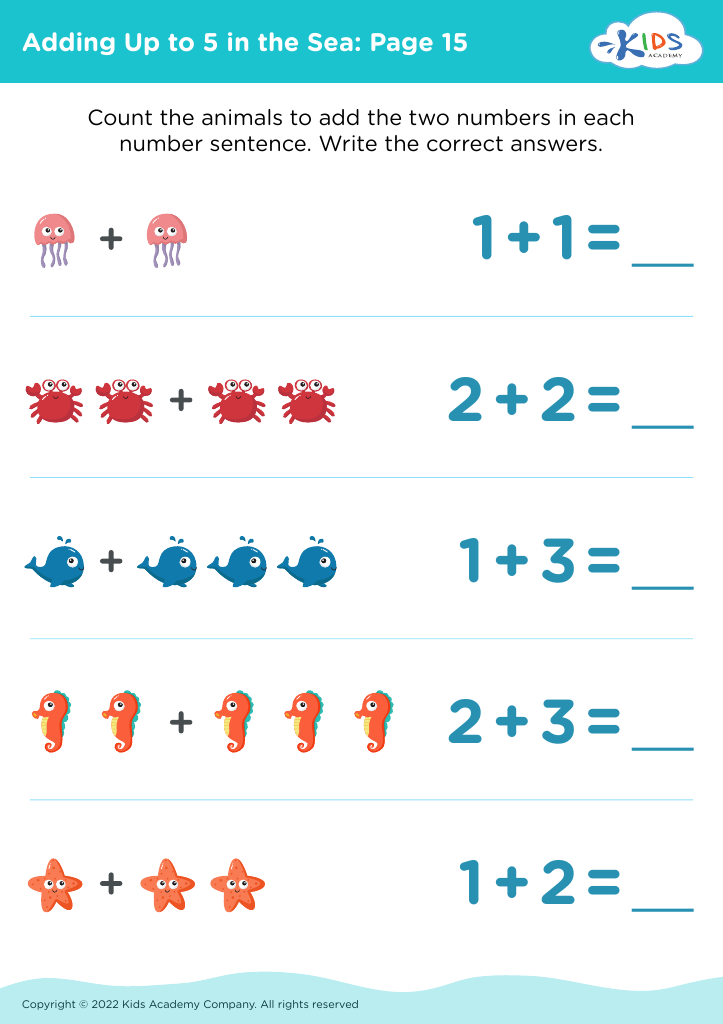
Adding Up to 5 in the Sea: Page 15
Worksheet
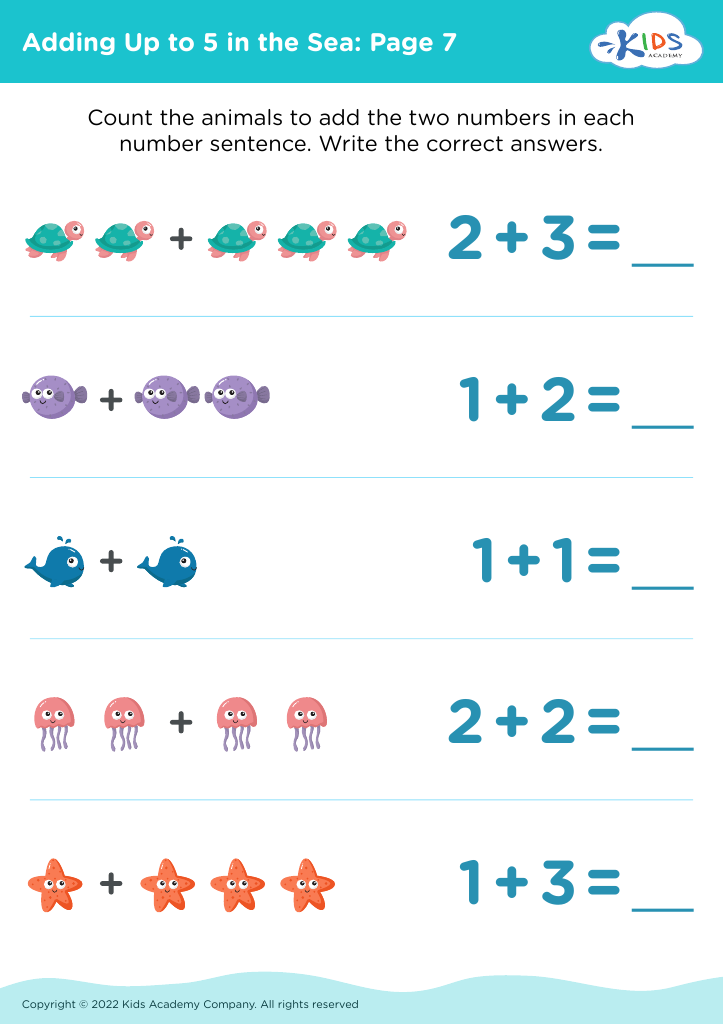
Adding Up to 5 in the Sea: Page 7

Adding Up to 5 in the Sea: Page 7

Adding Up to 5 in the Sea: Page 7
Worksheet
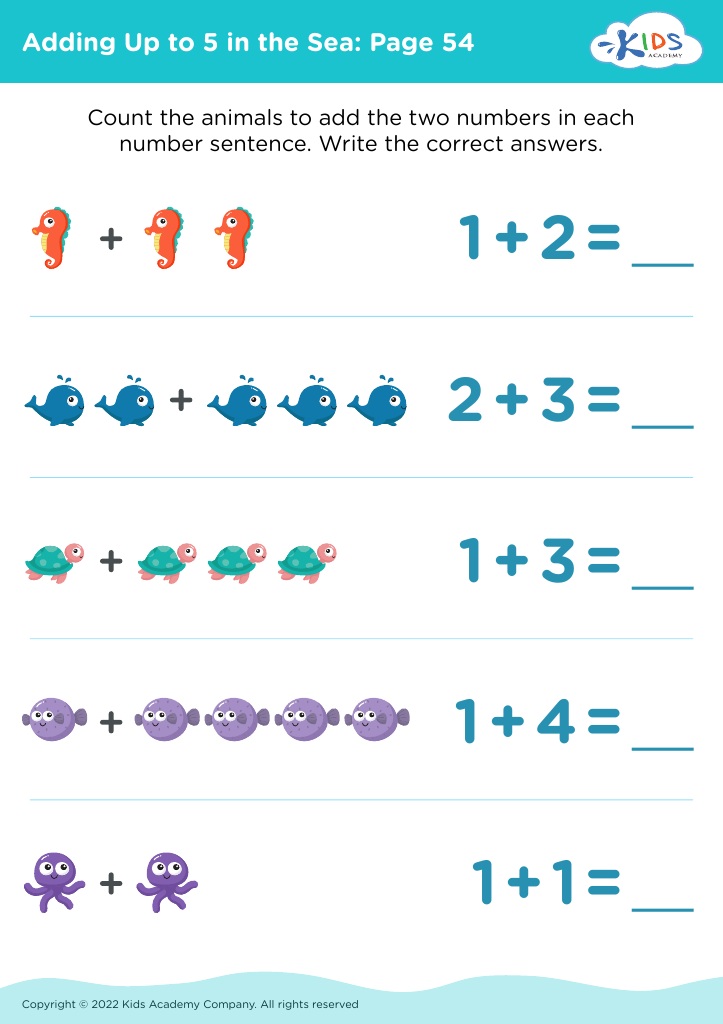
Adding Up to 5 in the Sea: Page 54
Worksheet
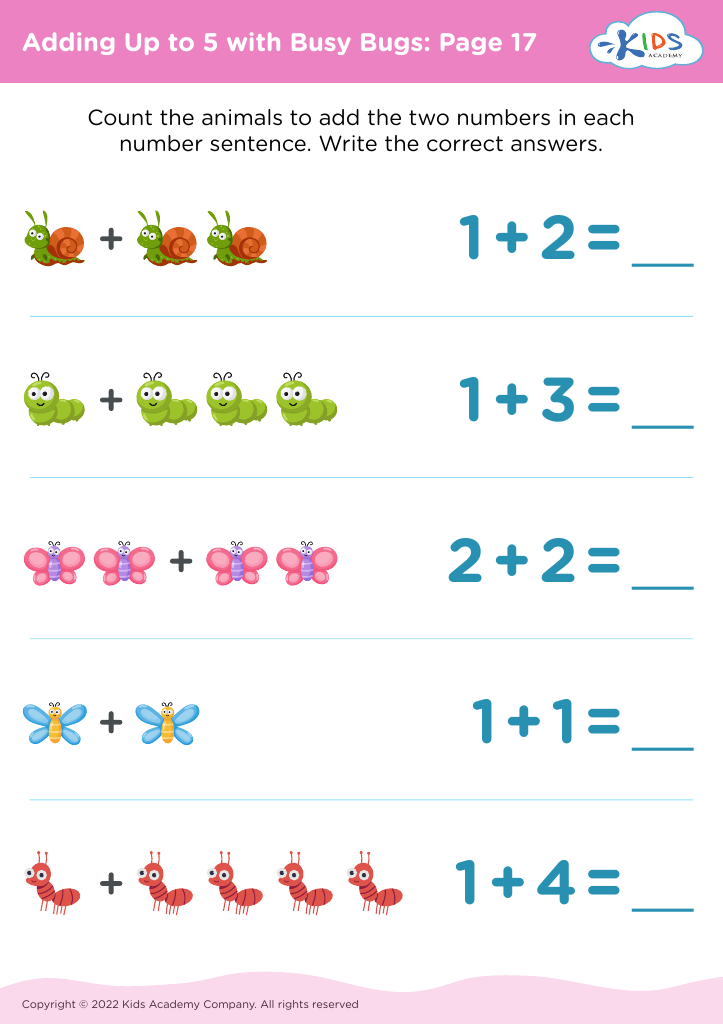
Adding Up to 5 with Busy Bugs: Page 17
Worksheet
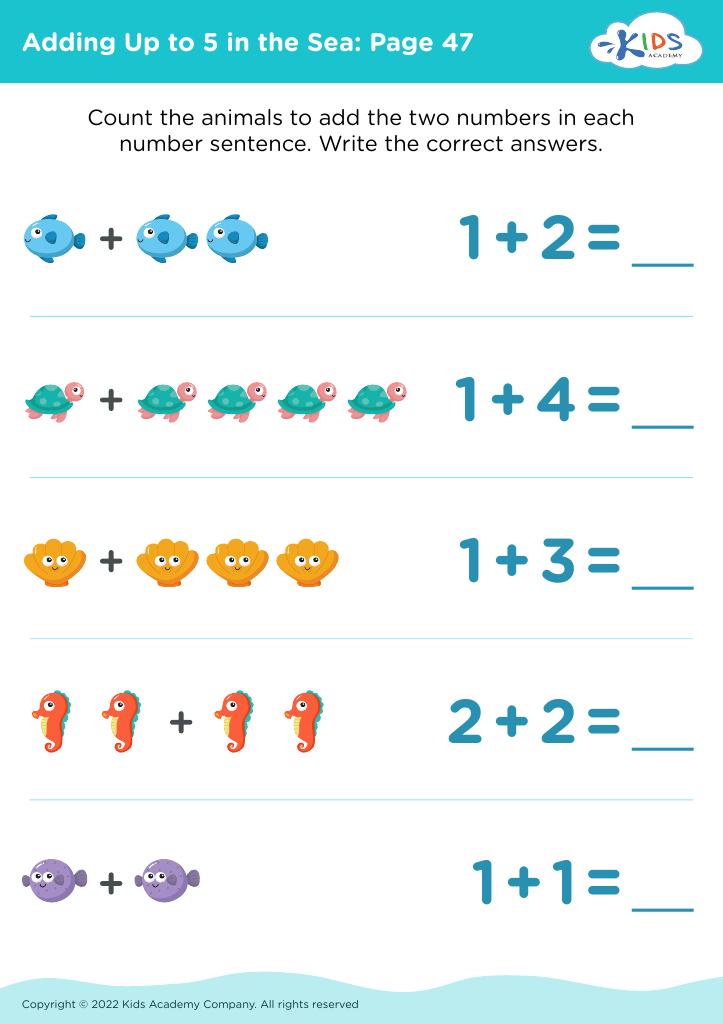
Adding Up to 5 in the Sea: Page 47
Worksheet
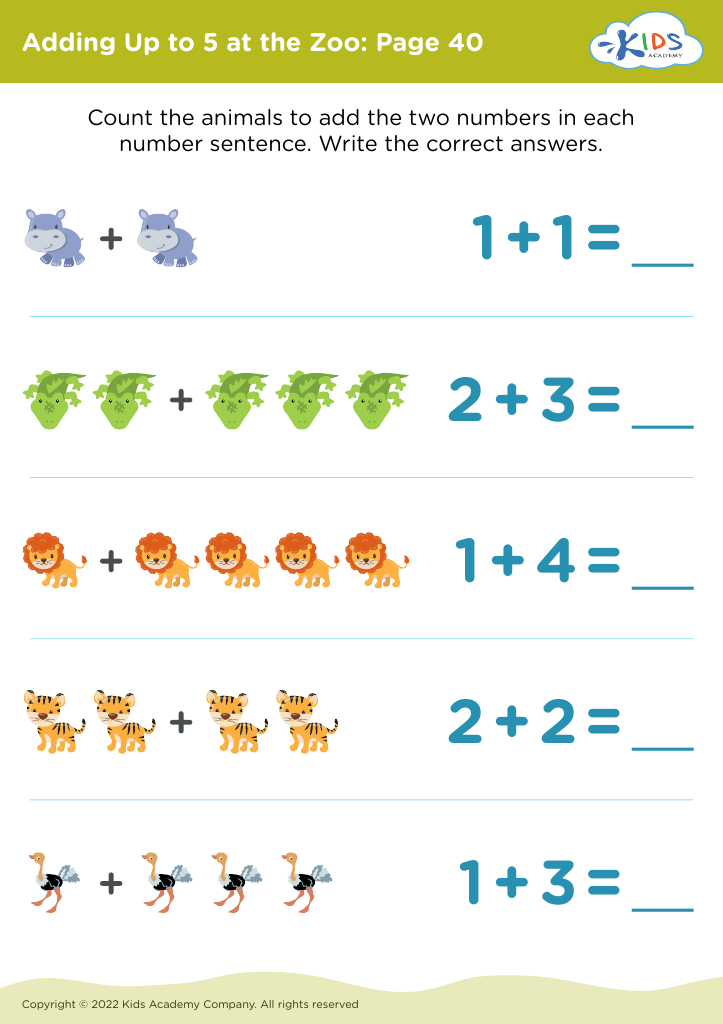
Adding Up to 5 at the Zoo: Page 40
Worksheet
Community Places: 1 Less Worksheet
Community Places: 1 Less Worksheet
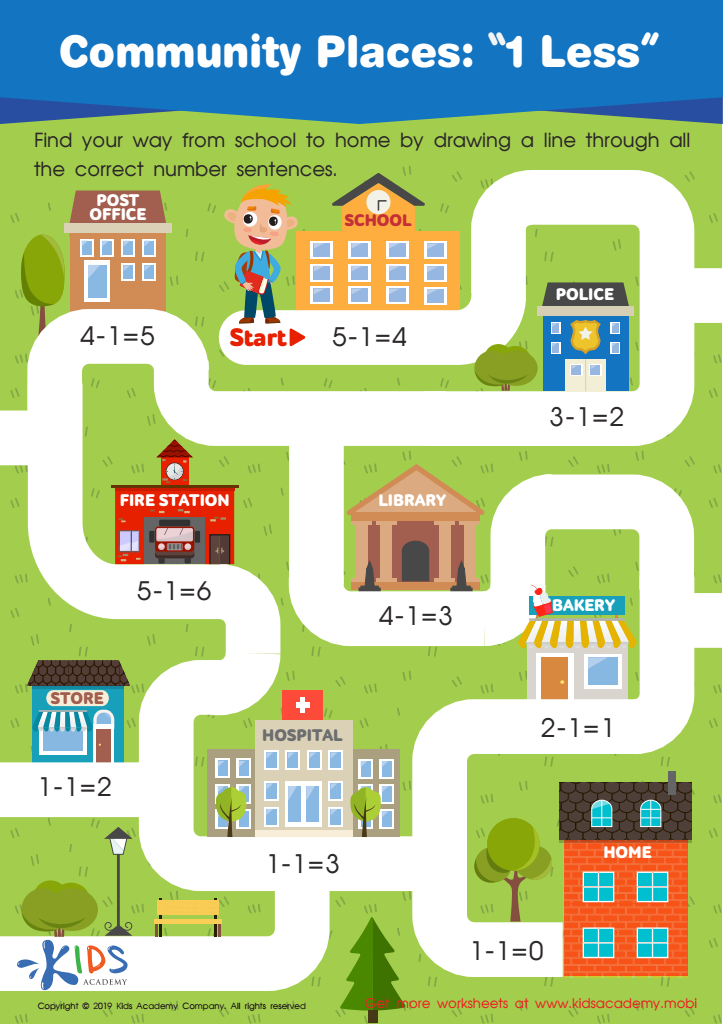
Have your kindergarteners draw a line through the correct number sentences as they find their way home from school. Ask them to identify the people, places, and buildings in their community and the jobs they do.
Community Places: 1 Less Worksheet
Worksheet
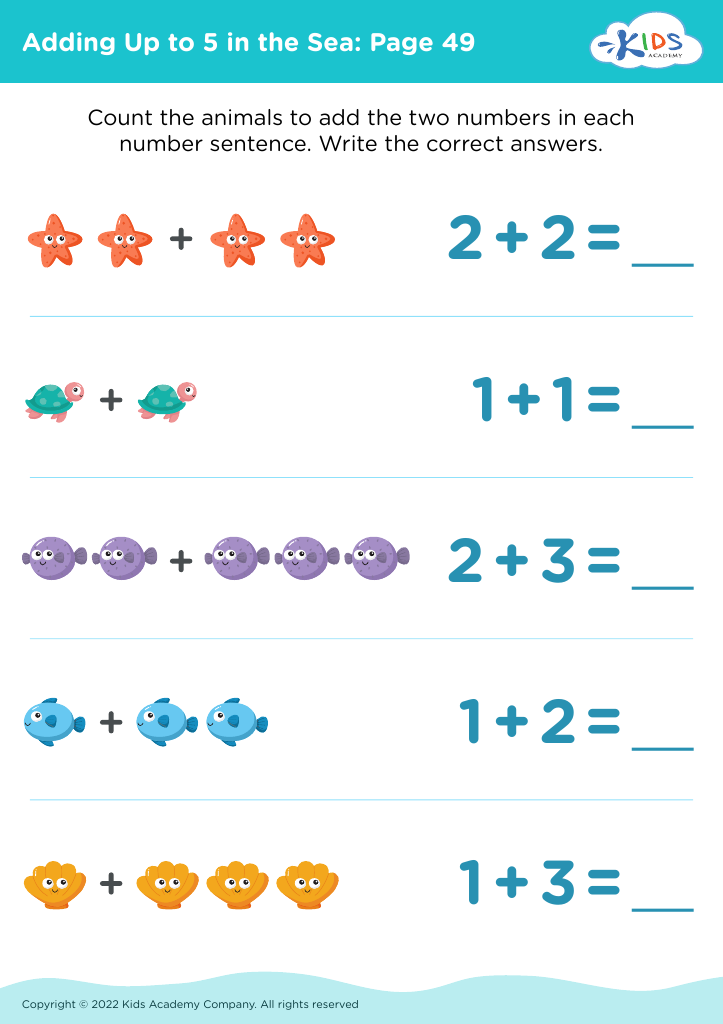
Adding Up to 5 in the Sea: Page 49
Worksheet
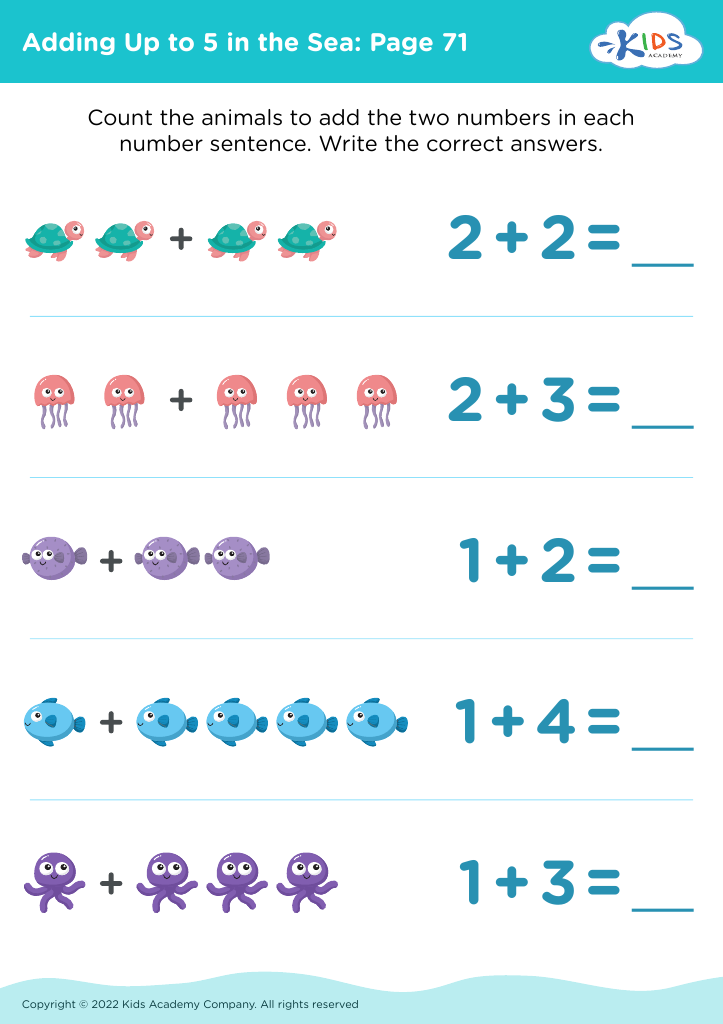
Adding Up to 5 in the Sea: Page 71
Worksheet
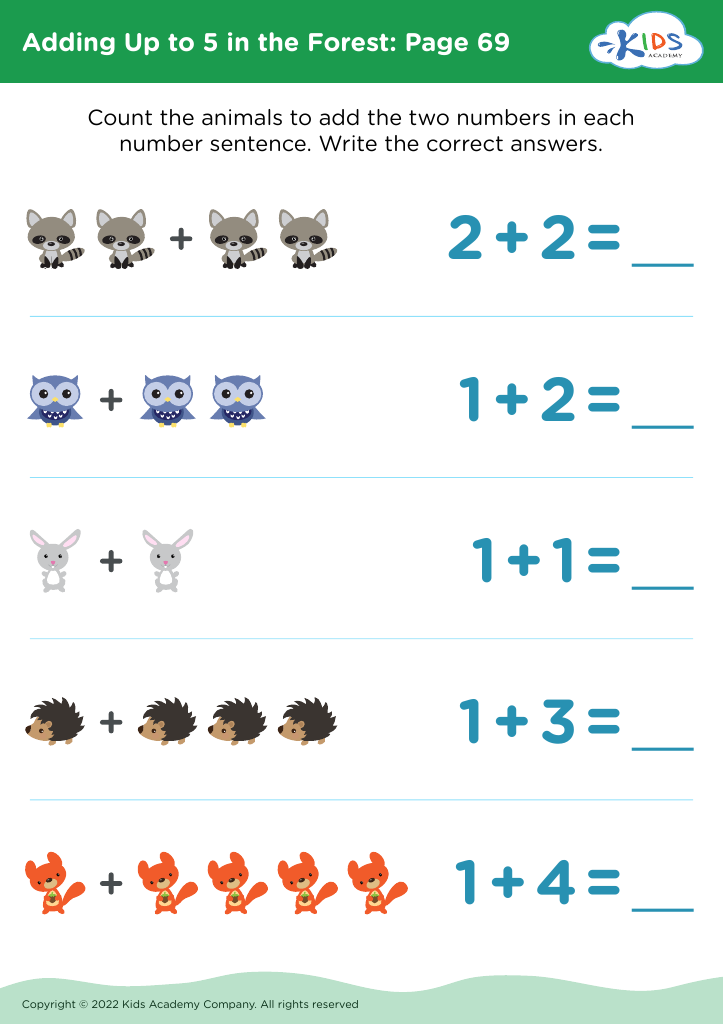
Adding Up to 5 in the Forest: Page 69
Worksheet
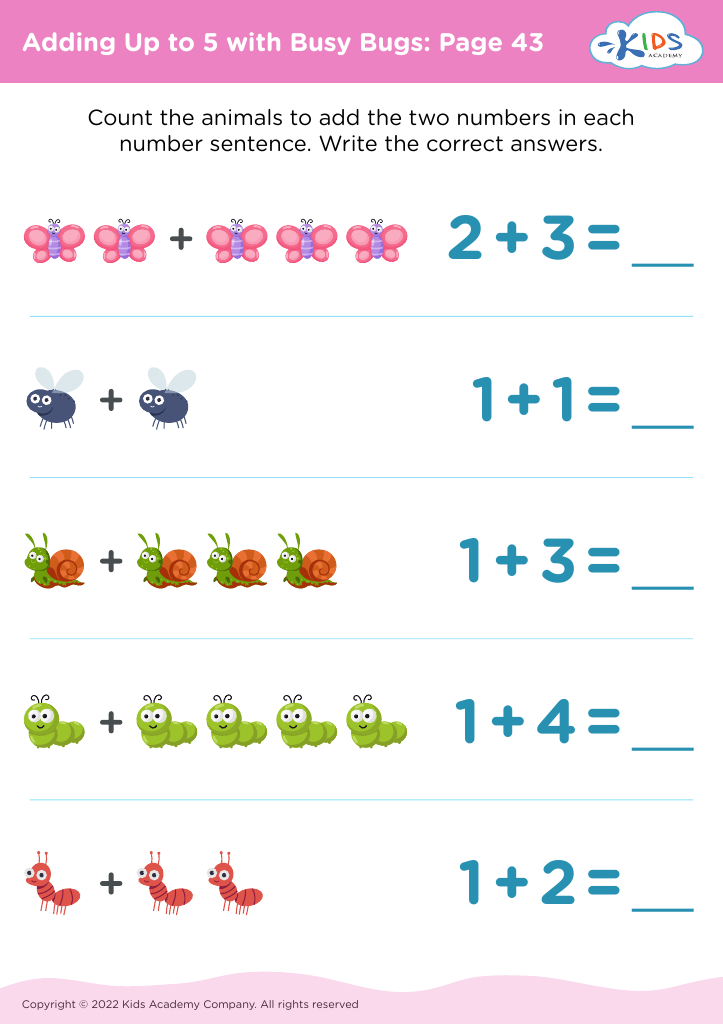
Adding Up to 5 with Busy Bugs: Page 43
Worksheet
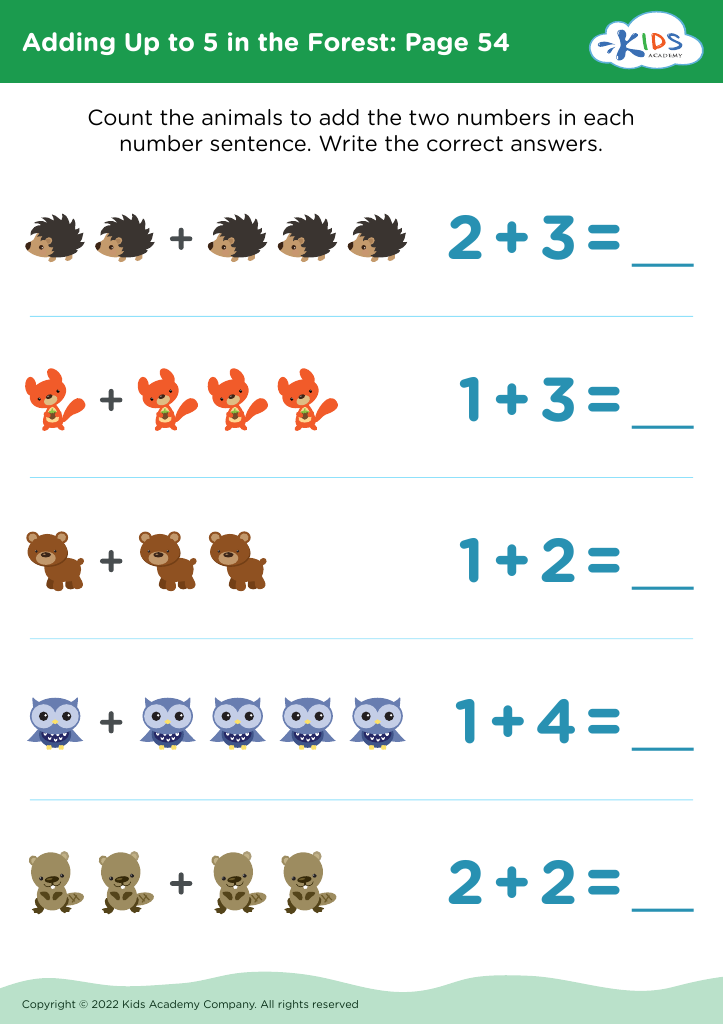
Adding Up to 5 in the Forest: Page 54
Worksheet
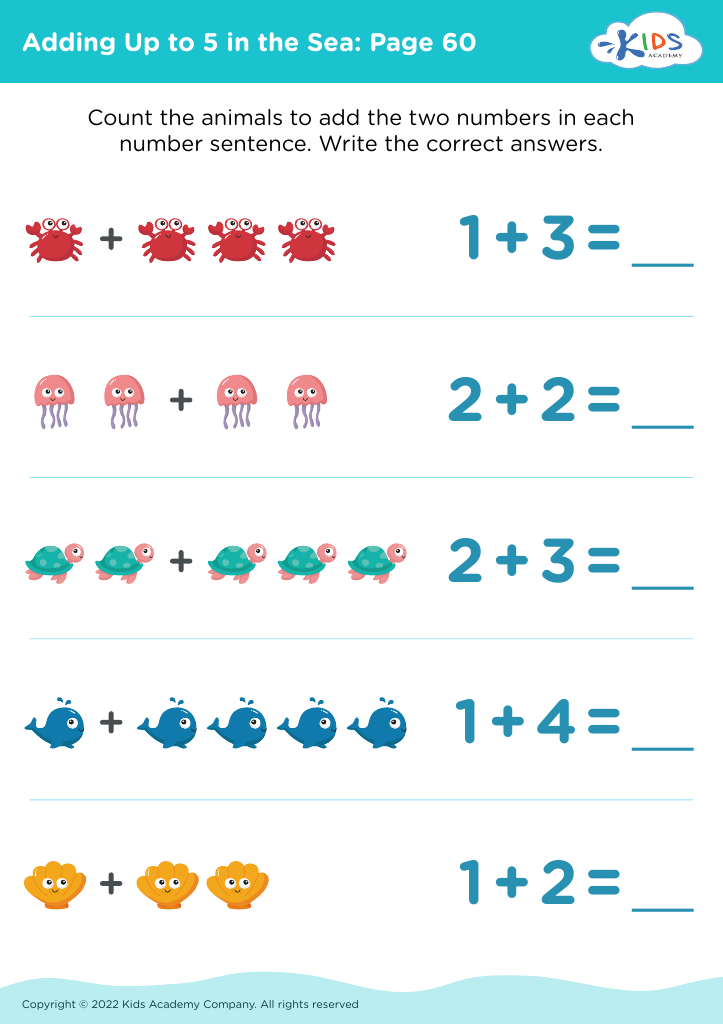
Adding Up to 5 in the Sea: Page 60
Worksheet
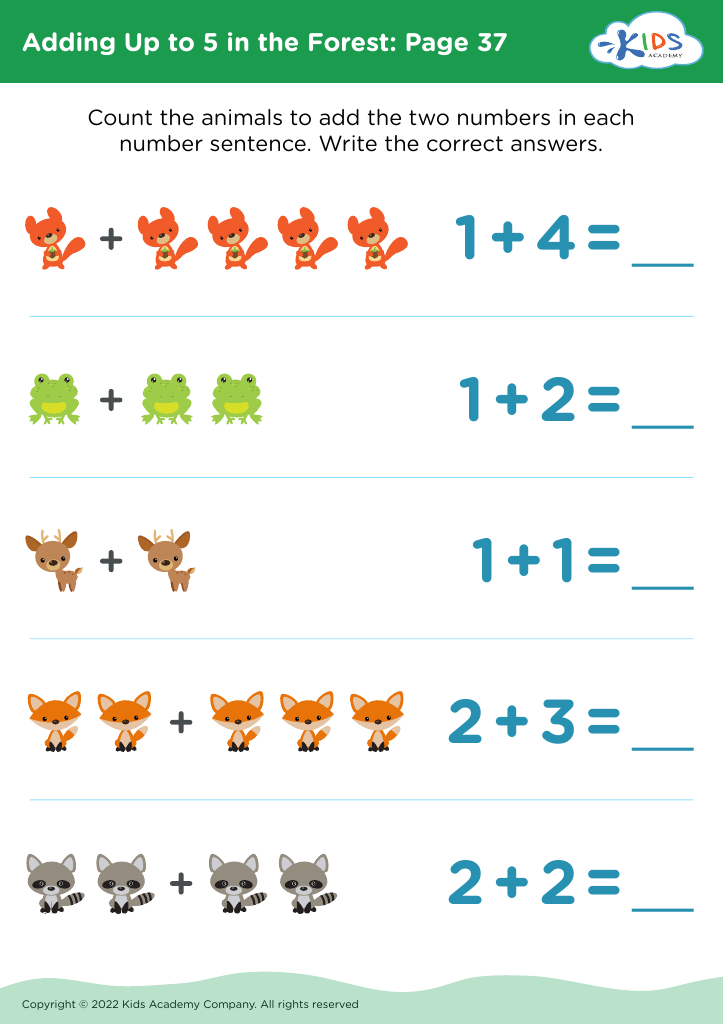
Adding Up to 5 in the Forest: Page 37
Worksheet


Cognitive development refers to the ways in which young children acquire knowledge, think critically, and solve problems. For children aged 3 to 6, this stage is fundamental as their brains develop rapidly, influencing their capacity to learn and understand their surroundings. Parents and teachers should prioritize cognitive development, especially concerning addition, because this mathematical skill serves as a building block for more complex concepts. Early success in mathematics lays the groundwork for overall academic achievement, boosting children's confidence and making them more resilient in problem-solving tasks.

Addition exercises help develop logical thinking and reasoning skills, allowing children to form connections and patterns by recognizing numbers in various contexts. Engaging in addition activities can also enhance verbal communication, as children articulate their thought processes and explore different strategies with peers and adults.

Furthermore, supporting cognitive development through addition fosters a love for learning and inquisitiveness about mathematics. In an increasingly data-driven world, equipping children with foundational skills early on will help them adapt and thrive. Therefore, parents and teachers should be actively involved in nurturing these skills, utilizing play-based activities to make learning engaging and effective, ensuring children are better prepared for their academic journeys ahead.