Filters

240 filtered results

Clear all filters
Favorites
With answer key
Interactive

240 filtered results

Difficulty Level

Grade


Check out this FREE Trial Lesson on Addition for age 3-6!

Drawing for Addition

Favorites
With answer key
Interactive
  • 3-6
  • Counting practice
  • Addition
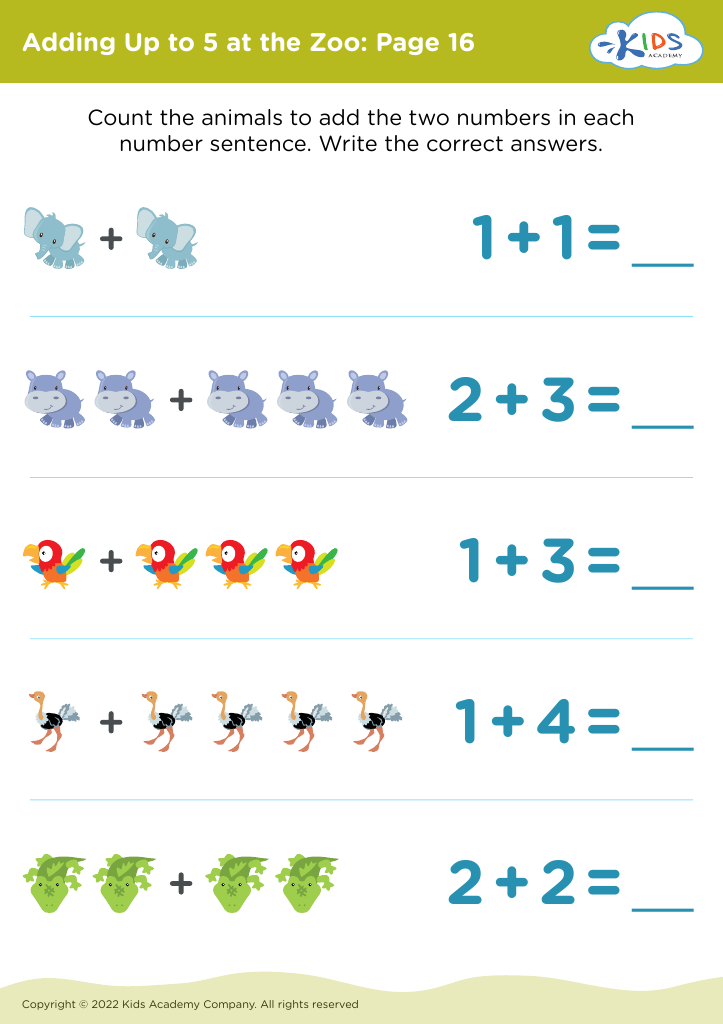
Adding Up to 5 at the Zoo: Page 16
Worksheet
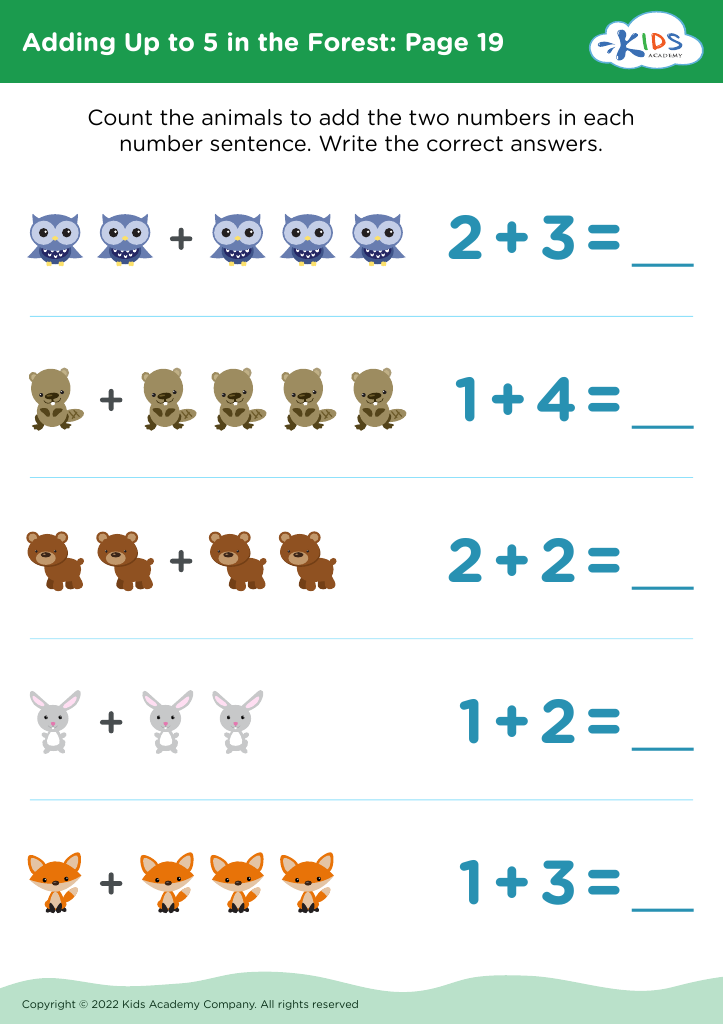
Adding Up to 5 in the Forest: Page 19
Worksheet
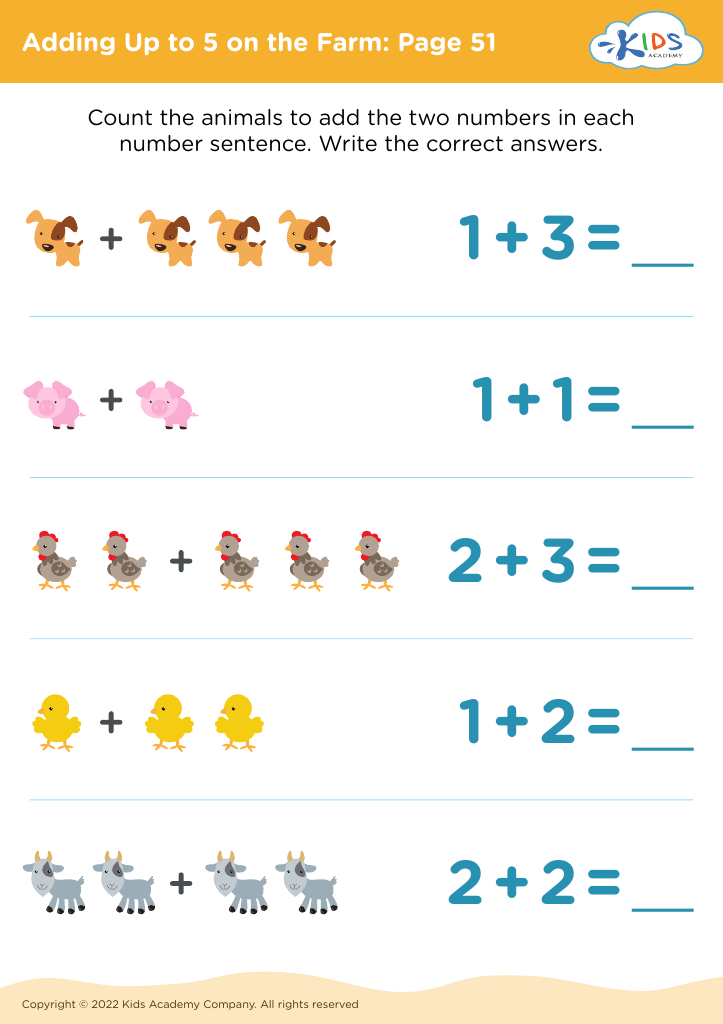
Adding Up to 5 on the Farm: Page 51
Worksheet
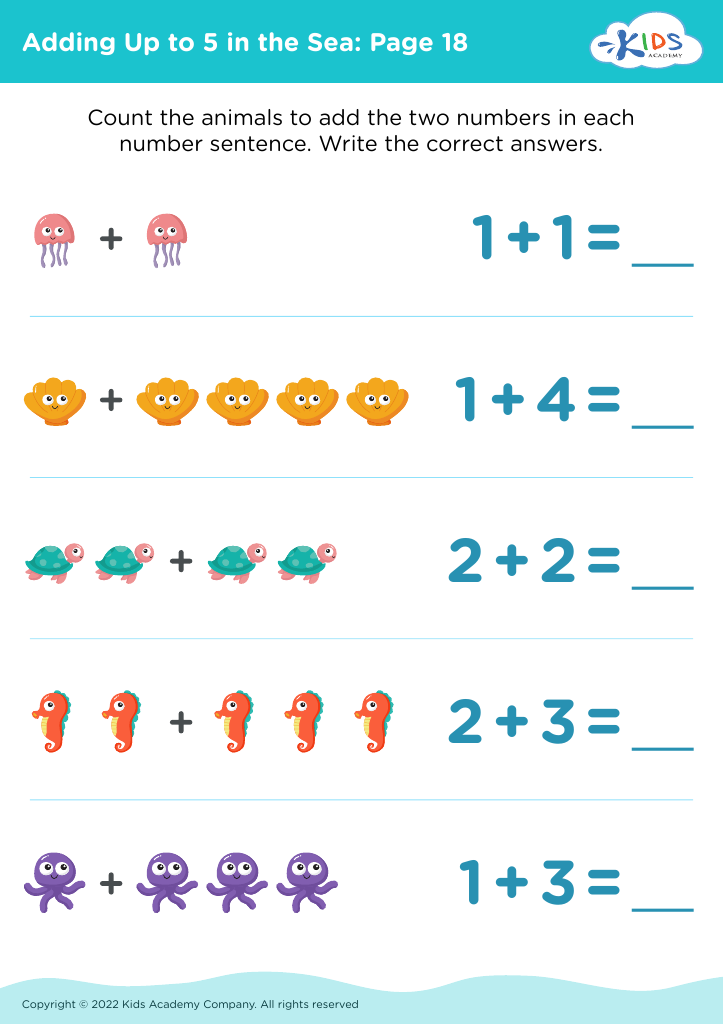
Adding Up to 5 in the Sea: Page 18
Worksheet
Add it Up Worksheet
Add it Up Worksheet

Add it Up Worksheet

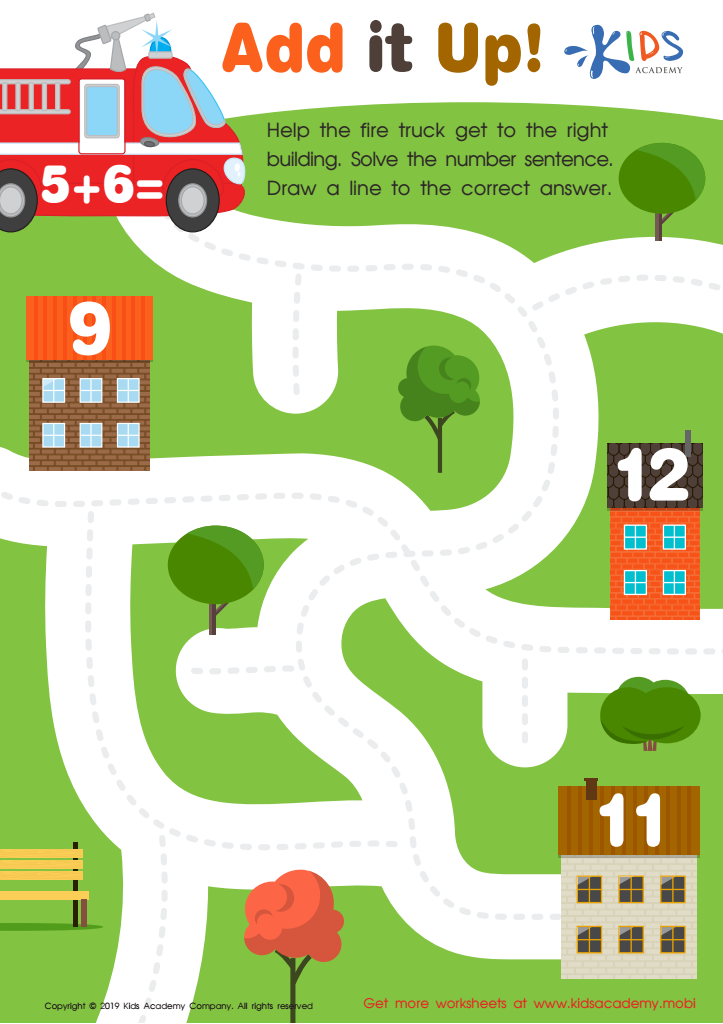
The fire service is the right number to call in case of a fire. Test your children's safety knowledge by asking them other emergency numbers. Have them identify the fire truck in the worksheet and solve the number sentences. Guide them in drawing a line to the right answer.
Add it Up Worksheet
Worksheet
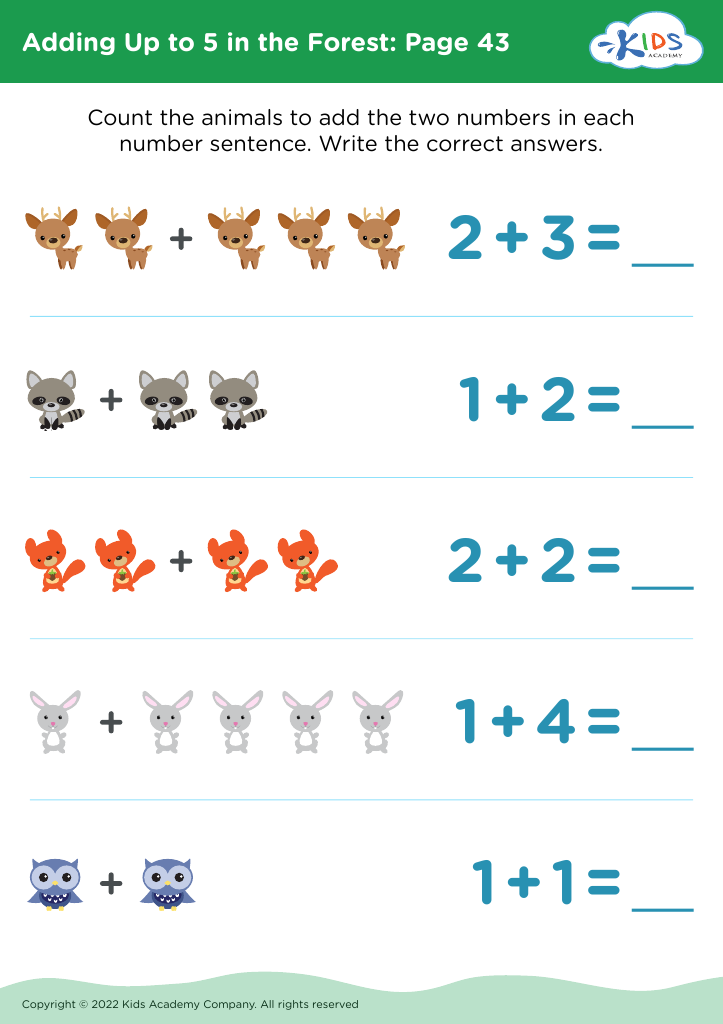
Adding Up to 5 in the Forest: Page 43
Worksheet
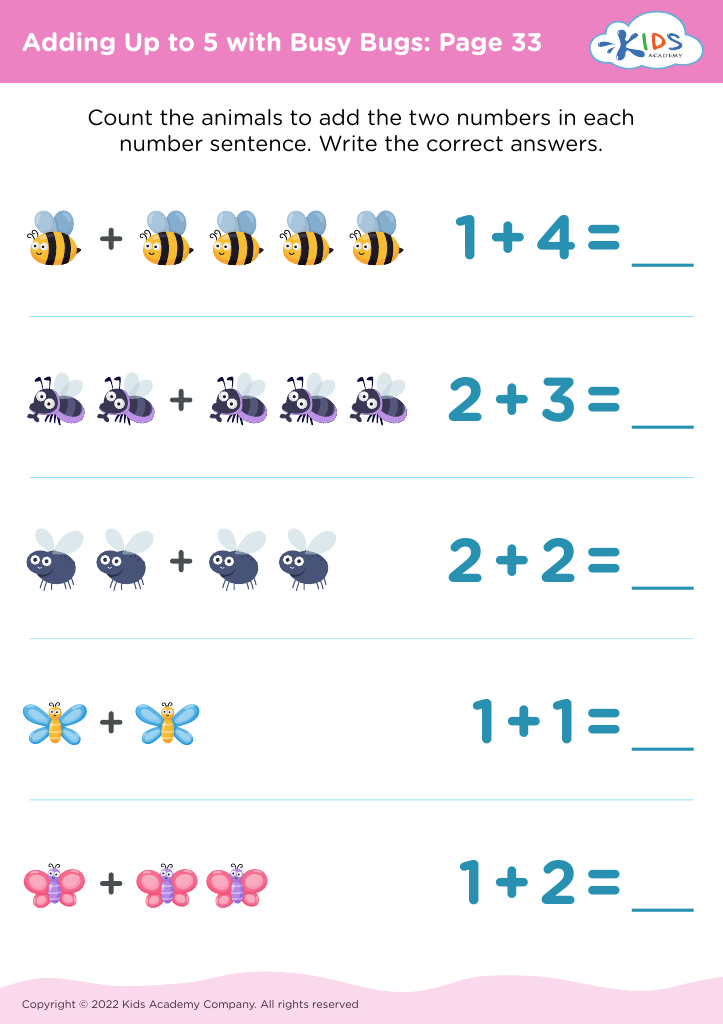
Adding Up to 5 with Busy Bugs: Page 33
Worksheet
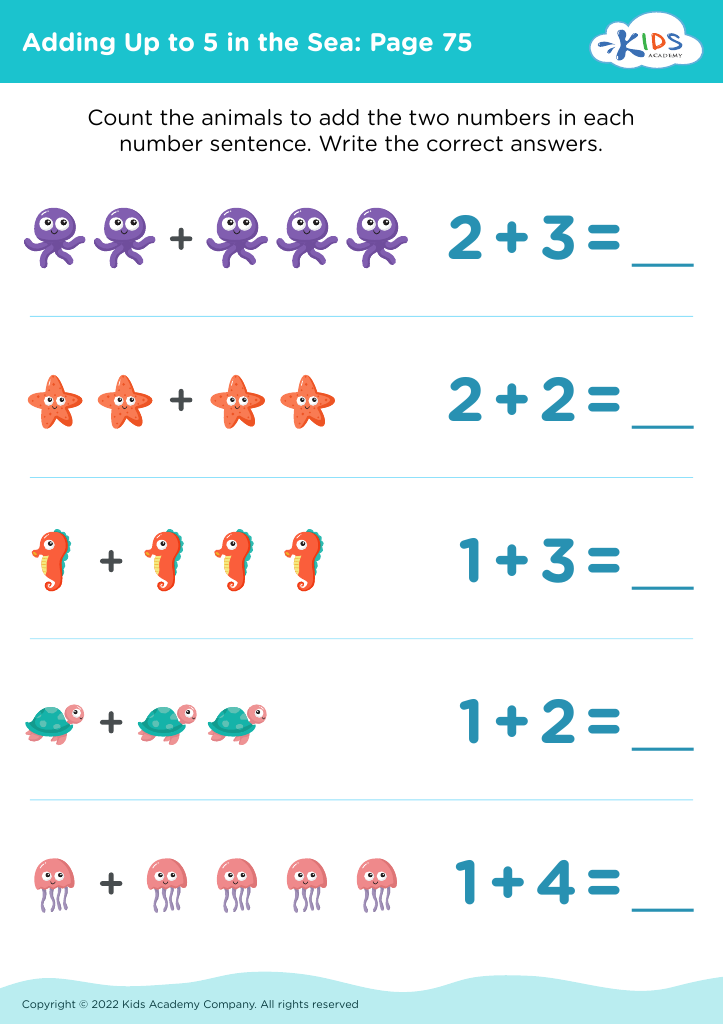
Adding Up to 5 in the Sea: Page 75
Worksheet
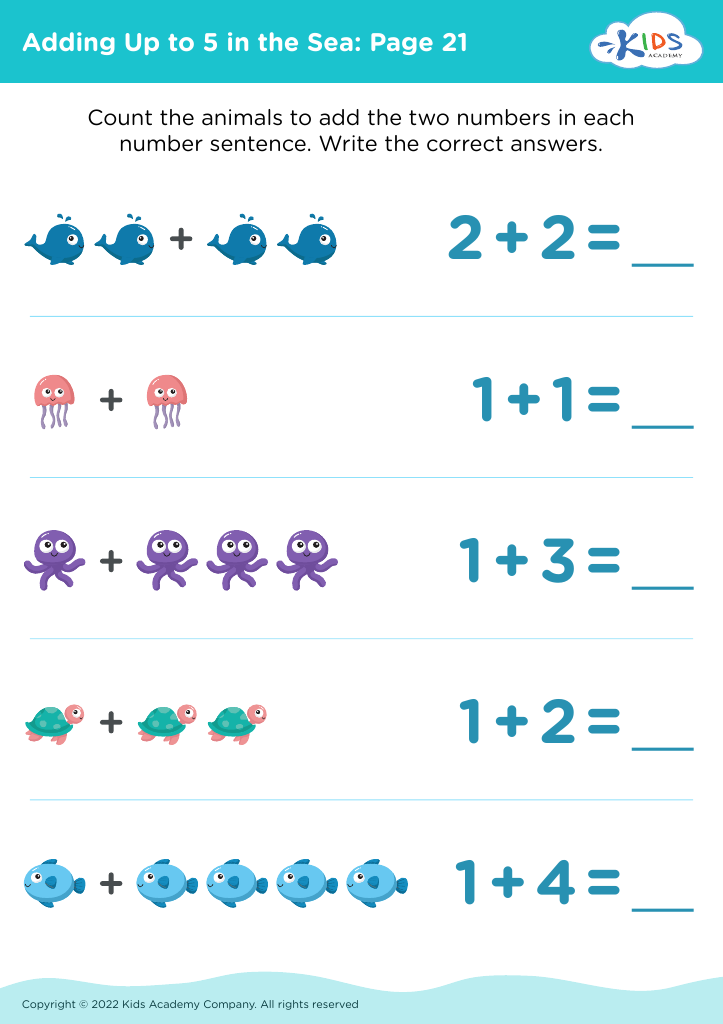
Adding Up to 5 in the Sea: Page 21
Worksheet
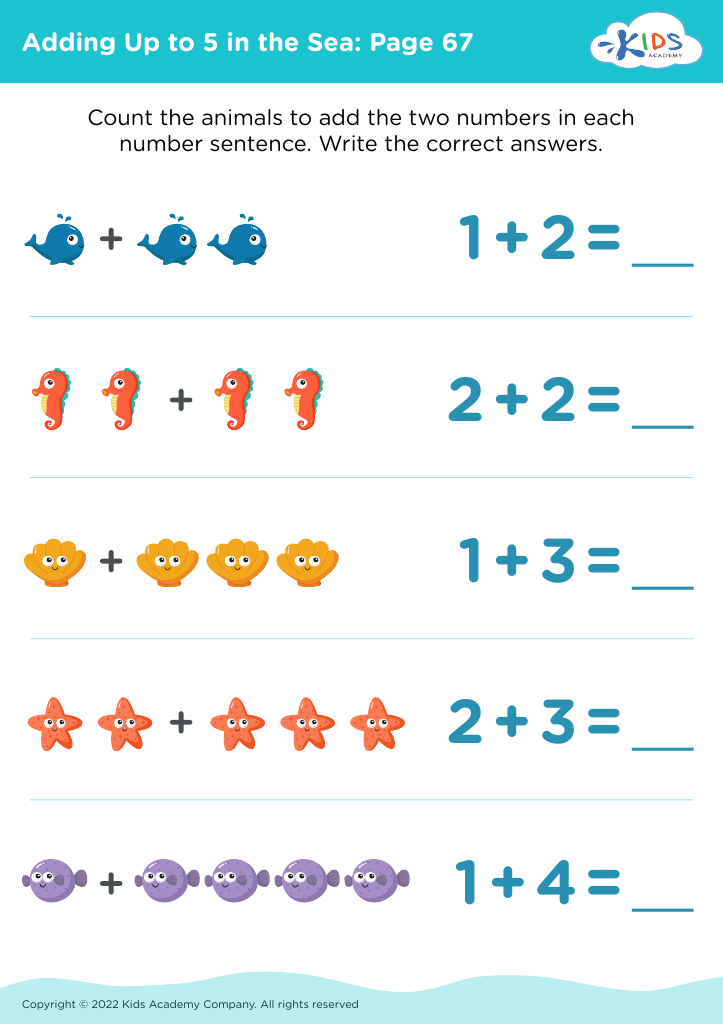
Adding Up to 5 in the Sea: Page 67
Worksheet
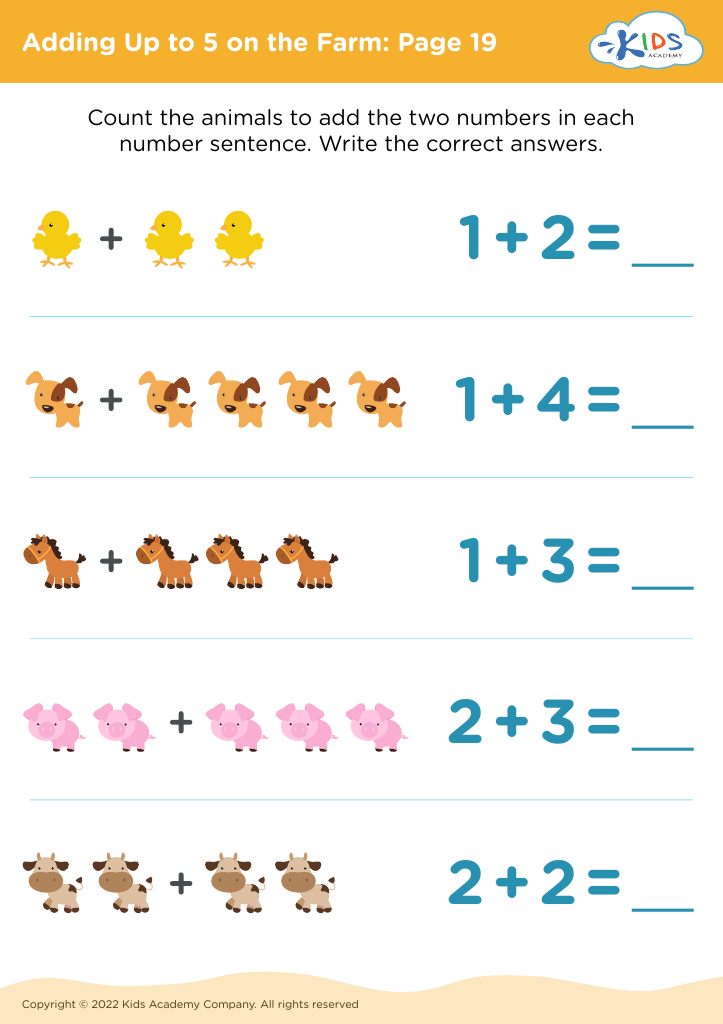
Adding Up to 5 on the Farm: Page 19
Worksheet
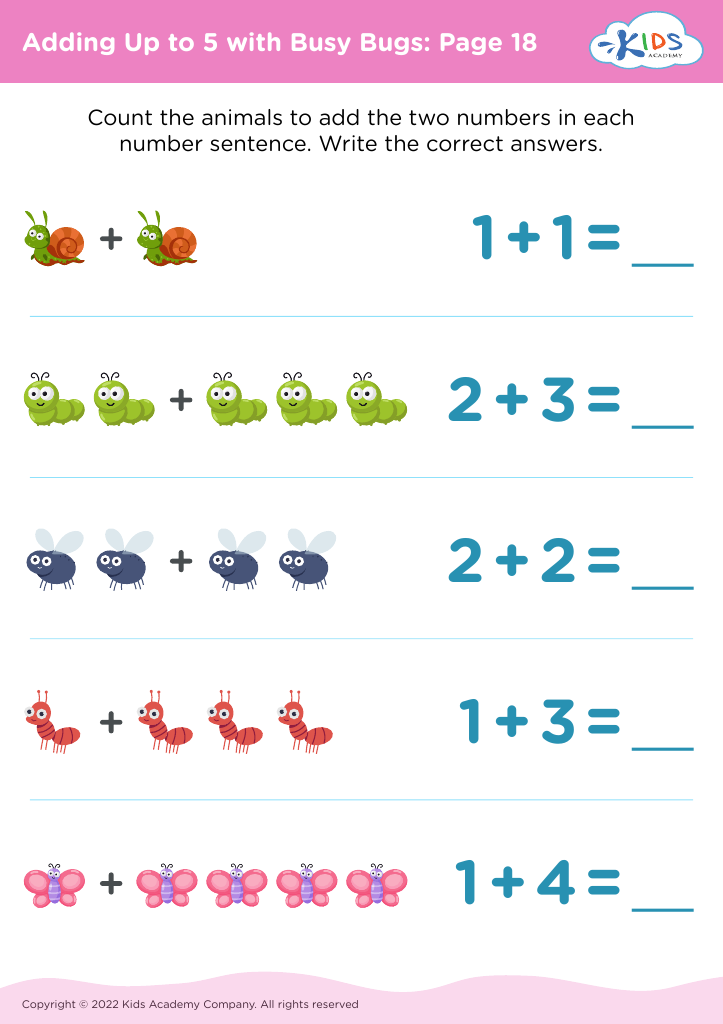
Adding Up to 5 with Busy Bugs: Page 18
Worksheet
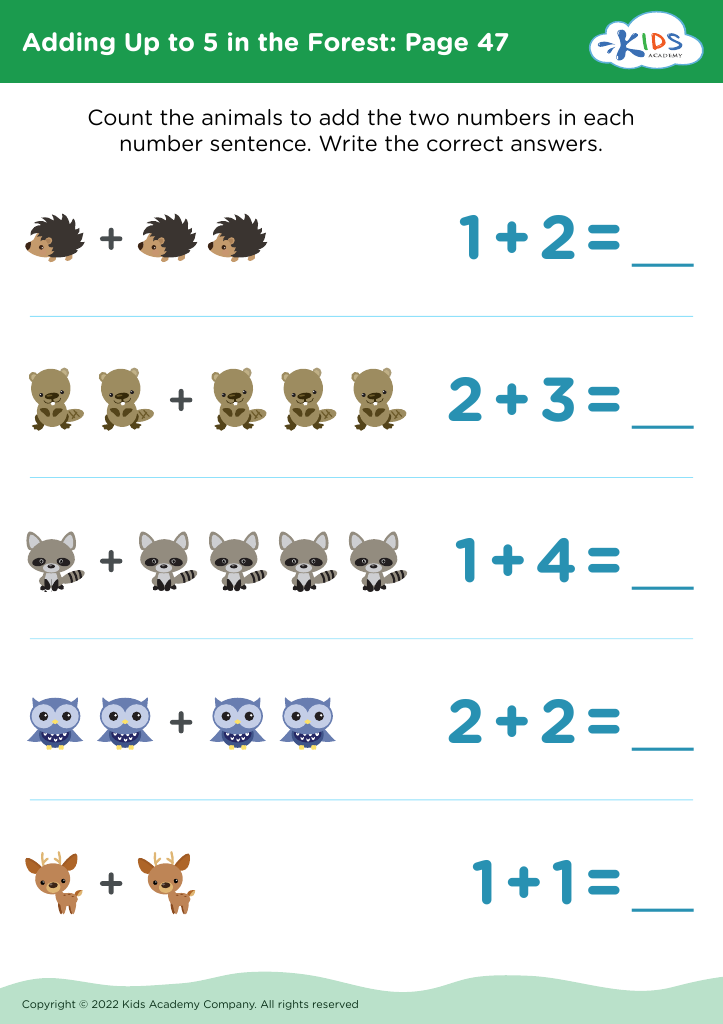
Adding Up to 5 in the Forest: Page 47
Worksheet
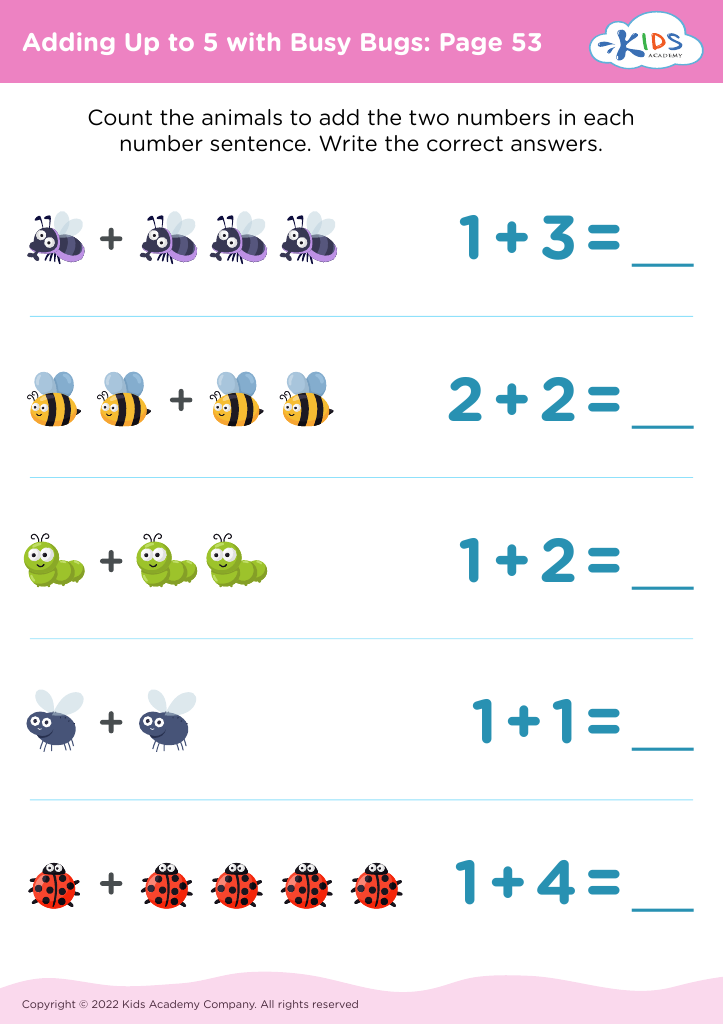
Adding Up to 5 with Busy Bugs: Page 53
Worksheet
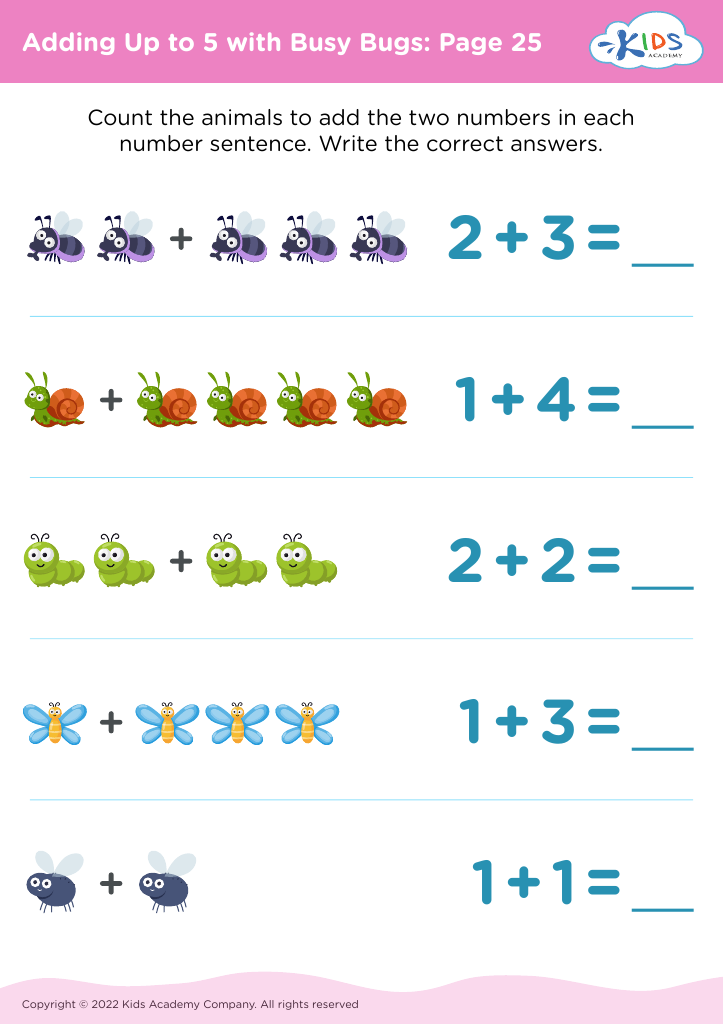
Adding Up to 5 with Busy Bugs: Page 25
Worksheet
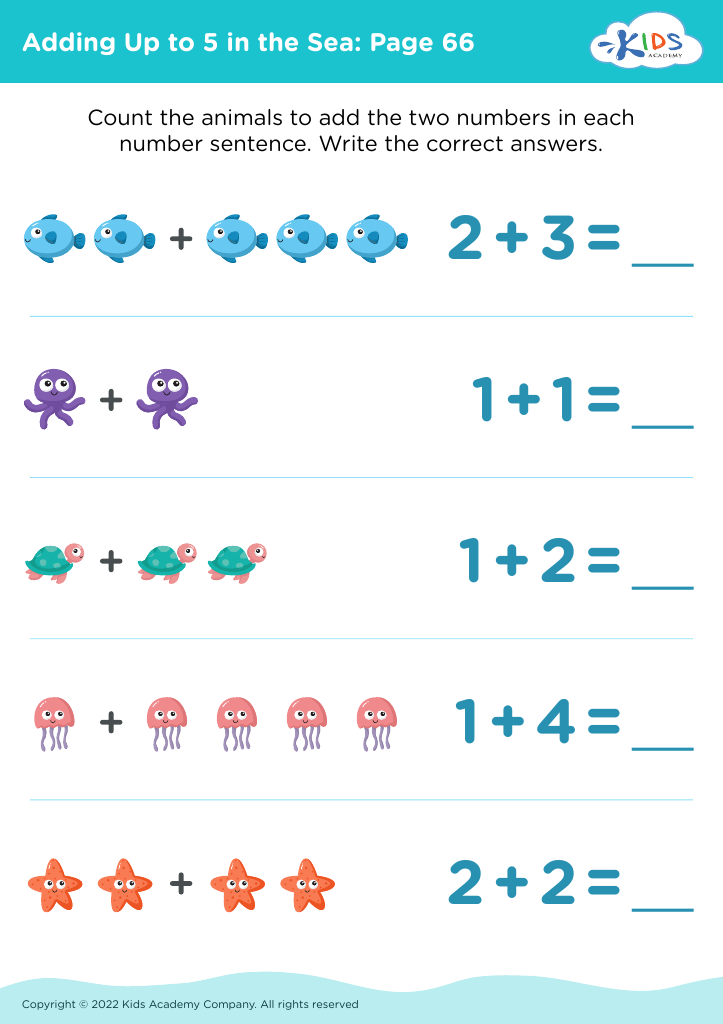
Adding Up to 5 in the Sea: Page 66
Worksheet
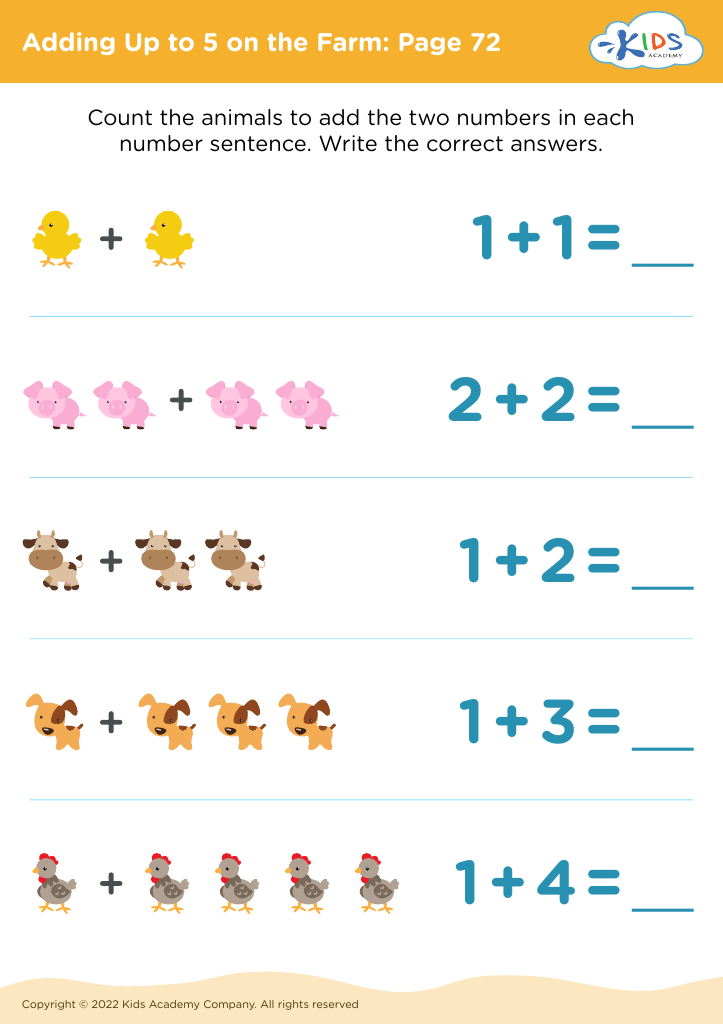
Adding Up to 5 on the Farm: Page 72
Worksheet
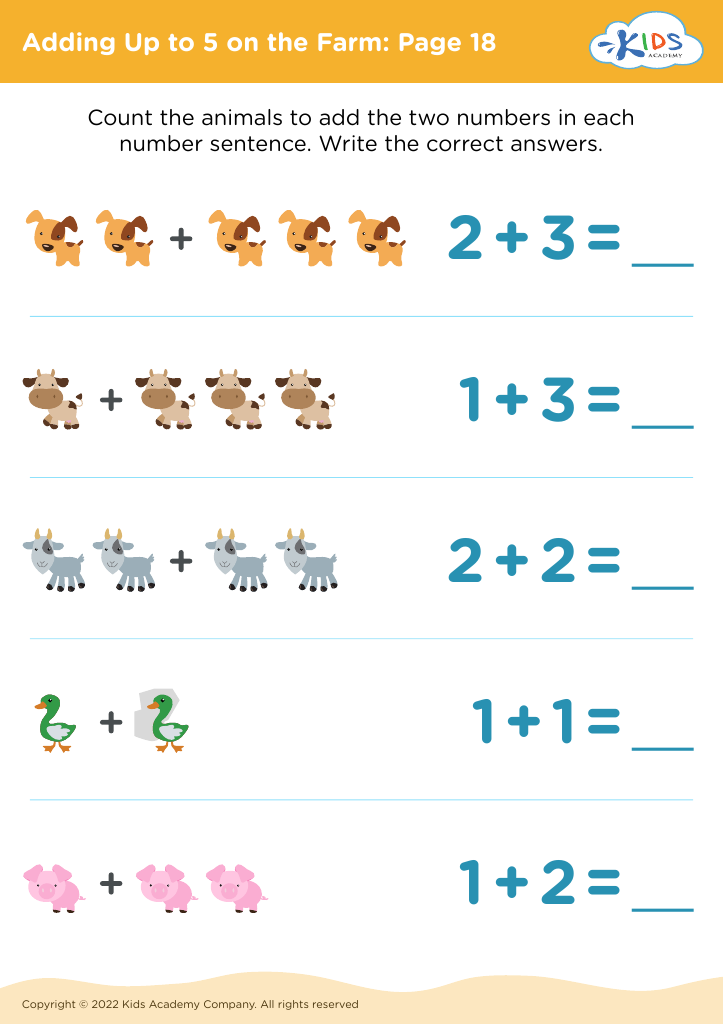
Adding Up to 5 on the Farm: Page 18
Worksheet
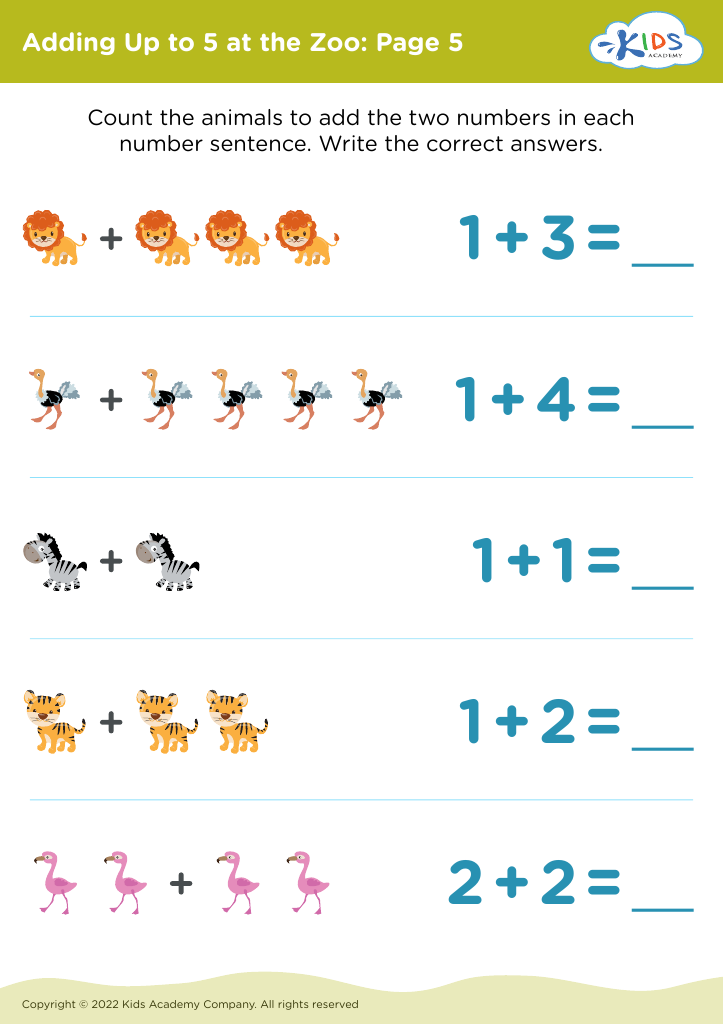
Adding Up to 5 at the Zoo: Page 5

Adding Up to 5 at the Zoo: Page 5

Adding Up to 5 at the Zoo: Page 5
Worksheet
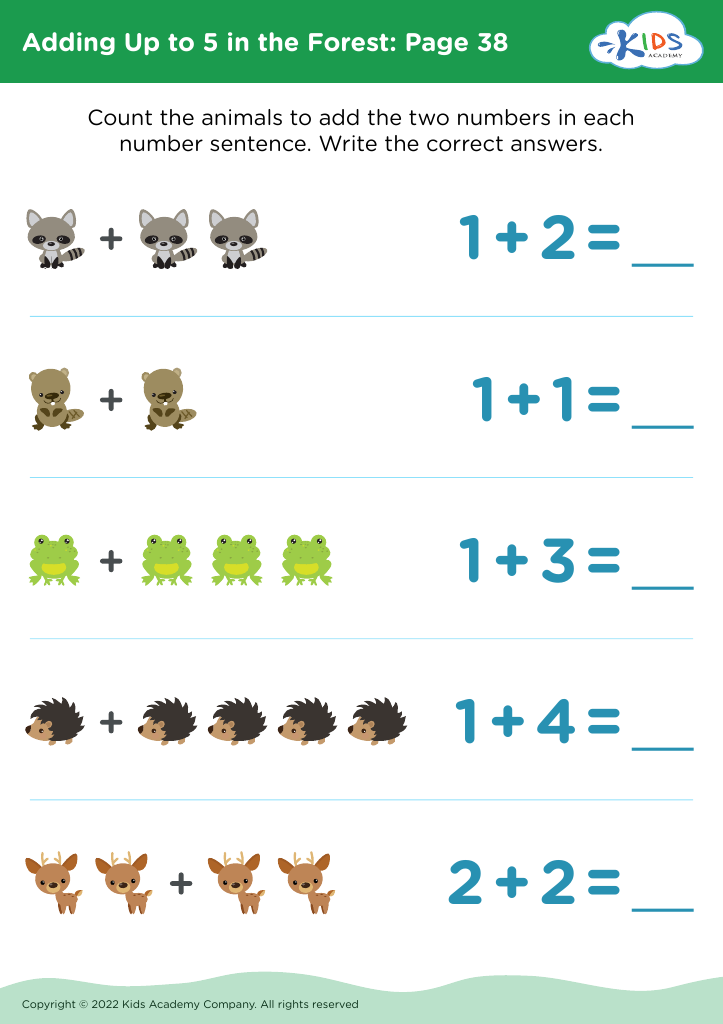
Adding Up to 5 in the Forest: Page 38
Worksheet
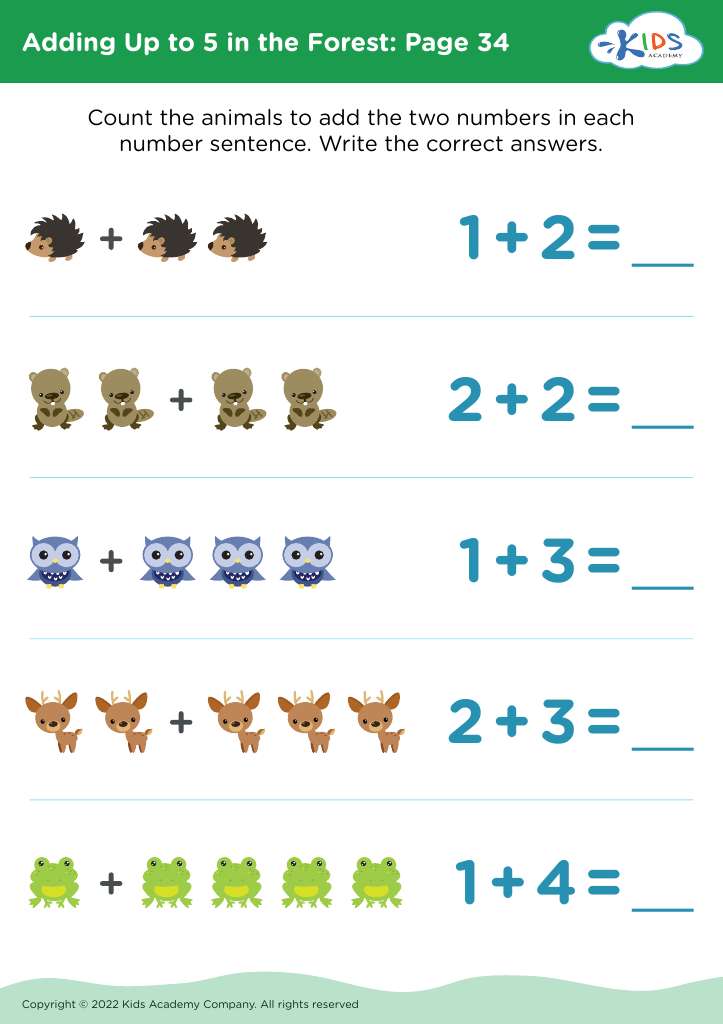
Adding Up to 5 in the Forest: Page 34
Worksheet
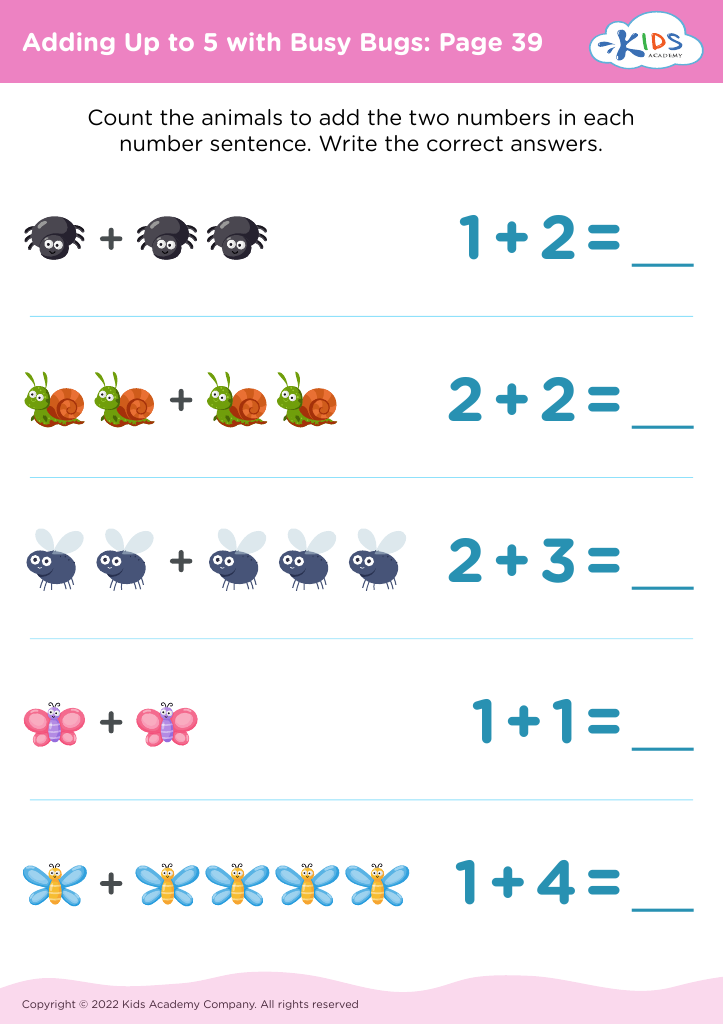
Adding Up to 5 with Busy Bugs: Page 39
Worksheet
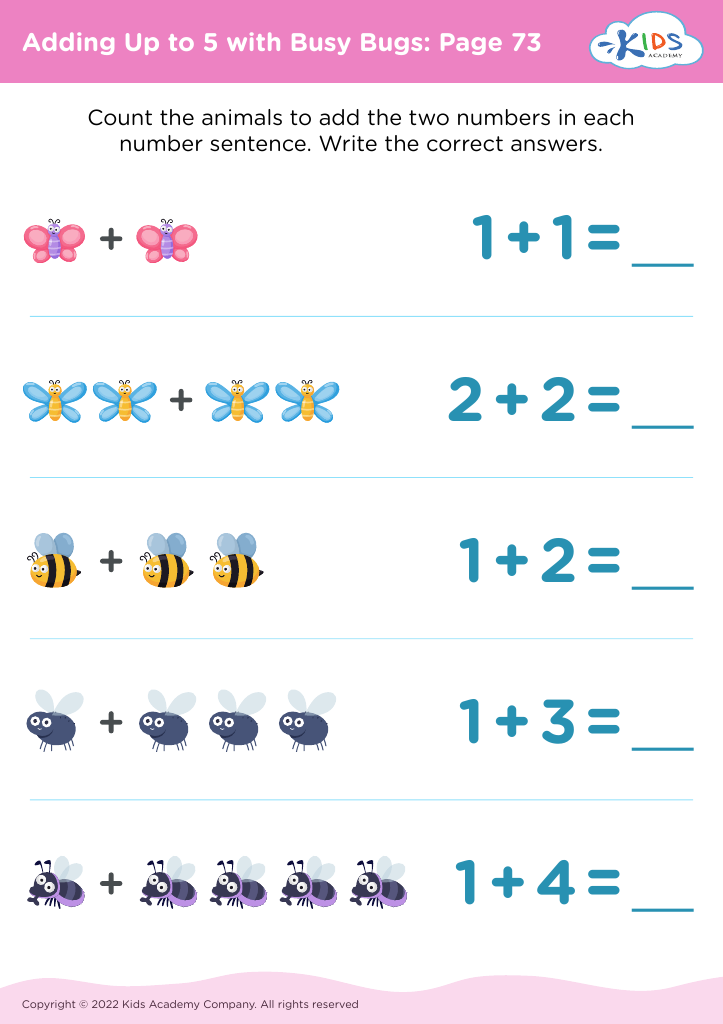
Adding Up to 5 with Busy Bugs: Page 73
Worksheet
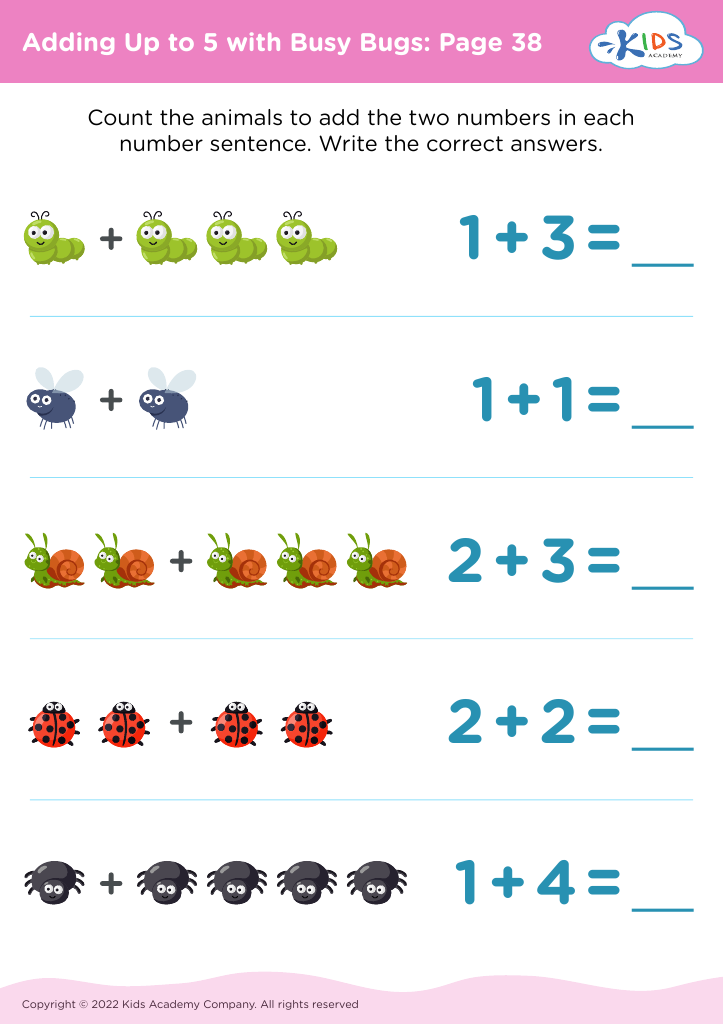
Adding Up to 5 with Busy Bugs: Page 38
Worksheet


Engaging young children aged 3-6 in counting practice and basic addition is essential for several foundational reasons. At this developmental stage, kids are incredibly receptive to learning, and their cognitive skills are rapidly evolving. Early exposure to these fundamental mathematical concepts not only establishes a strong numerical foundation but also aids in broader cognitive development.

Firstly, counting practice helps children understand the concept of quantity and number order, which are fundamental building blocks for all future math learning. It provides them with the ability to recognize patterns, which enhances problem-solving skills. Counting also improves memory and attention span as children focus on sequences and context.

Adding practice is equally important. It introduces children to the idea of combining groups of objects, which forms the basis for all higher mathematical concepts, from simple subtraction to complex fractions. Learning addition at a young age boosts logical thinking and enables kids to approach everyday problems confidently, such as sharing items evenly among friends.

Moreover, early math experiences contribute to improved academic performance in later years. When parents and teachers actively encourage counting and basic addition, they foster a positive attitude towards math, reducing future math anxiety and building a child's self-esteem in their abilities.

In summary, counting practice and early addition lay the groundwork for critical thinking, problem-solving, and lifelong learning, proving invaluable to a child's overall developmental success.