Enhancing focus Addition Worksheets for Ages 3-6
4 filtered results
-
From - To
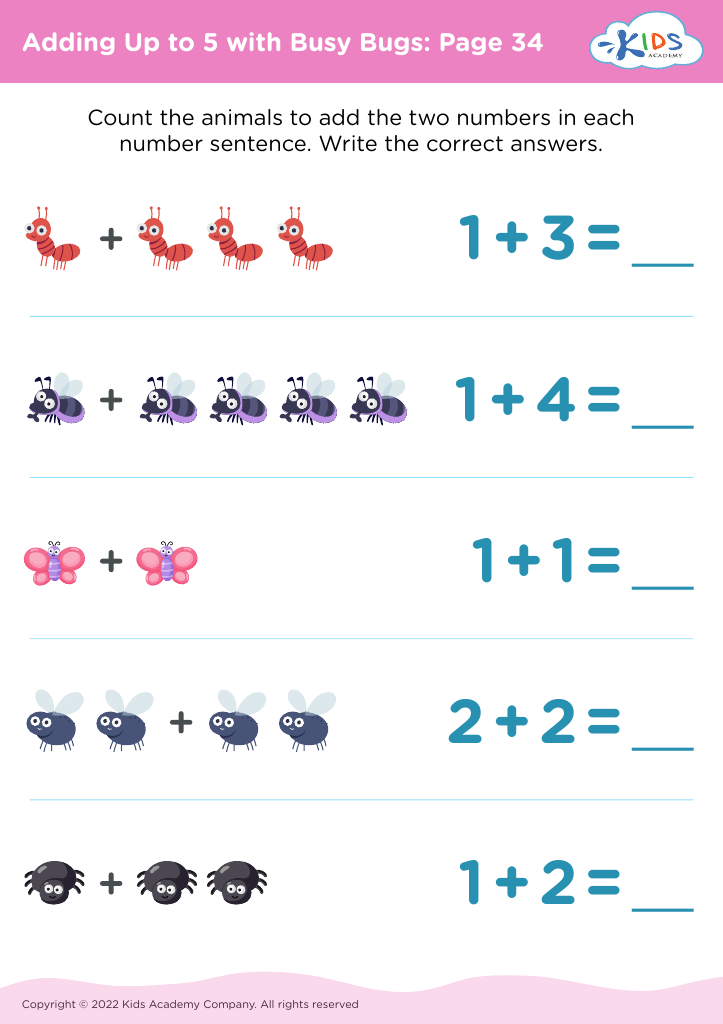
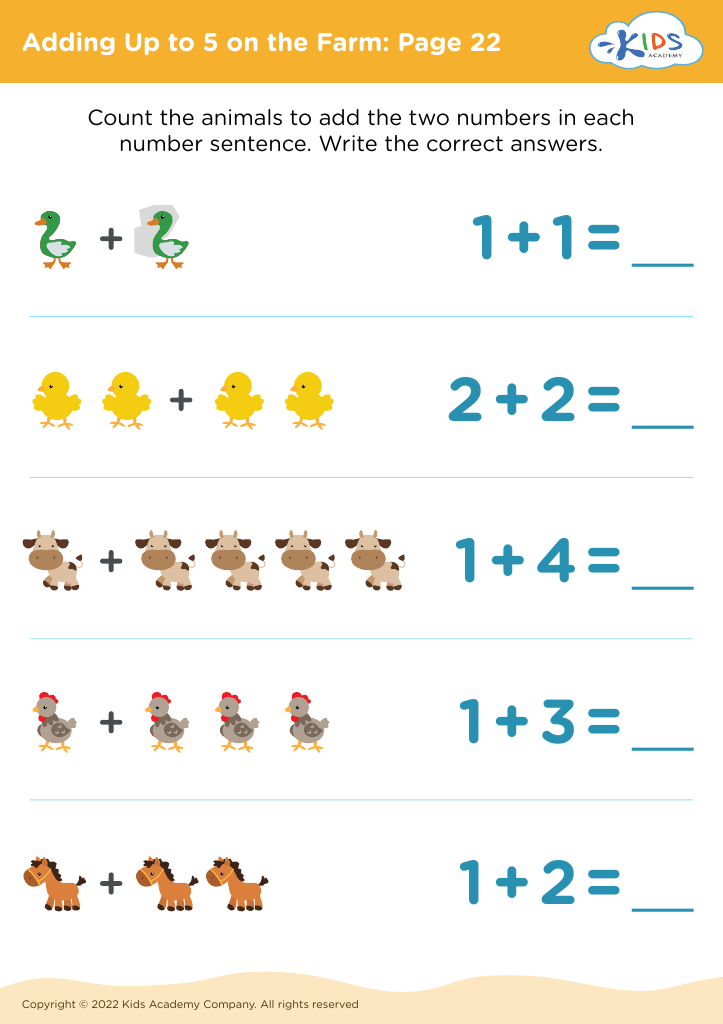
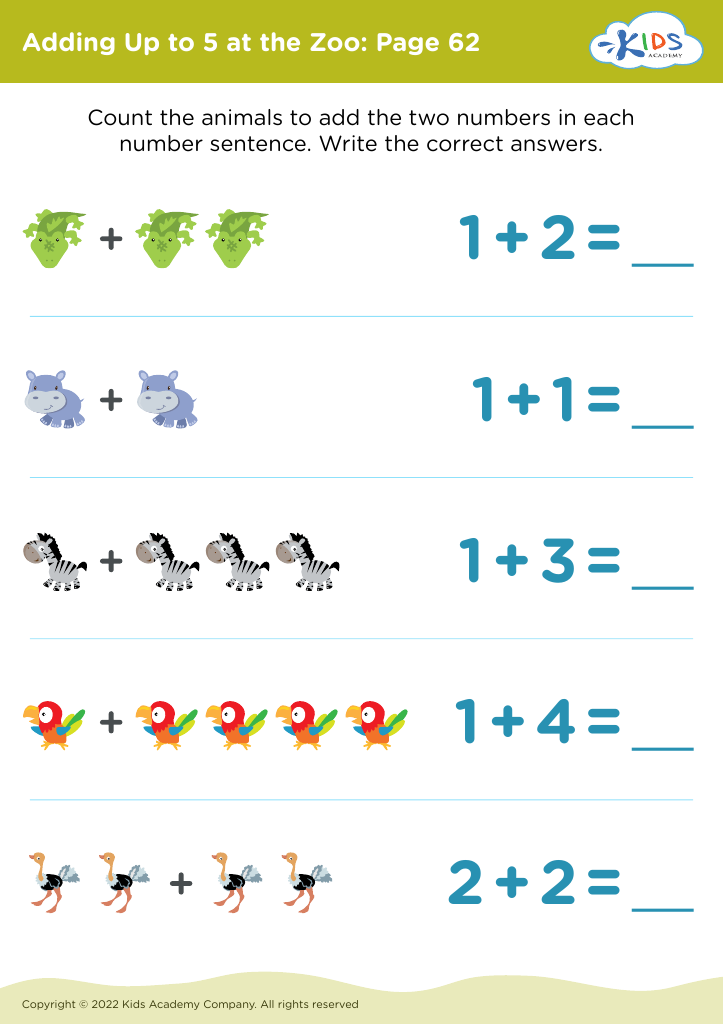
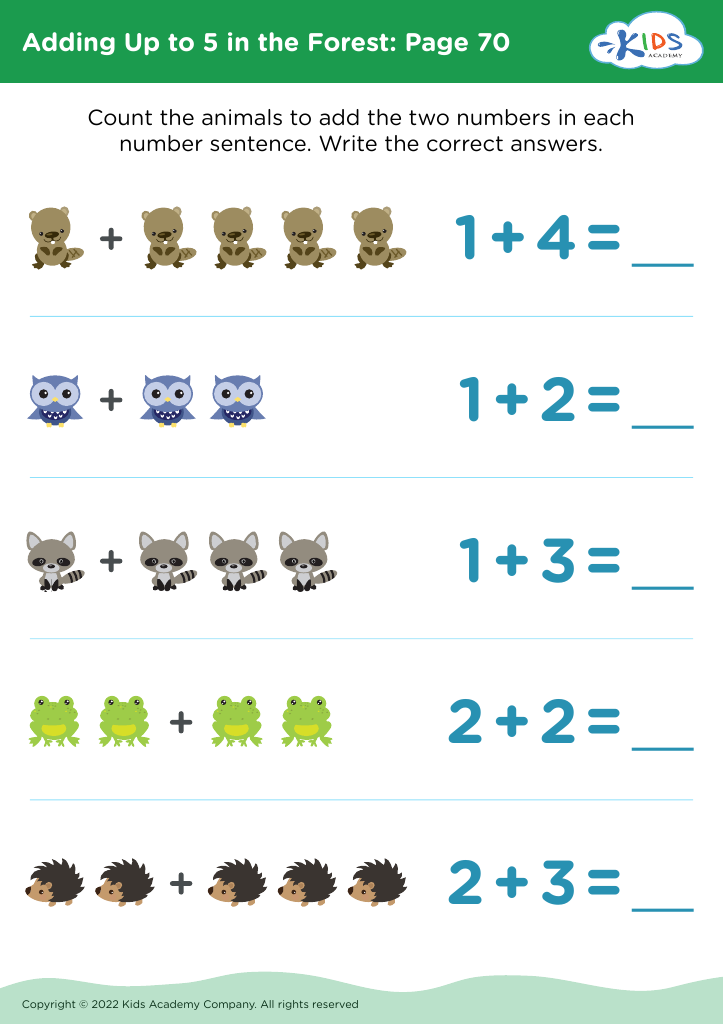
Boost your child's concentration and arithmetic skills with our Enhancing Focus Addition Worksheets for Ages 3-6. Perfectly designed for young learners, these worksheets create a fun and engaging environment, promoting focused attention through simple addition problems. Using vibrant illustrations and interactive components, activities are tailored to both captivate and challenge, fostering a love for learning math early on. By integrating playful elements with educational content, kids develop stronger focus, problem-solving abilities, and a solid foundation in addition. Ideal for preschool and early elementary students, our worksheets make mastering basic math an enjoyable adventure simply at home.








Fostering focus in young children aged 3-6 is crucial for their developmental progress. This period, often termed the "Foundation Years," lays the groundwork for lifelong cognitive skills and behaviors. Enhancing focus in early childhood not only bolsters academic competence but also supports emotional and social growth.
During these formative years, children are highly receptive to learning and developing new skills. Improving their ability to concentrate aids in better engagement with educational activities, thus nurturing early literacy and numeracy skills. Focused children can follow instructions more effectively, solve problems logically, and engage in creative thinking, which are essential for future academic success.
In addition to cognitive benefits, fostering focus also impacts social development. Better concentration allows children to listen attentively, communicate clearly, and respond appropriately in social interactions. This can significantly improve their relationships with peers and adults, fostering a sense of confidence and cooperation.
Moreover, improving focus helps in developing self-regulation skills. Children learn to manage their attention and behavior, leading to fewer distractions and tantrums. This enhances their overall learning environment, reducing stress for both teachers and parents, and fostering a more harmonious and productive atmosphere.
In summary, prioritizing focus enhancement for children aged 3-6 offers profound educational, social, and emotional benefits, laying a strong foundation for future learning and well-being.








