
Fine motor skills (drawing lines) Addition Worksheets for Ages 3-6
3 filtered results
Difficulty Level
Grade
Age
-
From - To
Subject
Activity
Standards
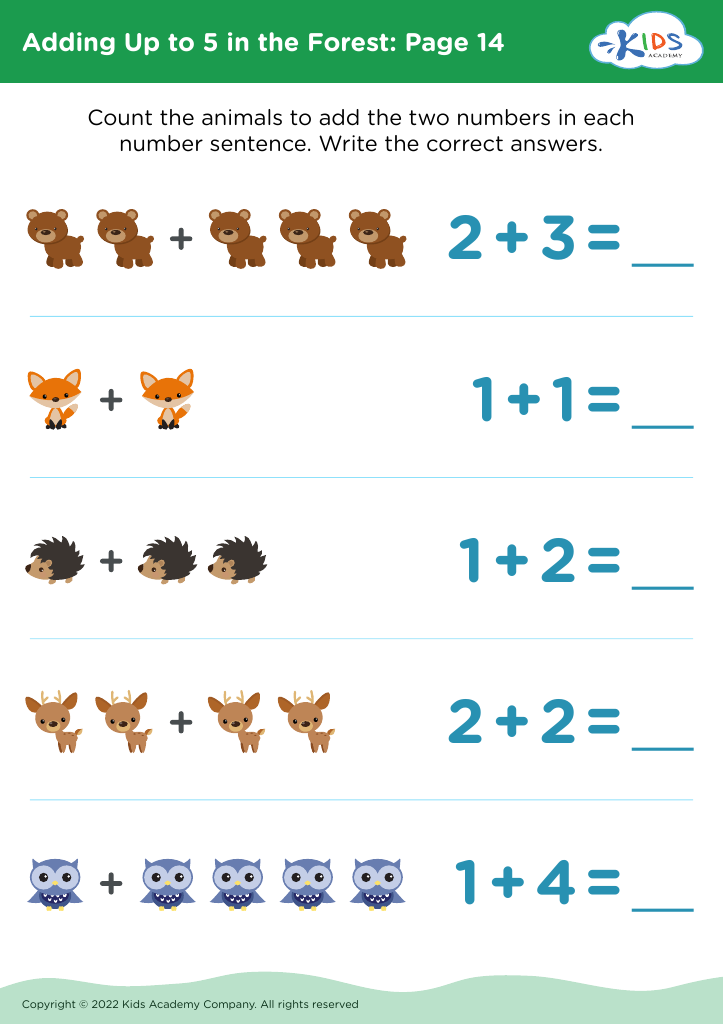
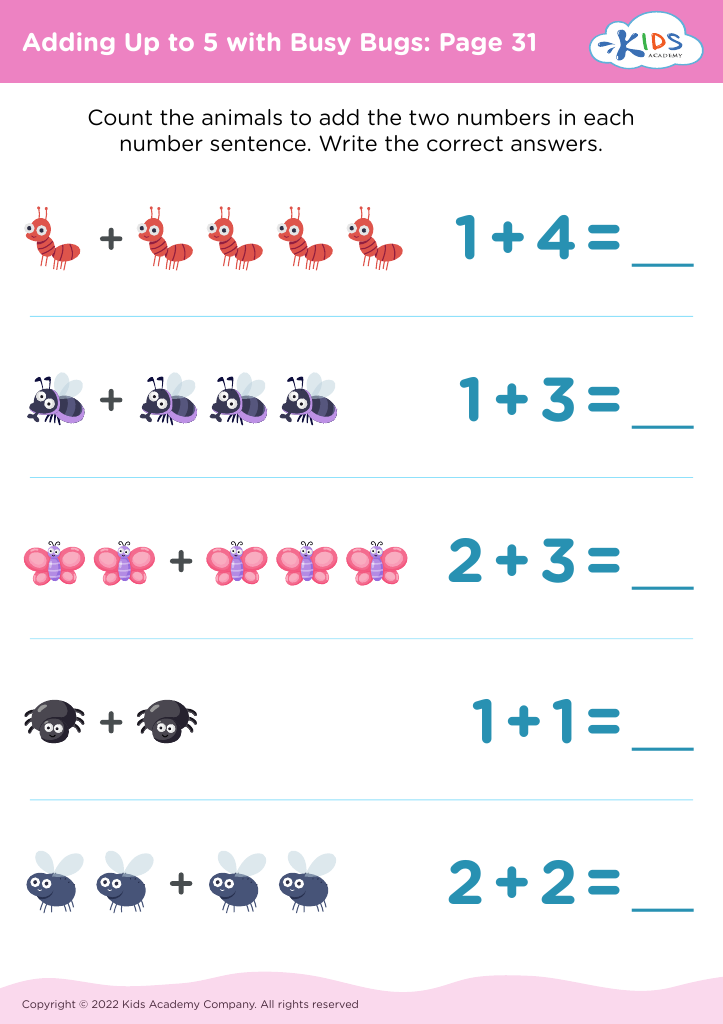
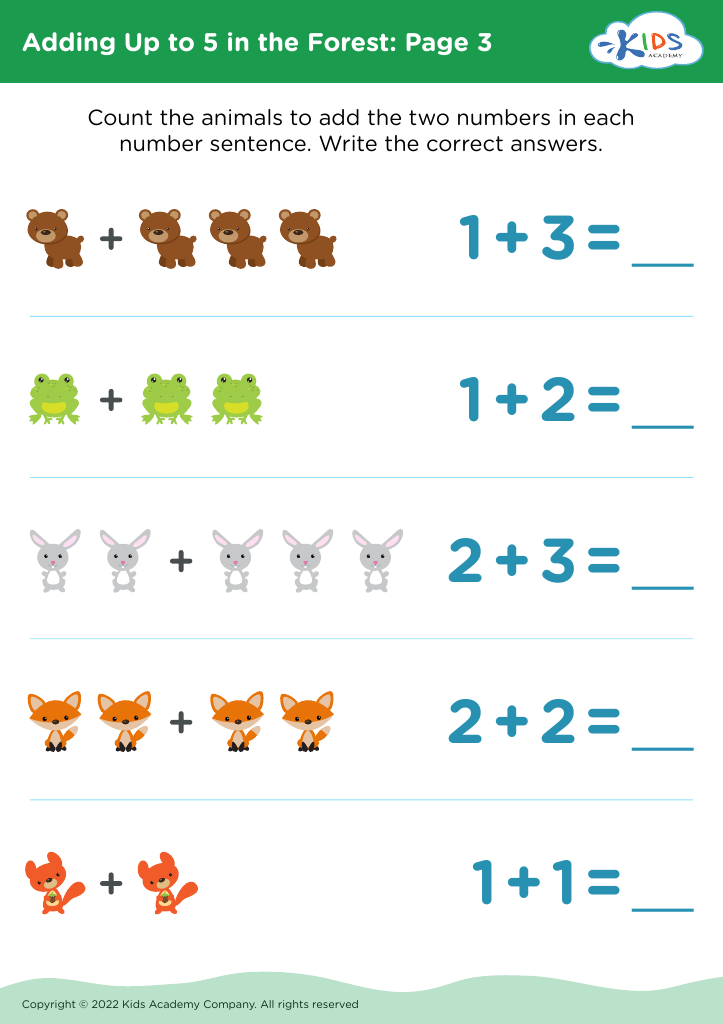
Enhance your child's fine motor skills with our engaging "Drawing Lines Addition Worksheets" designed for ages 3-6! These worksheets offer a fun and interactive way for young learners to practice addition while developing essential hand-eye coordination and pre-writing skills. As children connect lines, trace paths, and solve simple addition problems, they build confidence and readiness for future math concepts. Bright colors and playful themes keep the learning process enjoyable, ensuring kids remain motivated and focused. Perfect for home or classroom use, these resources help make early math learning a creative and playful adventure. Download now to inspire young mathematicians!
Favorites
With answer key
Interactive
Join Kids Academy for Free
Who is primarily going to use this learning content?








Fine motor skills, particularly those developed through activities like drawing lines and basic addition, are crucial for children aged 3-6. These skills are foundational for various essential tasks, impacting a child’s personal development, academic readiness, and overall confidence.
When children engage in drawing lines, they enhance hand-eye coordination and grip strength, which are vital for writing and other everyday activities. This not only helps them with activities like holding pencils or scissors but also prepares them for more complex tasks in the future.
Additionally, introducing simple addition to young learners can make early math concepts more relatable and enjoyable. This foundational numeracy builds critical thinking skills and fosters a positive attitude towards mathematics. Both fine motor skills and basic math skills encourage problem-solving abilities, logical reasoning, and creativity.
Moreover, these activities promote patience and focus, essential traits in any learning environment. By strengthening fine motor skills and early math proficiency, parents and educators can set children on a path to future success in both academic and life skills. Investing time in these developmental areas ensures that children are prepared for kindergarten and beyond, setting a solid groundwork for their lifelong learning journey.








