Fine motor skills (writing) Addition Worksheets for Ages 3-6 - Page 2
32 filtered results
-
From - To
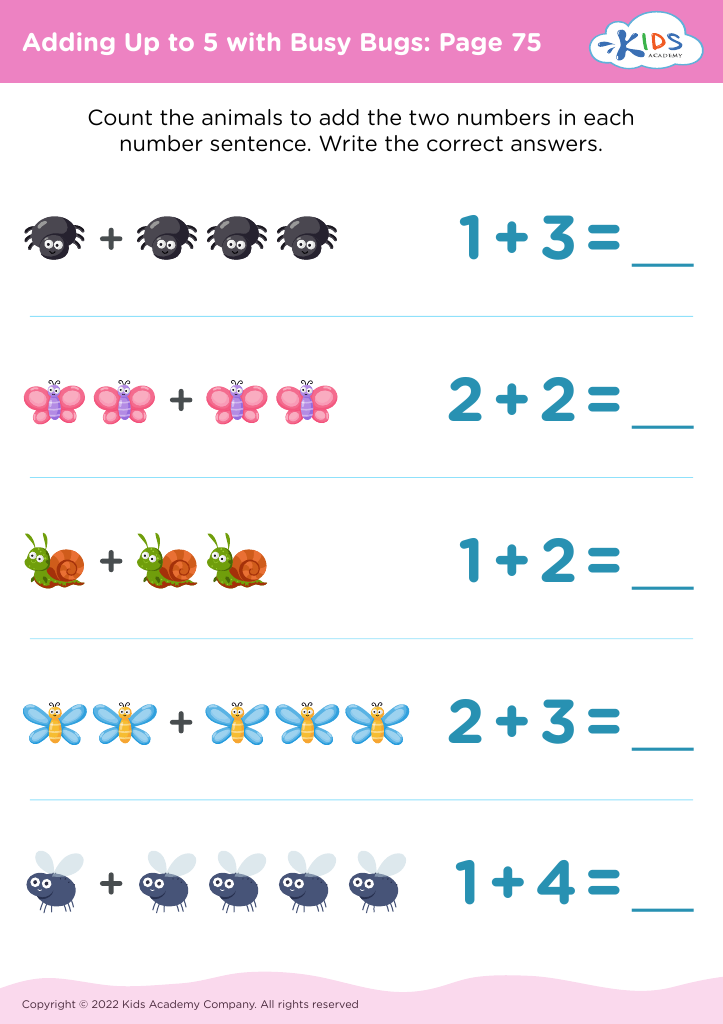
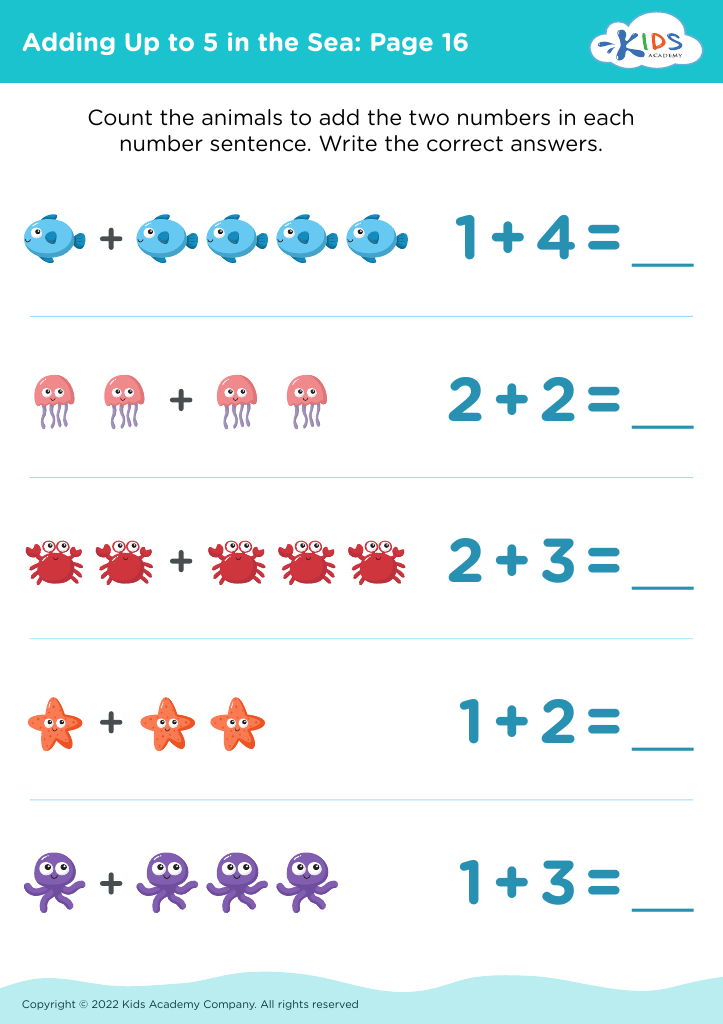
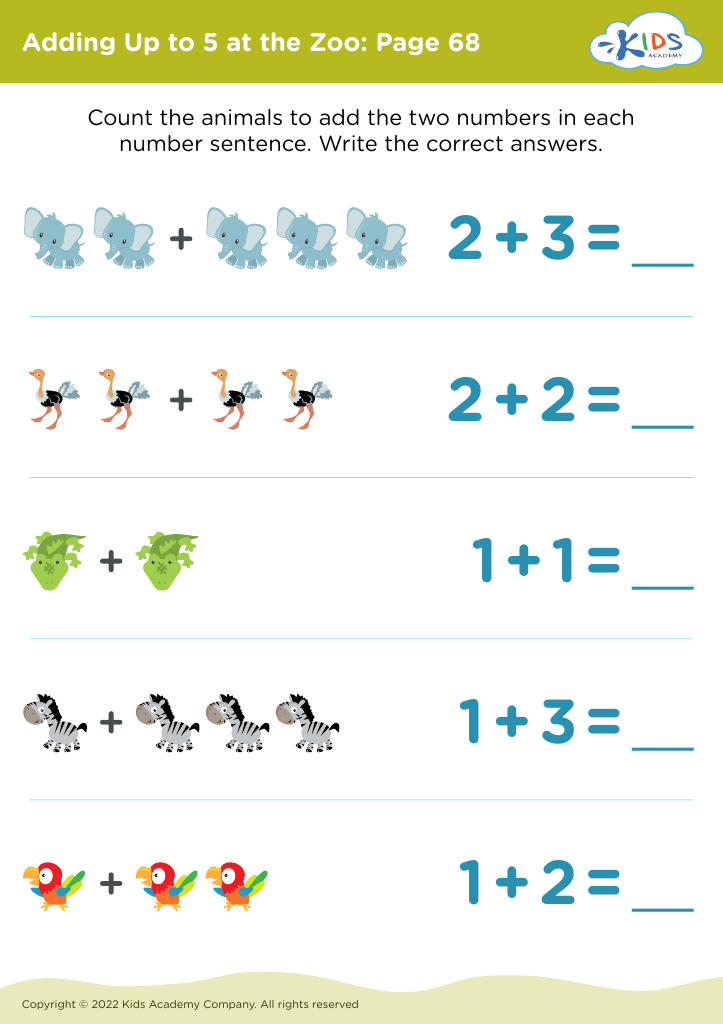
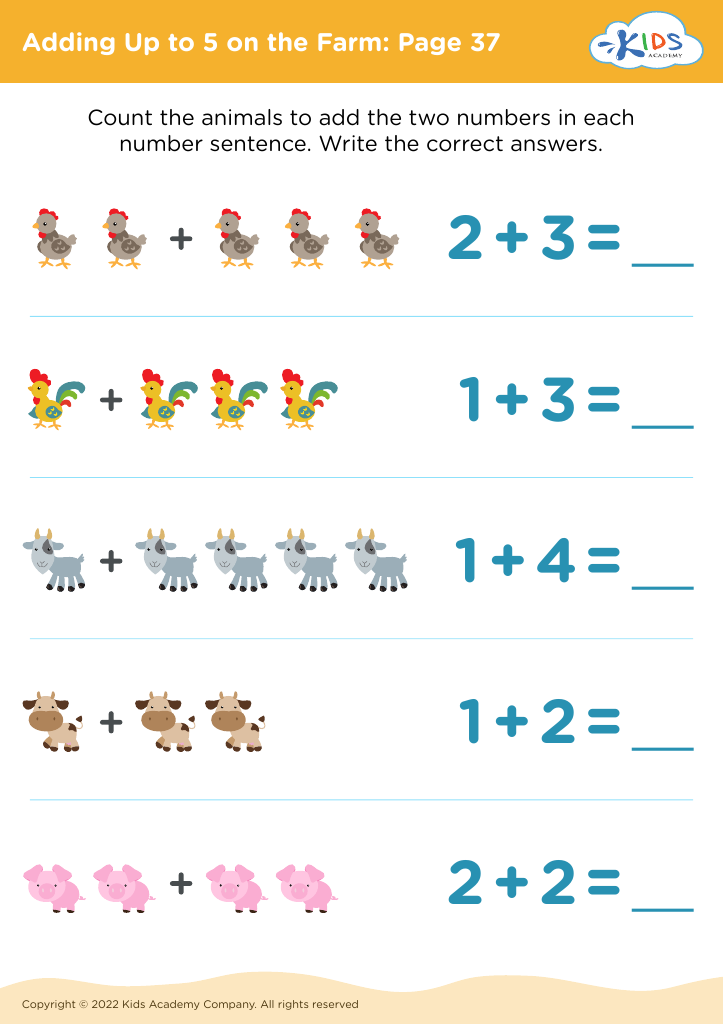
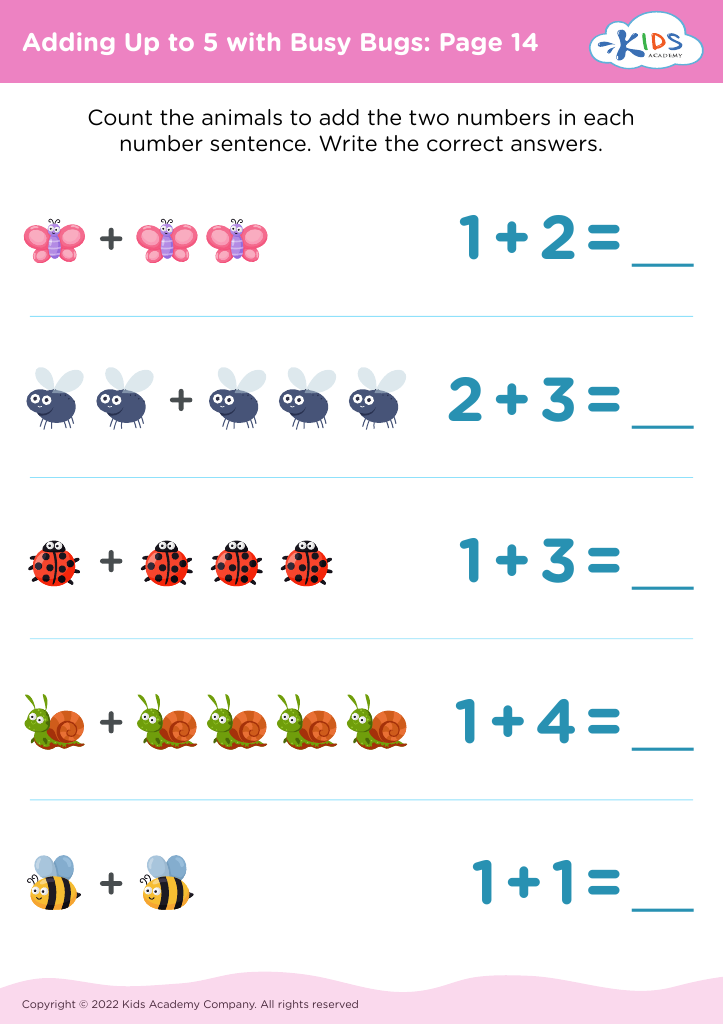
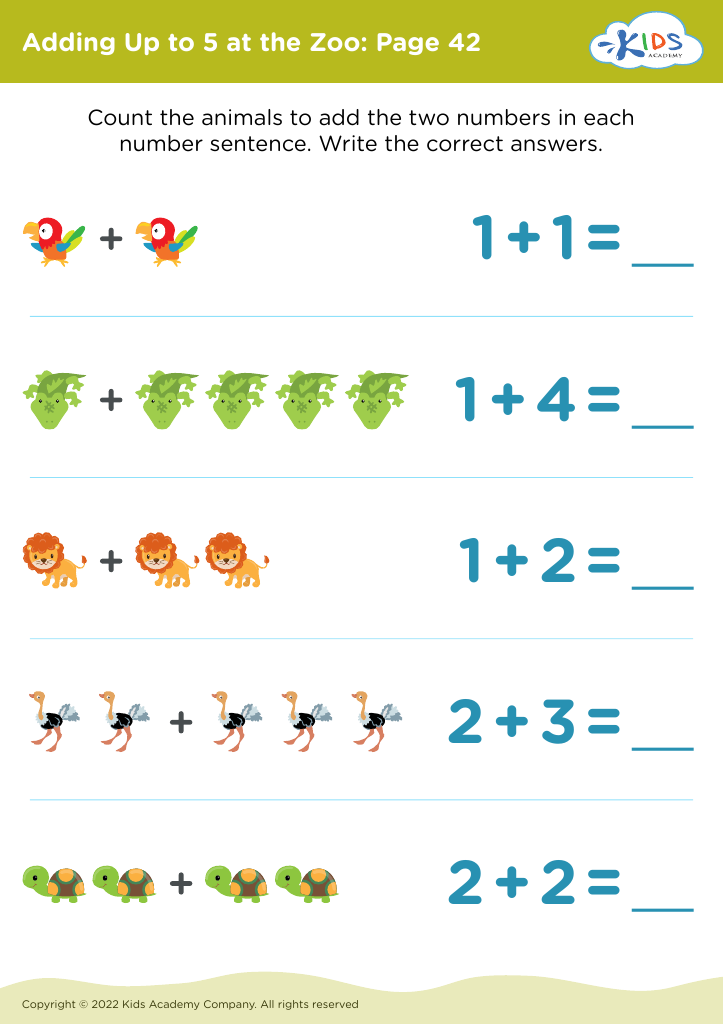
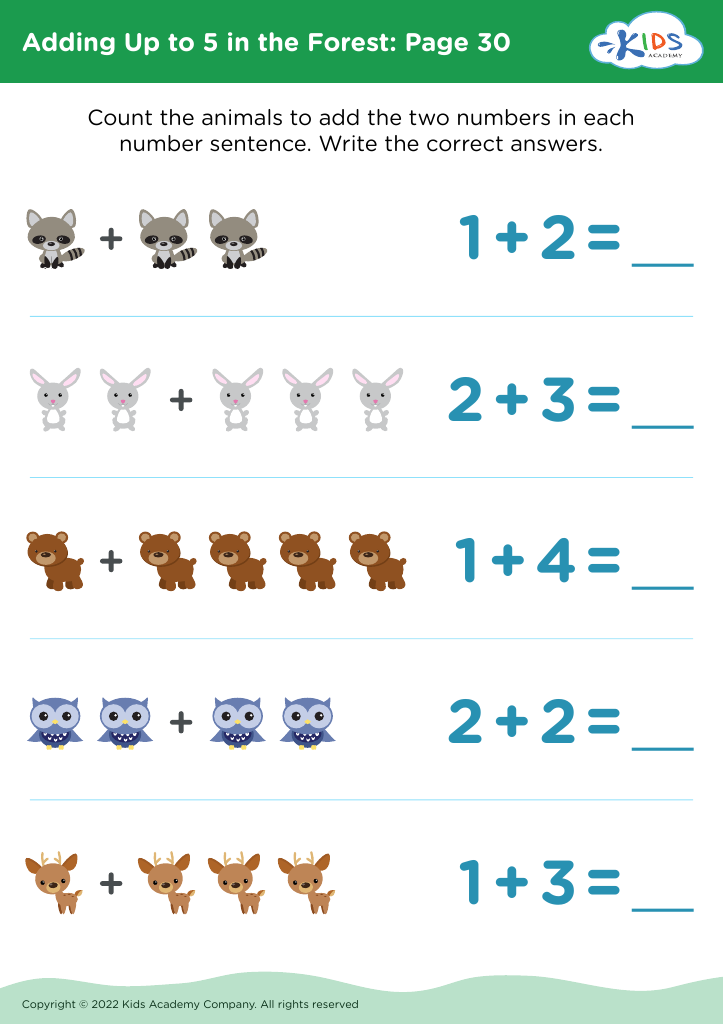
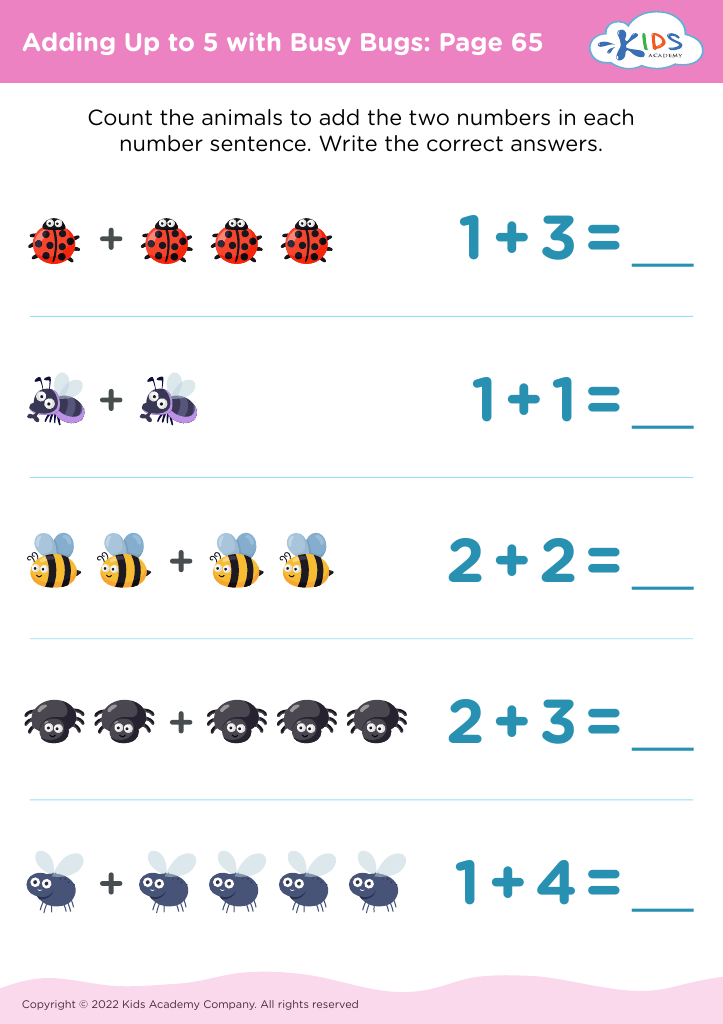








Fine motor skills are vital for young children, particularly in the 3-6 age bracket, as they lay the foundation for important daily activities and academic success. These skills involve the coordination of small muscles, particularly in the hands and fingers, that enable tasks such as writing, drawing, and buttoning clothes. One primary area of focus is writing, which not only enhances a child's ability to communicate but also supports cognitive development.
Developing fine motor skills through writing exercises has numerous benefits. For one, it improves hand-eye coordination, which is essential for tasks ranging from tying shoelaces to participating in sports. Moreover, strong fine motor skills contribute to better handwriting, reducing frustration and empowering children with the confidence to express themselves clearly on paper.
From an academic perspective, writing is a cornerstone skill that supports literacy. When children can write effectively, they're better equipped to engage in other educational activities, such as spelling and reading. Improved motor control also prepares children for the structured environment of school, helping them follow instructions and complete tasks independently.
In summary, fostering fine motor skills at an early age is crucial for a child's overall development, preparing them for academic achievement and instilling foundational life skills that support their day-to-day activities.








