Sea creatures identification Addition Worksheets for Ages 3-6
3 filtered results
-
From - To
Explore the wonders of the ocean with our engaging Sea Creatures Identification Addition Worksheets, specially designed for children aged 3 to 6! These worksheets combine early math skills with exciting marine life themes, promoting both addition practice and the identification of vibrant sea animals. Each worksheet features colorful illustrations of various sea creatures, making learning fun and visually appealing. Ideal for preschool and kindergarten classrooms or at-home learning, these worksheets help develop crucial early math skills while sparking an interest in marine biology. Let your child dive into a learning adventure that strengthens their counting and recognition abilities under the sea!
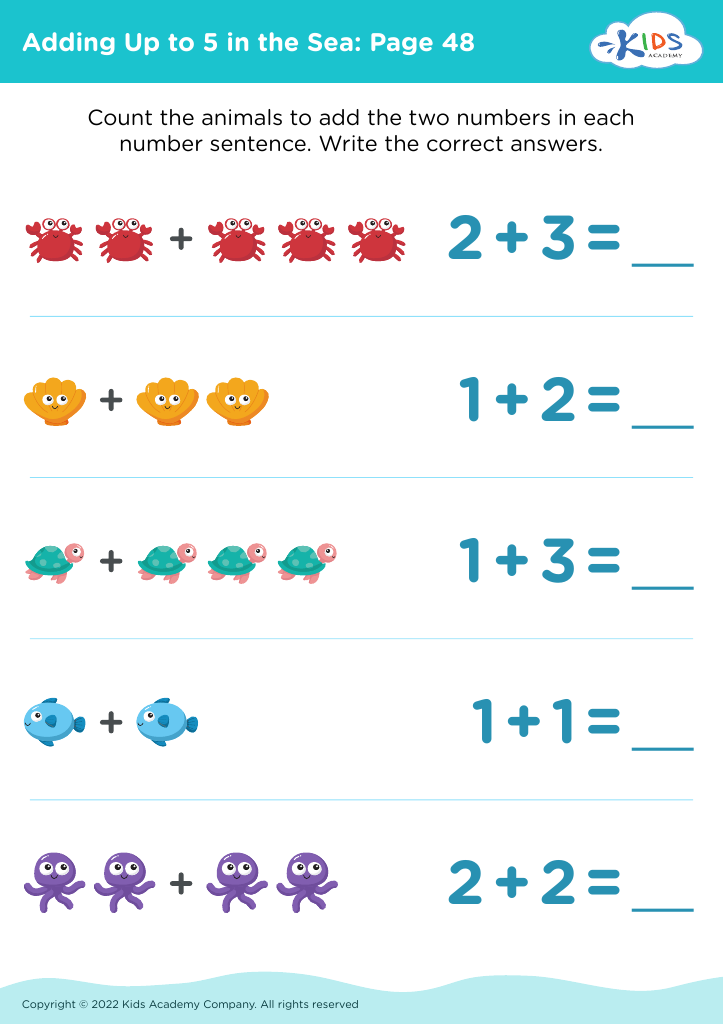
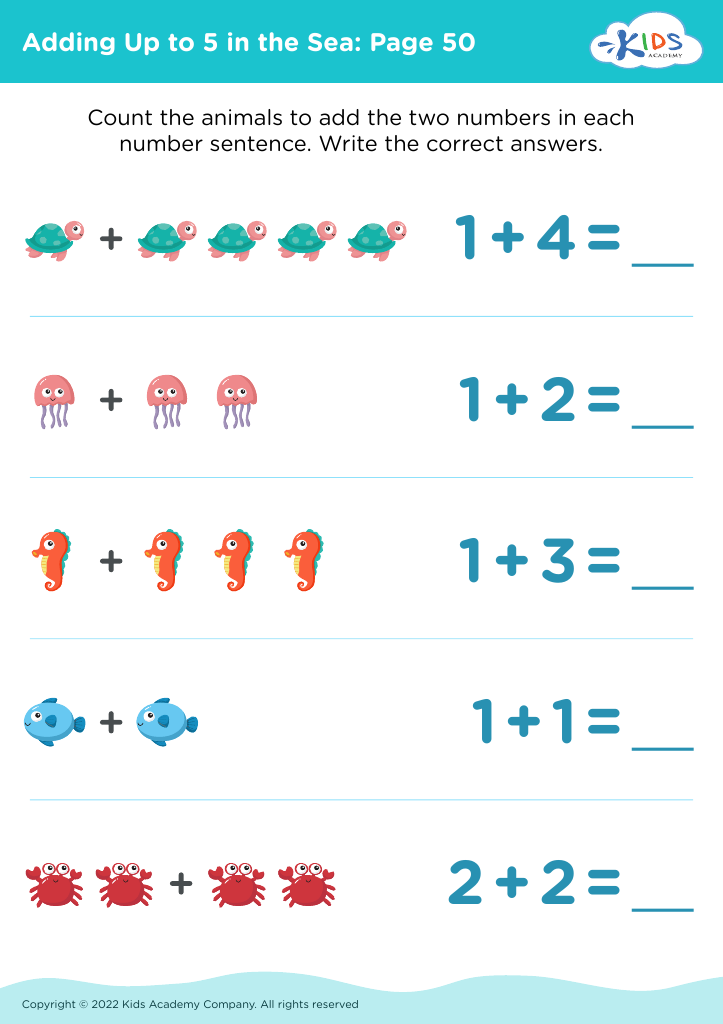
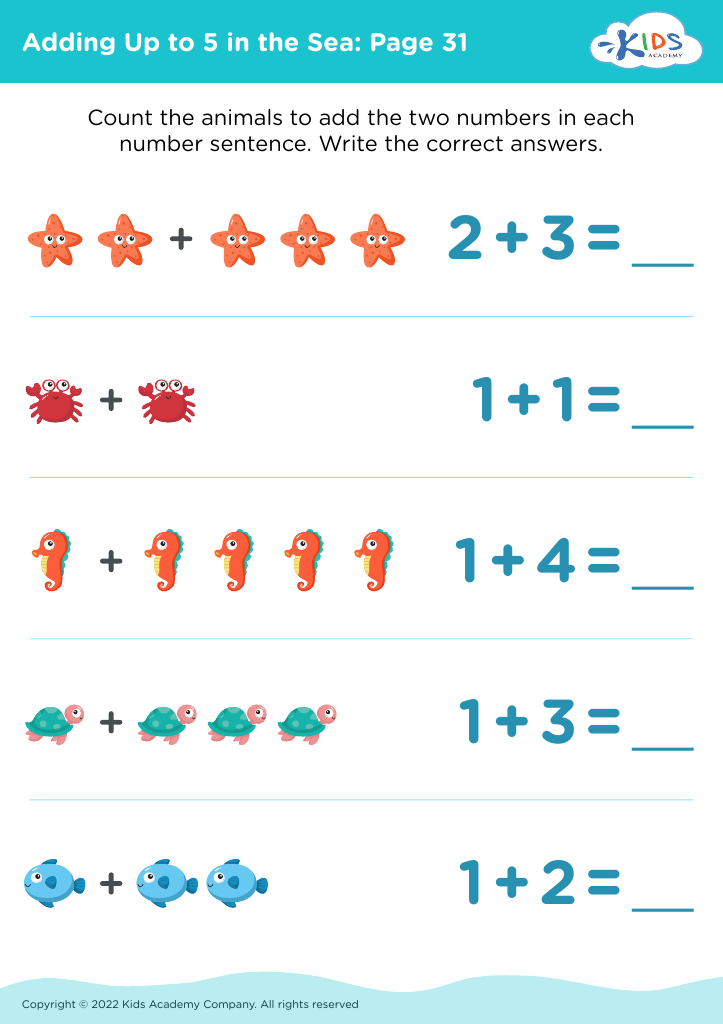








Identifying sea creatures is an essential educational activity for children aged 3-6. At this stage of development, children are naturally curious about the world around them, and exploring marine life can ignite their interest in science and the environment. Engaging them in sea creature identification fosters cognitive skills, such as observation and critical thinking. As they learn to recognize different species, they also enhance their vocabulary and language skills by building descriptive terms and concepts.
Moreover, understanding marine life can cultivate a sense of responsibility towards our oceans. Teaching young children about the diversity of sea creatures instills early awareness of environmental conservation, emphasizing the importance of protecting fragile ecosystems. This knowledge lays the foundation for nurturing environmentally-conscious adults.
Additionally, sea creature identification can be a fun, interactive activity. Parents and teachers can turn learning into a playful experience through stories, games, and hands-on activities like exploring aquariums or conducting simple projects. These interactions not only foster a love for learning but also strengthen parent-child or teacher-student bonds. Encouraging young learners to embrace marine education influences their overall cognitive and emotional development, making it vital that adults prioritize these educational experiences.








