Check out this FREE Trial Lesson on Addition for age 3-6!

D

Favorites
With answer key
Interactive
  • 3-6
  • Understanding Quantities
  • Addition
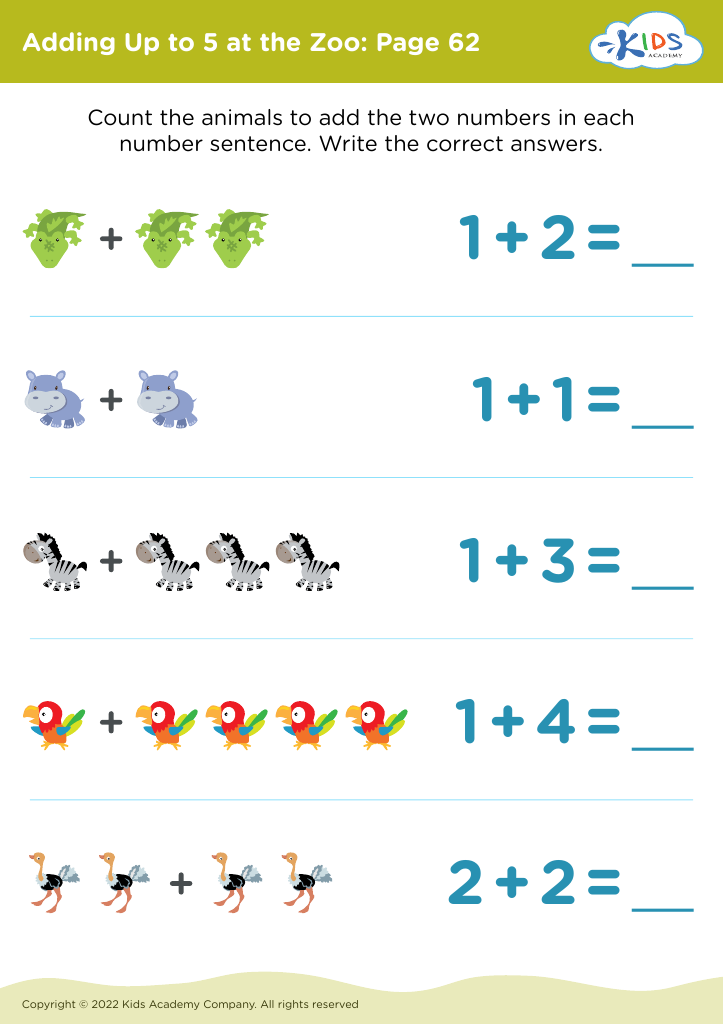
Adding Up to 5 at the Zoo: Page 62
Worksheet
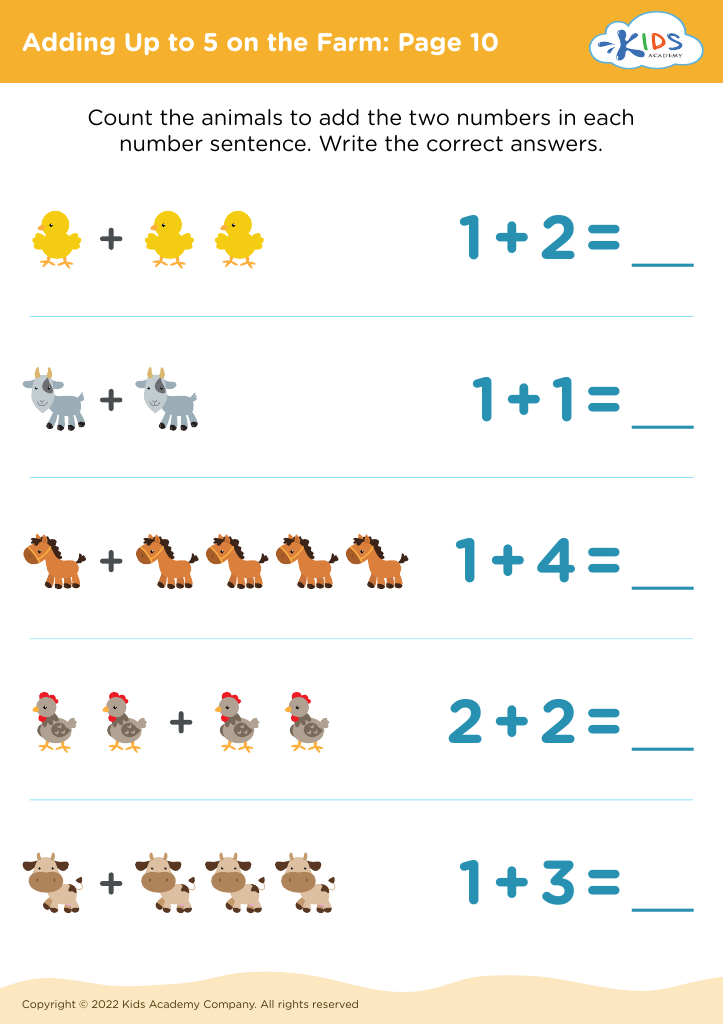
Adding Up to 5 on the Farm: Page 10
Worksheet
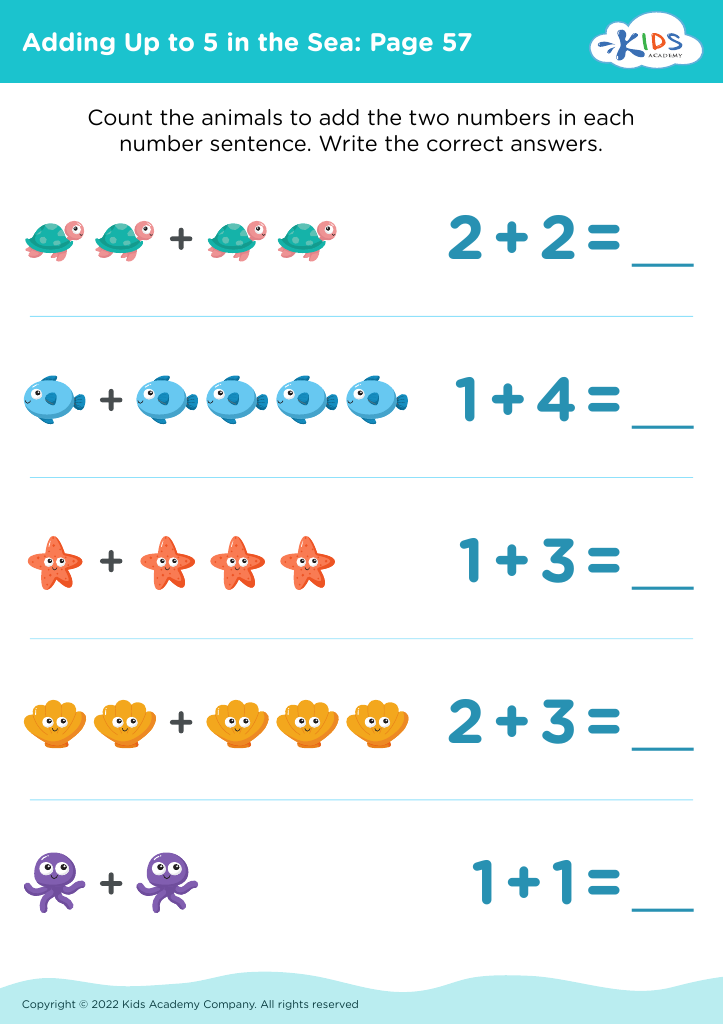
Adding Up to 5 in the Sea: Page 57
Worksheet
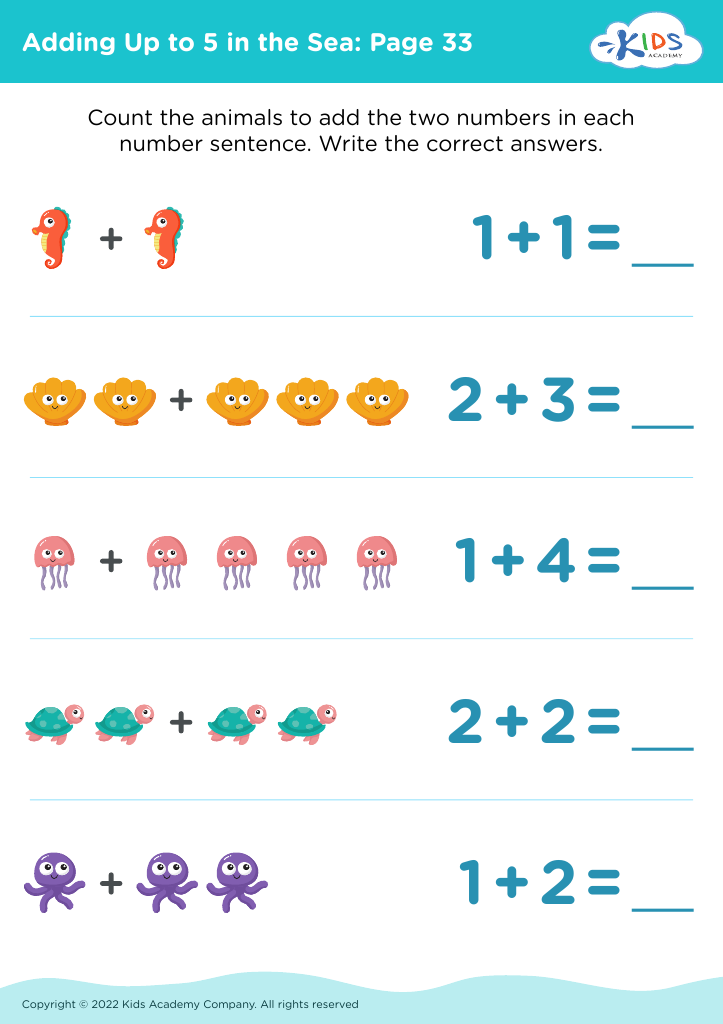
Adding Up to 5 in the Sea: Page 33
Worksheet
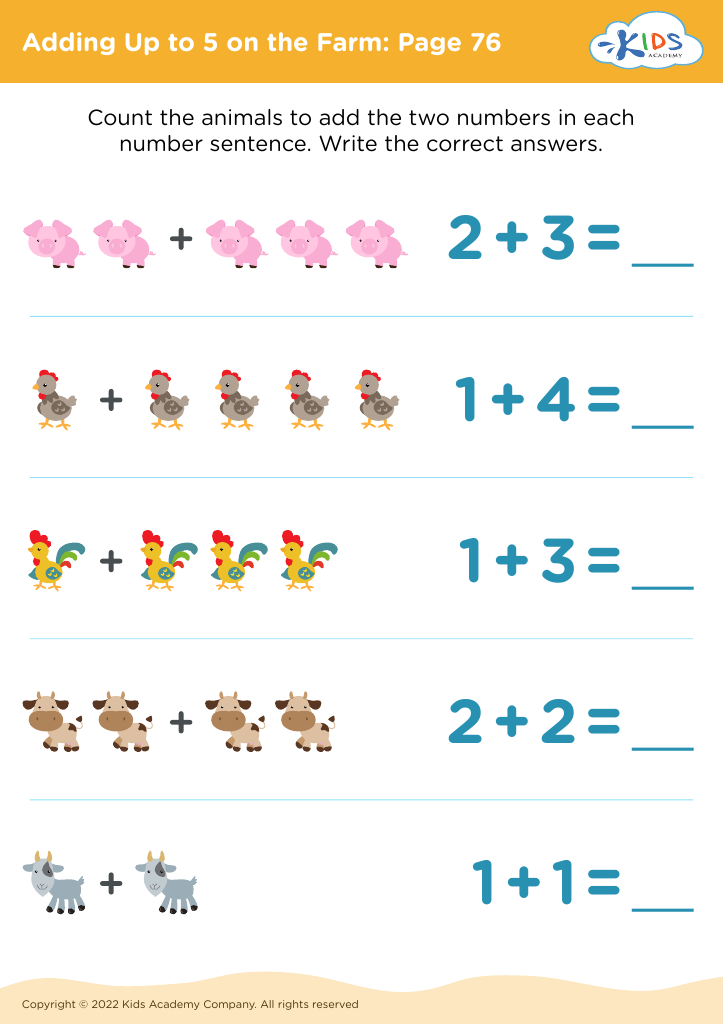
Adding Up to 5 on the Farm: Page 76
Worksheet
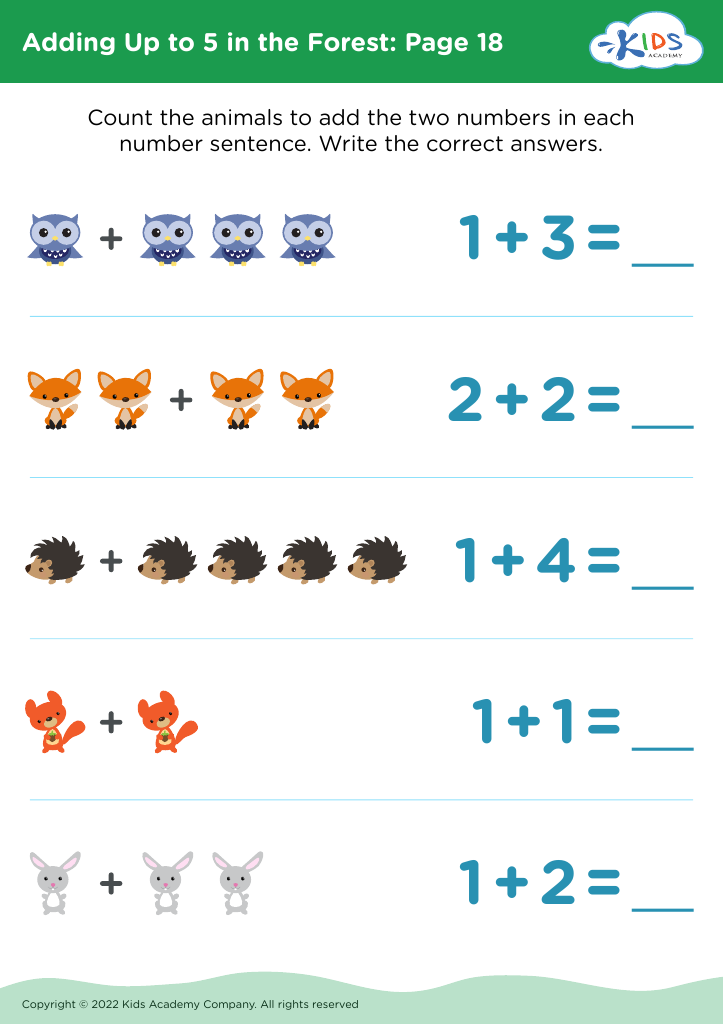
Adding Up to 5 in the Forest: Page 18
Worksheet
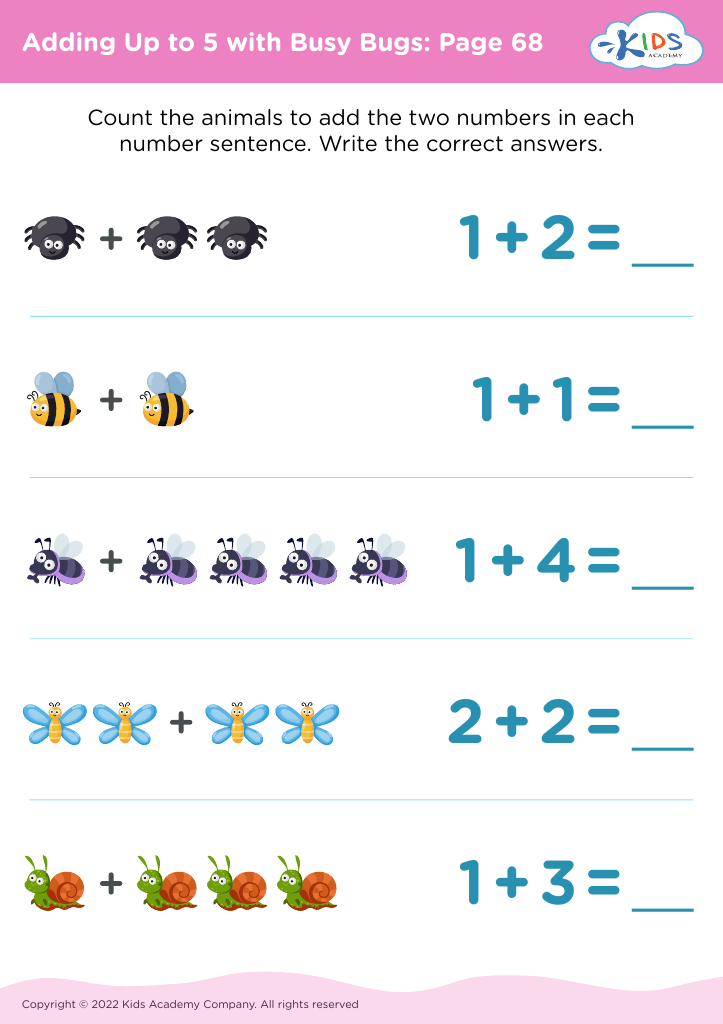
Adding Up to 5 with Busy Bugs: Page 68
Worksheet
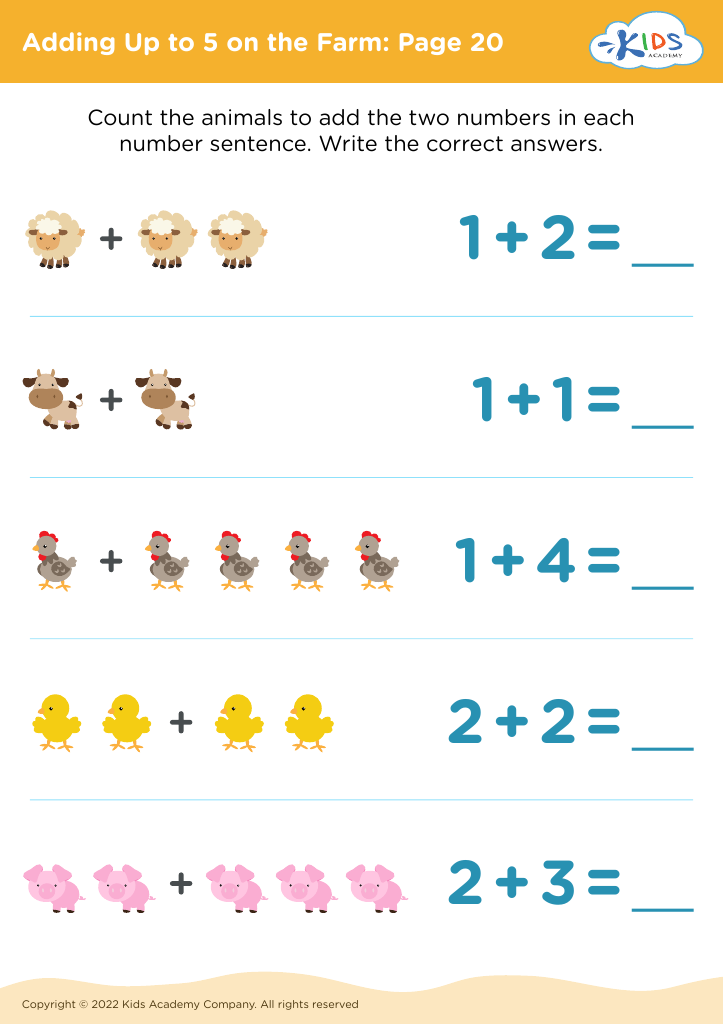
Adding Up to 5 on the Farm: Page 20
Worksheet
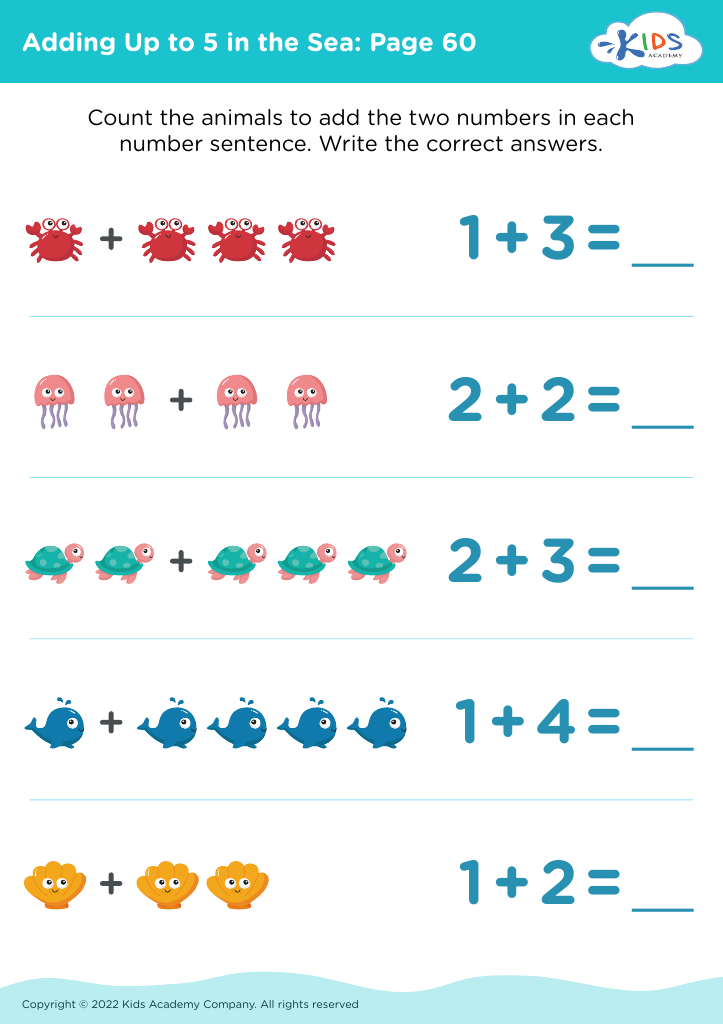
Adding Up to 5 in the Sea: Page 60
Worksheet
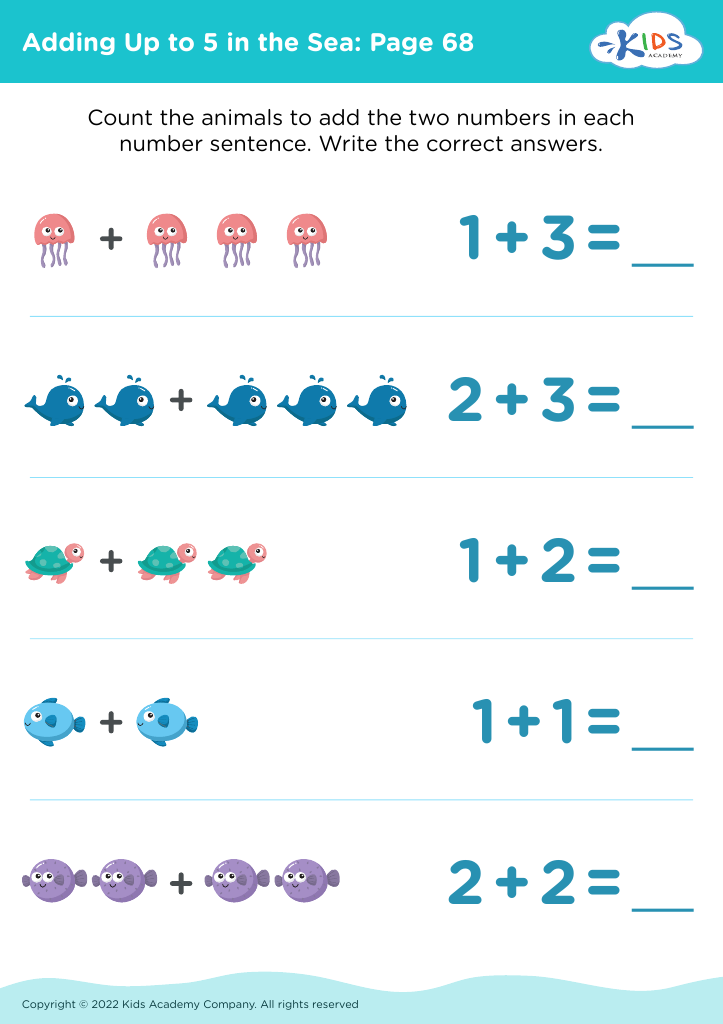
Adding Up to 5 in the Sea: Page 68
Worksheet
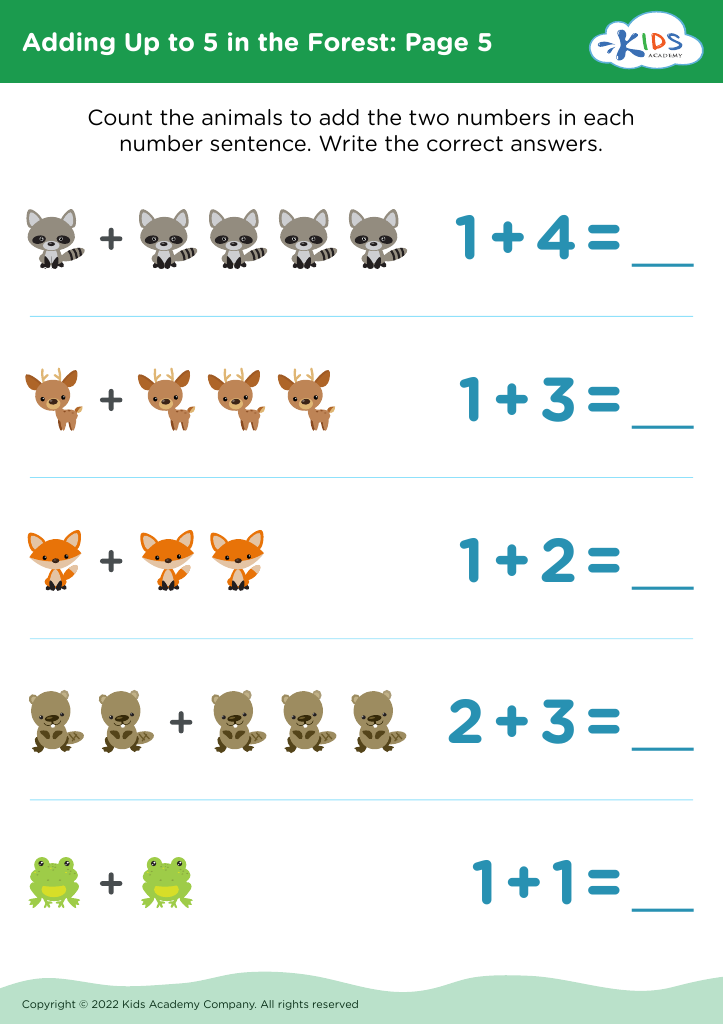
Adding Up to 5 in the Forest: Page 5
Worksheet
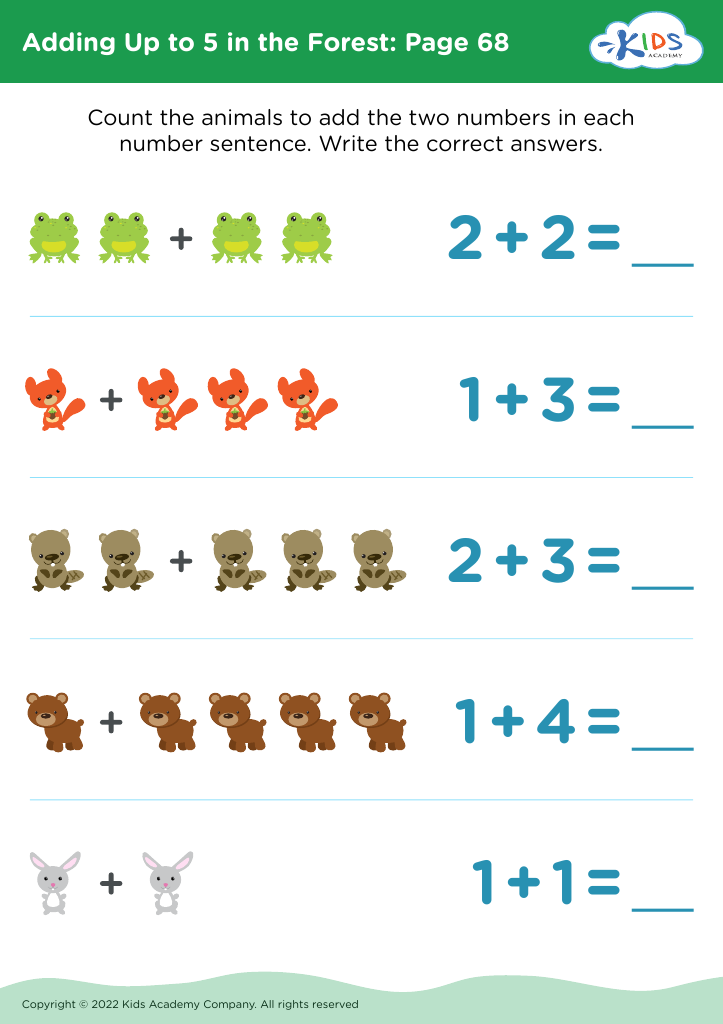
Adding Up to 5 in the Forest: Page 68
Worksheet
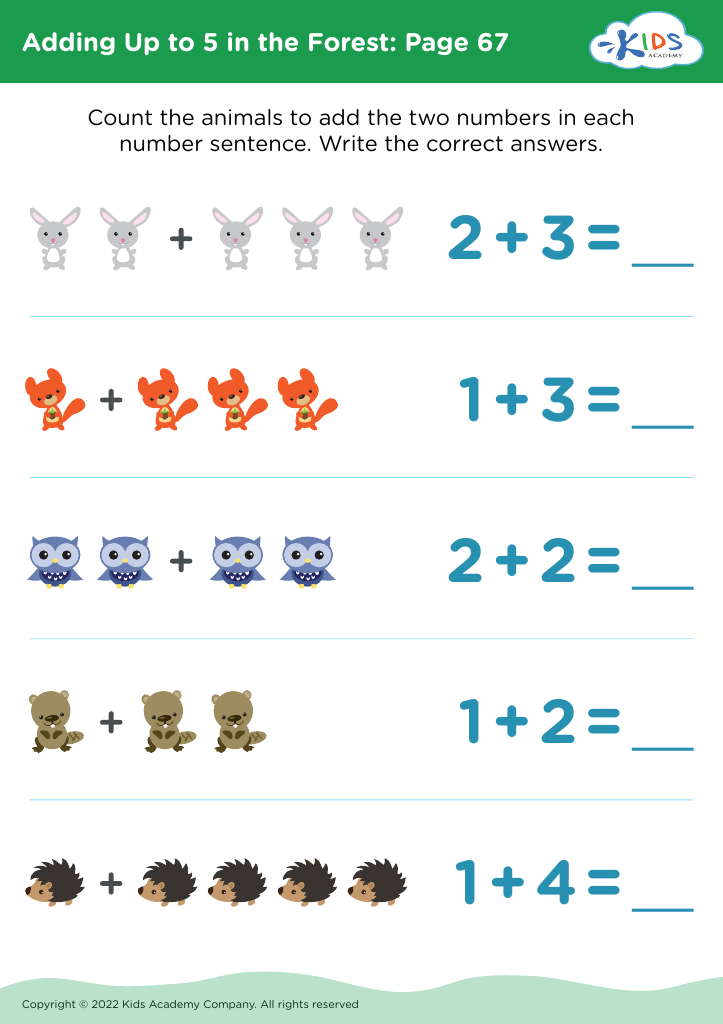
Adding Up to 5 in the Forest: Page 67
Worksheet
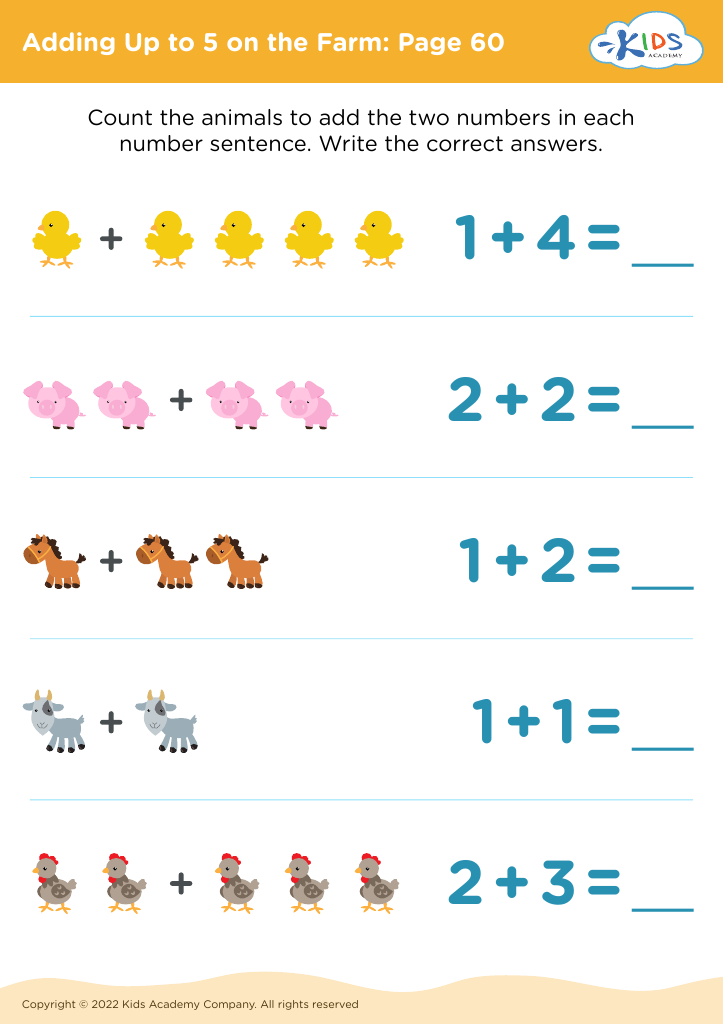
Adding Up to 5 on the Farm: Page 60
Worksheet


Understanding quantities and addition for children aged 3 to 6 is vital for various reasons, making it a priority for parents and teachers. During these formative years, children develop crucial mathematical foundations that influence their future learning. Learning about quantities helps children grasp the concept of "how many," introducing them to basic number sense, which is essential for more complex mathematical operations later on.

Additionally, early experiences with addition foster problem-solving skills and critical thinking. Engaging in activities that involve counting objects, such as toys or snacks, boosts cognitive development and enhances social skills through cooperative play. This hands-on learning is conducive to reinforcing the understanding that numbers represent real-world quantities, making math more relatable and enjoyable.

Moreover, a solid understanding of addition and quantities builds confidence in young learners. When children can successfully solve simple addition problems, they feel accomplished, nurturing a positive attitude toward learning. This early enthusiasm can motivate them to explore more advanced mathematical concepts as they progress in their education.

In summary, prioritizing the understanding of quantities and addition provides essential tools for children's cognitive, social, and emotional development, setting the stage for lifelong learning and a healthy relationship with mathematics.