Understanding Sequences Addition Worksheets for Ages 3-6
3 filtered results
-
From - To
"Understanding Sequences Addition Worksheets for Ages 3-6" offer engaging and educational resources designed to introduce young learners to foundational math skills. These printable worksheets help children recognize number patterns and enhance their sequencing abilities through fun addition exercises. Perfect for early grade students, they bridge the gap between counting and performing simple arithmetic operations. By solving these problems, kids gain confidence in their math abilities while developing critical thinking and problem-solving skills. Ideal for both classroom use and at-home practice, these worksheets make learning sequences in addition enjoyable and effective. Let's make early math a playful adventure!
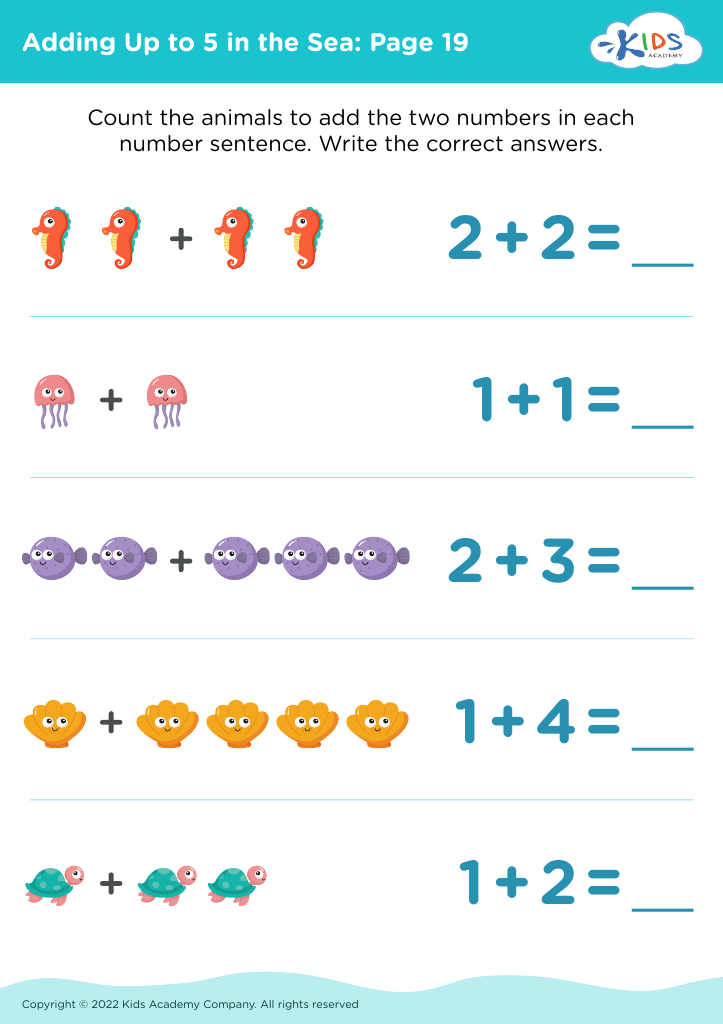
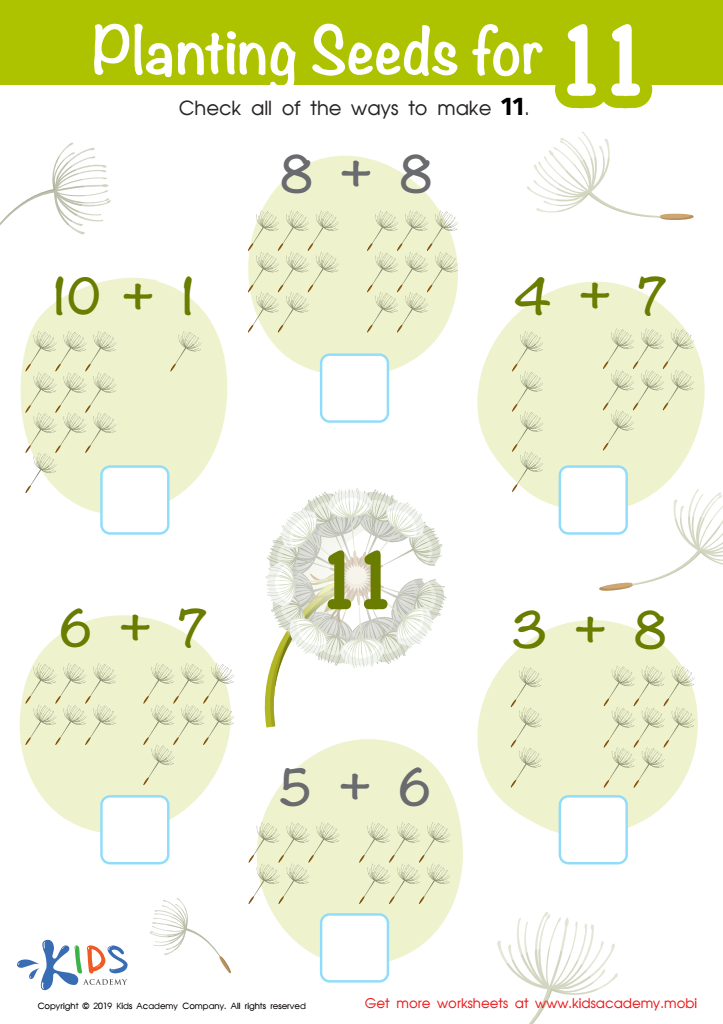
Planting Seeds for 11 Worksheet
 Assign to My Students
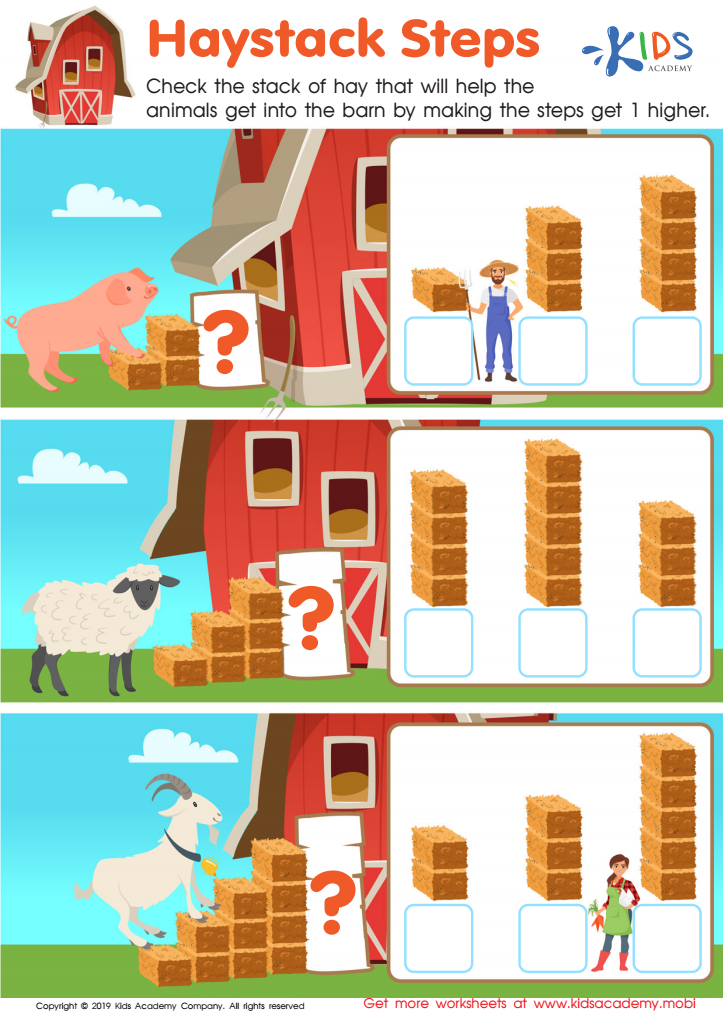
Haystack Steps Worksheet








Understanding sequences and addition at an early age sets a strong mathematical foundation for children aged 3-6. This early groundwork is crucial for several reasons. First, it promotes logical thinking and problem-solving skills. When children grasp sequences, they learn to recognize patterns and make predictions, which are fundamental components of logical reasoning. Additionally, addition introduces the concept of joining groups and understanding quantity, essential arithmetic principles they will build upon throughout their education.
Engaging with sequences and addition helps develop fine motor skills and attention to detail through interactive activities like arranging numbers or using counting objects. Moreover, early exposure to these concepts instills confidence and a positive attitude towards math, often leading to a lifelong interest in the subject. By integrating these skills into daily routines, children encounter real-life applications, such as counting steps or food items, making learning both relevant and enjoyable.
Furthermore, by working collaboratively through these activities, parents and teachers can foster a nurturing educational environment, strengthening the child's social skills and academic curiosity. Ultimately, early mastery of these concepts enables smoother transitions to more complex mathematical operations, making it an essential step in a child’s cognitive development.








