Visual learning reinforcement Addition Worksheets for Ages 3-6
5 filtered results
-
From - To
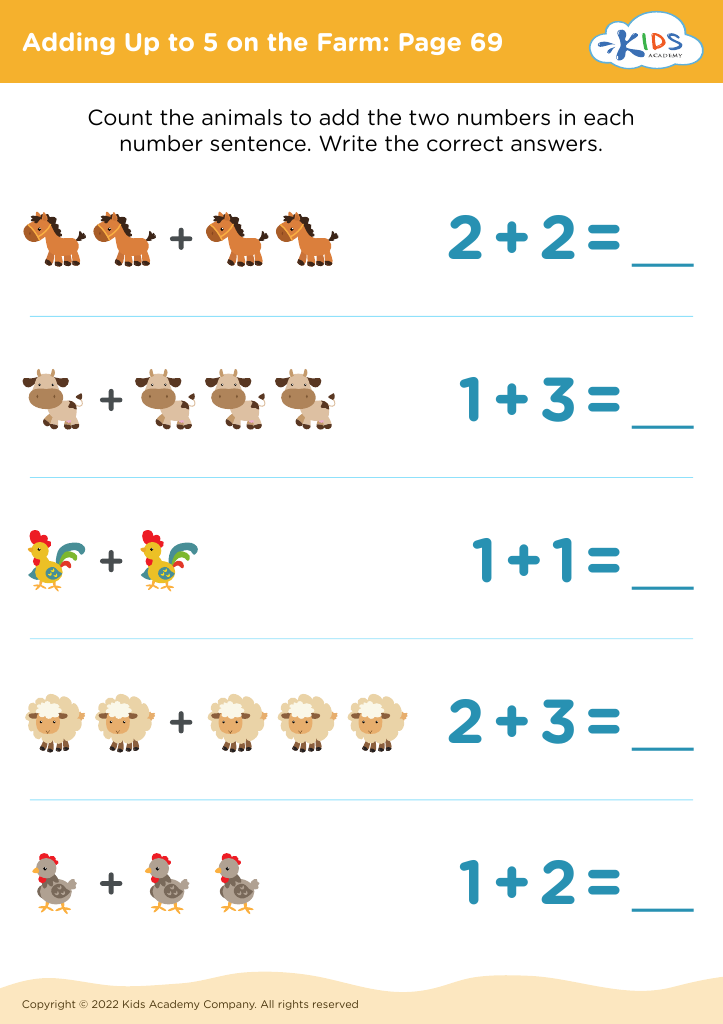
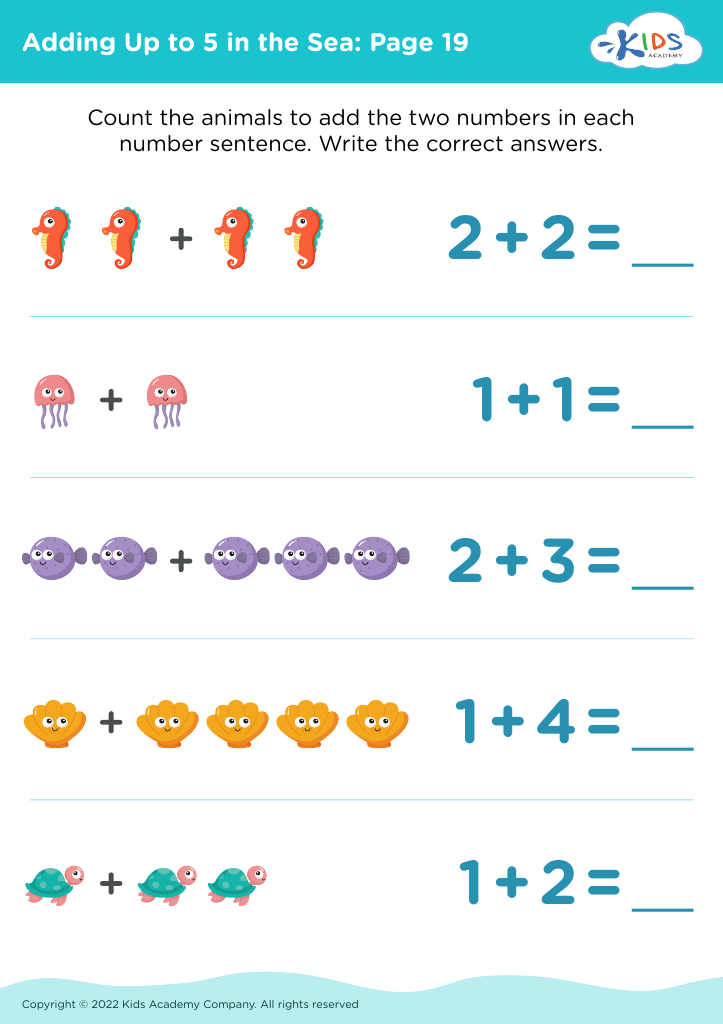
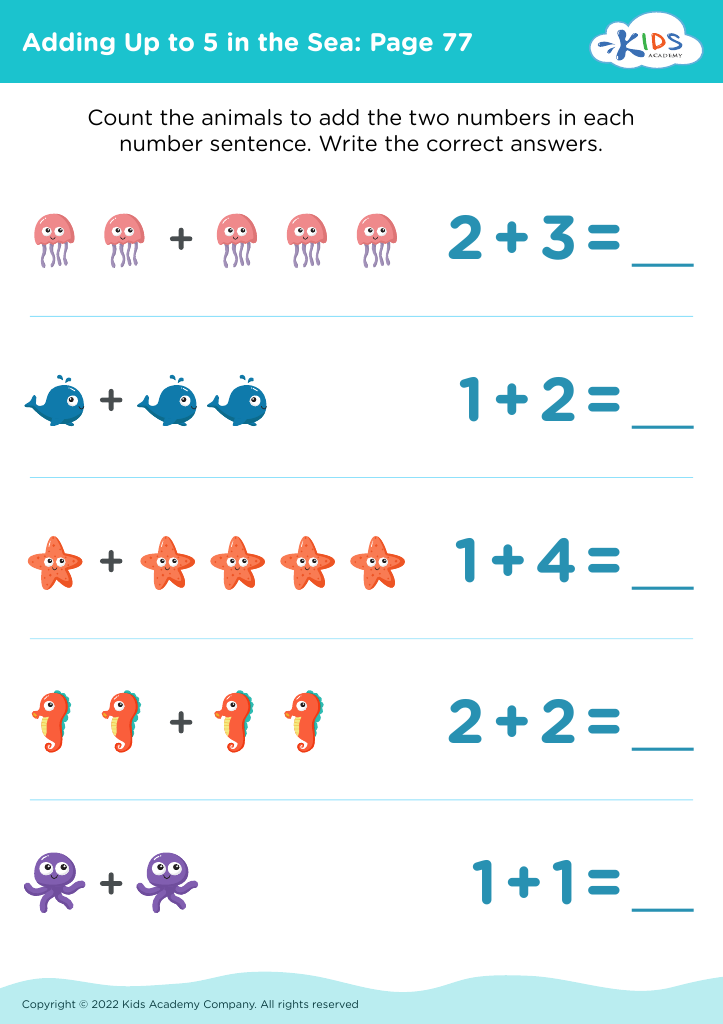
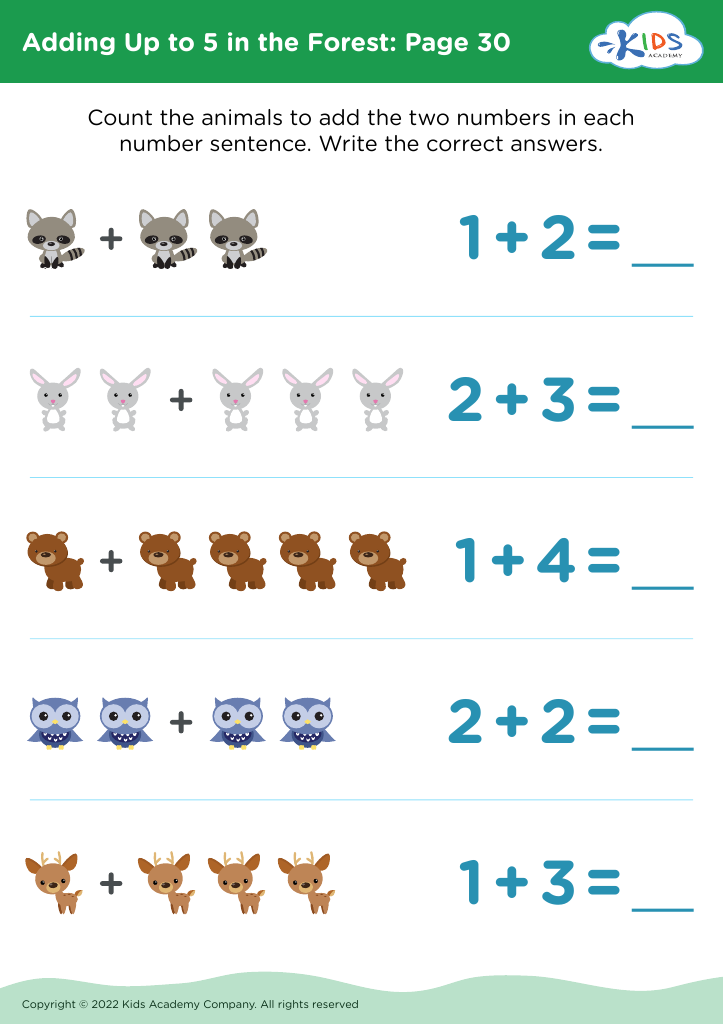
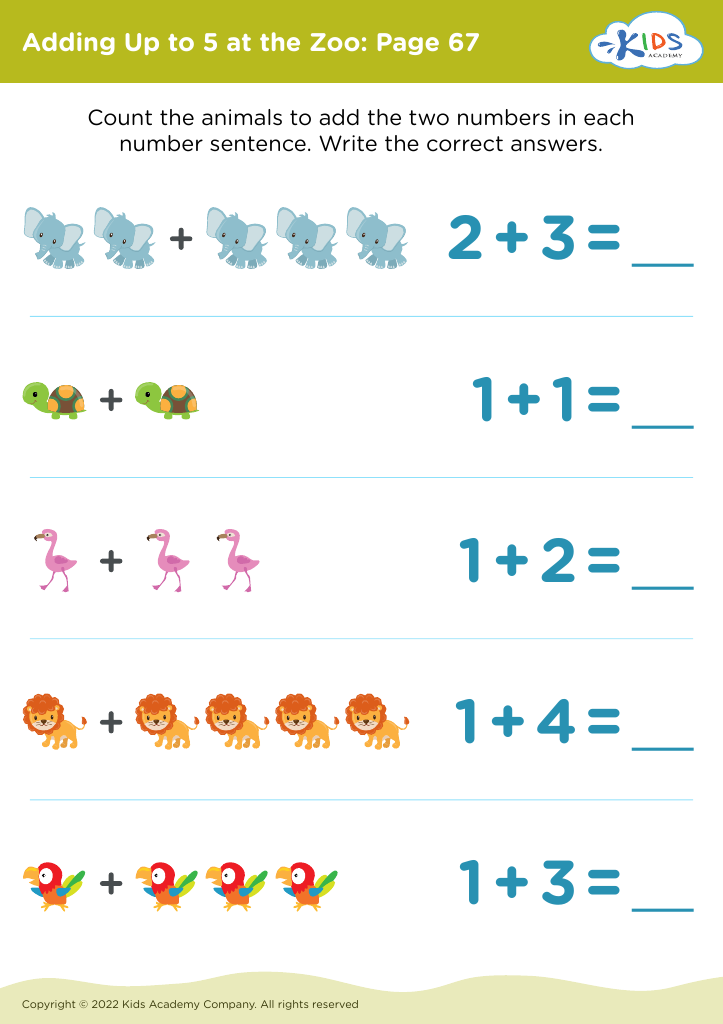
Discover our engaging Visual Learning Reinforcement Addition Worksheets designed specifically for children aged 3-6! These interactive worksheets are tailored to support early math skills by using colorful visuals and fun illustrations that capture young learners' attention. Through hands-on activities, these worksheets help children grasp foundational addition concepts, fostering a love for math while enhancing their visual recognition skills. Ideal for preschool and kindergarten educators or parents looking to supplement their child's learning at home, our resource promotes effective learning in a playful manner. Start your little one's journey towards math proficiency today with our comprehensive collection of addition worksheets!






.jpg)

Visual learning reinforcement for addition is crucial for children ages 3-6, as it taps into their natural learning styles and developmental stage. Young children are inherently visual learners, and employing visual aids can help them grasp mathematical concepts more concretely. By using objects like counters, pictures, and number lines, children can see the addition process in action, making abstract concepts more tangible.
Visual strategies enhance engagement and comprehension, fostering an enjoyable learning experience. For instance, using colorful blocks or drawings helps create a playful atmosphere that stimulates curiosity and encourages exploration. This approach aids in developing foundational numeracy skills, necessary for future academic success.
Additionally, visual learning reinforces memory retention. When children see and manipulate objects, they are more likely to remember the addition process, laying the groundwork for more complex math later on. For parents and teachers, incorporating visual elements in teaching not only strengthens understanding but also builds a positive relationship with math, combatting anxiety that may arise in later grades.
Ultimately, focusing on visual learning reinforces early math skills, boosts confidence, and shapes a positive attitude towards learning that can last a lifetime. This early investment sets the stage for future mathematical proficiency and overall academic success.








