Addition skills Money Worksheets for Ages 3-6
3 filtered results
-
From - To
Welcome to our Addition Skills Money Worksheets for Ages 3-6! Designed to introduce young learners to the basic concepts of addition through money, these engaging worksheets provide a fun and interactive way for kids to practice their math skills. Each worksheet features colorful illustrations and age-appropriate exercises that help children learn to add coins, recognize their values, and solve simple addition problems. By incorporating real-life contexts, these resources make learning about money enjoyable and relevant. Download our worksheets today and support your child’s early mathematical development with a focus on addition skills! Perfect for homeschooling or classroom use!
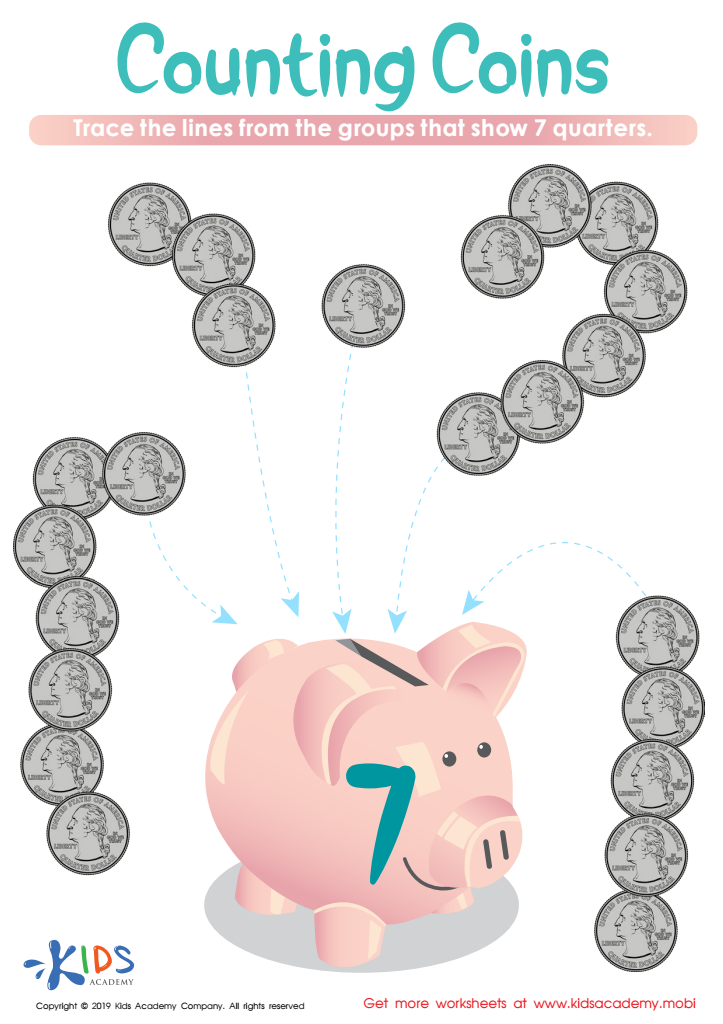
Counting Coins Worksheet
 Assign to My Students
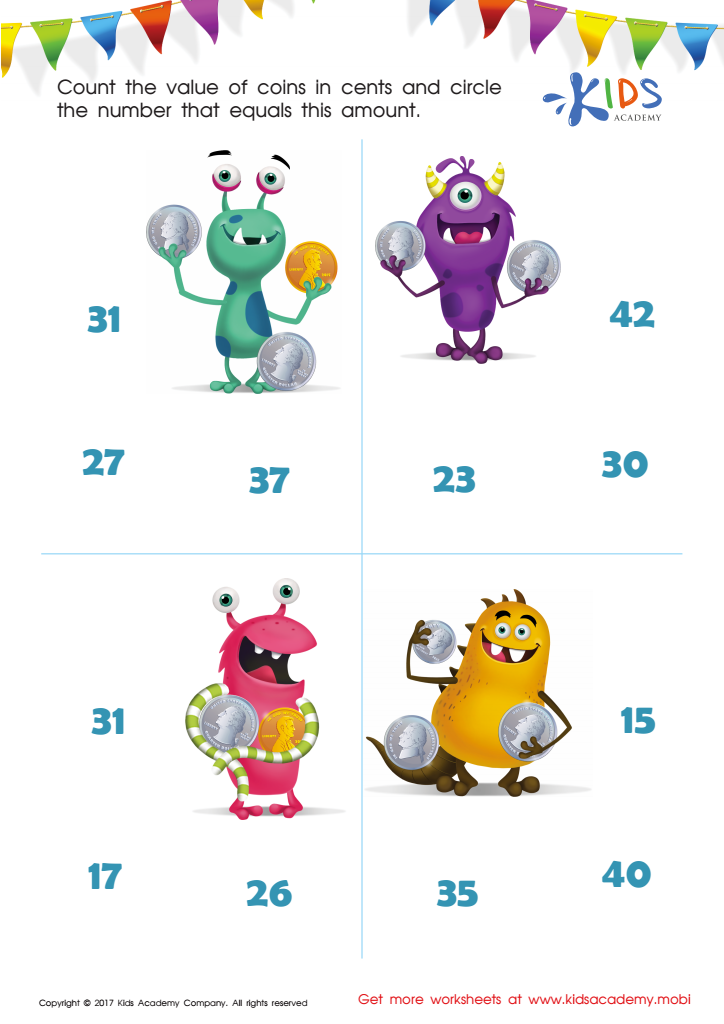
How Many Coins Money Worksheet
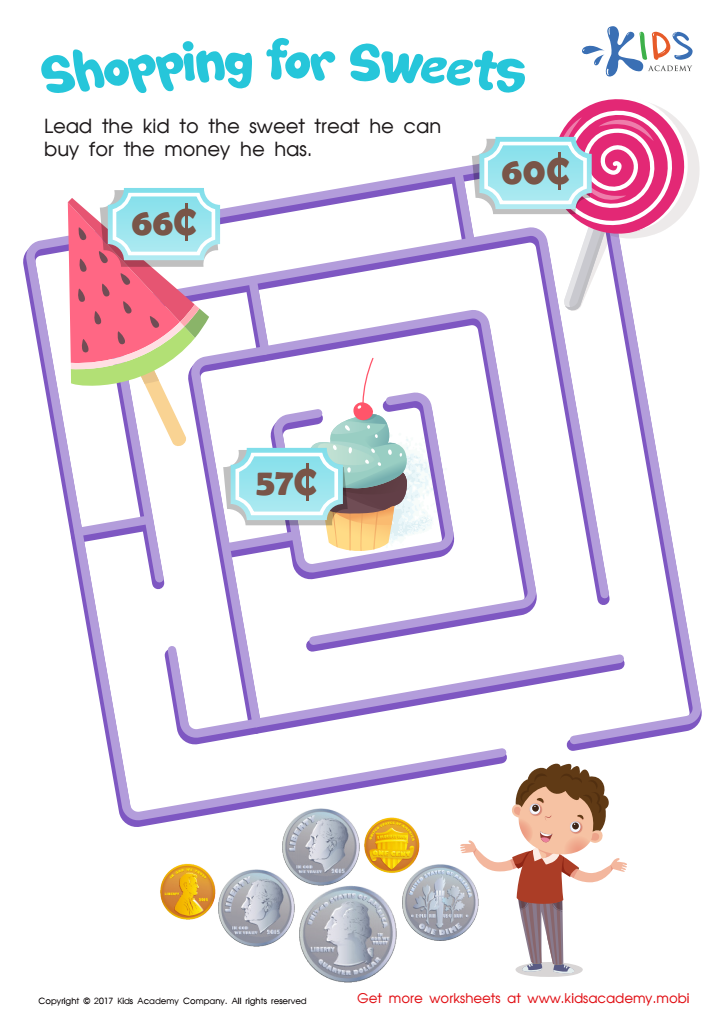
Shopping for Sweets Worksheet








Teaching addition skills related to money for children aged 3-6 is crucial for several reasons. First, early exposure to money concepts helps children understand its value, promoting financial literacy from a young age. Understanding how to add and compare different denominations is fundamental as they begin to encounter real-world transactions, whether at a store or during play.
Moreover, addition skills in the context of money support cognitive development. Engaging in simple math with coins and play money enhances problem-solving abilities, fosters logical thinking, and encourages counting through hands-on activities. These experiences make math interactive and enjoyable, keeping young minds engaged.
Additionally, using money to teach addition fosters crucial life skills. It nurtures confidence in making purchases and managing simple budgets, which are valuable skills as they transition to adulthood. It also enables parents and teachers to instill a sense of responsibility toward money management.
Finally, incorporating money into early math education integrates more practical, relatable contexts motivating learning. When children recognize that math is not just abstract but is connected to daily activities, they are more likely to engage actively and develop a lifelong appreciation for math. This foundational knowledge sets the stage for educational success in later years.








