
Improving concentration Geometry Worksheets for Ages 3-6
3 filtered results
Difficulty Level
Grade
Age
-
From - To
Subject
Activity
Standards
Enhance your child's focus and cognitive skills with our "Improving Concentration Geometry Worksheets" for ages 3-6! These engaging and interactive worksheets are designed to make learning geometry fun while promoting attention span development. Each activity encourages young learners to identify shapes, colors, and patterns, fostering visual recognition and problem-solving abilities. Perfect for classrooms or at-home practice, these worksheets are tailored to cater to different learning styles, ensuring that every child stays focused and motivated. Help your little ones build a strong foundation in geometry while improving their concentration skills with our thoughtfully crafted resources!
Favorites
With answer key
Interactive
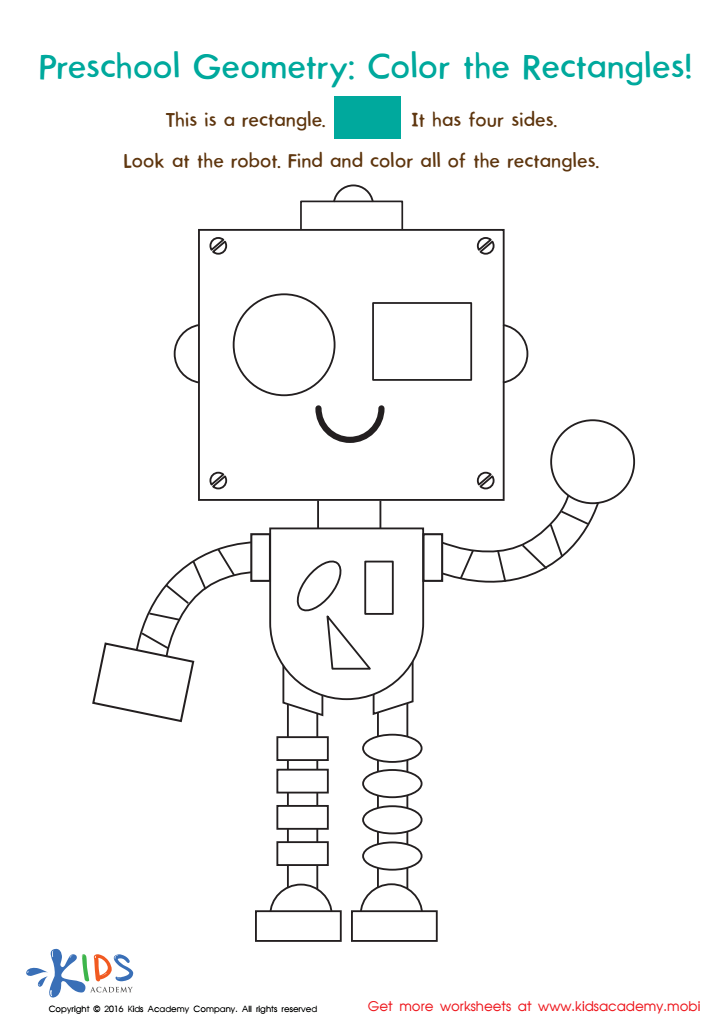
Geometry Worksheet
Geometry can be fun for kids! They explore shapes that create their favorite pics and objects. This preschool worksheet explains that rectangles have four sides, then kids color rectangles on a funny robot!
Geometry Worksheet
Worksheet











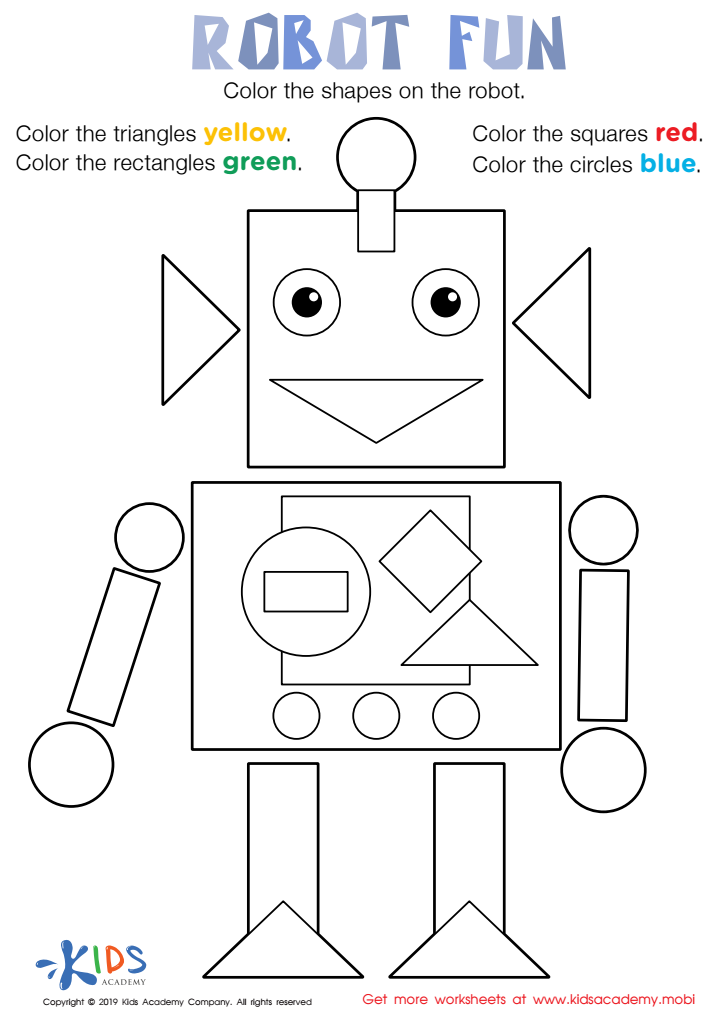
Robot Fun Worksheet
Help your child learn about basic shapes with this fun robot worksheet! Kids practice identifying circles, squares, rectangles and triangles, then color each shape according to directions. Make math practice enjoyable with this coloring page that teaches all four basic shapes - it's an important math skill!
Download (PDF)
 Assign to My Students
Assign to My Students
Robot Fun Worksheet
Worksheet
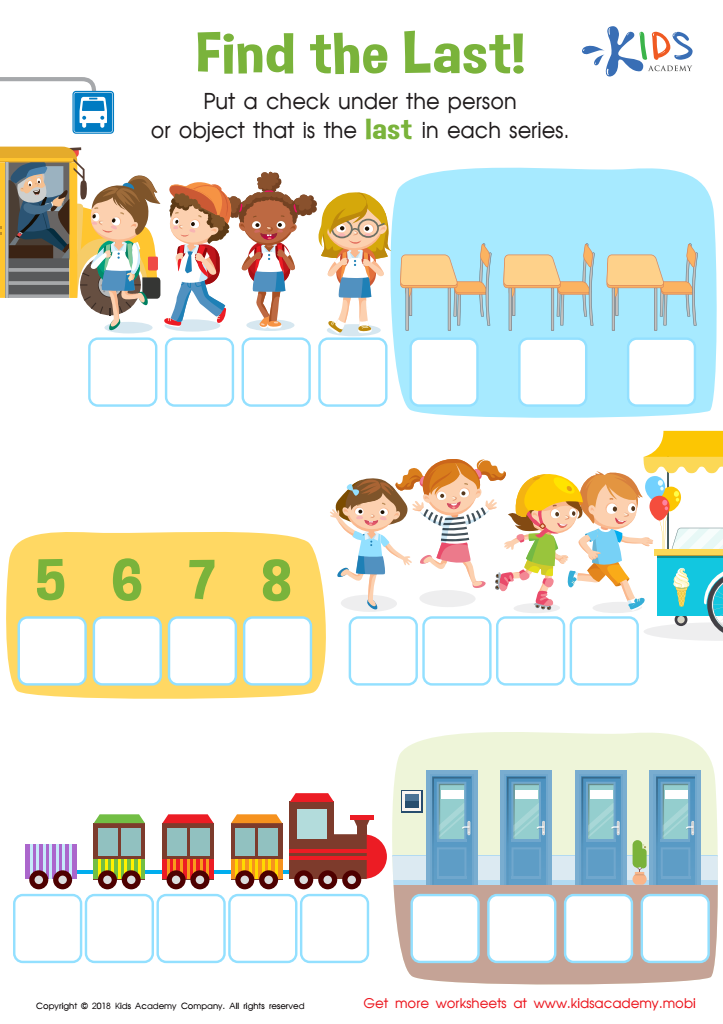
Find the Last! Worksheet
Teach young students about sequence words with this free worksheet. Have them look at sets of people or objects and choose the one that is last. Engage them further by having them describe or act out their day, and what happens last? Enjoy this printout and have fun!
Find the Last! Worksheet
Worksheet
Join Kids Academy for Free
Who is primarily going to use this learning content?








Improving concentration in geometry for young learners aged 3-6 is crucial for several reasons. First, early exposure to geometric concepts helps children understand shapes, spatial relationships, and measurements, forming the foundation for later math skills. When kids engage with geometry through hands-on activities, they develop critical thinking and problem-solving abilities that are essential for lifelong learning.
Additionally, enhancing concentration during these formative years aligns with building focus, listening skills, and persistence in facing challenges. As these young children learn to concentrate, they can better absorb information and follow instructions, crucial for their overall development. Early math skills, particularly in geometry, have been linked to future academic success, making this an investment in their education.
Furthermore, teachers and parents can use geometry activities as a grounding experience for children to interact socially, share ideas, and collaborate, which fosters emotional and social growth. By encouraging concentration in geometry, we not only enhance cognitive skills but also empower children to become confident in their abilities, ensuring a strong foundation for all future learning. Ultimately, prioritizing geometric learning for young children supports holistic development and equips them for success in both academics and everyday life.








