Recognizing shapes Geometry Worksheets for Ages 3-6
3 filtered results
-
From - To
Welcome to our "Recognizing Shapes Geometry Worksheets" for ages 3-6! These engaging worksheets are designed to help young learners identify and understand various shapes in a fun and interactive way. Each activity promotes visual recognition of circles, squares, triangles, and more, fostering essential foundational math skills. Our carefully crafted exercises encourage creativity and critical thinking, all while making shape recognition an enjoyable experience. Perfect for in-home learning or classroom activities, these worksheets align with early education standards, ensuring your child builds confidence in their geometric understanding. Explore our collection and watch your little ones thrive in their mathematical journey!
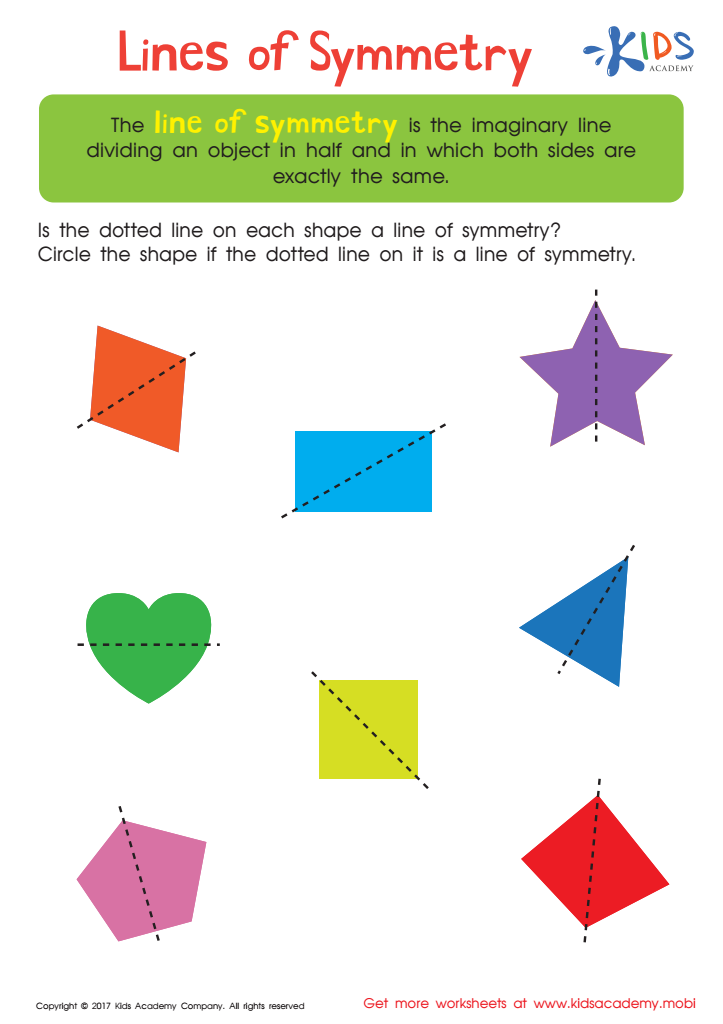
Lines of Symmetry Printable
 Assign to My Students











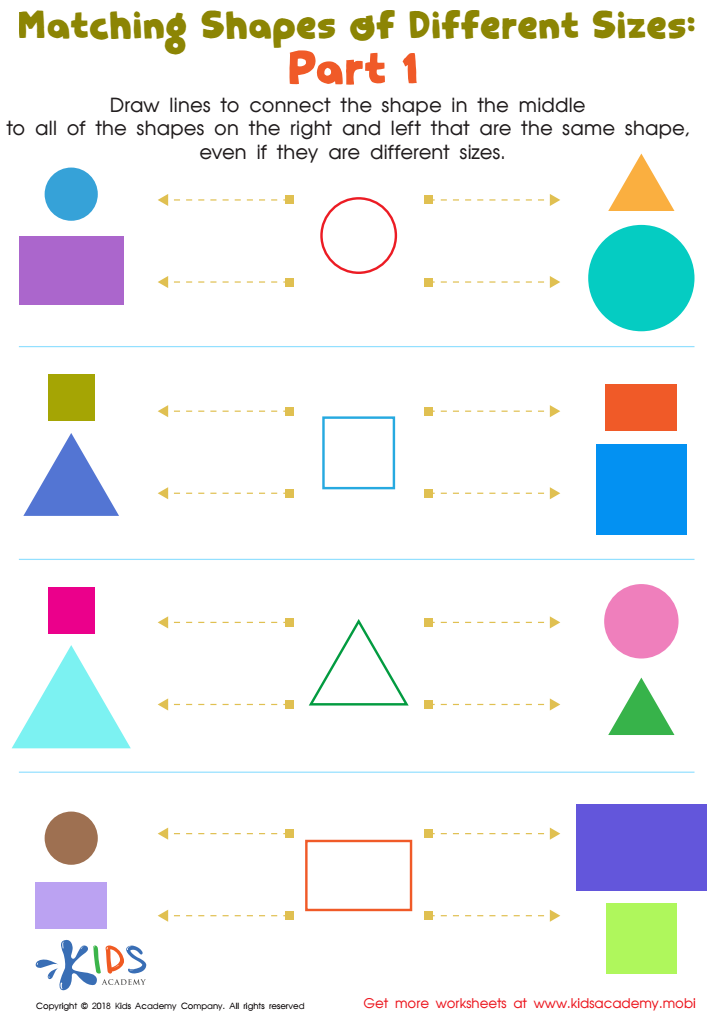
Geometry: part 1 Worksheet
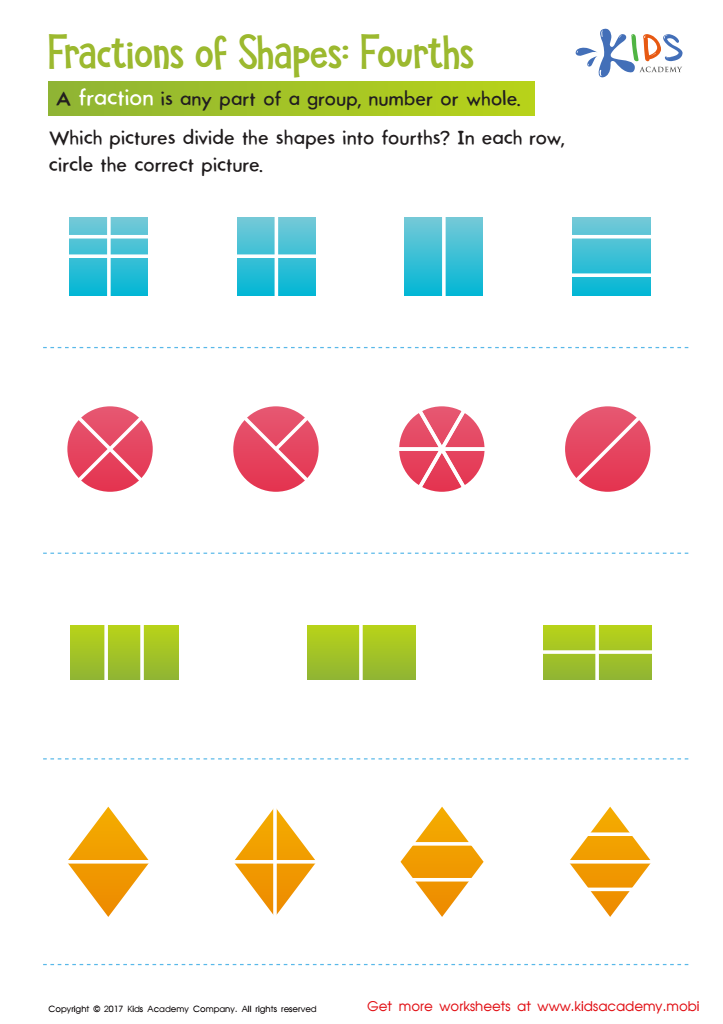
Fractions of Shapes Worksheet








Recognizing shapes is fundamental to early childhood development and plays a crucial role in a child's cognitive, social, and emotional growth. For children aged 3 to 6, engaging with geometry helps them understand the world around them in a structured way. Shapes are everywhere; they serve as the building blocks for recognizing patterns, understanding spatial relationships, and enhancing problem-solving skills.
Parents and teachers should care about this aspect of learning because shape recognition promotes critical thinking and fosters creativity. As children identify, categorize, and compare different shapes, they develop essential mathematical skills that form the foundation for more complex concepts later in life. Furthermore, learning about shapes enhances language skills, as children learn to describe and communicate their observations.
Shape-related activities also encourage fine motor skills through hands-on learning, such as tracing, cutting, and building shapes with various materials. Moreover, working with shapes in group settings fosters collaboration and social interaction, critical components of a child's emotional development. Ultimately, recognizing shapes supports a well-rounded education, equipping young learners with essential skills that will benefit them in school and beyond. Hence, parents and teachers should prioritize shape recognition as a meaningful component of early education.








