Associative learning Math Worksheets for Ages 3-6
3 filtered results
-
From - To
Unlock your child's potential with our "Associative Learning Math Worksheets" designed specifically for ages 3-6. These engaging worksheets introduce fundamental math concepts through fun and interactive activities, helping young learners make connections between numbers and their meanings. With vibrant illustrations and age-appropriate exercises, children will develop critical thinking skills while enhancing their understanding of addition and subtraction. Our materials support early mathematical foundations, fostering a love for learning in a playful environment. Perfect for parents or educators, these worksheets make math accessible and enjoyable. Download now and watch your child thrive in their mathematical journey!
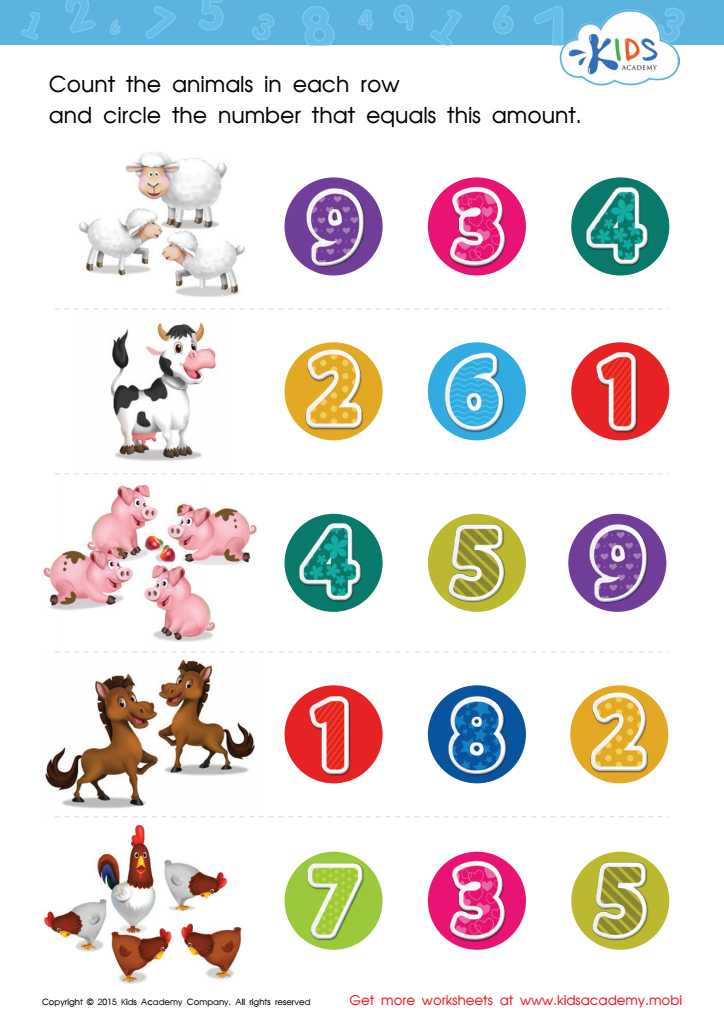
Count and Match 1 – 5 Math Worksheet
 Assign to My Students
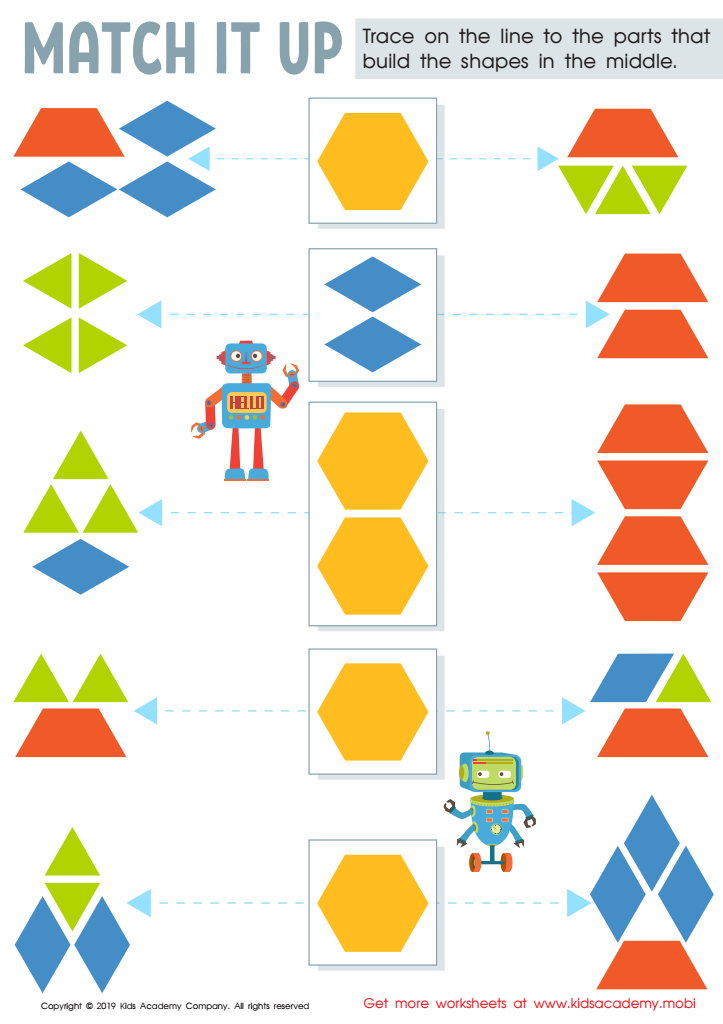
Match It up Worksheet
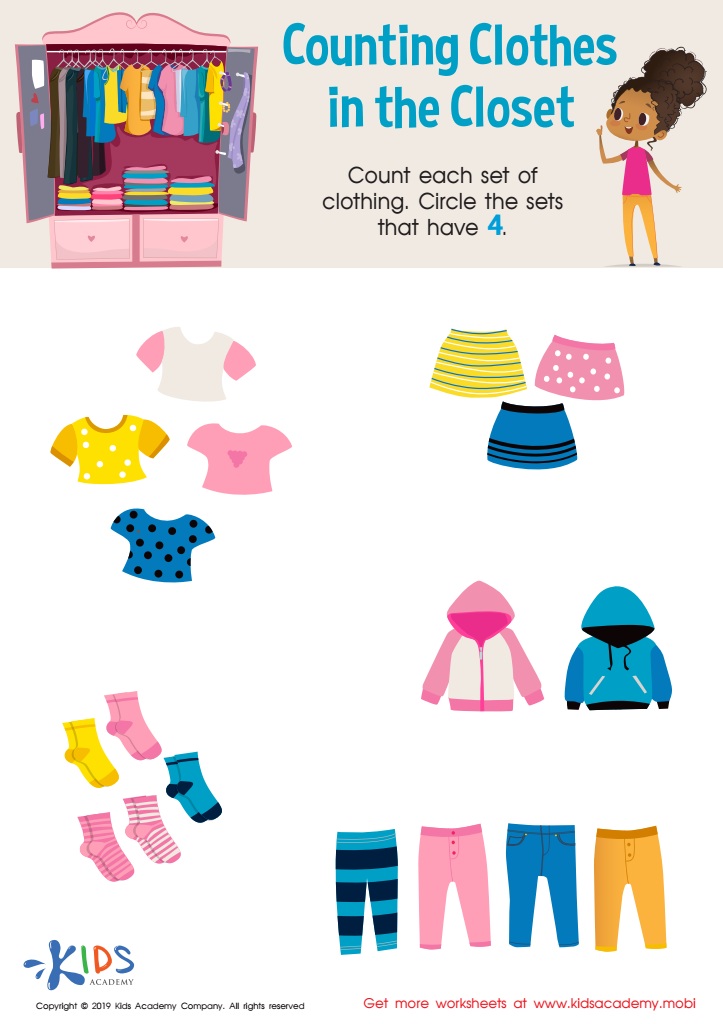
Counting Clothes Worksheet








Associative learning in math for ages 3-6 is crucial because it builds a strong foundation for later mathematical understanding. At this developmental stage, children are naturally curious and eager to explore patterns, relationships, and concepts through play. Associative learning highlights the connections between numbers and operations, helping children to make sense of mathematical concepts in a meaningful way.
By nurturing associative learning, parents and teachers can foster critical thinking skills and problem-solving abilities. For instance, when children learn through real-life examples—such as counting apples, sharing toys, or identifying shapes—they associate math with concrete experiences. This makes abstract concepts less intimidating and more relatable.
Moreover, engaging in associative learning promotes language development, as children learn to articulate their thinking in mathematical terms. Early exposure to these concepts prepares them for more complex math skills in later years, ensuring confidence and competence in their abilities.
Ultimately, investing in associative learning during these formative years cultivates a positive attitude towards math. Parents and teachers should recognize its importance in shaping a child's intellectual growth, enabling them to approach future learning challenges with resilience, creativity, and curiosity.








