Basic geometry knowledge Math Worksheets for Ages 3-6
3 filtered results
-
From - To
Discover our engaging Basic Geometry Knowledge Math Worksheets designed for young learners aged 3-6! These expertly crafted resources introduce essential geometric concepts such as shapes, sizes, and spatial understanding in a fun and interactive way. Each worksheet is filled with vibrant illustrations and hands-on activities that captivate children's attention while reinforcing their learning. Perfect for parents and educators alike, our worksheets help develop critical thinking and problem-solving skills early on. Whether at home or in the classroom, these materials encourage creativity and exploration in geometry, laying a strong foundation for future math success. Download your worksheets today and inspire a love for learning!
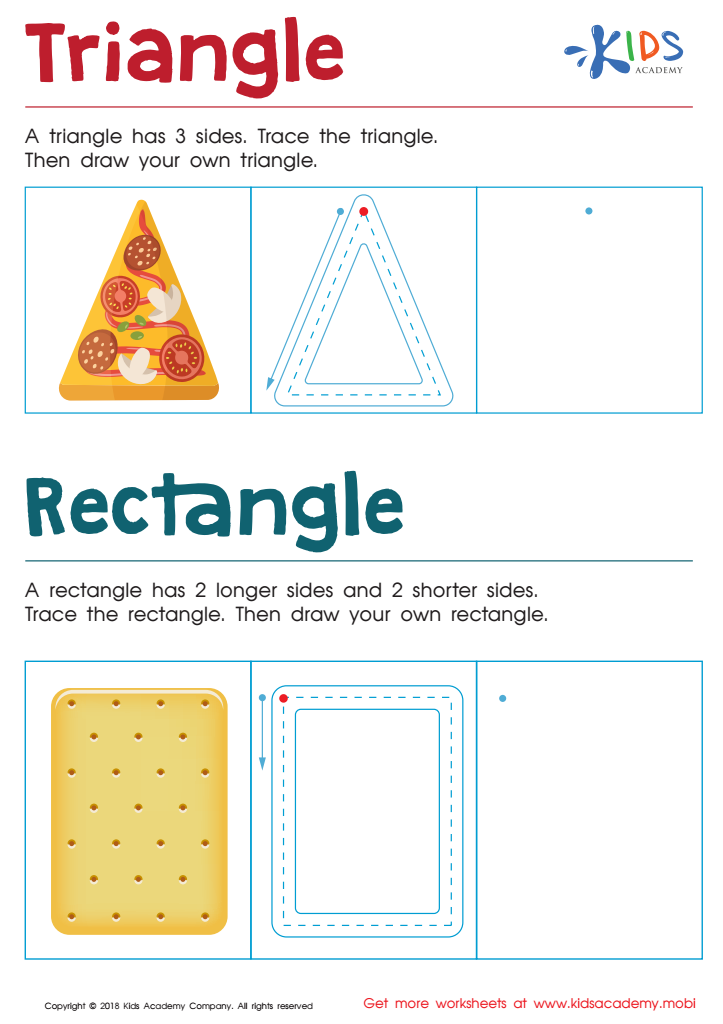
Triangle Rectangle Worksheet
 Assign to My Students
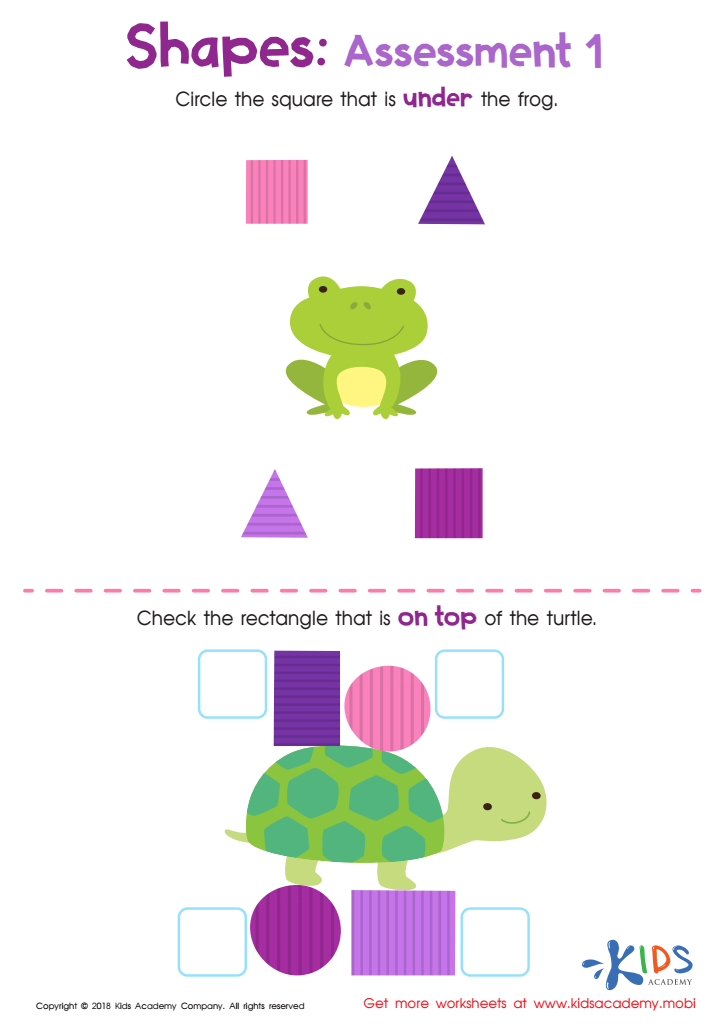
Geometry – Assessment 1 Worksheet
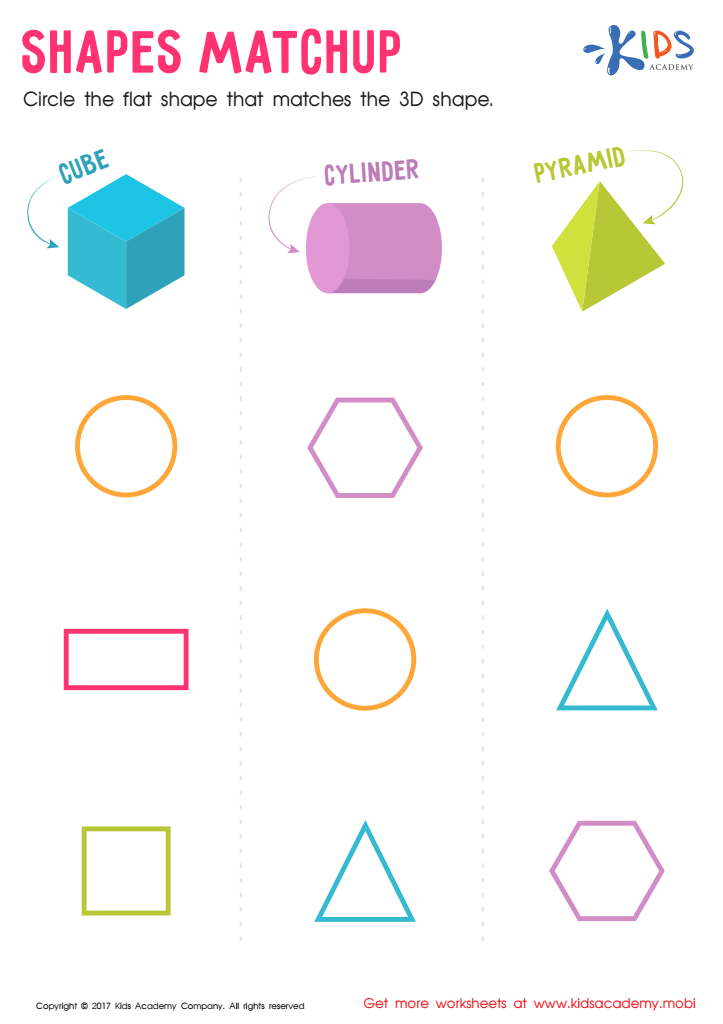
Shapes Matchup Worksheet








Basic geometry knowledge for children ages 3-6 is essential for several reasons, making it crucial for parents and teachers to prioritize this area of math education. At this young age, children are naturally curious and eager to explore their surroundings. Introducing geometric concepts such as shapes, sizes, and spatial relationships fosters their cognitive development and enhances their observation skills.
Geometry is not just an abstract concept; it plays a vital role in everyday life. Familiarity with basic shapes helps children make sense of the world around them, from recognizing patterns to describing objects accurately. Furthermore, geometry lays the foundation for more advanced math skills in later years, such as spatial reasoning and critical thinking.
Engaging children in fun activities— like building with blocks, drawing shapes, or playing with shape-sorting toys—promotes not only mathematical understanding but also fine motor skills and creativity.
Moreover, geometric concepts encourage problem-solving skills and help children understand the relationship between objects, making them more adept at navigating their environments. Overall, emphasizing basic geometry knowledge in early childhood education builds confidence and equips children with essential tools for lifelong learning and success in math and beyond.








