Comparison Skills Math Worksheets for Ages 3-6
6 filtered results
-
From - To
Introduce your young learners to fundamental math concepts with our "Comparison Skills Math Worksheets for Ages 3-6." These engaging worksheets are designed to help children build essential cognitive skills by identifying similarities and differences, comparing quantities, and understanding relationships. With vibrant illustrations and age-appropriate activities, kids will develop important comparison skills while having fun. Perfect for classroom use or at-home practice, these worksheets support early math proficiency and set the foundation for future learning. Help your child gain confidence and enjoy learning with our expertly crafted comparison skills worksheets from Kids Academy.
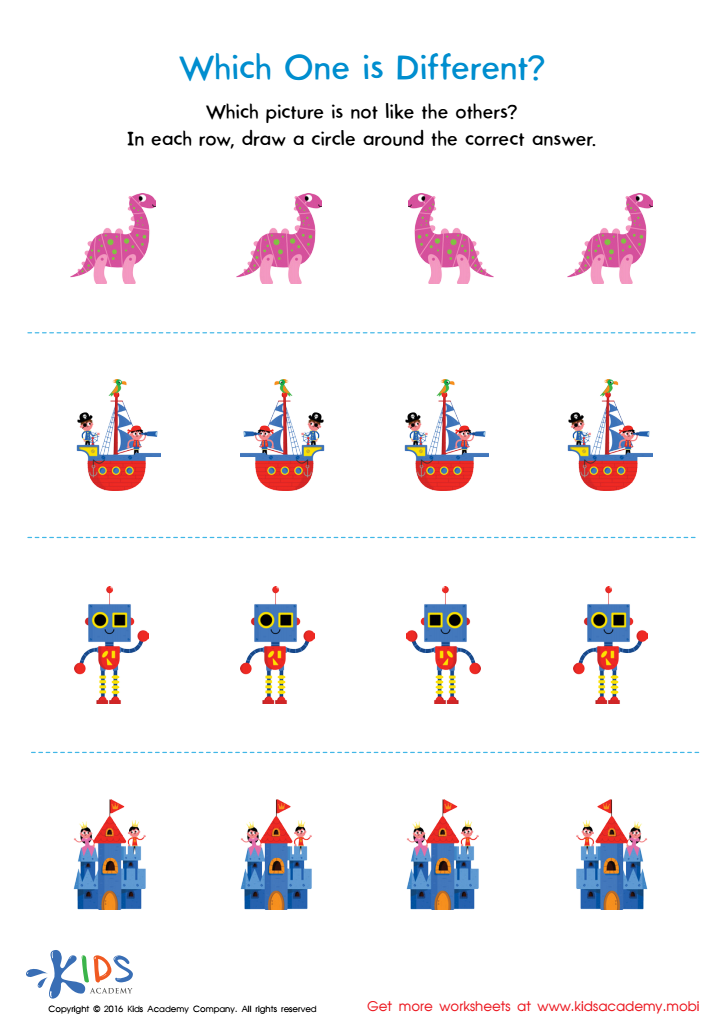
Which One Is Different Worksheet
 Assign to My Students
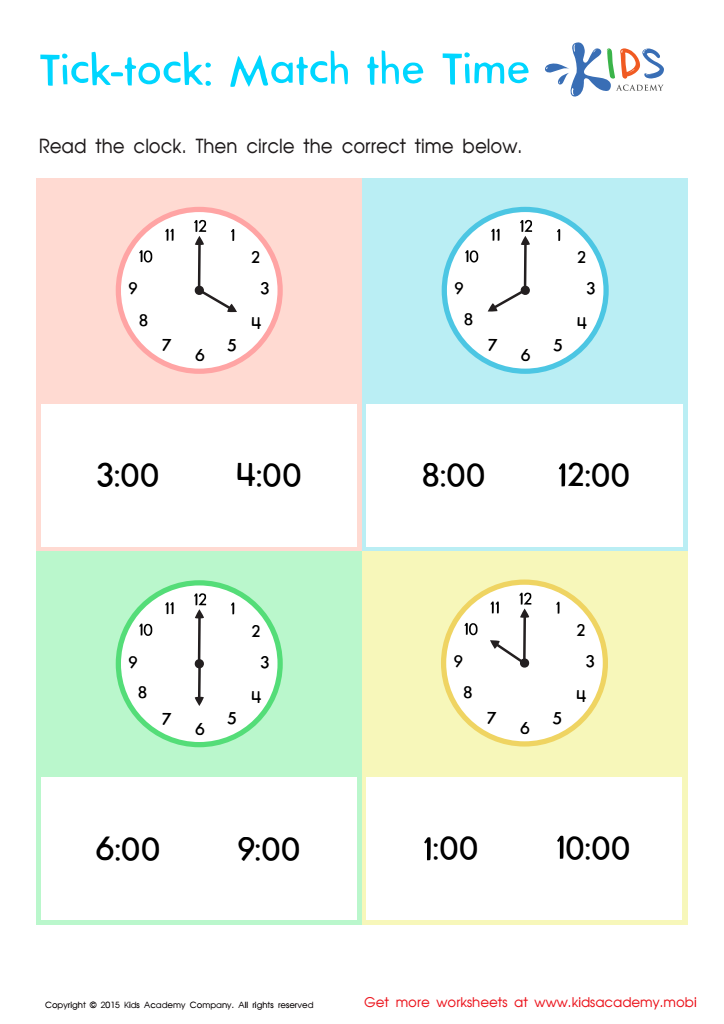
Telling The Time Worksheet: Part 4
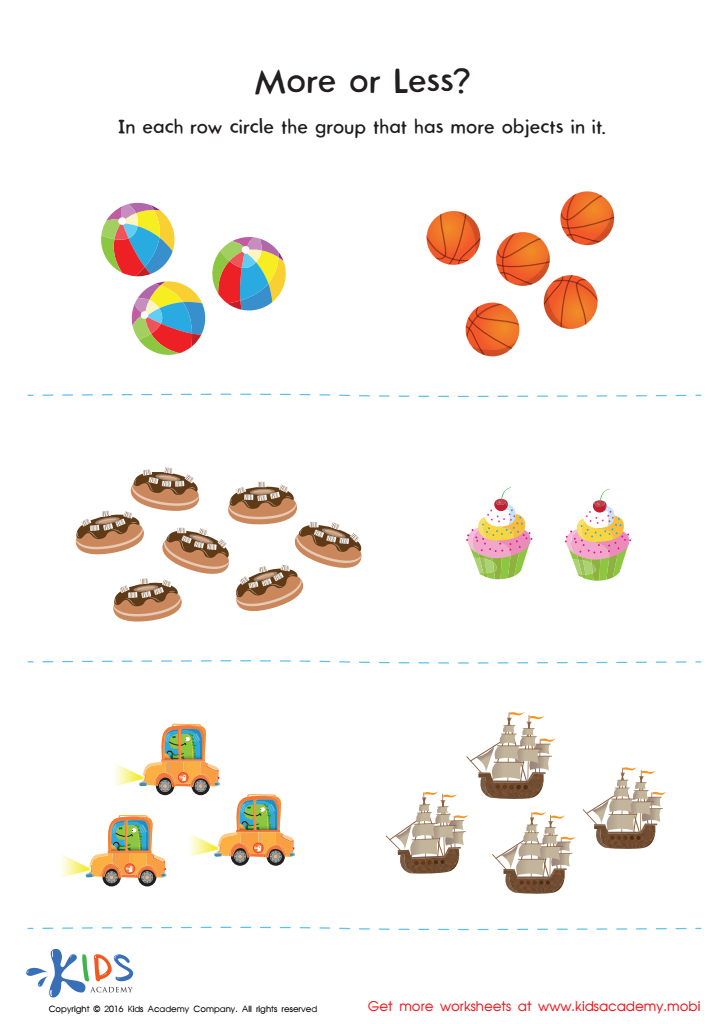
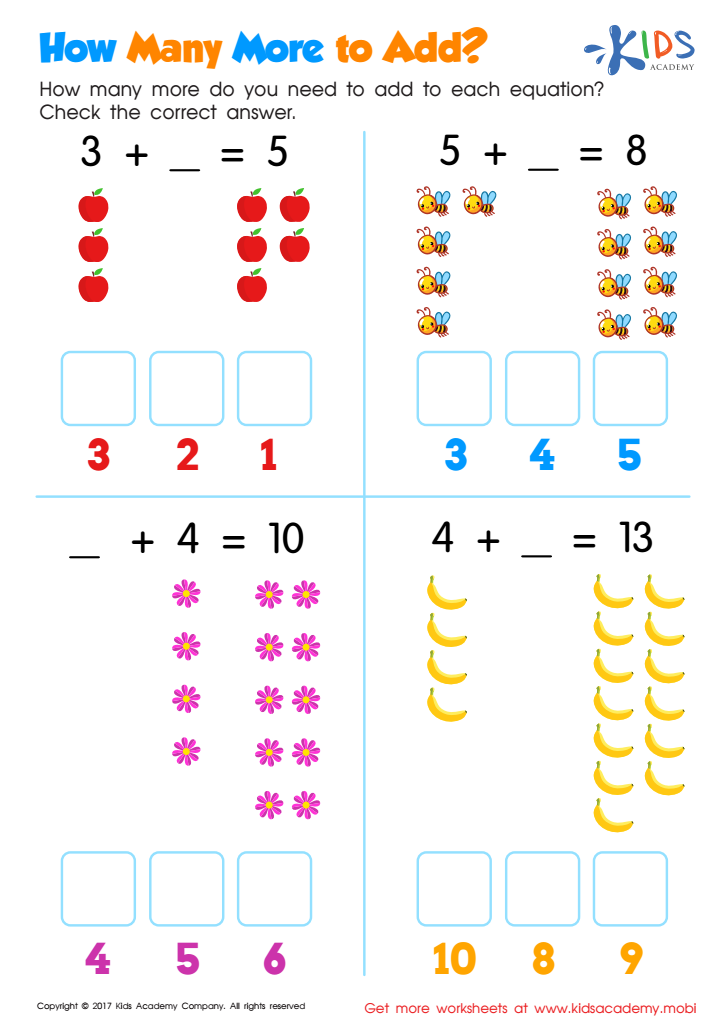
How Many More to Add Worksheet
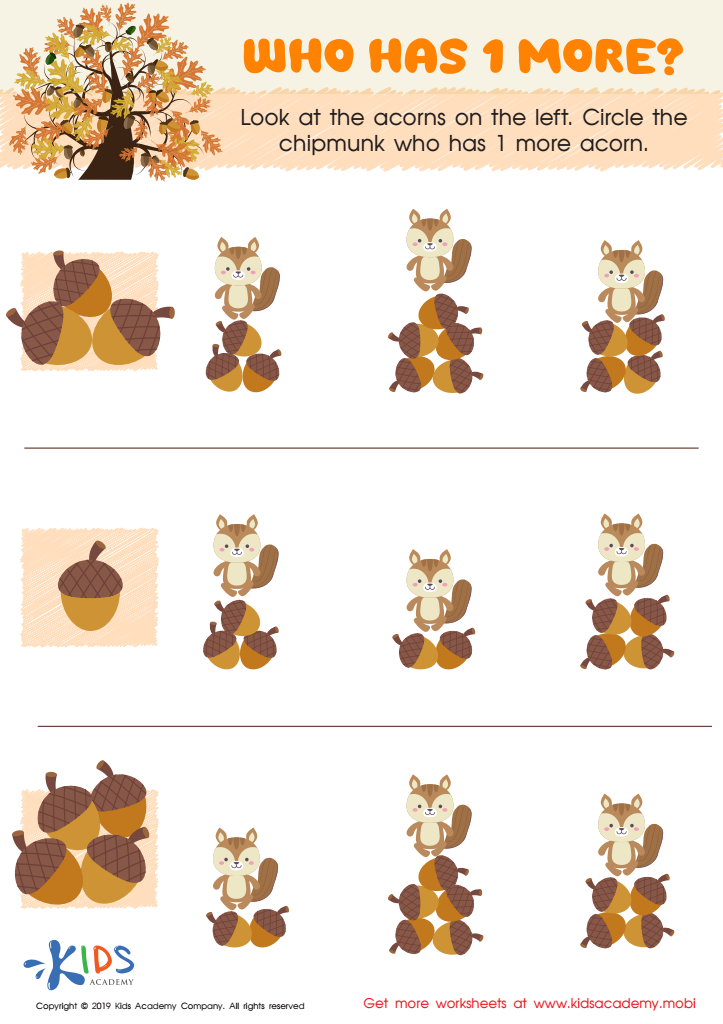
Who Has 1 More? Worksheet
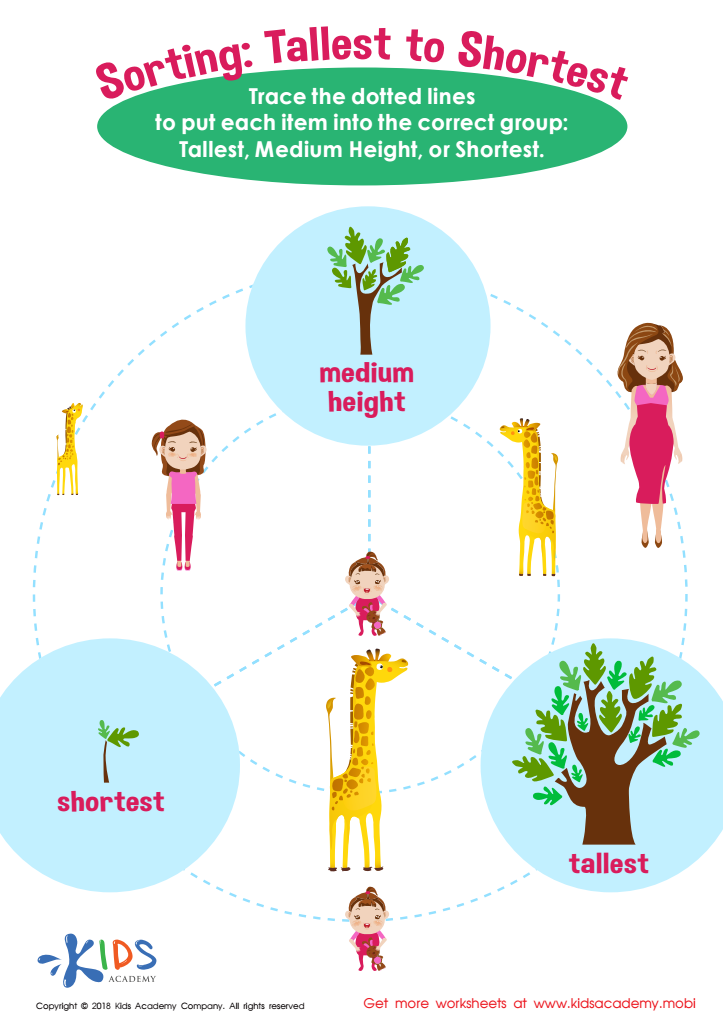
Sorting: Tallest to Shortest Worksheet








Comparison skills in math for children aged 3-6 lay the foundational groundwork necessary for future academic success. Learning to compare objects, quantities, and numbers helps young children develop critical logical and problem-solving skills. For instance, when a child can identify which of two groups of toys has more or fewer items, they are practicing basic concepts of measurement and quantity analysis. These skills are directly relevant to later mathematical concepts like addition, subtraction, and number sequencing.
Parents and teachers should prioritize these skills because they also foster essential cognitive growth. By comparing shapes, sizes, and amounts, children enhance their observational abilities and attention to detail. This type of thinking translates to other areas, like reading comprehension, where children will draw comparisons within stories or between separate texts.
Moreover, comparison skills are fundamental to making informed decisions, a crucial life skill. For instance, comparing weights teaches basic physical properties of objects, while comparing lengths can help in everyday situations like picking the right-sized clothing or furniture.
During these formative years, children absorb new information rapidly. Introducing them to comparison skills through engaging activities like play, interactive games, and hands-on experiments ensures that these mathematical concepts become deeply ingrained, forming a robust educational foundation they will build upon in future learning.








