
Environmental awareness Math Worksheets for Ages 3-6
3 filtered results
Difficulty Level
Grade
Age
-
From - To
Subject
Activity
Standards
Nurture young minds and inspire ecological stewardship with our Environmental Awareness Math Worksheets designed for children ages 3-6 from Kids Academy. Each worksheet uniquely combines essential math skills with fundamental environmental concepts, simplifying complex ideas into engaging, age-appropriate activities. Your child will practice counting, sorting, comparing, and more while learning about recycling, wildlife, and conservation. These worksheets promote critical thinking, environmental responsibility, and a love for nature, setting the stage for lifelong eco-friendly habits. Make learning math fun and meaningful by integrating foundational math skills with vital lessons on protecting our planet. Start a green learning journey today!
Favorites
With answer key
Interactive
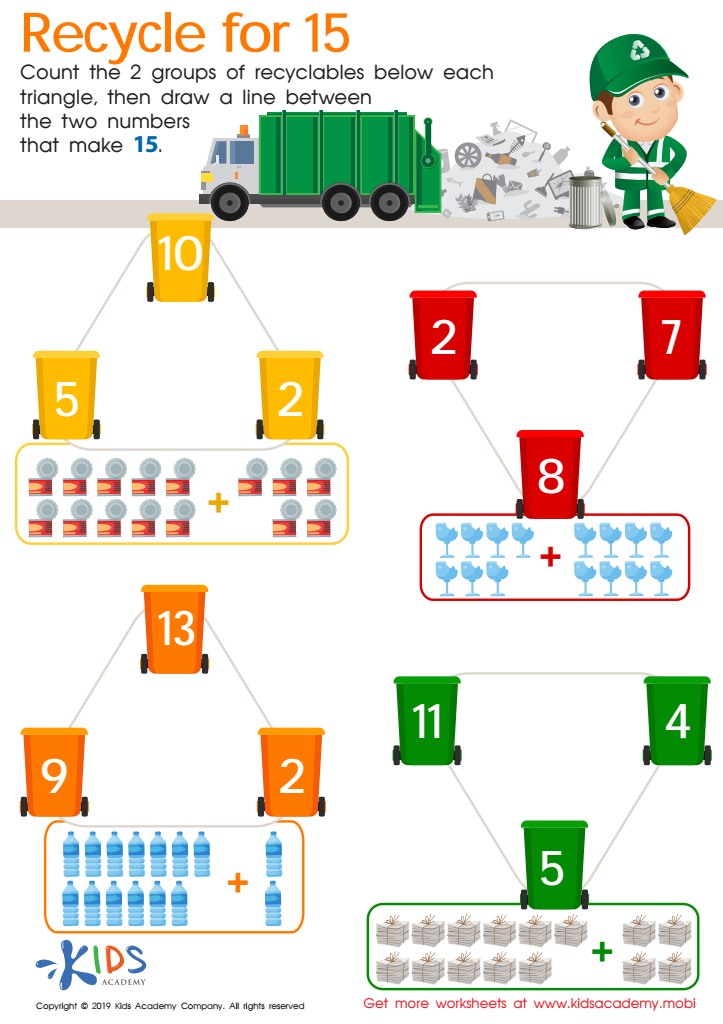
Recycle for 15 Worksheet
Recycle to help the planet! Have students count the recyclables and draw a line between the two numbers that make 15. This will help them understand the importance of recycling.
 Assign to My Students
Recycle for 15 Worksheet
Worksheet
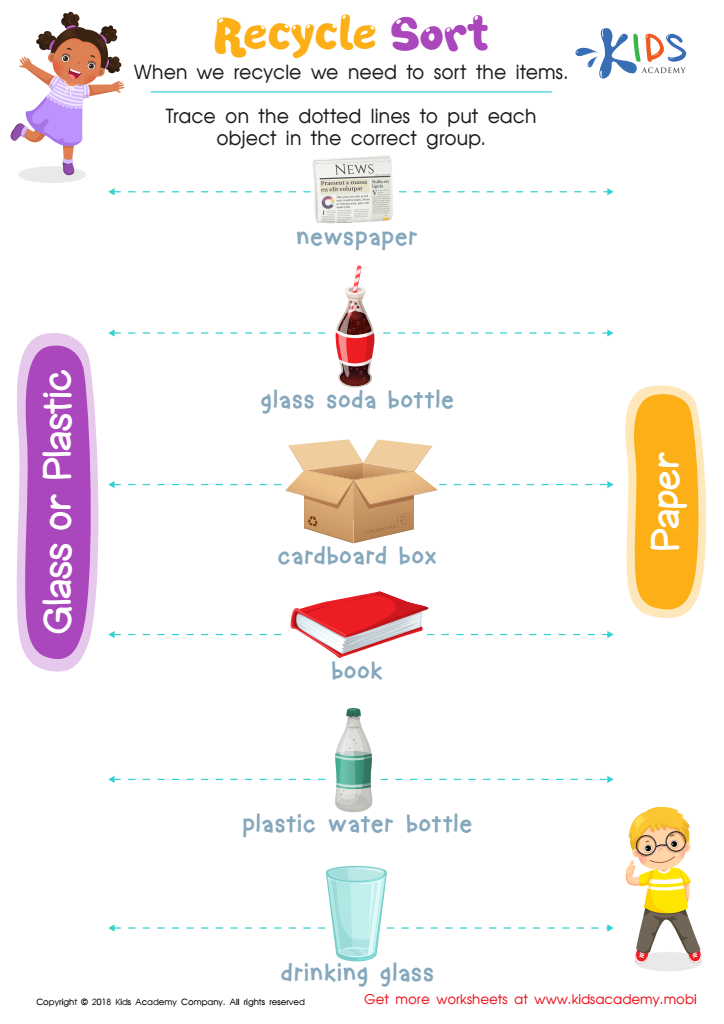
Recycle Sort Worksheet
Help your children become eco-warriors while they develop critical thinking and fine motor skills with this free downloadable worksheet! Engaging pictures and matching words, plus fun and bright colors, will have kids analyzing and sorting recyclables into paper or glass/plastic groups using traceable lines.
Recycle Sort Worksheet
Worksheet
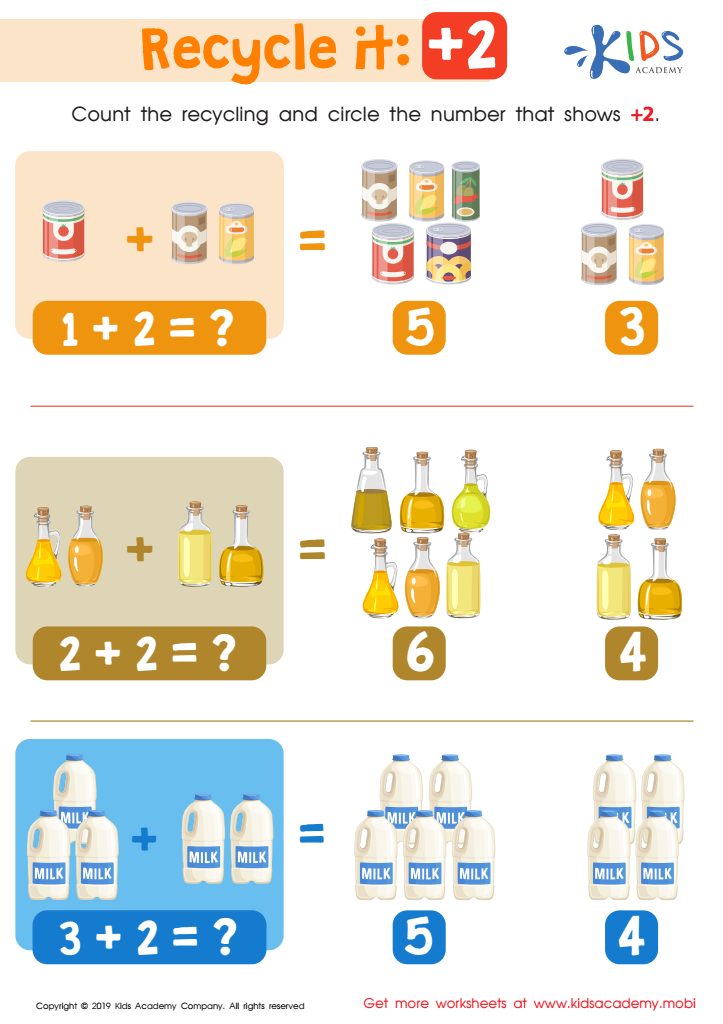
Recycle It: +2 Worksheet
Your kindergartners likely count everything they see, which is great for practice. Give them simple exercises such as in this worksheet to stimulate their minds. Ask them to count the recycling cans and then circle the number that shows +2.
Recycle It: +2 Worksheet
Worksheet
Join Kids Academy for Free
Who is primarily going to use this learning content?






.jpg)
Environmental awareness in early childhood, including ages 3-6, is crucial as it sets the foundation for responsible and informed future citizens. Integrating environmental themes with early math skills benefits both environmental understanding and cognitive development. When children engage with concepts like counting leaves, sorting recyclables, or measuring water usage, they not only practice math skills but also develop an appreciation for the environment.
Incorporating environmental awareness at this formative stage nurtures curiosity and respect for nature. When combined with math activities, it fosters critical thinking and problem-solving abilities. For instance, asking children to count how many trees are in a park can spark discussions about the importance of trees, leading to a broader understanding of ecological balance.
For parents and teachers, promoting this dual focus means equipping children with tools to understand and address future environmental challenges. Activities might include counting objects found in nature, classifying items for recycling, or even simple gardening tasks that incorporate measurement and comparison.
Developing these skills early has long-term benefits. It instills values of sustainability and reinforces the importance of personal responsibility. In essence, nurturing environmental awareness through math for young learners is an investment in a healthier planet and a robust educational foundation, reinforcing the interconnectedness of math skills and lifelong environmental stewardship.








