Identifying objects Math Worksheets for Ages 3-6
3 filtered results
-
From - To
Introducing our "Identifying Objects Math Worksheets," designed for children aged 3-6! These engaging worksheets help young learners develop essential skills in recognizing and distinguishing various objects. Our fun and interactive exercises encourage cognitive development and enhance observation abilities through vibrant illustrations and age-appropriate activities. Each worksheet reinforces key concepts in math while introducing valuable vocabulary related to everyday items. Perfect for homeschoolers and classroom settings, these resources ensure an enjoyable learning experience. Download our identifying objects worksheets today and empower your child to explore the world around them while building a strong foundation in math!
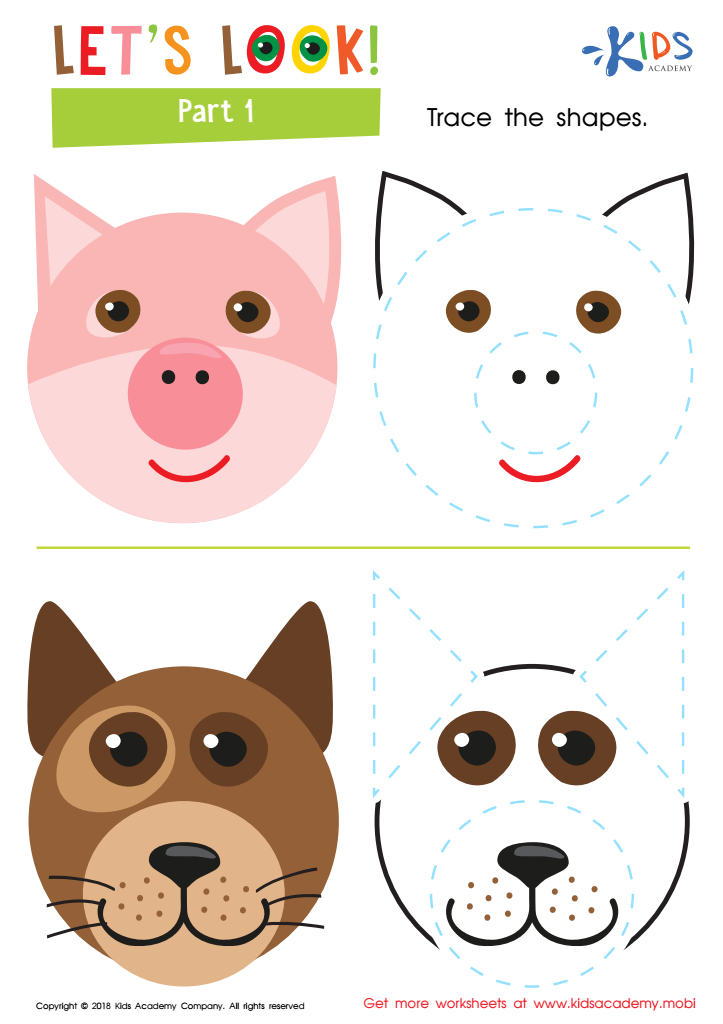
Let's Look! Part 1 Worksheet
 Assign to My Students
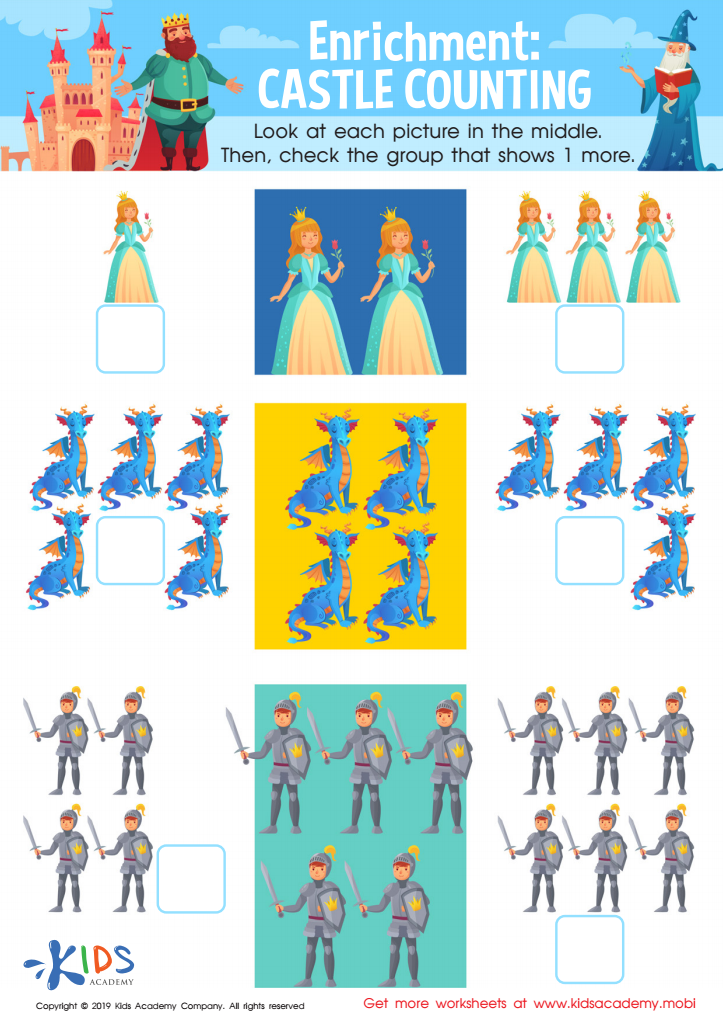
Enrichment: Castle Counting Worksheet
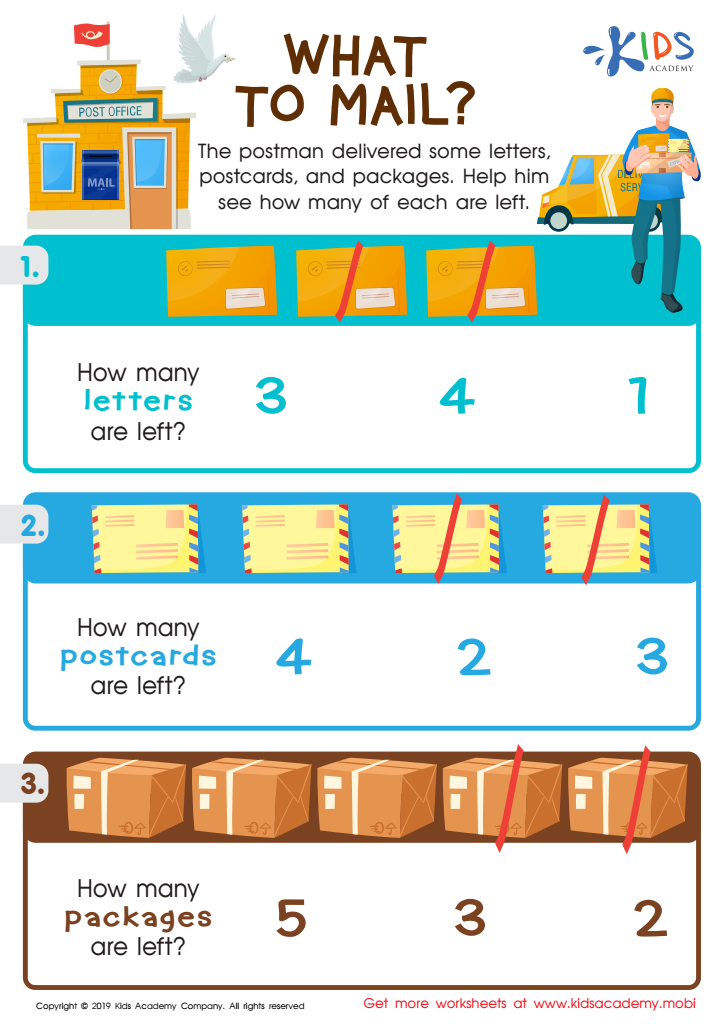
What to Mail? Worksheet







Identifying objects in math is a foundational skill for children aged 3 to 6 that significantly influences their cognitive development and future academic success. This early understanding of spatial relationships, shapes, and quantities lays the groundwork for more complex mathematical concepts. When parents and teachers emphasize object identification, they foster critical thinking and analytical skills that children will use throughout their lives.
At this age, children learn best through play and hands-on experiences. Engaging them in activities like sorting toys, counting blocks, or identifying shapes supports curiosity and reinforces language development. As they categorize objects, children inherently develop foundational skills in classification, comparisons, and problem-solving.
Moreover, recognizing and naming objects enhances children’s observational skills and boosts their confidence, as they start to make connections between their environment and math. As parents and teachers create an environment rich in opportunities for exploration, they empower children to intuitively understand the world around them. This early math experience not only enhances cognitive abilities but also promotes social interaction and collaboration through play, establishing a positive attitude towards learning vital for their ongoing educational journey. In essence, prioritizing the identification of objects sets the stage for lifelong love of learning and confidence in math skills.








