Sea creatures identification Math Worksheets for Ages 3-6
3 filtered results
-
From - To
Introducing our Sea Creatures Identification Math Worksheets for Ages 3-6! Dive into a fun, educational adventure where young learners can boost their math skills through engaging sea-themed activities. These printable worksheets help children identify and count various sea creatures, fostering early math concepts such as numbers, patterns, and shapes. Perfect for both classroom and home use, our colorful and captivating designs ensure that learning feels like play. Equip your child with foundational skills in a delightful, oceanic setting. Explore now and make waves in your child’s mathematical journey!
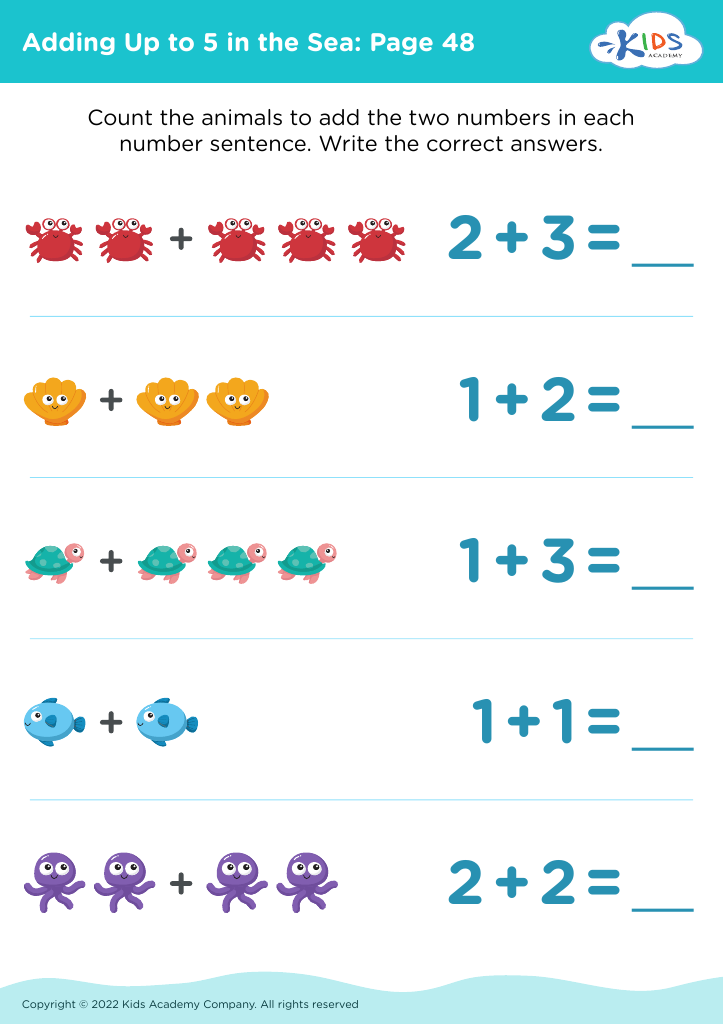
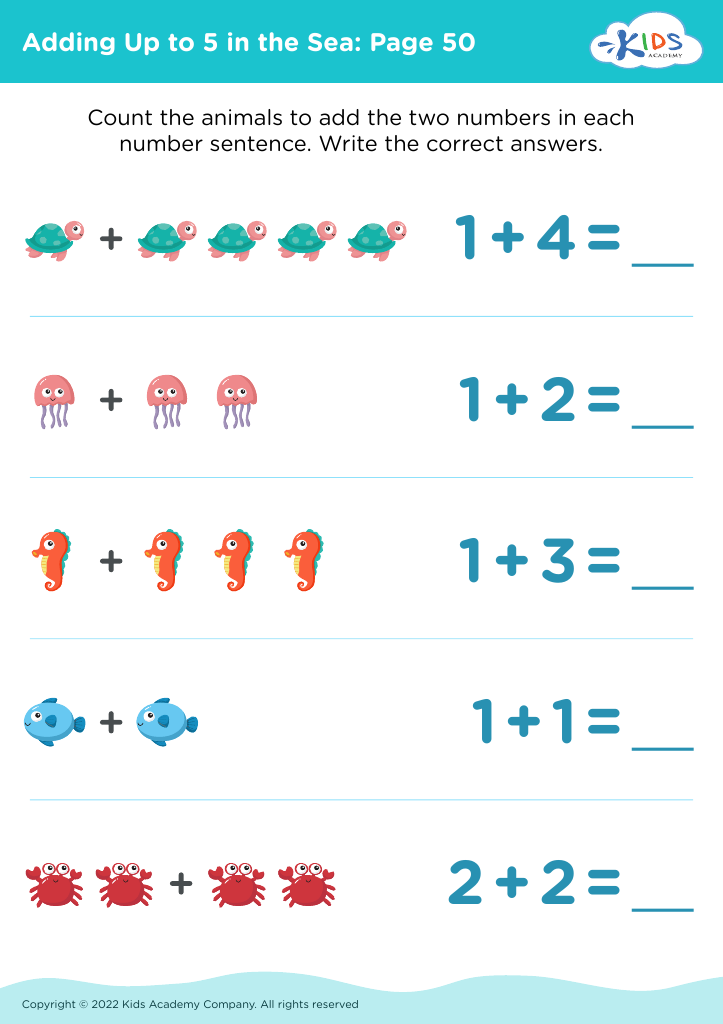
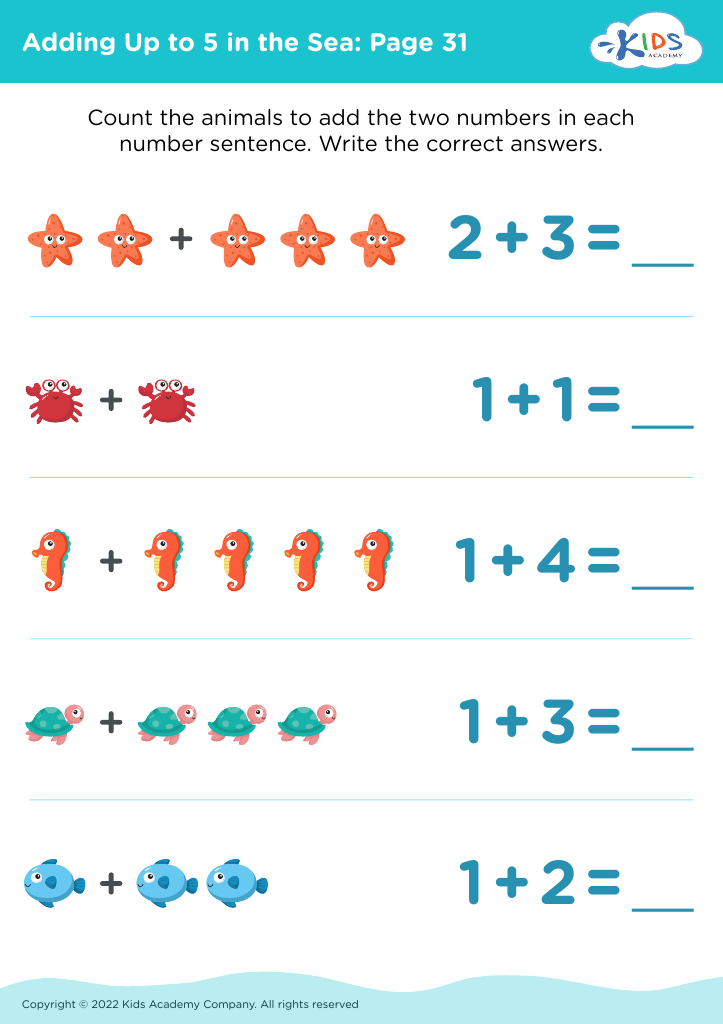





Introducing sea creature identification and math to children aged 3-6 can be a delightful and educational experience that has significant benefits for their development. Parents and teachers should care about this for several key reasons.
Firstly, it taps into children's natural curiosity about the world around them. The ocean is a fascinating place full of diverse and colorful creatures that captivate young minds. Using sea creatures as a theme makes learning fun and engaging, which can foster a love of learning from an early age.
Secondly, it integrates key educational domains. Identifying sea creatures enhances children's observational skills and vocabulary. They learn new words and concepts, which builds their language and communication abilities. Math concepts like counting, sorting, and comparing sizes, numbers, and patterns can be naturally incorporated into activities involving sea creatures, making abstract concepts more tangible and understandable.
Thirdly, such activities promote developmental skills through interactive play. Children improve fine motor skills by drawing and manipulating sea creature shapes, enhance cognitive skills through memory and matching games, and develop social skills by working in groups or pairs during these activities.
By blending sea creature identification with math exercises, parents and teachers provide a multidimensional learning experience that nurtures curiosity, introduces critical educational concepts, and supports holistic child development.








