Understanding Math Concepts Math Worksheets for Ages 3-6
3 filtered results
-
From - To
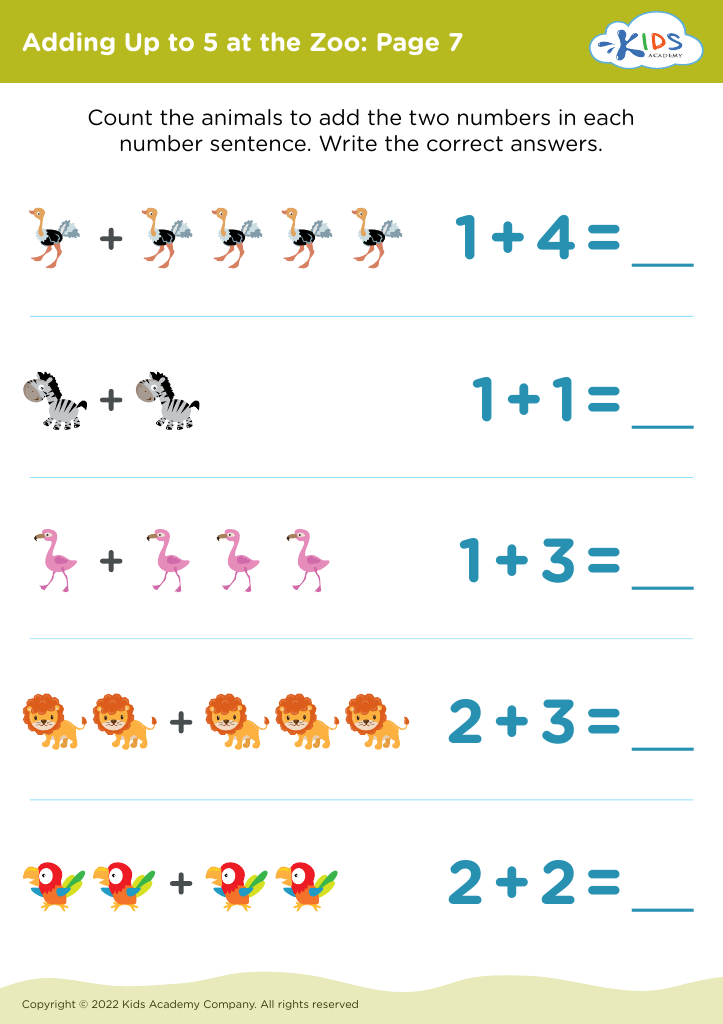
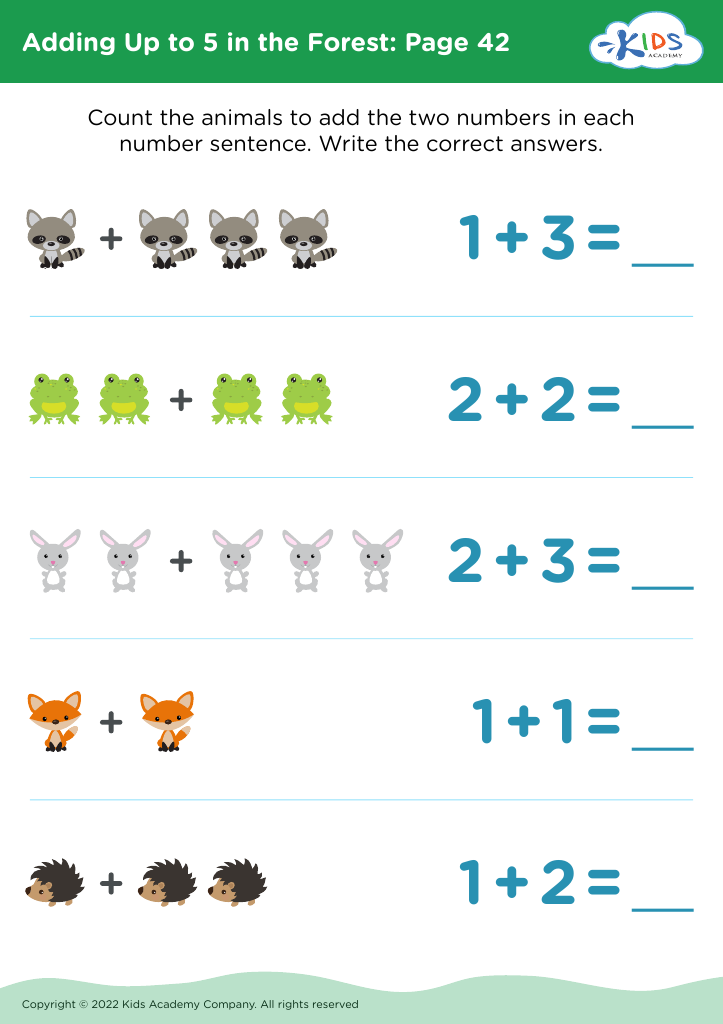
Discover "Understanding Math Concepts Math Worksheets for Ages 3-6," designed to ignite a love for numbers and shapes in young learners. Our engaging worksheets foster foundational math skills through interactive activities that introduce counting, basic addition and subtraction, shapes, and patterns. Tailored specifically for preschool and kindergarten learners, these worksheets promote essential cognitive development while making learning fun. Our user-friendly resources encourage independent exploration, putting a joyful spin on early math education. Equip your child with the tools they need to succeed in math, while boosting confidence and critical thinking. Explore our collection today and watch your child's math skills soar!
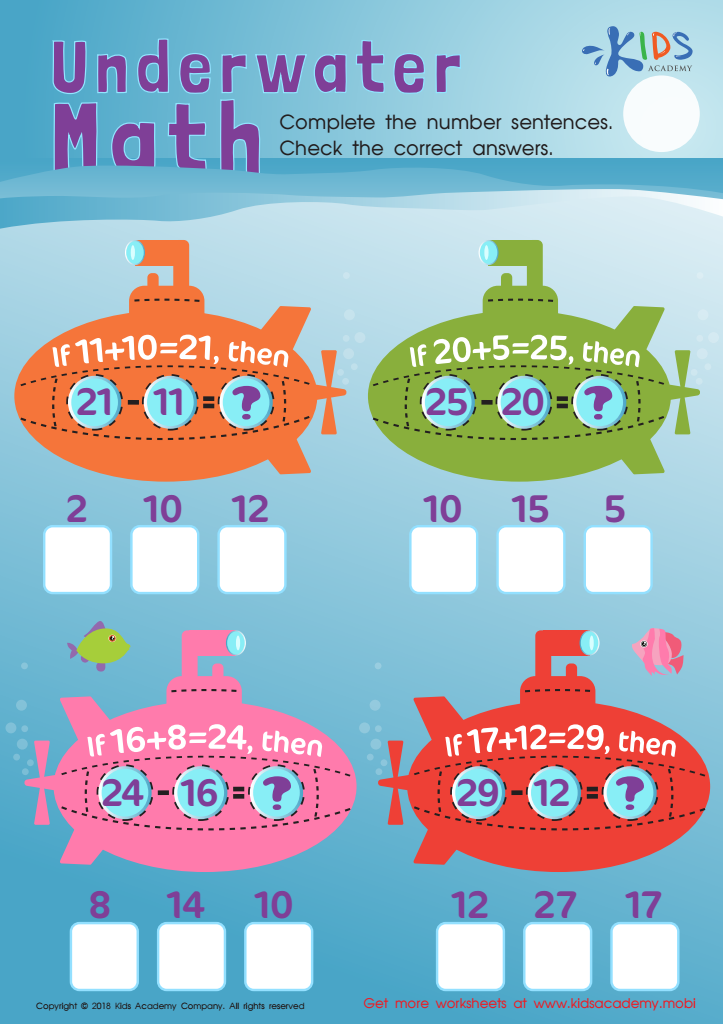
Addition and Subtraction: Underwater Math Worksheet
 Assign to My Students








Understanding math concepts for ages 3-6 is crucial for both parents and teachers because this foundational stage sets the tone for a child’s future learning and confidence in mathematics. During these early years, children develop critical cognitive skills through playful, hands-on learning experiences that can enhance their problem-solving abilities and analytical thinking.
At this age, children progress from basic counting and number recognition to understanding shapes, patterns, simple addition and subtraction, and measurement. Grasping these concepts fosters a mathematical mindset that allows them to connect abstract ideas with real-world applications, making math more relatable and less intimidating.
Moreover, early exposure to math boosts overall academic performance. Studies have shown that children who have a solid foundation in math during preschool are more likely to excel in mathematics in later grades. Researchers also note the link between early math skills and later success in various careers.
Beyond academics, nurturing math understanding helps build critical life skills like logical reasoning, adaptability, and spatial awareness. For parents and teachers, supporting this foundational learning is essential, emphasizing the importance of interactive, engaging, and appropriate math experiences that inspire a lifelong love for the subject.








