Understanding measurement units Math Worksheets for Ages 3-6
3 filtered results
-
From - To
Introduce your child to the world of measurement with our "Understanding Measurement Units Math Worksheets for Ages 3-6." Designed to cultivate essential skills, our engaging worksheets help young learners grasp concepts of length, weight, and volume in a fun and interactive way. Perfect for preschool and kindergarten students, these activities use colorful illustrations and simple exercises to teach the basics of measurement units. Watch as your child develops confidence in their math abilities, while also building a strong foundation for future learning. Ideal for both classroom use and home practice, these worksheets make learning math enjoyable and effective!
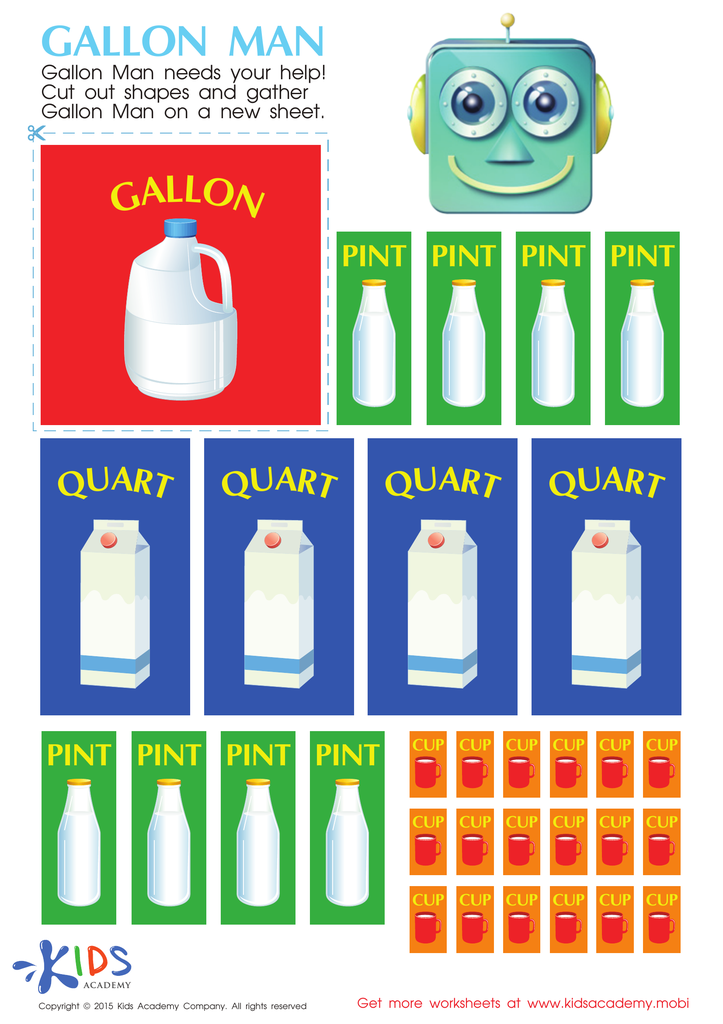
Cups, Pints and Quarts With Gallon Man Worksheet
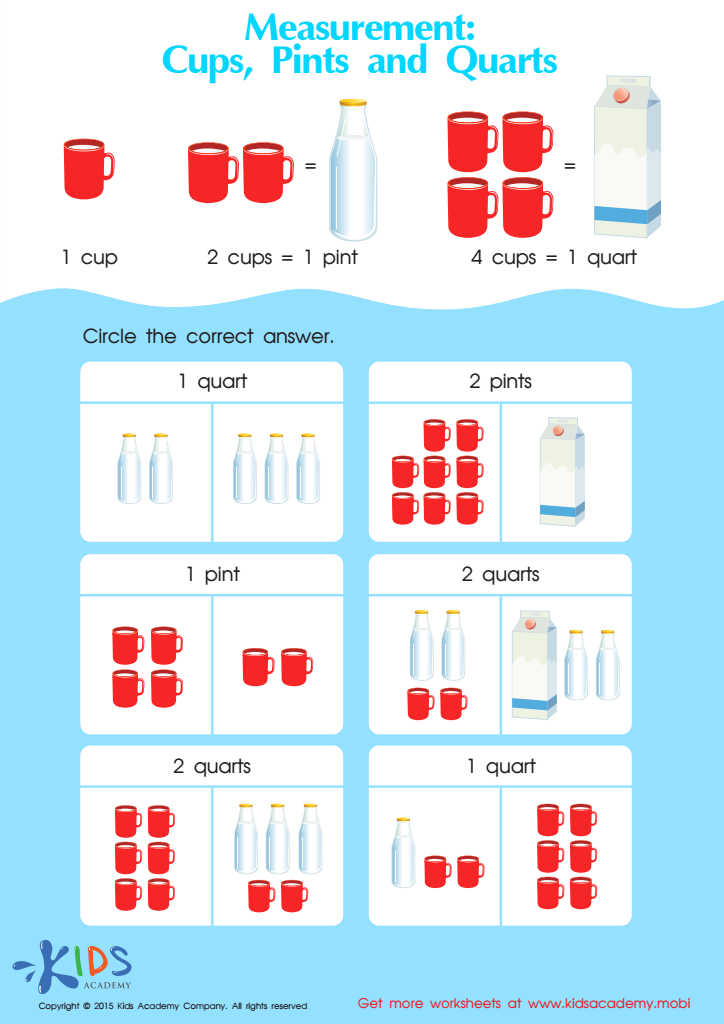
Cups, Pints and Quarts Worksheet
 Assign to My Students
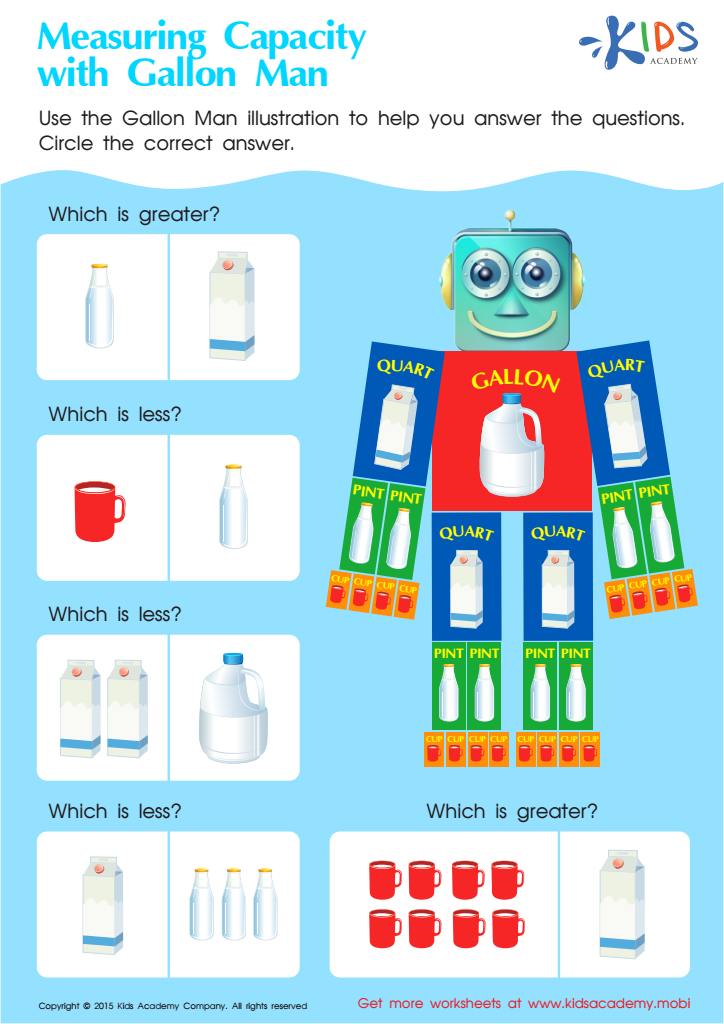
Measurement: Measuring Capacity with Gallon Man Worksheet






Understanding measurement units is fundamental for young children aged 3-6 as it lays the groundwork for essential life skills and future academic success. At this developmental stage, kids are naturally curious about the world around them, and mastering measurement units helps channel this curiosity into meaningful learning experiences.
First, grasping basic measurement concepts, such as length, weight, and volume, nurtures cognitive development. It encourages logical thinking and problem-solving, which are crucial skills for overall intellectual growth. For instance, determining how many cups of water a container can hold fosters critical-thinking abilities and enhances spatial awareness.
Moreover, early exposure to measurement units supports numerical literacy. When children measure objects, they practice counting, comparing, and making sense of numbers in a practical context. This tangible interaction with numbers makes abstract math concepts more relatable and understandable, forming a strong mathematical foundation.
In addition, learning about measurement influences daily life skills. Children better appreciate concepts of size, quantity, and time, aiding in tasks like setting tables, cooking, and even predicting how long activities or trips will take.
Ultimately, both parents and teachers benefit from prioritizing measurement education as it supports comprehensive development. It empowers children with skills that transcend the classroom, contributing to their holistic growth and readiness for future academic challenges.








