
Visual interpretation Math Worksheets for Ages 3-6
3 filtered results
Difficulty Level
Grade
Age
-
From - To
Subject
Activity
Standards
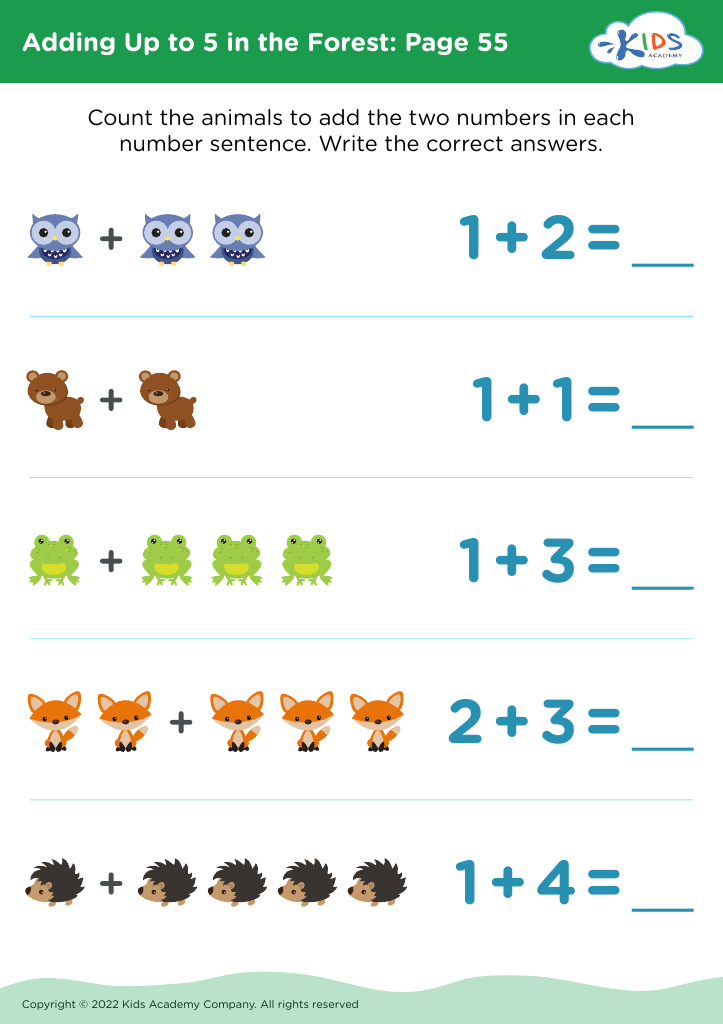
Discover the perfect tool to build your child's math foundation with our Visual Interpretation Math Worksheets for Ages 3-6! Carefully designed to engage young learners, these colorful, enticing printable worksheets help children develop essential mathematical skills through fun visual exercises. Kids will practice pattern recognition, shape identification, and spatial reasoning, bringing math concepts to life in a playful and interactive way. Ensure your child's success in early math by providing them with these enjoyable learning activities that foster curiosity and creativity. Set the stage for a lifetime of love for learning math with Kids Academy's expertly crafted resources.
Favorites
With answer key
Interactive
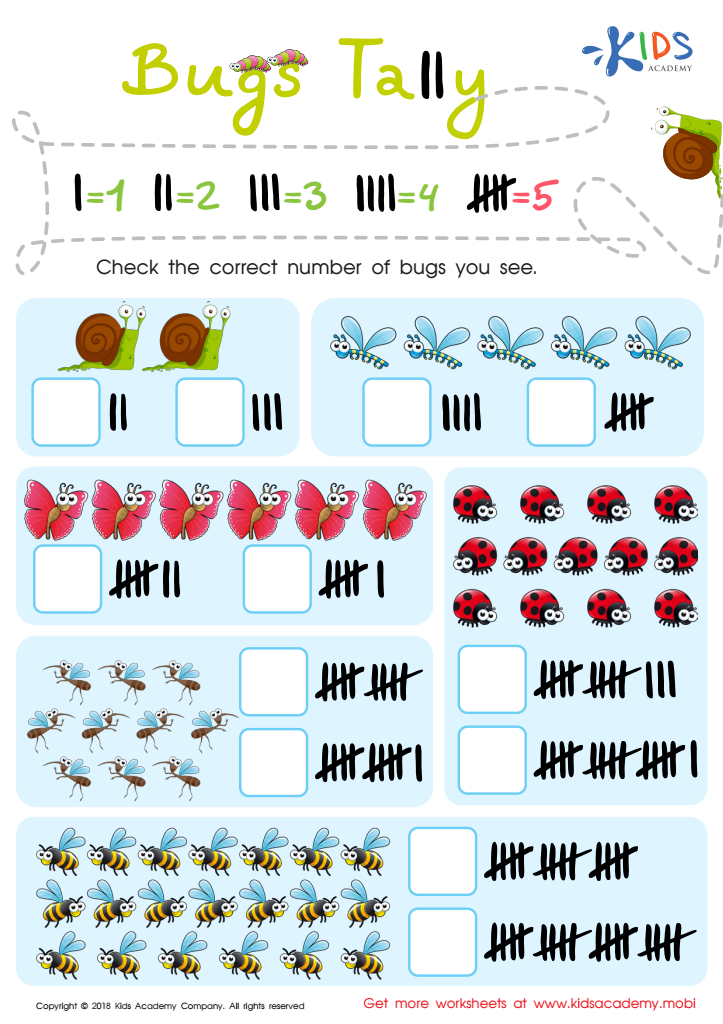
Bugs Tally Worksheet
This fun worksheet uses friendly bugs to help young mathematicians learn numbers and tally marks. They'll gain real-world skills to help with adding, subtracting and counting. Representations will solidify number reasoning, aiding with game playing and more.
 Assign to My Students
Bugs Tally Worksheet
Worksheet
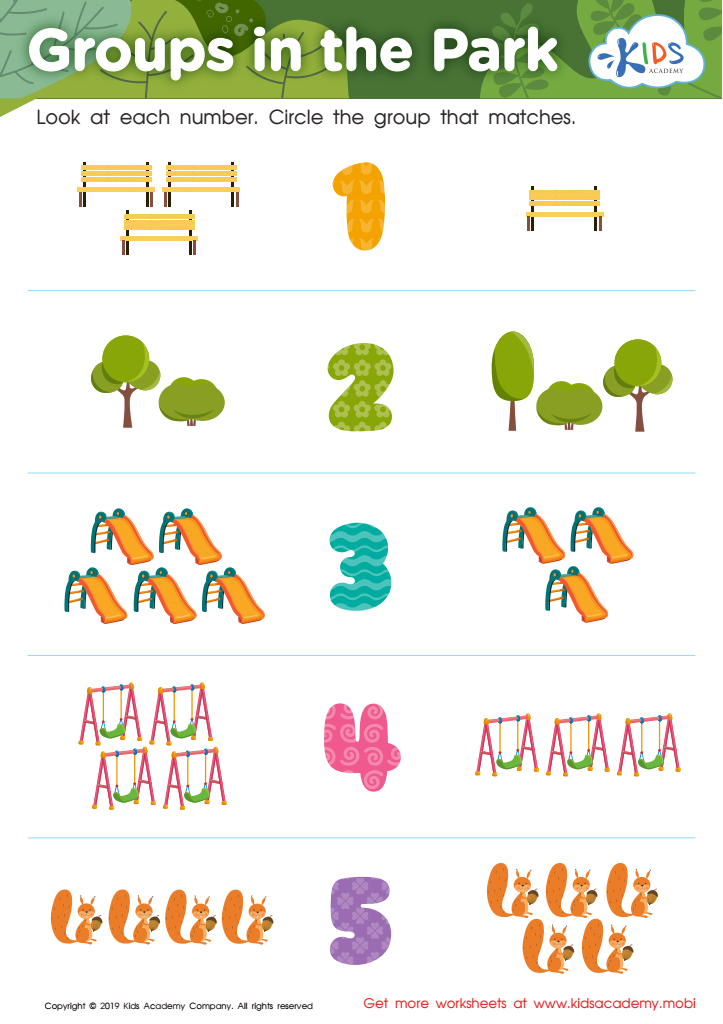
Groups in the Park Worksheet
Take your kids to the park and let them enjoy the freedom to play! Ask them what they love doing most and study a picture together - name items and count objects in the sets, then circle the correct one. It's a fun way for your kids to learn.
Groups in the Park Worksheet
Worksheet
Join Kids Academy for Free
Who is primarily going to use this learning content?








Visual interpretation in math is crucial for young children, ages 3-6, as it creates a strong foundational understanding of mathematical concepts. At this early developmental stage, kids learn primarily through sensory experiences and exploration. Visual tools like picture books, colored counters, and interactive apps help bridge the gap between abstract ideas and tangible understanding. These tools provide concrete examples children can see and touch, making abstract concepts like counting, addition, and pattern recognition easier to grasp.
Engaging with visual math also fosters critical thinking and problem-solving skills. By manipulating objects, children can experiment with different ways to approach a problem, enhancing their cognitive flexibility. This hands-on approach promotes curiosity and makes learning math enjoyable, setting a positive precedent for future education.
Furthermore, visual interpretation of math supports diverse learning styles and can be particularly beneficial for children who may struggle with traditional verbal or written methods. It makes math accessible and inclusive, ensuring that all children have the opportunity to develop important early numeracy skills.
In conclusion, visual math tools are not just aids but essential components in early childhood education, paving the way for lifelong mathematical proficiency and a positive attitude towards learning. Parents and teachers should, therefore, prioritize and integrate these tools into everyday learning.








