
Number Recognition Measurement Worksheets for Ages 3-6
3 filtered results
Difficulty Level
Grade
Age
-
From - To
Subject
Activity
Standards
Enhance your child's number recognition skills with our engaging Measurement Worksheets designed for ages 3-6. These printable resources provide fun and interactive activities that help young learners identify and understand numbers in an exciting way. With a variety of exercises involving measurement concepts, children will practice counting, matching, and recognizing numbers, building a strong foundation for their early math skills. Perfect for homeschooling or classroom settings, our worksheets foster cognitive development while promoting fine motor skills. Explore our collection today and watch your child gain confidence in their number recognition abilities through playful learning experiences!
Favorites
With answer key
Interactive
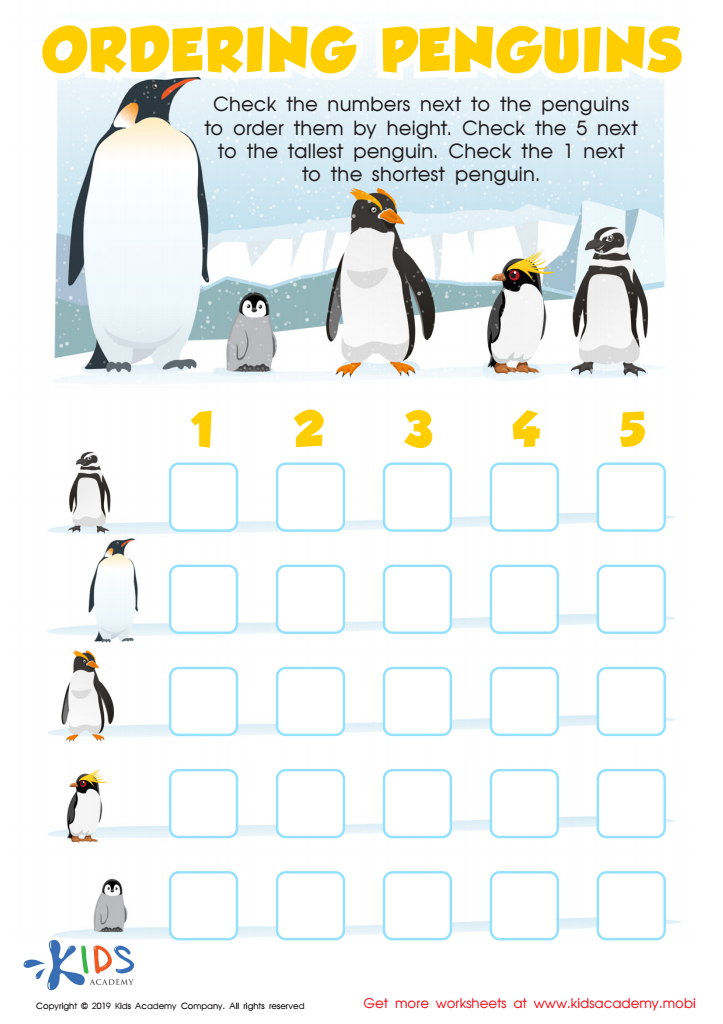
Ordering Penguins Worksheet
Check photos of penguins with your kids, then help them order by height. Tallest gets a 5, shortest gets a 1. Learn cool facts while having fun!
 Assign to My Students
Ordering Penguins Worksheet
Worksheet
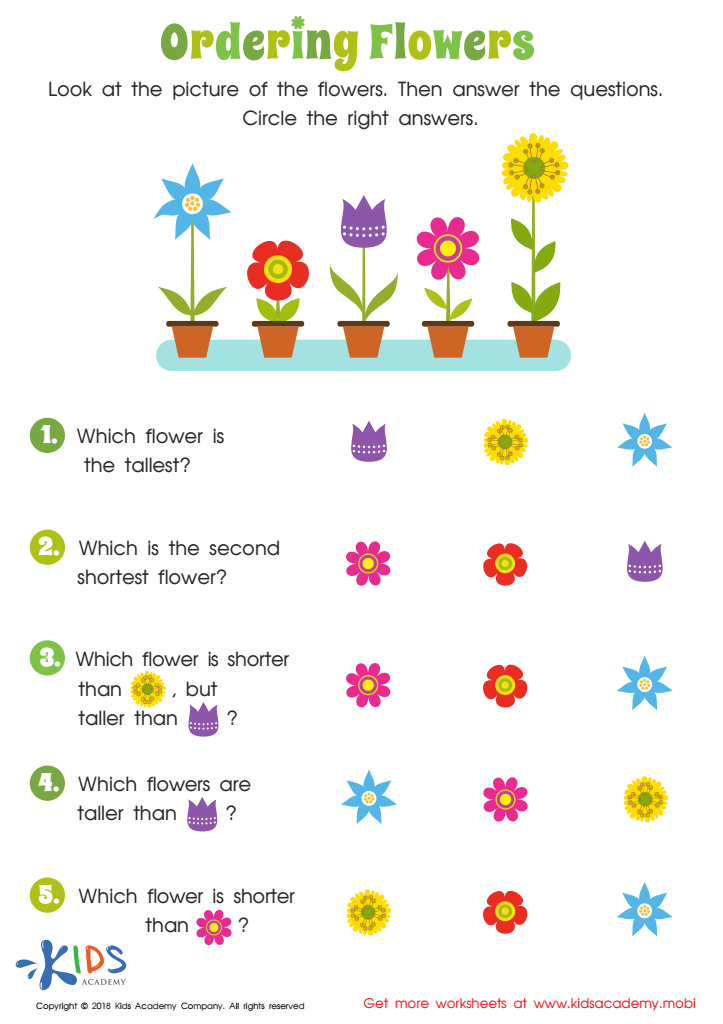
Ordering Flowers Worksheet
Preschoolers can start learning measurement with visuals! This worksheet uses colorful flowers of different heights. Ask your learner to observe the flowers, then help them compare/answer which is taller/shorter. It's an easy way for them to begin learning about measurement.
Ordering Flowers Worksheet
Worksheet
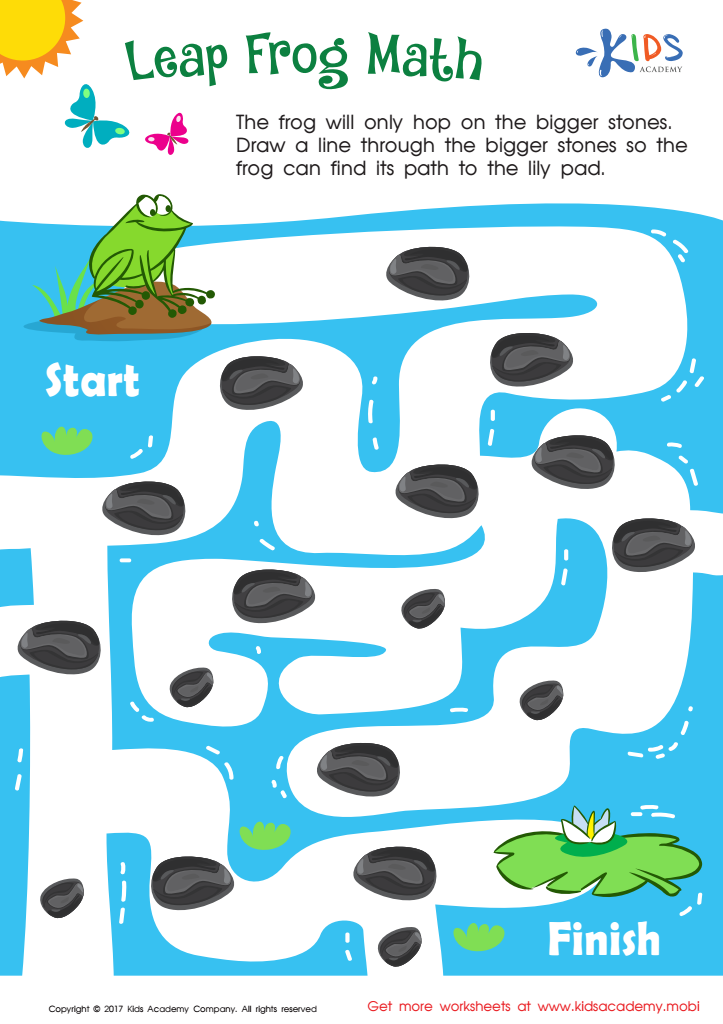
Math Puzzle Worksheet
Kids will use their math skills to help the frog get through the maze by selecting the larger stones. Perfect for kindergarteners, it develops the ability to identify size differences.
Math Puzzle Worksheet
Worksheet
Join Kids Academy for Free
Who is primarily going to use this learning content?








Number recognition is a crucial foundational skill for young children aged 3-6, encompassing their ability to identify and understand numbers. Parents and teachers should prioritize this competency as it lays the groundwork for future mathematical learning and cognitive development. Mastering number recognition enhances a child's ability to count, which is essential for their mathematical fluency.
Engaging in activities that promote number recognition helps children develop critical thinking and problem-solving skills. Early exposure to numbers boosts their confidence in tackling mathematical challenges as they progress. Moreover, children who understand numbers are better equipped to grasp concepts like addition and subtraction, enabling them to excel in later grades.
Such skills also contribute to everyday life competencies, such as understanding money, telling time, and recognizing patterns. As children engage in number-related activities, such as counting toys or sorting objects, they also cultivate fine motor and language skills, fostering holistic development.
Encouraging number recognition not only sets the stage for academic success but also promotes curiosity and a love for learning in children. Parents and teachers can make learning fun by incorporating games and activities, ensuring that children are both engaged and motivated to explore the world of numbers.








