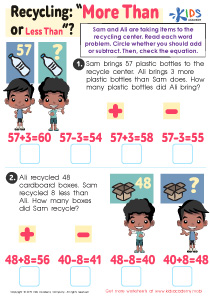
Shape Recognition Numbers up to 100 Worksheets for Ages 3-6
3 filtered results
-
From - To
Give your little learners a fun and educational boost with our "Shape Recognition Numbers up to 100 Worksheets" designed for ages 3-6. These engaging printables combine shape identification and number recognition, offering interactive learning experiences for young minds. Children will practice counting and familiarize themselves with numbers up to 100 while matching and identifying various shapes. Perfect for preschool and kindergarten settings, these worksheets help build foundational math skills in an enjoyable way. Start developing your child's number sense and shape recognition abilities today—download our free, high-quality worksheets and watch them thrive!
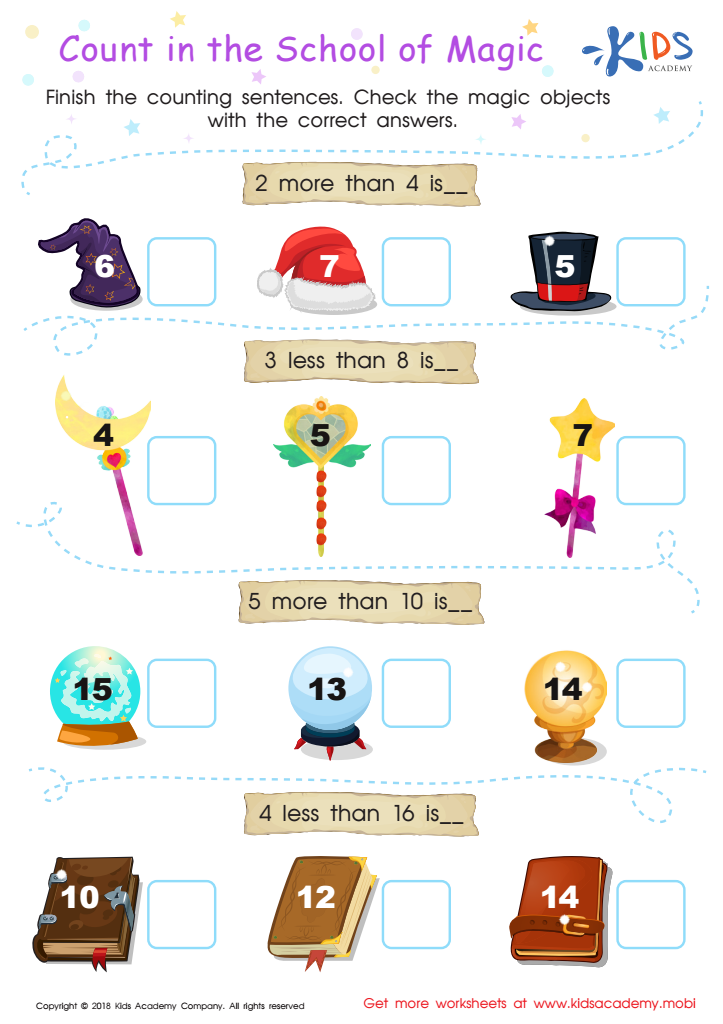
Count in the School of Magic Worksheet
 Assign to My Students
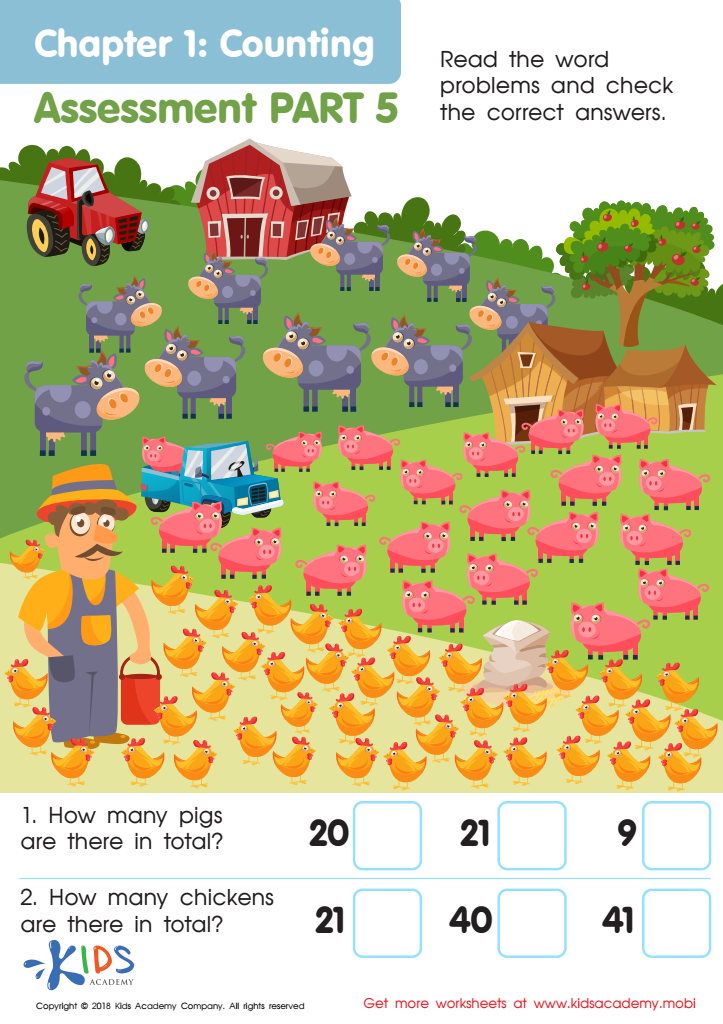
Counting: Assessment 5 Worksheet
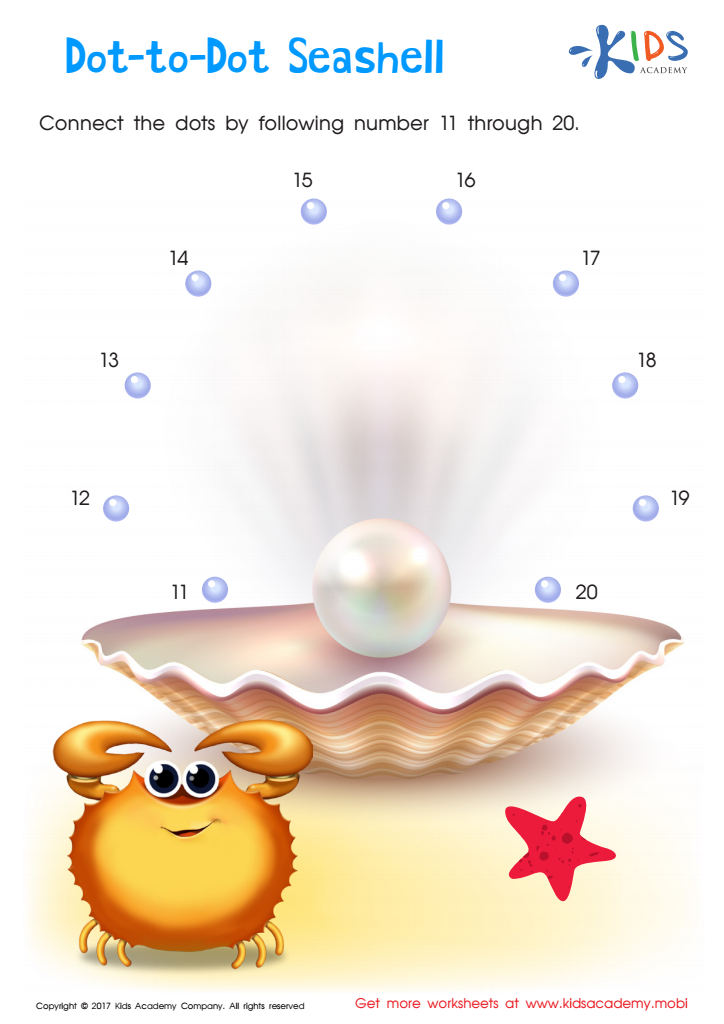
Ordering 11–20: Dot–to–dot Seashell Printable







%20(1).jpg)
Shape recognition and early number learning are crucial cognitive skills for young children, typically ages 3 to 6. During these formative years, children's brains are highly receptive to new information, and integrating shape recognition with numbers up to 100 can significantly enhance their cognitive development, foundational math skills, and overall academic readiness.
Understanding shapes helps children to process visual information more effectively, aiding their ability to distinguish between different objects and patterns in their environment. Meanwhile, recognizing numbers up to 100 goes beyond simple counting; it builds a child's ability to identify numerical patterns, understand relationships between numbers, and develop early arithmetic skills.
Blending these concepts, parents and teachers can create a learning environment that fosters problem-solving and critical thinking abilities. For instance, recognizing that the number "7" looks like an angle or that "10" combines a round zero and a straight line challenges children to draw connections between numerical and geometric ideas, reinforcing both.
Moreover, these skills lay the groundwork for more complex mathematical concepts encountered in later grades, such as place value, addition, subtraction, and even geometry. Caring about this aspect of early learning means investing in a child's academic success and everyday problem-solving abilities, setting them up for a confident and curious approach to future learning opportunities.