Counting practice Tracing Numbers Worksheets for Ages 3-6
3 filtered results
-
From - To
Enhance your child's early math skills with our "Counting Practice Tracing Numbers Worksheets," designed for children ages 3-6. These engaging worksheets encourage young learners to trace numbers, fostering fine motor skills while reinforcing their understanding of counting. Each activity features colorful illustrations and fun themes to captivate children’s attention and make learning enjoyable. Kids will build confidence in recognizing numbers and develop a strong foundation for early math concepts. Perfect for homeschoolers and classroom settings, these worksheets provide an interactive way to combine learning and play, setting the stage for a lifelong love of math. Download and start counting today!
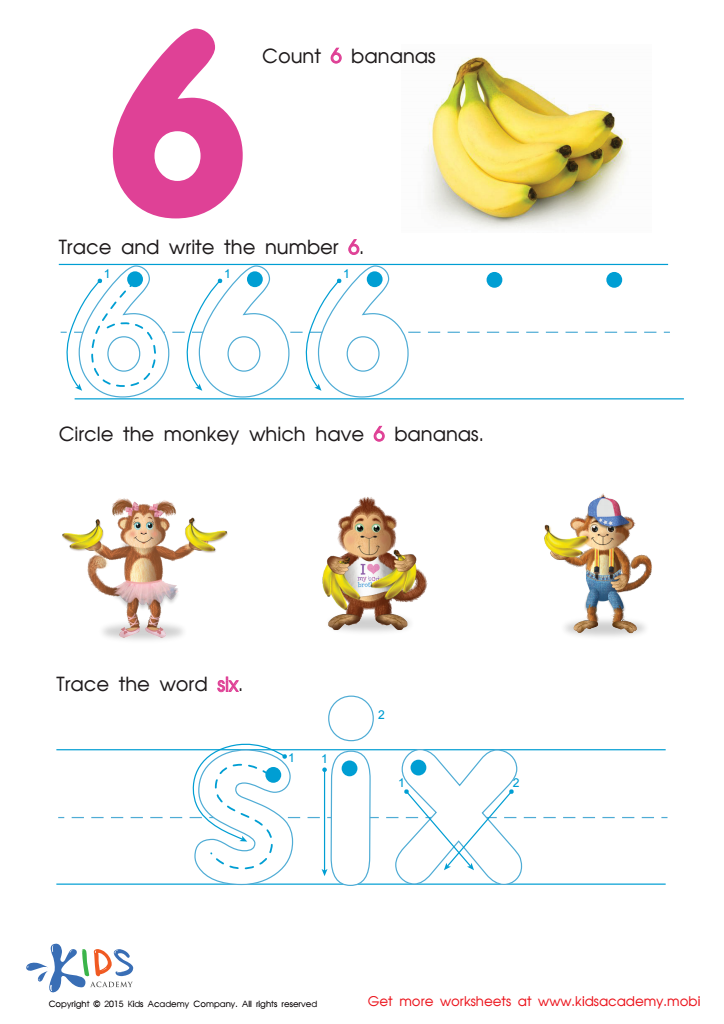
Tracing And Writing Number 6 Worksheet
 Assign to My Students
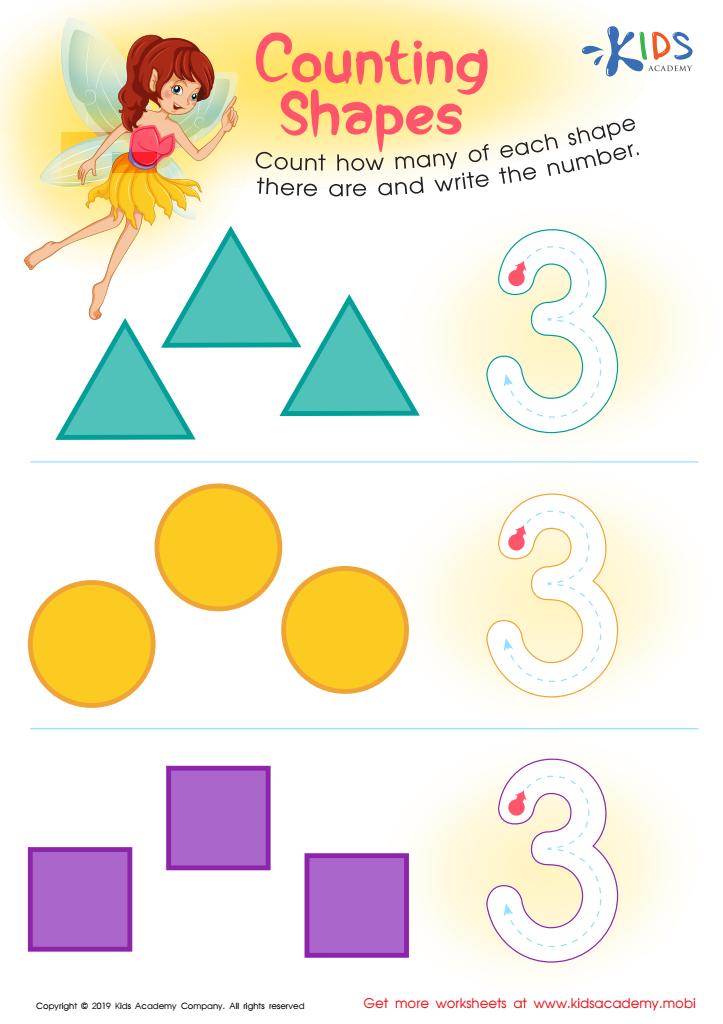
Counting Shapes Worksheet
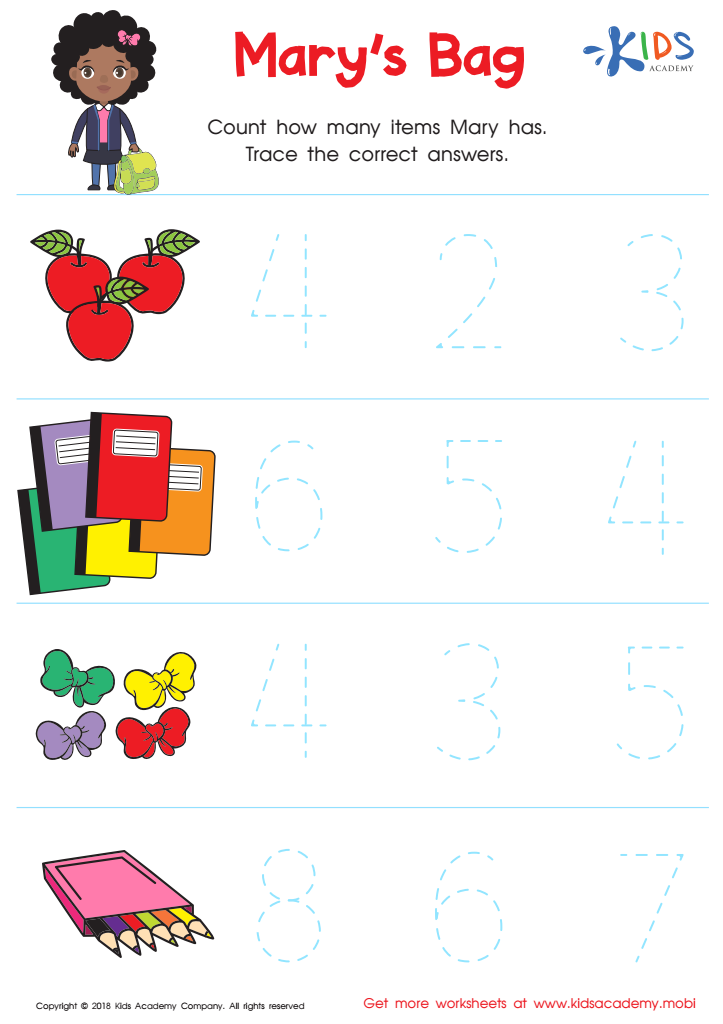
Kindergarten Number Tracing: Mary's Bag Worksheet








Counting practice and tracing numbers for children aged 3-6 are fundamental components of early education that lay the groundwork for future mathematical understanding. At this developmental stage, children are highly receptive to new concepts, making it an ideal time to introduce basic numeracy skills.
Engaging in counting practice helps children develop number recognition, which is crucial for later learning. It fosters their ability to quantify objects, introduces the one-to-one correspondence, and strengthens their understanding of quantity. Through these activities, children also learn to appreciate patterns and sequences, which are essential for advanced math skills.
Tracing numbers allows young learners to develop fine motor skills essential for writing. This activity enhances their hand-eye coordination and muscle memory, supporting not just academic readiness, but overall dexterity needed for various tasks in life.
Furthermore, both counting and tracing practices can build confidence in young learners. As they successfully master these skills, they gain a sense of accomplishment that fosters a positive attitude towards learning. Involving parents or teachers in this process encourages a supportive learning environment, making math an engaging and enjoyable subject rather than a daunting challenge. Ultimately, these practices form the foundation for lifelong mathematical competence.