Basic Arithmetic Word Problems Worksheets for Ages 3-6
5 filtered results
-
From - To
Discover our engaging Basic Arithmetic Word Problems Worksheets designed for children aged 3-6! These worksheets creatively introduce foundational math concepts through relatable scenarios. Young learners will explore addition and subtraction using vividly illustrated problems that capture their interest and imagination. Lesions focus on boosting critical thinking, problem-solving skills, and number recognition in a fun, interactive way. Perfect for parents and teachers, these worksheets provide a valuable resource for early math education, ensuring kids build confidence in their arithmetic abilities. Start fostering a love for learning today with our thoughtfully crafted activities that make math enjoyable and approachable for your little ones!
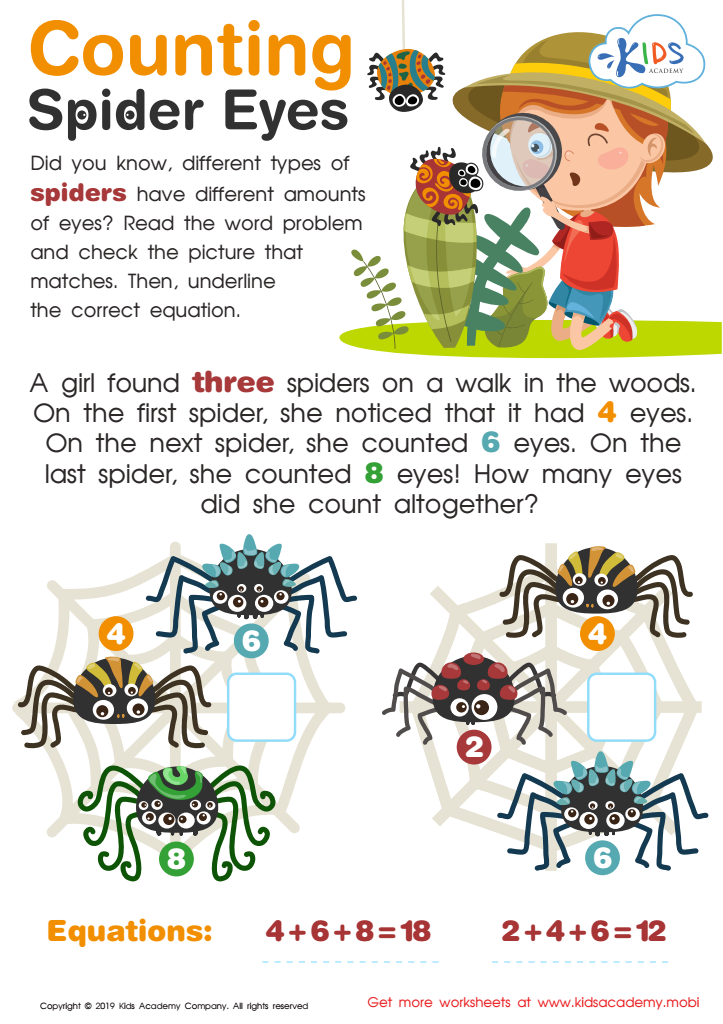
Counting Spider Eyes Worksheet
 Assign to My Students
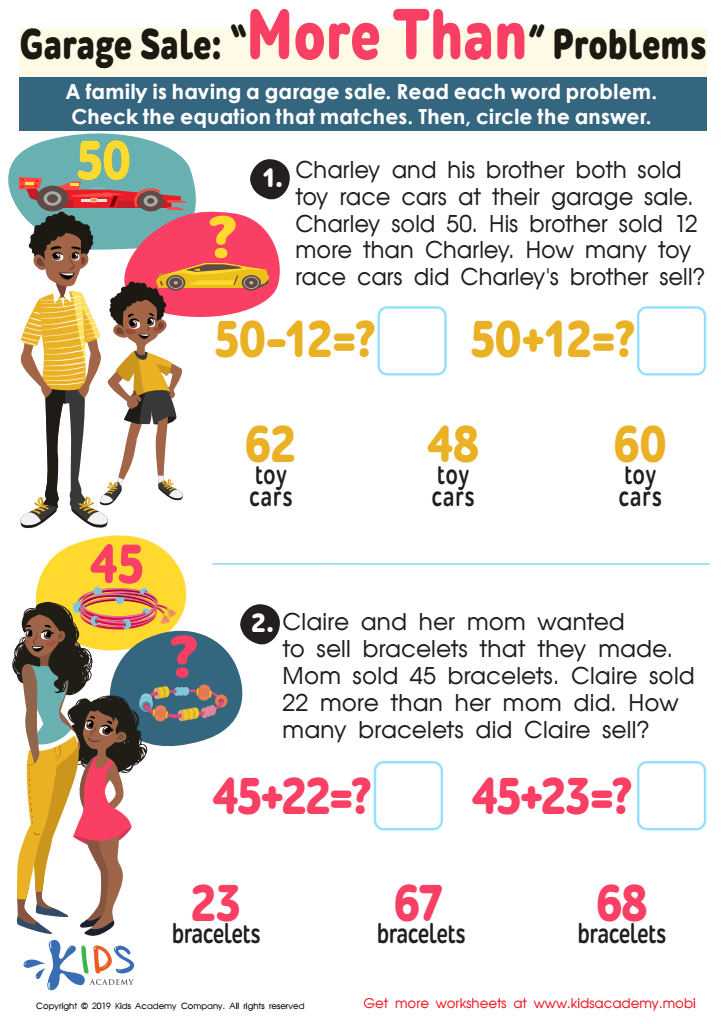
Garage Sale - More yhan Worksheet
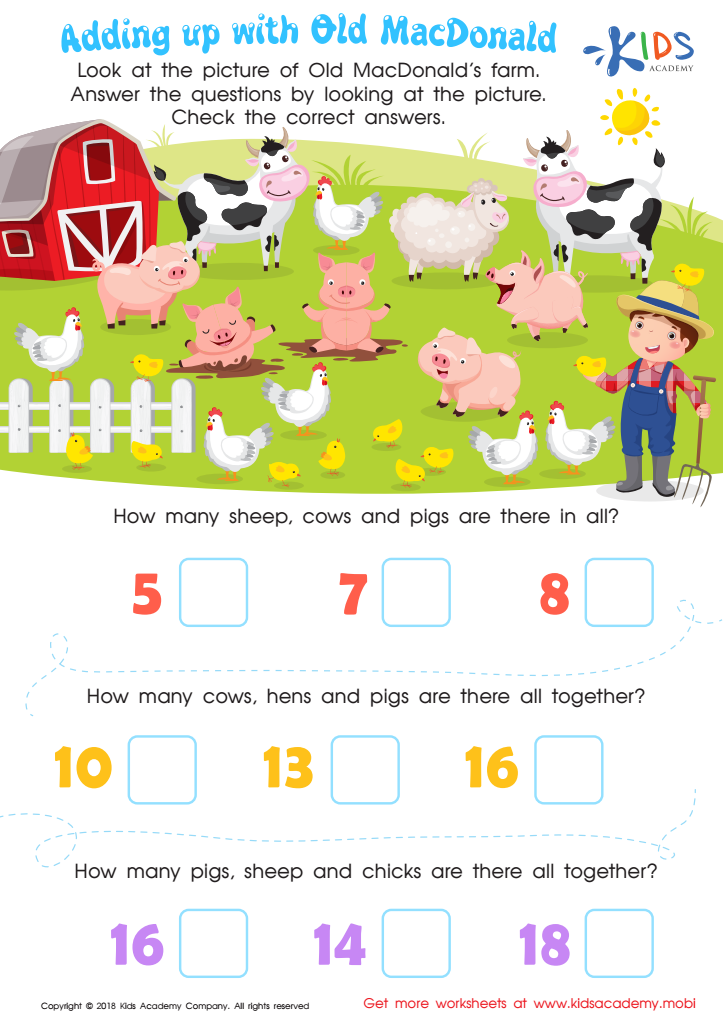
Adding Up with Old MacDonald Worksheet
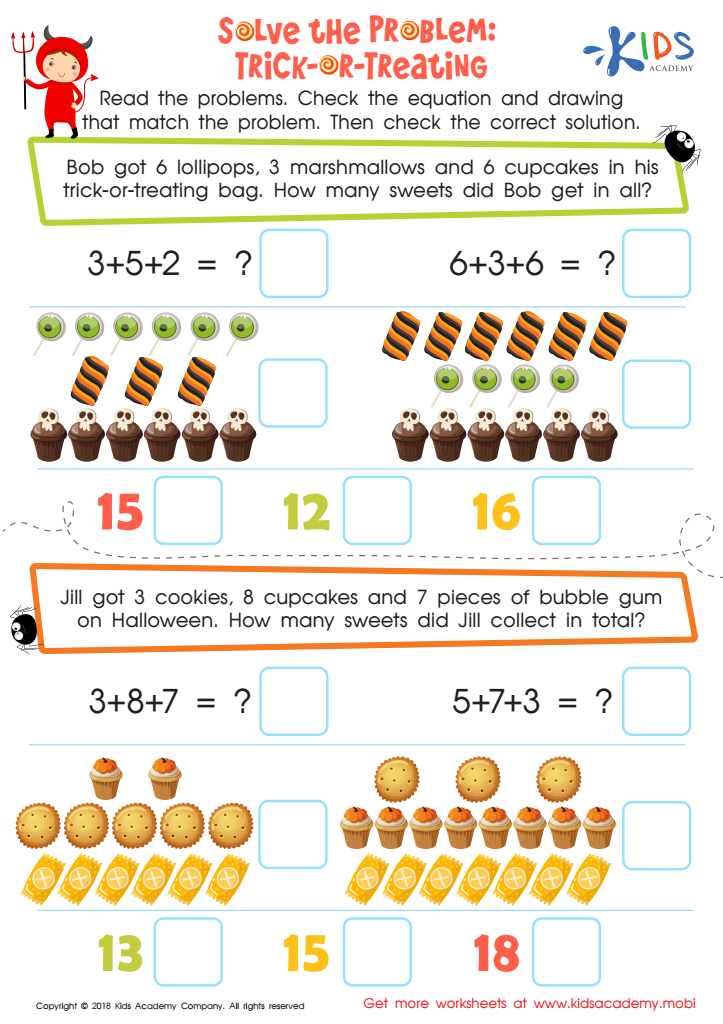
Solve the Problem: Trick–or–treating Worksheet
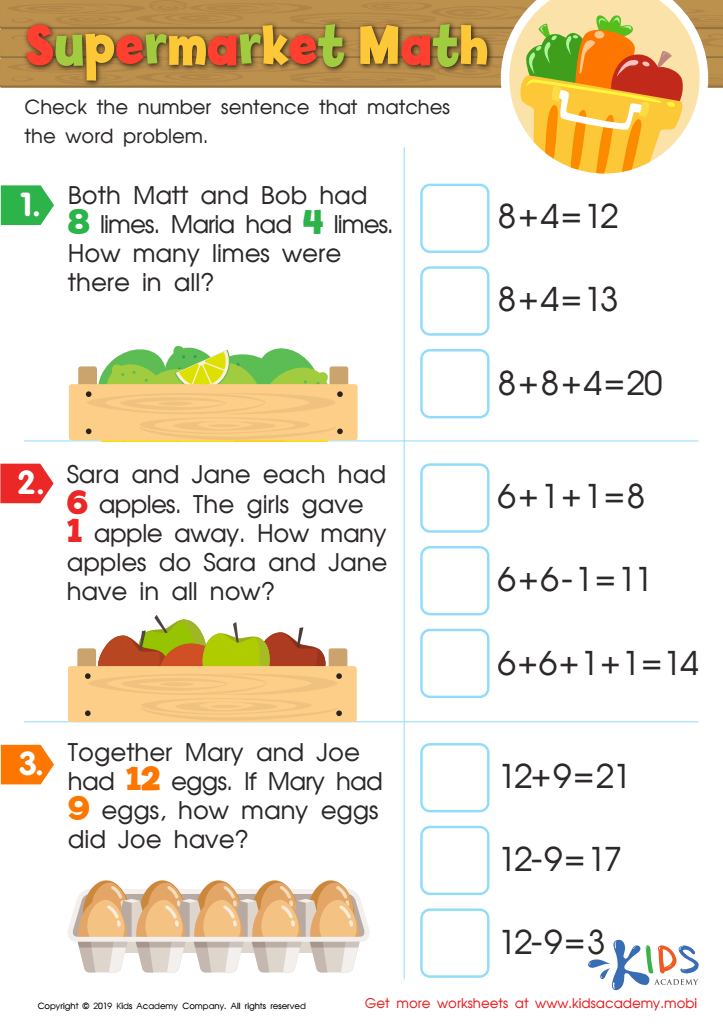
Supermarket Math Worksheet








Basic arithmetic word problems are essential for children aged 3-6 as they lay the groundwork for critical mathematical skills while fostering problem-solving and language development. At this early stage, children transition from recognizing numbers and counting to applying these concepts in real-life situations. Engaging with word problems allows young learners to interpret and analyze scenarios, enhancing their comprehension and logical reasoning.
Moreover, these problems often incorporate familiar contexts, helping children connect math to the world around them. This integration not only makes learning more enjoyable but also empowers children to see the relevance of math in everyday life. Additionally, word problems encourage dialogue between children and adults, promoting language skills and vocabulary through the exploration of terms related to addition, subtraction, and comparisons.
By prioritizing basic arithmetic word problems, parents and teachers support cognitive development, critical thinking skills, and the ability to communicate and reason. In essence, these foundational experiences foster a positive attitude toward mathematics, preparing children for more complex concepts in the future, while also helping them develop resilience and confidence as they navigate problem-solving challenges. Ensuring that children engage in meaningful math conversations ultimately supports their overall academic success and personal growth.








